Picking out the right NSK Roller Bearing isn’t just a matter of flipping through a catalog—especially for global buyers. It’s more complicated than that. You’ve got to think about machine duty, the direction of loads, speed, temperature, how it’s lubricated, and the space available for installation. Sometimes, a bearing looks perfect on paper, but then it fails early because little things like contamination or misalignment slip past unnoticed.
This guide, which we’re calling the 2026 edition, dives into the main types of NSK roller bearings—like cylindrical, tapered, spherical, needle, and thrust designs. Each one is built for a different mechanical challenge. For example, cylindrical roller bearings handle heavy radial forces, while tapered ones are good for both radial and axial loads. Spherical bearings can handle a bit of misalignment in the housing. Needle bearings are great if space is tight, but you need to be careful with shaft and raceway prep. Thrust bearings are designed specifically for axial loads.
Toshihiro Uchiyama, who used to be the boss at NSK Ltd., once shared a pretty simple but smart engineering tip: “Bearing performance depends on the whole system, not just the bearing itself.” That’s still pretty relevant, especially if you’re ordering from overseas. You’ll want to double-check things like load calculations, clearances, material specs, seals, lubricants, and how long the bearing is supposed to last. And don’t forget about supplier traceability—that’s a big deal if you’re buying through unfamiliar channels.
Details really do matter. A poorly aligned housing can cause heat marks in just a few hours. Using too much grease can push up the operating temperature. Getting the clearance wrong can cripple what might otherwise be a top-notch bearing. These might seem like small mistakes, but they happen more often than you’d think.
In this guide, we’ll compare NSK solutions based on technical data, real-world experiences, and practical purchasing tips. Of course, some applications still call for expert calculations, and no one-size-fits-all ranking can replace proper engineering checks. That’s a limit we’ll keep in mind throughout.
NSK Roller Bearings: Definition, Structure, and Core Functions
A roller bearing supports rotating shafts while reducing sliding contact between moving parts.
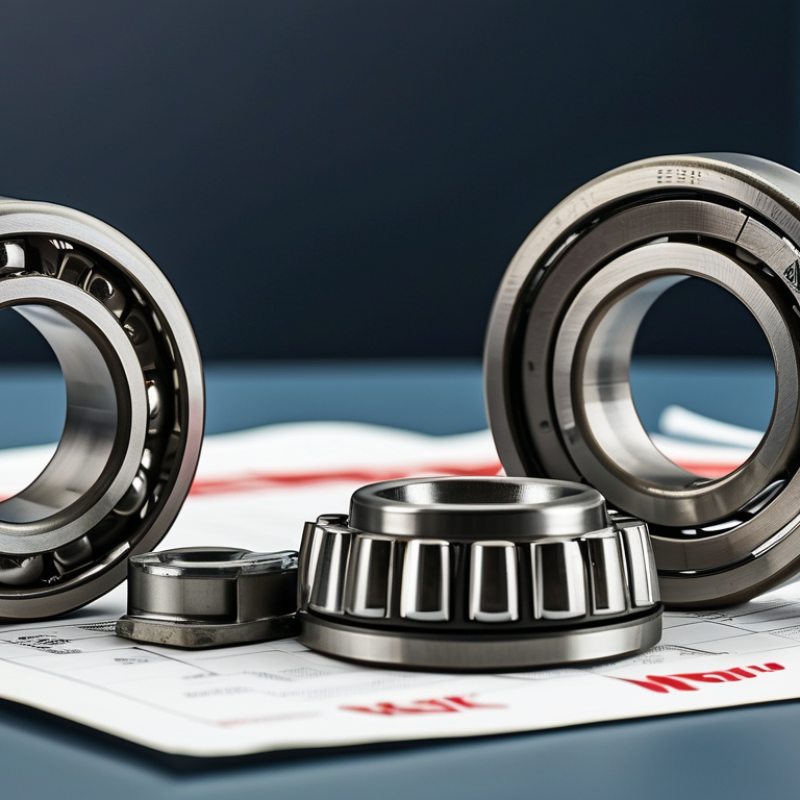
Its structure is practical, not mysterious. The inner ring fits the shaft, while the outer ring sits inside the housing. Rollers carry the load between both rings. A cage separates them and controls spacing. Seals or shields help retain lubricant and block dust.
Different roller profiles solve different problems.
Cylindrical rollers suit high radial loads and moderate speeds. Spherical rollers tolerate shaft misalignment, which is common in heavy equipment. Tapered rollers manage combined radial and axial forces. Needle rollers save space, but they demand accurate shaft surfaces.
ISO 281 defines basic rating life as the life reached by 90% of identical bearings under stated conditions. That calculation assumes clean lubricant and correct installation. Real factories are less perfect. Misalignment, water, and over-tightened fits can shorten life sharply.
According to the U.S. Department of Energy’s Motor Systems guidance, motor-driven equipment consumes more than half of industrial electricity in the United States. Small friction losses therefore deserve attention. A rough raceway, dry lubricant film, or damaged seal can quietly increase heat and energy waste.
Field inspection should check noise, temperature, vibration, lubrication condition, and housing fit.
A lower price may look attractive, but the wrong internal clearance can create an expensive failure.
Key NSK Roller Bearing Types Available for Global Buyers in 2026
For global buyers in 2026, roller bearing selection should match load direction, speed, and maintenance conditions.
Cylindrical roller bearings suit high radial loads and stiff shafts. Spherical roller bearings tolerate housing misalignment and heavy shock loads. Tapered roller bearings manage combined radial and axial forces, making them practical for wheel hubs and gearboxes. Needle roller bearings save space where shaft diameter is limited. Thrust roller bearings handle axial pressure, but they need accurate seating surfaces.
A 2024 industry market report estimates the global roller bearing market will expand steadily through 2030, supported by renewable energy, automation, and electric vehicles. Industry surveys also identify downtime reduction as a major purchasing priority. ISO 281 calculations help compare basic rating life, while ISO 492 supports dimensional accuracy checks. These standards improve supplier discussions, especially when buyers compare sealed, open, or split designs across regions.
Details matter.
A dusty conveyor may need effective sealing more than maximum speed. A wind turbine gearbox needs controlled preload and verified lubrication. Buyers should request load ratings, clearance values, grease specifications, inspection records, and traceable test data. Price alone misleads. A lower-cost bearing can create expensive vibration problems later. I would not treat catalog life as a promise; installation quality, contamination, and alignment can change real performance sharply. Some purchasing teams still overlook storage humidity. That mistake deserves another review.
How to Match NSK Bearing Types with Industrial Applications
Matching roller bearing types to applications requires more than checking load ratings. Start with load direction, speed, space, contamination, and maintenance access.
A cylindrical roller bearing suits high radial loads in gearboxes and conveyors. A tapered roller bearing handles combined radial and axial loads, especially in wheel hubs and heavy machinery. For thin housings, a Nsk Needle Roller Bearing can provide high radial capacity within limited installation space. However, its lower tolerance for misalignment demands accurate shaft and housing control. That detail is often missed.
The 2024 Grand View Research bearing market analysis reported strong growth in industrial automation and transportation applications. This trend increases demand for compact, efficient bearing arrangements. ISO 281 remains useful for estimating rating life, but real service life depends on lubrication, sealing, and contamination. A clean laboratory calculation can mislead.
Field experience favors a simple matching check. For a dusty quarry conveyor, select effective seals and relubrication access before chasing maximum speed. For a high-speed machine tool, prioritize low friction, balance, and thermal stability. For oscillating joints, needle rollers may need special attention to raceway hardness and lubrication film. One warning: catalog data is not a plant survey. Buyers should record temperature, vibration, shaft tolerance, and actual duty cycles before final selection. Mistakes still happen. That is why pilot installation and vibration verification remain valuable.
NSK Roller Bearing Selection Criteria for International Purchasers
For international purchasers, roller bearing selection should begin with operating evidence, not catalog popularity. The U.S. Department of Energy reports that motor systems use about 69% of industrial electricity. Small bearing losses can therefore affect long-term costs. Choose cylindrical roller bearings for high radial loads and axial movement. Tapered roller bearings suit combined loads and controlled shaft positioning. Spherical roller bearings tolerate housing misalignment. Needle bearings save space, but require accurate shaft surfaces and strict lubrication control.
Check dynamic load rating, static safety, speed limits, clearance, sealing, cage material, and operating temperature. ISO 281 provides the basic rating-life method, while ISO 492 defines dimensional and running-accuracy tolerances. These standards improve comparison between suppliers. Yet calculated life is not actual field life. Contamination, poor mounting, and incorrect preload can dominate the result. I have seen a technically correct bearing fail early because the storage package absorbed moisture. That weakness deserves more attention.
Tips: Request ISO 9001 certification, material certificates, batch traceability, and inspection records. Confirm bore, outside diameter, width, load direction, lubrication, and delivery terms in writing. For overseas supply, review corrosion protection, packaging strength, replacement availability, and customs documentation. Use ISO 15243 damage classifications when investigating failures. Do not select only by price. A cheaper unit may increase downtime, freight, and installation labor. Test one shipment under real temperature, vibration, and load conditions before approving large quantities.
Load Ratings, Speed Limits, Materials, and Sealing Options
For buyers searching “Nsk Bearing,” load rating should come before catalog price. ISO 281 calculates basic rating life using L10 = (C/P)p. The exponent is 3 for ball bearings and 10/3 for roller bearings. A higher dynamic rating, C, generally supports longer service under the same load. Static rating still matters when heavy loads or shock loads stop the shaft.
Speed limits are not fixed numbers. They depend on clearance, cage design, lubricant, temperature, and mounting accuracy. Open bearings usually run faster than contact-sealed versions. A 2RS seal improves contamination resistance but adds friction. ZZ shields create less drag, yet they offer weaker protection against washdown and fine dust. The World Bearing Association’s bearing damage guidance repeatedly identifies contamination and poor lubrication as major failure causes.
Material choice changes practical life. Chrome steel suits standard industrial duty. Stainless steel handles moisture better, but its load capacity may be lower. Ceramic hybrid designs can reduce electrical damage and support higher speeds, although their price needs justification. ISO 15243 failure classifications help engineers distinguish fatigue, smearing, corrosion, and installation damage. Published speed values remain laboratory-oriented. In a dusty gearbox, I would reduce them conservatively. I have also seen buyers overestimate seal protection; a sealed bearing is not automatically waterproof. Salt spray, misalignment, and irregular relubrication can defeat a good specification.
NSK Bearing Standards, Quality Verification, and Product Authenticity
Global buyers need more than a familiar bearing label. A Nsk Ball Bearing should match the required load, speed, clearance, and operating temperature. Product selection begins with the application, not the catalog title. A conveyor bearing may face dust, shock, and continuous vibration. A precision spindle needs tighter control and cleaner lubrication.
Reliable evaluation uses recognized bearing standards. Dimensional accuracy, running noise, radial clearance, and load ratings should appear in technical documents. Quality systems, such as ISO 9001, support process control, but certification alone does not prove every batch is perfect. Ask for the production code, inspection record, material information, and traceable shipment details. Compare measurements with the stated tolerance. A micrometer, clean gloves, and bright lighting can reveal small problems.
Authenticity checks should combine evidence. Inspect laser markings, seal condition, surface finish, packaging quality, and grease consistency. Then compare these details with authorized technical references. A polished box proves little. My early inspections relied too heavily on paperwork. That was a weakness. One supplier document showed no obvious error, yet the bearing bore measured outside the expected range. Independent testing can examine hardness, vibration, and internal geometry when the purchase is critical. Keep photographs, serial records, and sample results for future audits. Small inconsistencies deserve attention, especially when several cartons show different fonts, weights, or manufacturing codes.
Global Sourcing, Maintenance, and Replacement Considerations
Global sourcing of roller bearings now requires more than comparing catalog prices. Buyers should check load direction, speed, temperature, sealing, clearance, and shaft tolerance. A Nsk Needle Bearing may suit compact radial applications, but its selection still depends on real operating conditions. Confirm the original dimensions and lubrication method before approving substitutes.
Maintenance data deserves equal attention. The U.S. Department of Energy’s Operations & Maintenance Best Practices report indicates predictive maintenance can reduce costs by 8–12% versus preventive maintenance, and about 30% versus reactive maintenance. Use vibration readings, temperature checks, and grease-condition records. These measurements often reveal misalignment before visible damage appears. Replacement planning should include lead time, packaging controls, batch traceability, and local technical support. Cheap inventory is not always cheap.
Tips: Keep two approved sources for critical sizes. Store bearings horizontally, dry, and in unopened packaging. Record installation force and shaft condition. A puller is safer than improvised striking. Small details matter. I would also challenge one common assumption: a longer calculated life does not guarantee longer field life. Contamination, poor fits, and incorrect lubrication can dominate the result. ISO 281 calculations help compare options, but they cannot replace site evidence. For global shipments, request current inspection reports and verify dimensions at receiving. Mistakes often begin with an outdated drawing.
FAQS
: Cylindrical roller bearings handle high radial loads and allow some axial movement. They suit stiff shafts. Check clearance carefully.
Choose them when housing misalignment or heavy shock loads may occur. They tolerate imperfect alignment better. They are not maintenance-free.
Tapered roller bearings manage both force directions and help control shaft positioning. They are useful in wheel hubs and gearboxes. Preload still needs careful adjustment.
Needle roller bearings save space when shaft diameter is limited. However, the shaft surface must be accurate and properly lubricated. Small space, strict requirements.
Confirm bore, outside diameter, width, load direction, speed, clearance, sealing, and temperature. Request load ratings and grease specifications in writing. Details prevent expensive misunderstandings.
No. ISO 281 calculations help compare basic rating life, but real life can differ sharply. Contamination, poor mounting, alignment, and preload can cause early failure. Catalog life is not a promise.
Request quality certification, material certificates, inspection records, batch traceability, and test data. Also review packaging strength, corrosion protection, replacement availability, and customs documents. Paperwork matters.
High humidity can affect protective packaging and encourage corrosion before installation. Store bearings in a dry, controlled area. This risk is easy to overlook.
Conclusion
This guide explains how Nsk Roller Bearing products support reliable motion, load handling, and reduced friction in industrial equipment. It introduces their basic structure and core functions, then compares major roller bearing types available to global buyers in 2026, including options suited for radial loads, axial loads, combined loads, and high-speed operation. Readers will learn how to match bearing designs with machinery requirements such as conveyors, gear systems, motors, pumps, and heavy-duty production equipment.
The article also presents practical selection criteria for international purchasers, covering load ratings, operating speed, materials, lubrication, sealing options, temperature conditions, and service life. In addition, it discusses dimensional and quality standards, product verification, authenticity checks, supplier evaluation, maintenance planning, replacement procedures, packaging, and international sourcing considerations. By applying these guidelines, buyers can reduce compatibility risks, improve equipment uptime, and select roller bearings that balance performance, cost, availability, and long-term maintenance needs.