People around the world are taking a fresh look at motor efficiency, supply reliability, and after-sales support. Why? Well, it’s pretty practical—since motor-driven systems eat up a big chunk of industrial electricity. The International Energy Agency’s Energy Efficiency 2023 report points out that these systems are actually a huge opportunity for saving energy. A good Delta Drive Motor can really cut down on operating losses—especially when its size, control method, and load match what the equipment actually needs. It’s all about choosing the right fit.
We looked into ten well-known suppliers—like Delta Electronics, Siemens, ABB, Schneider Electric, Yaskawa Electric, Mitsubishi Electric, Rockwell Automation, Danfoss, Fuji Electric, and INOVANCE. Their products are used in conveyors, pumps, fans, packaging lines, machine tools, and HVAC systems. Market research from MarketsandMarkets keeps showing that demand for variable-speed control is rising across industrial automation. Meanwhile, Grand View Research links this growth to factories going digital and investing in energy management. All these insights give us a pretty solid view of what makes a supplier good quality.
But, let’s be honest—price isn’t everything.
When you’re comparing options, it’s important to look beyond just the sticker price. You should check out things like rated torque, overload capacity, braking capabilities, communication protocols, how well the enclosure protects against the elements, warranty terms, and regional service support. Certifications and detailed technical specs are a must, too. Standards like IEC 61800 are useful guides for adjustable-speed drives, but keep in mind that specs listed on paper might not tell the whole story. Real-world factors like heat, dust, voltage dips, and poor setup can seriously affect performance. So, it’s worth paying attention to the documented engineering capabilities, how accessible the distributor is, replacement parts availability, and what users are saying. Of course, always do some site testing and chat with the supplier before you commit to a large order—better safe than sorry, right?
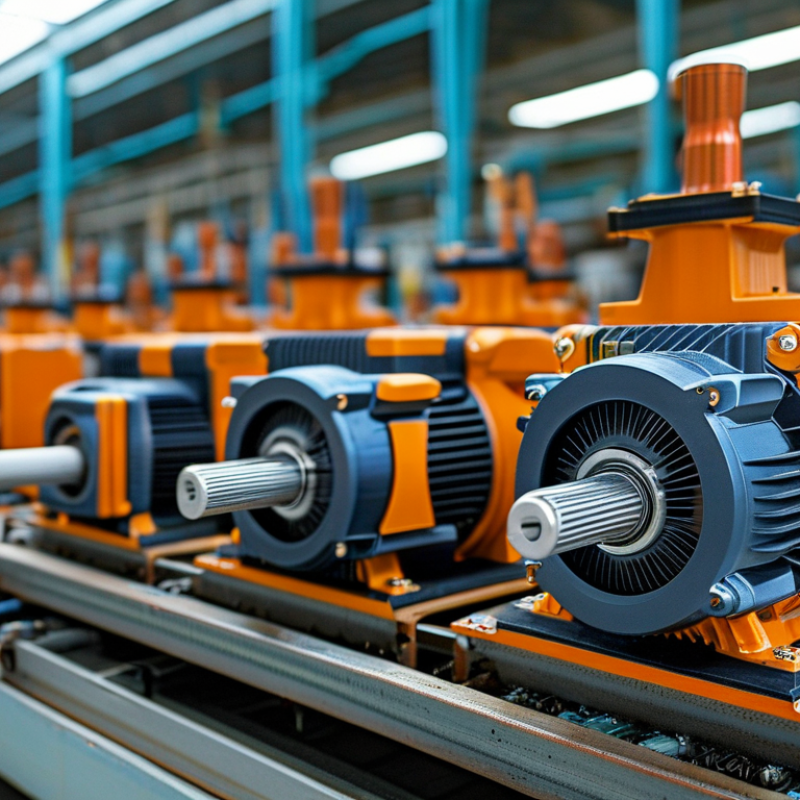
Selecting a drive motor begins with the load, not the catalog. AC motors suit pumps, fans, conveyors, and other applications needing steady torque. A variable-frequency drive adjusts speed and limits starting stress. They tolerate dust and long operating hours, but poor sizing can cause heat, noise, or weak low-speed torque. Check duty cycle, ambient temperature, insulation class, and available voltage before comparing suppliers. Keep it practical.
Servo motors are built for controlled motion. An encoder reports shaft position, allowing rapid correction during indexing, cutting, robotics, and packaging. Their strength is repeatability, not simply high speed. The motor, amplifier, feedback device, and mechanical transmission must work as one system. Excessive gain may create vibration, while weak tuning produces slow, inaccurate movement. A commissioning test with real payloads reveals more than a brochure. I have learned that “plug and play” is often optimistic.
BLDC motors use electronic commutation and permanent magnets, offering compact size, efficient operation, and low maintenance. They fit fans, pumps, tools, and battery-powered equipment. Hall sensors improve startup control; sensorless designs can struggle at very low speed. Global buyers should request thermal curves, efficiency data, protection ratings, lifecycle evidence, and replacement-part support. Certification documents and clear warranty terms matter too. The cheapest quote may hide controller compatibility problems. Rechecking assumptions is worthwhile, especially when the machine runs continuously.
Choosing a Delta Ac Motor Drive supplier requires more than comparing catalog prices. The useful benchmark is range: 0.1 to 630 kW, with frequency control from 0.1 to 600 Hz. A 0.1 kW unit may serve a small dosing pump. A 630 kW cabinet may control a crusher, fan, or conveyor line. Not every supplier supports both extremes equally. Ask for tested output data.
Experienced buyers examine continuous current, overload duration, braking options, and motor compatibility. At low speed, torque stability matters more than an impressive maximum frequency. At high speed, insulation stress and bearing limits need careful review. A reliable supplier should provide manuals, wiring diagrams, parameter files, and fault records. Request samples from factory testing. Check whether the stated 600 Hz range applies to real motor operation or only software settings. This distinction is easy to miss.
Field commissioning also exposes practical differences. A drive may reach its rating, yet poor thermal design can cause nuisance trips in a hot, dusty enclosure. I have seen selection decisions focus on kilowatts while ignoring ambient temperature and cable length. That was a costly oversight. Supplier credibility grows when engineers explain derating clearly and respond with measured evidence. Global buyers should compare service response, spare-part access, firmware control, and regional compliance documents. Start with measured evidence. Leave room for doubt.
When comparing the 10 Best Delta Drive Motor Suppliers for Global Buyers, standards should guide every technical decision. IEC 61800 covers adjustable-speed electrical drive systems, including performance, safety, and electromagnetic compatibility. Ask suppliers for test reports, firmware details, and clear operating limits. A Delta Servo Motor Drive should also match the motor’s feedback device, rated current, braking method, and control network.
IEC 60034 provides essential requirements for rotating electrical machines. Check insulation class, temperature rise, vibration limits, and enclosure protection. For efficiency, verify whether IE3, IE4, or IE5 applies to the complete motor system. An IE5 motor may not deliver expected savings when paired with an unsuitable drive or poor load profile. Request measured data, not only catalogue claims. Review certificates, factory inspection records, and serial-number traceability before approval.
Tips: Compare efficiency at your actual load points. Check the 50 Hz and 60 Hz versions. Confirm cooling performance in dusty rooms. Ask for spare-part availability and service response times. I have seen promising specifications fail during hot-weather testing. That mistake is avoidable. Suppliers should explain deviations openly, even minor ones. One uncomfortable question can reveal weak documentation, unclear test conditions, or an efficiency class applied too broadly.
For global buyers, the best ten Delta drive motor suppliers should be ranked by evidence, not catalog size. Certifications deserve 30% of the score. Buyers should verify valid ISO 9001 certificates, IEC test reports, and market-specific conformity documents.
The IEA’s Energy Efficiency 2023 report states that electric motor systems consume nearly half of global electricity.
That makes traceable quality more than paperwork. It affects energy use, downtime, and plant safety. Still, certification alone proves little about daily service.
Warranty receives 25%, stock 20%, and technical support 25%. A strong supplier states coverage, exclusions, repair procedures, and replacement timing in writing. Live inventory data matters more than a vague “ready to ship” promise.
Ask for batch traceability and a realistic lead-time record. Technical teams should provide parameter files, wiring guidance, commissioning help, and multilingual troubleshooting.
The U.S. Department of Energy’s Industrial Decarbonization Roadmap identifies motor-driven equipment as a major industrial energy user, supporting careful efficiency and support evaluations. My weighting is not perfect. A two-year warranty may hide difficult claim conditions. A large warehouse may still lack the correct voltage or encoder option. Score documented response times, not friendly sales language. Test one unit before placing a large order.
Global buyers need more than a low quotation when selecting a Delta Drive motor supplier. Compliance documents should match the exact motor, drive, and production site. A CE marking supports European market access, while UL recognition may matter for North American installations. CCC approval is often required for equipment entering China. Ask suppliers for current certificates, test reports, and declared standards.
Check the enclosure carefully. An IP55 motor can resist dust and low-pressure water jets, but it is not designed for immersion. In a factory, this distinction matters. I have seen a motor survive years beside a dry conveyor, then fail after washdown exposure. The label alone was not enough. Confirm cable glands, cooling design, insulation class, and ambient temperature ratings.
Frequency compatibility also deserves practical testing. A motor rated for 50/60 Hz may operate across different grids, but voltage, speed, torque, and drive settings still require verification. Reliable suppliers provide wiring diagrams and commissioning guidance. They should explain efficiency data at the buyer’s actual voltage. Some documents look complete but omit regional conditions. That is a warning sign. Before ordering ten suppliers into a comparison, request sample nameplates and factory inspection evidence. Small discrepancies can become expensive delays. I would also check spare-part availability, response times, and whether technical support understands the destination country’s certification process.
10 Best Delta Drive Motor Suppliers for Global Buyers
Application Matching: Conveyors, Pumps, Fans, Robotics, and CNC Systems
Choosing a motor supplier should begin with the machine, not the catalogue. A conveyor needs steady torque, controlled acceleration, and reliable stopping under changing loads. Ask suppliers for tested duty ratings, overload data, brake options, and support for long cable runs. A Delta Vfd Drive can improve speed control, but correct motor sizing remains essential.
Pumps and fans often benefit from adjustable speed because flow demand changes throughout the day. Check whether the supplier understands quadratic torque loads, sensorless control, pressure feedback, and energy-saving settings. Small details matter. A poorly tuned drive may create noise, vibration, or unstable pressure. Request commissioning guidance and clear parameter documentation in your operating language.
Robotic systems require fast response, repeatable positioning, and careful coordination between drives and controllers. CNC equipment demands even tighter control, low speed smoothness, braking performance, and protection from electrical interference. During supplier evaluation, review field experience, spare-part availability, warranty terms, and regional technical service. I have seen technically capable suppliers overlook installation conditions, especially cabinet heat and dust. That mistake is avoidable, though not always obvious. Test the complete motor-drive combination before production, because a specification sheet cannot reveal every mechanical weakness.
| Supplier Profile | Primary Supply Region | Typical Drive Power Range | Motor Compatibility | Control and Communication Capability | Conveyors | Pumps | Fans | Robotics | CNC Systems | Common Compliance Scope | Recommended Buyer Type |
|---|---|---|---|---|---|---|---|---|---|---|---|
| Supplier Profile 01 | East Asia | 0.2–7.5 kW | Three-phase induction motors; permanent-magnet motors | V/f control, sensorless vector control, RS-485 communication | Excellent | Excellent | Excellent | Moderate | Moderate | Low-voltage industrial equipment requirements; EMC-focused configurations | Small and medium machine builders |
| Supplier Profile 02 | Western Europe | 0.75–22 kW | Induction motors; geared motors; brake motors | Vector control, digital I/O, industrial Ethernet options | Excellent | Excellent | Excellent | Moderate | Moderate | CE-oriented designs; IEC motor and enclosure practices | Process equipment and factory automation integrators |
| Supplier Profile 03 | North America | 1–30 hp | General-purpose motors; severe-duty motors; pump motors | Scalar and vector modes, Ethernet-based industrial networking | Excellent | Excellent | Excellent | Limited | Moderate | NEMA-oriented motor sizing; UL and industrial control panel compatibility | OEMs serving North American installations |
| Supplier Profile 04 | South Korea | 0.4–15 kW | Induction motors; compact servo-compatible motor packages | Sensorless vector control, PID control, Modbus communication | Excellent | Excellent | Excellent | Moderate | Moderate | EMC filtering and IEC-compatible low-voltage drive configurations | Packaging, material-handling, and light industrial users |
| Supplier Profile 05 | Japan | 0.2–11 kW | Induction motors; high-response permanent-magnet motors | Closed-loop vector control, positioning functions, encoder feedback | Excellent | Excellent | Excellent | Excellent | Excellent | Precision automation requirements; IEC and regional safety practices | Robotics, CNC, and high-accuracy equipment builders |
| Supplier Profile 06 | China | 0.75–75 kW | Standard induction motors; geared motors; brake motors | V/f control, sensorless vector control, PLC and RS-485 integration | Excellent | Excellent | Excellent | Limited | Limited | IEC-based motor configurations; export documentation varies by model | Cost-sensitive OEMs and standard automation projects |
| Supplier Profile 07 | Italy | 0.37–37 kW | Induction motors; geared motors; washdown-capable motor options | Vector control, torque control, fieldbus communication | Excellent | Excellent | Excellent | Moderate | Moderate | CE-oriented industrial equipment; IP-rated enclosure options | Food processing, packaging, and conveyor system integrators |
| Supplier Profile 08 | Germany | 0.37–160 kW | Induction motors; synchronous motors; regenerative drive packages | Closed-loop vector control, regenerative braking, industrial Ethernet | Excellent | Excellent | Excellent | Excellent | Excellent | IEC, EMC, functional-safety, and industrial networking requirements | Large factories and technically demanding OEM projects |
| Supplier Profile 09 | India | 0.75–90 kW | Induction motors; pump-duty motors; high-temperature motor options | V/f control, PID loops, programmable digital and analog inputs | Excellent | Excellent | Excellent | Limited | Limited | IEC-oriented products; local installation and service requirements | Water treatment, HVAC, and general-purpose industrial users |
| Supplier Profile 10 | United Kingdom | 0.75–45 kW | Induction motors; permanent-magnet motors; high-efficiency packages | Sensorless vector control, energy optimization, Ethernet communication | Excellent | Excellent | Excellent | Moderate | Moderate | CE and UKCA-oriented configurations; energy-efficiency documentation | Energy-conscious facilities and retrofit projects |
At 8,000 operating hours yearly, purchase price becomes a small part of ownership cost. The U.S. Department of Energy’s 2022 Motor Systems Market Assessment reports that motor-driven equipment uses about 57% of electricity in American manufacturing. Efficiency deserves serious attention.
Consider a 30 kW motor running at 92% efficiency versus 94%. At $0.12 per kWh, the difference can exceed $660 annually. Over ten years, assuming 80,000 operating hours, the gap approaches $6,600. This excludes downtime, cooling, maintenance, and drive replacement. A supplier offering stronger testing, documented efficiency, and local service may therefore cost less overall. The calculation is useful, but imperfect. Energy prices fluctuate. Loads rarely stay constant.
Tips: Ask suppliers for measured efficiency curves, not only catalog ratings. Check performance at 25%, 50%, and 75% load. Request warranty terms, spare-part lead times, and harmonic data. The International Energy Agency identifies industrial motor systems as a major electricity-use area, making variable-speed control valuable where loads change. Still, an oversized motor can waste energy continuously. A cheaper quotation may hide that mistake. Evaluate the motor, drive, installation, service, and expected downtime as one lifecycle package.
Compare evidence, not catalog size. Review certifications, warranty terms, stock accuracy, and technical support. Test one unit first.
Request a valid ISO 9001 certificate, IEC test reports, and required conformity documents. Check expiry dates and product scope. Paperwork can still mislead.
Certification receives 30% in this evaluation model. It supports traceability, quality control, and safety. It does not prove dependable daily service.
It should explain coverage, exclusions, claim steps, repair methods, and replacement timing. A two-year warranty may contain difficult conditions. Read the small details.
Ask for live inventory data, exact voltage options, encoder details, and batch traceability. “Ready to ship” is too vague. Confirm the actual unit.
Support teams should provide parameter files, wiring guidance, commissioning help, and multilingual troubleshooting. Request documented response times. Friendly language is not evidence.
At 8,000 yearly operating hours, purchase price becomes a smaller cost. A 30 kW motor at 92% efficiency can cost over $660 more annually than one at 94%, under stated assumptions.
Ask for measured efficiency curves at 25%, 50%, and 75% load. Check harmonic data and variable-speed performance. Catalog ratings alone are insufficient.
An oversized motor may run inefficiently during normal loads. That waste continues for thousands of hours. The cheaper quote may hide this mistake.
Evaluate the motor, drive, installation, maintenance, energy use, service, and downtime together. Energy prices and loads change. The calculation is useful, but imperfect.
Choosing the right Delta Drive Motor requires more than comparing rated power. Buyers should first understand the differences among AC, servo, and BLDC technologies, then match motor performance to system demands across the 0.1–630 kW power range and 0.1–600 Hz frequency range. A reliable evaluation should include compliance with IEC 61800 and IEC 60034, efficiency classifications from IE3 to IE5, and practical features such as CE, UL, and CCC certifications, IP55 protection, and 50/60 Hz compatibility.
This guide ranks ten international suppliers according to certification coverage, warranty terms, inventory availability, and technical support, without focusing on brand promotion. It also explains how to select motors for conveyors, pumps, fans, robotics, and CNC systems. Finally, buyers can estimate total lifecycle cost by considering energy consumption, maintenance, downtime, and replacement needs over 8,000 operating hours per year, enabling more dependable and economical purchasing decisions.