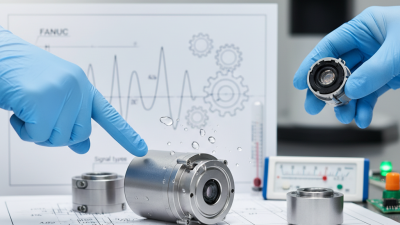
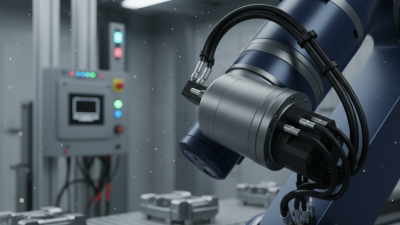
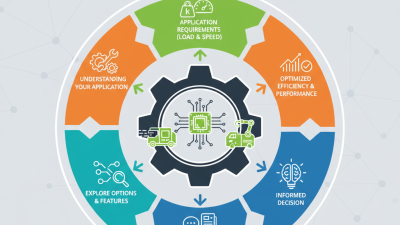
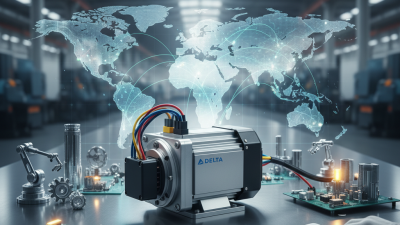
Picking the right Fanuc Encoder is genuinely important if you want your CNC machinery to run smoothly. These little devices have a huge impact on how precise and efficient your machine is. With so many models out there, figuring out which one suits your needs can feel a bit overwhelming. Trust me, it’s pretty common to get stuck trying to compare specs and options.
First things first, understanding what you really need is a game-changer. Think about things like resolution, size, and whether the encoder is compatible with your setup. Going for a high-res Fanuc Encoder might boost your accuracy — but it can also push up your costs, so finding that sweet spot between quality and budget is key here.
And don’t forget, a lot of folks tend to overlook how important ongoing maintenance and good support are. It’s worth choosing a supplier you can trust — one with real expertise in Fanuc products. Checking out reviews or asking around can really help steer you in the right direction. In this whole complicated world of CNC parts, making thoughtful choices definitely pays off in the long run.
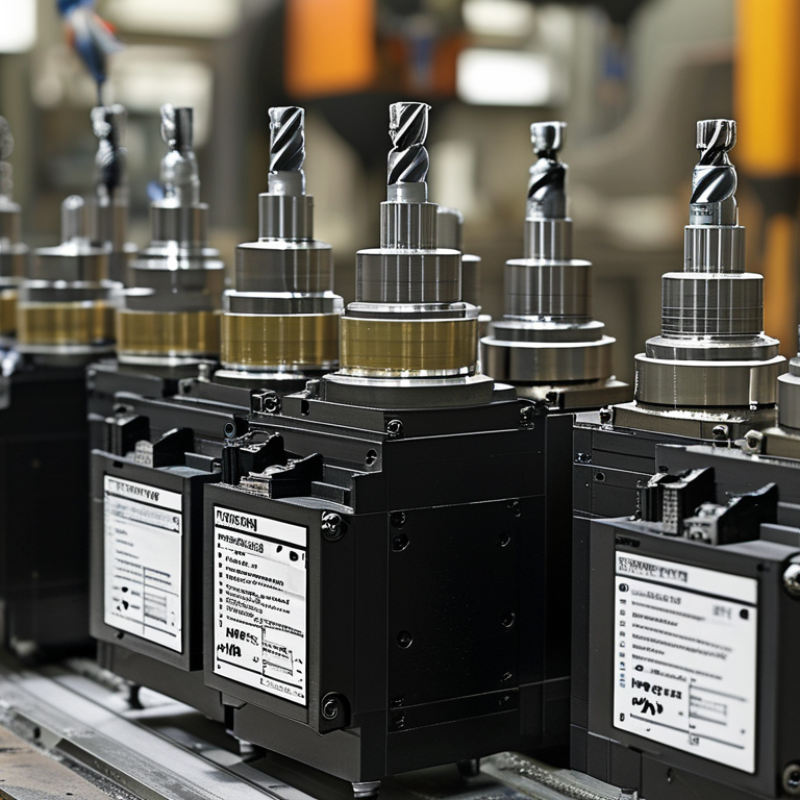
Understanding the Basics of Fanuc Encoders
Understanding Fanuc encoders is crucial for selecting the right one. These devices convert rotational or linear position into electrical signals. They provide feedback for precise motion control in various applications. There are different types, such as incremental and absolute encoders. Each type serves unique purposes and has specific features.
When choosing an encoder, consider the environment. Factors like temperature, vibration, and moisture can influence performance. Check the encoder's specifications to ensure it matches your operational requirements. Compatibility with your system is also essential. A mismatch may lead to inaccurate readings or system failures.
It’s easy to overlook aspects like resolution and response time. High resolution is vital for precise control, but it may also increase costs. Neglecting these details may lead to operational inefficiencies. Ultimately, the right choice balances performance and budget. Be prepared to reflect on your needs continually; priorities may shift over time.
Understanding Fanuc Encoder Performance Metrics
Identifying Your Application Requirements for Encoders
Choosing the right encoder for your application begins with a clear understanding of your requirements. Consider the environment where the encoder will operate. Extreme temperatures, moisture, and dust can affect performance. Different encoders offer varying degrees of protection against these elements. Assessing your environment helps narrow down the options effectively.
Next, think about the required precision. Will you need high-resolution feedback for delicate tasks? Or is lower precision acceptable for more rugged applications? Knowing the accuracy level you need will guide your selection. Additionally, evaluate the communication protocol. Ensure that it aligns with your existing systems and integrates smoothly.
Directly matching the encoder's specifications with your application can unveil hidden challenges. Perhaps an encoder's speed isn't compatible with your machinery, leading to operational hiccups. Sometimes, prototypes can expose unforeseen issues. Engaging in discussions with experienced engineers can illuminate aspects you might overlook. Selecting the right encoder is more than a mere checklist; it's about finding the best fit for your unique needs.
Evaluating Different Types of Fanuc Encoders Available
When selecting a Fanuc encoder, understanding the various types is crucial. Encoders convert motion into signals. They come in absolute and incremental types. Absolute encoders provide a unique position at every point. In contrast, incremental encoders track movement from a reference point. Depending on your application, one type may suit you better.
In industrial settings, absolute encoders are often preferred for their precision. A report from the International Society of Automation notes that 70% of automated systems benefit from absolute position feedback. Incremental encoders, however, are simpler and cost-effective. They are commonly used in speed measurement applications. It's noteworthy that around 40% of users reported issues related to resolution with incremental options.
When evaluating different encoders, consider factors such as accuracy, resolution, and environmental conditions. Each type has strengths and weaknesses. For instance, absolute encoders handle interference better but may be more expensive. Understanding your specific requirements is key. Reviewing maintenance needs and compatibility is equally important. In an ever-evolving market, staying informed ensures you choose the right encoder for your application.
Key Specifications to Consider When Choosing an Encoder
When selecting an encoder, several key specifications must be considered. Accuracy is vital. Look for encoders that provide high precision for your specific applications. You should also consider the resolution. Higher resolution means better performance in detecting minute changes in position. Take into account the operating environment too; factors like dust, moisture, and vibration can impact the encoder's longevity and reliability.
Compatibility with your system is crucial. Ensure the encoder can integrate with your existing machinery without extensive modifications. Interface types should match, whether it's incremental or absolute encoding. If you are working with complex applications, check the speed capabilities to avoid bottlenecks.
Pay attention to the output formats as well. Some may prefer analog signals while others might need digital outputs. Each has its benefits and drawbacks. It is worthwhile to reflect on specifics like power consumption and mounting options. These details can greatly influence operational efficiency.
Consider real-world scenarios. Test different models in your setup to assess performance firsthand. Sometimes the specifications look good on paper but may not translate well in practice. This exploratory approach can lead to better decision-making and might uncover unforeseen issues.
Assessing Compatibility with Your Existing Machinery
When selecting an encoder, compatibility with your existing machinery is paramount. Begin by examining the current systems in place. Assess the specifications like shaft size and mounting options. Ensure the new encoder matches these parameters to avoid installation headaches.
Consider the communication protocols used in your machinery. Encoders may use various signals, such as analog or digital outputs. Understanding the data exchange formats will help you choose an encoder that integrates smoothly with your controllers. If your machinery is older, some modern encoders might not be compatible due to differing signal specifications.
The environment in which the encoder will operate matters too. Factors like temperature, humidity, and exposure to dust are crucial. An encoder unsuitable for your specific conditions could compromise performance. It's wise to consult technical resources or experts for insights tailored to your application. Mistakes in this selection can lead to operational inefficiencies and resource wastage, emphasizing the importance of informed decision-making.
Analyzing Cost vs. Performance for Your Encoder Selection
Choosing the right encoder can be challenging. Understanding the balance between cost and performance is crucial. According to industry research, performance directly impacts the efficiency and reliability of automated processes. A quality encoder can enhance precision, ultimately saving costs associated with downtime and mistakes.
When evaluating performance, consider critical specifications. Resolution, speed, and environmental resistance are vital. For instance, encoders with higher resolution provide finer control. A report by the Automation Conference indicates that businesses can improve their productivity by up to 30% with the right encoder choice. However, these benefits come at a cost. Cheap alternatives often lead to frequent failures, resulting in long-term expenses.
Be mindful of your specific requirements. Assess the operating conditions and intended applications. Sometimes, a more economical option meets the demands effectively. Consider how much you're willing to spend relative to the expected lifespan. A standard encoder might suffice for simple tasks, but complex systems may necessitate advanced features. Analyze your needs carefully. Factor in potential growth. As technology evolves, having a versatile encoder can future-proof your investment.
Resources for Purchasing and Installing Fanuc Encoders
Choosing the right encoder is essential for efficient machinery operation. When it comes to Fanuc encoders, understanding specifications is key to a successful purchase. Research shows that a significant percentage of machinery failures stem from poor installation and selection of components. Ensuring the right fit can minimize downtime and maintenance costs.
When purchasing, consider sensor type and resolution. Optical encoders typically offer high precision but may be less durable in harsh environments. Magnet encoders are robust and resistant to dust. Familiarizing yourself with environmental factors and operational demands will help in making the right choice.
Installing fanuc encoders requires attention to detail. Ensure that the alignment is correct and that all electronic connections are secure. Improper installation can lead to inaccurate readings. Utilize professional installation services to mitigate risks. Evaluate the user manual carefully. Sometimes, overlooked steps can cause functionality issues later.
Plan for future needs. Consider the long-term implications of your choices. Investing in quality encoders may save costs in the long run. Assess the manufacturer's support and warranty options, as this can indicate reliability. Make informed decisions to enhance your operational efficiency.
How to Choose the Right Fanuc Encoder for Your Needs? - Resources for Purchasing and Installing Fanuc Encoders
| Encoder Type |
Resolution (PPR) |
Accuracy (%) |
Application |
Installation Difficulty |
| Incremental Encoder |
1000 |
0.05 |
Light Industrial |
Medium |
| Absolute Encoder |
2048 |
0.1 |
Robotics |
High |
| Linear Encoder |
5000 |
0.02 |
CNC Machines |
Medium |
| Rotary Encoder |
3000 |
0.03 |
Conveyors |
Low |
FAQS
: The two main types of encoders are absolute and incremental.
An absolute encoder provides a unique position at every point during operation.
Incremental encoders are simpler and cost-effective, commonly used for speed measurement.
About 40% of users reported resolution issues with incremental encoders.
Dust, moisture, and vibration can impact an encoder’s longevity and reliability.
The encoder must integrate with existing machinery without extensive modifications.
Consider whether you need analog or digital outputs, as each has benefits and drawbacks.
Testing can reveal performance issues that may not be obvious from specifications alone.
Higher accuracy helps detect minute position changes, enhancing overall performance.
Power consumption can greatly influence operational efficiency and should be evaluated.
Conclusion
Choosing the right Fanuc Encoder for your application involves a comprehensive understanding of various factors. Begin by grasping the basics of Fanuc Encoders and clearly identifying your specific application requirements. Evaluate the different types available, putting emphasis on key specifications such as resolution, feedback technology, and environmental considerations.
Compatibility with your existing machinery is crucial to ensure seamless integration, while also weighing the cost against performance to make an informed decision. Finally, consider utilizing available resources for purchasing and installation to facilitate a smooth acquisition process. By following these guidelines, you can effectively select the most suitable Fanuc Encoder for your needs, enhancing the performance and reliability of your machinery.