Choosing a Cnc Motor Controller in 2026 isn’t just about comparing speed ratings. It goes deeper than that. Think of the controller as the link between your software commands and the actual movement of the machine. The kind you pick will impact things like accuracy, heat generation, noise levels, and how often your machine needs to rest. Picking the wrong one could mean missed steps, rough finishes, or even unexpected shutdowns—none of which you want, right?
This guide is designed to help workshops, integrators, and manufacturers figure out what to look for when choosing a controller. We’ll talk about motor types, rated voltage, peak current, feedback support, communication interfaces, and how well it handles heat. For instance, if your controller is sitting next to a dusty router, it’ll need different protections than if it’s in a clean, controlled lab environment. Don’t forget about cable length and grounding—those tiny details really matter too.
In real-world setups, you’ll often run into issues that brochures simply don’t mention. A small, compact controller might fit inside your cabinet but struggle during long, continuous cuts. On the flip side, a more powerful unit might need better cooling and sturdier wiring. There’s no one-size-fits-all solution—every machine has different needs. It might sound obvious, but it’s something many overlook.
When making a choice, rely on a mix of manufacturer specs, real-world experience, and actual testing whenever possible. Look for things like clear derating curves, firmware update histories, safety certifications, and whether the company's support team is quick to help out. Big names like Siemens, Schneider Electric, and Delta Electronics put out good technical info, but it’s always smart to double-check those specs independently. Be cautious with marketing hype—don't take it at face value.
Of course, you won’t always hit it perfectly. Budget constraints, older motors, or incomplete machine records can make things tricky. Sometimes, the newest controller isn't necessarily the best fit. The real goal is to find one that provides smooth, reliable motion, manageable heat, and solid support over the years. In the end, it’s often the small details that make all the difference.
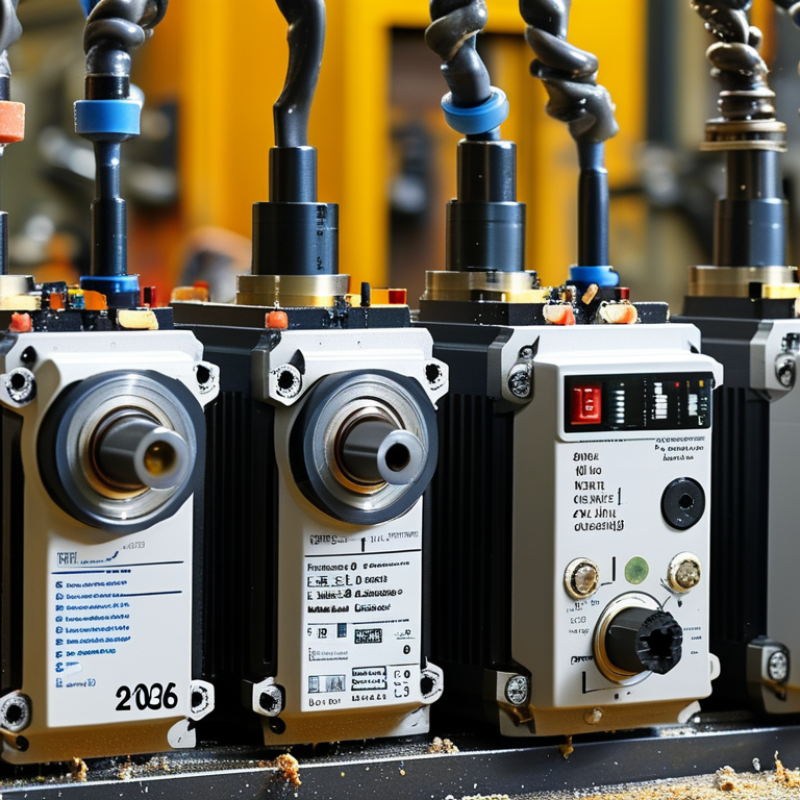
How to Choose a CNC Motor Controller in 2026?
A CNC motor controller is the machine’s motion coordinator. It converts digital commands into timed electrical pulses for each motor. Those pulses control position, speed, direction, and acceleration. The Cnc Controller also reads feedback from encoders, when available. This helps correct missed movement before a small error becomes a ruined part. In practice, a controller affects cut quality as much as the spindle or frame.
Start with motor compatibility. Check voltage, continuous current, peak current, and control signal type. A controller rated too low may overheat during long aluminum cuts. Excess capacity can also increase cost without improving accuracy. Closed-loop feedback is useful for demanding work, but it adds wiring and setup effort. I have seen installations fail because the motor matched electrically, but not mechanically.
Look for smooth interpolation, reliable communication, and clear diagnostic indicators. A good controller should handle emergency stops and limit switches without hesitation. Test thermal performance inside the real control cabinet, not only on a workbench. Dust, vibration, and poor ventilation change the result. Software support matters too, especially when firmware updates affect tuning or safety functions. Documentation should explain fault codes in plain language. No setup is flawless. Even experienced users should verify grounding, cable routing, and acceleration settings before production. A careful trial cut often reveals more than a specification sheet.
Choosing a CNC motor controller in 2026 requires more than checking maximum power. Compare rated current, peak current, voltage range, and continuous duty performance. A controller may survive a short overload but fail during a long aluminum-cutting cycle. Check feedback compatibility, encoder resolution, communication protocol, and response bandwidth. These specifications directly affect positioning accuracy, surface finish, and alarm recovery.
A Fanuc Cnc Controller may appear suitable, but compatibility should never be assumed from the product name alone. Verify motor phase requirements, feedback signals, connector wiring, and parameter access. I once selected a controller with excellent peak torque, yet its thermal limit caused nuisance shutdowns after two hours. That assumption was wrong. Also inspect diagnostic functions, firmware update methods, and replacement availability. Reliable service matters when a machine is producing parts every day.
Tips: Request test data, not only brochure ratings. Compare continuous torque at your actual spindle speed. Check cabinet temperature with the door closed. Leave capacity for future tooling changes. Review tuning software before purchase, because difficult setup can erase the benefit of advanced hardware. Keep a record of tested parameters. Small details matter.
| Specification | Entry-Level Stepper Controller | Industrial Stepper Controller | Closed-Loop Stepper Controller | Servo-Oriented CNC Controller |
|---|---|---|---|---|
| Typical CNC Use | Small routers, engravers, desktop mills, and light-duty 3-axis machines | Medium-duty routers, mills, plasma tables, and production machines | Machines requiring stall detection, position verification, and improved reliability | High-speed milling, turning, multi-axis machining, and demanding production work |
| Supported Motor Type | 2-phase open-loop stepper motors | 2-phase or 3-phase stepper motors, depending on the drive architecture | Stepper motors with incremental encoder feedback | AC or DC servo motors with encoder feedback |
| Typical DC Bus Voltage | 24–48 VDC | 48–80 VDC | 24–80 VDC | 160–400 VDC internal bus, depending on the motor and drive system |
| Continuous Output Current | 2–5 A per axis | 4–8 A per axis | 3–8 A per axis | 5–20 A per axis, matched to the servo motor rating |
| Peak Output Current | Up to 7 A per axis | Up to 12 A per axis | Up to 12 A per axis | Typically 150%–300% of rated current for short acceleration or overload periods |
| Microstepping Resolution | Up to 1/16 or 1/32 step | Up to 1/64 or 1/128 step | Up to 1/128 step, subject to encoder and control-loop settings | Electronic interpolation commonly equivalent to 1,000–10,000 command counts per motor revolution |
| Position Feedback | None; position is inferred from commanded pulses | Usually none; external limit and home switches are supported | Incremental encoder, commonly 500–5,000 pulses per revolution | Incremental or absolute encoder, commonly 17–23 bits for high-resolution motion control |
| Maximum Command Pulse Frequency | 100–250 kHz | 250–500 kHz | 250–500 kHz | 500 kHz–4 MHz, or network-based cyclic position commands |
| Positioning Capability | Suitable for moderate speed and low-to-medium accuracy requirements | Suitable for general machining when the load is predictable | Improved reliability because following errors and stalls can be detected | Best choice for high acceleration, high speed, and precise contouring |
| Typical Speed Range | 300–1,000 rpm motor speed, depending on load and supply voltage | 600–1,500 rpm motor speed, depending on motor inductance and torque demand | 500–1,500 rpm with closed-loop correction | 1,500–6,000 rpm or higher, depending on the servo motor and mechanical system |
| Control Interfaces | Step/direction, enable, limit inputs, and basic relay outputs | Step/direction, enable, fault output, limit inputs, and analog or relay I/O | Step/direction, encoder input, alarm output, and diagnostic I/O | Pulse/direction, analog command, or real-time industrial Ethernet or fieldbus |
| Motor Tuning | Basic current and microstep settings | Current, decay, acceleration, and resonance settings | Current, position-loop, encoder, and following-error settings | Auto-tuning plus current, velocity, position, notch-filter, and feed-forward parameters |
| Protection Functions | Overcurrent, overtemperature, undervoltage, and short-circuit protection | Overcurrent, overvoltage, overheating, short circuit, and motor phase-loss protection | All standard protections plus encoder fault and excessive position-error detection | Overcurrent, overvoltage, overload, overspeed, encoder fault, regenerative braking, and emergency-stop monitoring |
| Regenerative Braking | Usually limited; external braking components may be required | Basic braking support or external braking resistor connection | Available on selected drive designs | Normally supported with braking resistors or regenerative energy units |
| Cooling Method | Natural convection or small integrated fan | Natural convection, fan cooling, or a metal mounting plate | Fan or conduction cooling, depending on continuous current | Forced-air or cabinet cooling is commonly required at higher power levels |
| Operating Temperature | Typically 0°C to 40°C | Typically 0°C to 50°C | Typically 0°C to 50°C | Typically 0°C to 55°C, subject to derating and cabinet ventilation |
| Electrical Isolation | Basic isolation; verify input and output isolation before installation | Optically isolated control inputs are commonly preferred for industrial cabinets | Isolated step/direction and encoder interfaces are recommended | Galvanically isolated control, encoder, and communication interfaces are strongly recommended |
| EMC and Noise Control | Requires short motor cables, proper grounding, and cable separation | Typically includes shield termination guidance and stronger filtering provisions | Requires careful encoder shielding and separation from motor power cables | Requires shielded motor and feedback cables, cabinet bonding, filtering, and correct grounding |
| Best Selection Priority | Low cost, simple wiring, compact size, and moderate performance | Higher current capacity, thermal margin, reliability, and industrial I/O | Feedback, stall prevention, fault reporting, and stable performance under changing loads | Dynamic response, contour accuracy, fast settling, network synchronization, and safety integration |
Note: The values shown are representative engineering ranges for comparison. Final selection should be based on motor rated current, inductance, load inertia, supply voltage, required acceleration, machine-axis resolution, duty cycle, cabinet temperature, feedback type, and applicable electrical safety requirements.
Choosing a CNC motor controller in 2026 starts with identifying the motor, not the machine brand. A stepper motor needs controlled pulse signals, suitable current limits, and enough torque at low speed. A servo motor requires encoder feedback, accurate tuning, and protection against following errors. Closed-loop steppers sit between both types, but their feedback systems still need compatible controller inputs.
Check the motor’s rated voltage, continuous current, peak current, encoder type, and connector layout. A controller that accepts pulse-and-direction signals may not support a high-speed industrial communication bus. For example, a 400-watt servo with a 2,500-line encoder can behave poorly when the feedback settings are wrong. The machine may vibrate, lose position, or stop with an alarm. Fagor Cnc Controller should therefore be evaluated by its motor interface, feedback support, and tuning range, rather than its name alone.
Tips: Match current before torque. Confirm encoder compatibility. Measure twice. Keep cable shielding and grounding consistent. Test one axis at low speed before full-load cutting. Watch temperature after thirty minutes; an oversized controller can still create unstable tuning. One detail is easy to miss: some motors list peak torque, while the controller is rated for continuous output. That comparison can mislead you. Also, real installations are rarely perfect. Old wiring, unclear motor labels, or incomplete manuals may require careful testing and documentation.
Choosing a CNC motor controller in 2026 starts with a compatibility audit, not a feature list. Check motor voltage, continuous current, peak current, feedback type, and connector layout. A controller must match the motor’s electrical demands with enough safety margin. A 48-volt motor system may fail under a controller rated only for 24 volts. Review stepper, servo, or closed-loop requirements carefully. Mechanical details matter too. Confirm mounting space, cooling airflow, cable shielding, and emergency-stop integration. I have seen promising installations stall because one connector pinout was assumed, not verified.
Software compatibility deserves equal attention. Confirm operating-system support, communication protocol, pulse frequency, encoder resolution, and configuration tools. Ask whether the controller accepts the machine’s command format without an external converter. Test homing, limit switches, feed-rate changes, and fault reporting before production. A clean bench test can expose timing errors during slow setup. Keep firmware versions documented. They change. Check update recovery procedures, because a failed update can interrupt commissioning. Some manuals appear clear, yet omit unusual cable or grounding conditions. Treat missing data as a question, not permission to guess.
Tips: Create a compatibility table before purchase. Record every voltage, connector, protocol, and software version. Request wiring diagrams and test files from the supplier. Leave spare current capacity, but avoid oversized hardware without thermal calculations. Run a short trial cut using conservative settings. Then inspect noise, temperature, position accuracy, and alarm logs. Recheck everything. Small assumptions become expensive repairs.
Choosing a CNC motor controller starts with safety, not maximum speed. A Delta Cnc Controller should support dependable emergency stopping and clear fault reporting. Look for safe torque interruption, protected inputs, and separate limit-switch channels. These features help prevent unwanted motion when a sensor fails. Check whether the controller records overcurrent, overheating, and communication errors. Useful diagnostics reduce guesswork beside a noisy machine. Confirm that wiring terminals are clearly labeled and physically protected.
Reliability depends on more than a strong enclosure. Examine thermal management, vibration resistance, grounding guidance, and stable operation during long cutting cycles. A controller should recover predictably after a power interruption. It should not restart motion without deliberate operator action. Test the system with the actual motor, cable length, load, and cooling conditions. Laboratory specifications can look impressive. Workshop behavior may differ.
Control quality also matters for surface finish and tool life. Prioritize smooth acceleration, accurate speed regulation, adjustable current limits, and responsive feedback support. Real-time status should be visible through a simple interface. Complex menus can slow troubleshooting. I would also check service documentation, firmware update procedures, and replacement availability before purchasing. No checklist is perfect. A rushed test can hide intermittent faults, especially when the cabinet warms after several hours. Record temperatures, alarms, stopping distances, and positioning errors during practical trials.
How to Choose a CNC Motor Controller in 2026?
When comparing CNC motor controllers in 2026, the purchase price is only the opening line. A low-cost unit may require separate cables, filters, cooling, or replacement connectors. I calculate the first-year cost before choosing. For a small workshop, installation time can cost more than the controller itself. Keep records. Ask suppliers for warranty terms, repair procedures, and typical response times. Support should be measurable, not just promised.
I also test how clearly the technical documents explain wiring, alarm codes, and tuning procedures. Reliable documentation reduces mistakes during commissioning. Remote support can help, but it cannot replace local repair options or available spare parts. Check whether replacement boards can arrive within your production schedule. I once ignored this detail and lost several working days waiting for a simple interface module. That experience changed my purchasing checklist.
Long-term expandability deserves equal attention. Confirm the controller’s capacity for additional axes, encoder feedback, safety inputs, and network communication. Leave physical and electrical space for future upgrades. A system that fits today may become restrictive after one new machine tool. Firmware compatibility matters too. Ask how updates are tested and reversed if performance changes. Some specifications look impressive, yet practical integration remains unclear. Request a sample configuration and calculate cabinet space, power demand, and training hours before approving the order.
The chart compares three controller categories using a normalized 1–5 evaluation model. Higher scores indicate better performance. Cost efficiency reflects the expected three-year ownership cost, while support readiness considers documentation, diagnostics, firmware maintenance, and service accessibility.
Entry-level USB controllers generally minimize initial spending, industrial Ethernet controllers provide a stronger balance of reliability and support, and modular real-time Ethernet controllers offer the greatest long-term expandability for multi-axis machines, automated tool changers, feedback devices, and synchronized motion systems.
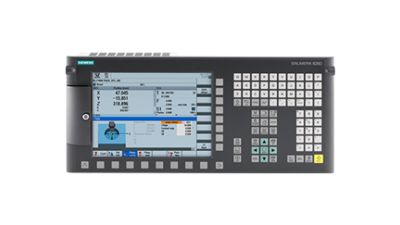
Recent consulting and market research analyses indicate that the CNC industry is moving toward compact, integrated, and digitally connected platforms. Manufacturers increasingly seek equipment that can support flexible job-shop production, shorten setup times, improve operator access, and maintain consistent quality across milling, turning, and grinding applications. Demand is also being influenced by labor shortages, customized production, and the need for efficient data use on the shop floor. In this environment, panel-based CNC systems are gaining attention because they combine essential control functions in a space-saving design.
A modern compact CNC solution integrates CNC, PLC, operating, and axis control within one unit, reducing cabinet complexity and simplifying machine construction. Its horizontal or vertical panel format allows installation in various operator-console layouts, while advanced programming functions support a wide range of global machining requirements. For standardized milling equipment, this architecture can provide precise motion control, streamlined workflows, and easier operation for both experienced machinists and newer personnel. As manufacturers pursue smarter, more adaptable production models, compact CNC platforms can help machine builders balance functionality, usability, and efficient use of factory space.
: Check the motor’s rated voltage, continuous current, and peak current. The controller must provide compatible pulse-and-direction signals. Test low-speed torque before cutting.
A servo needs encoder feedback, accurate tuning, and following-error protection. Confirm the encoder type and resolution before connecting it. Wrong settings can cause vibration.
They combine stepper operation with feedback correction. However, the controller still needs compatible feedback inputs. “Closed-loop” does not guarantee compatibility.
Review voltage, continuous current, peak current, encoder details, and connector layout. Match current before comparing torque. Peak torque can create a misleading comparison.
Choose emergency stopping, safe torque interruption, protected inputs, and separate limit-switch channels. Clear fault messages also matter. Stopping must be deliberate.
Test the actual motor, cable length, load, and cooling conditions. Check thermal behavior during long cutting cycles. Laboratory ratings may not reflect workshop performance.
Look for smooth acceleration, stable speed regulation, adjustable current limits, and responsive feedback. These features can support better surface finish and tool life. Menus should not slow troubleshooting.
Run one axis at low speed first. Record alarms, temperature, stopping distance, and positioning errors. Check temperature again after thirty minutes. I might still miss an intermittent fault.
Choosing the right Cnc Motor Controller in 2026 is essential for achieving accurate motion, stable performance, and efficient CNC operation. The controller translates software commands into electrical signals that regulate motor speed, torque, direction, and positioning. Key specifications to compare include voltage and current ratings, microstepping capability, operating temperature, response speed, feedback support, and protection against overload or overheating. The controller should also match the motor type, such as stepper, servo, or other compatible systems, while supporting the machine’s power supply and mechanical requirements.
Compatibility with the CNC control system, communication interfaces, operating software, and available drivers is equally important. Buyers should prioritize emergency-stop support, fault detection, thermal protection, reliable wiring options, and precise control functions. Finally, evaluate the total cost rather than only the purchase price, including installation, maintenance, technical support, replacement availability, and future expansion. A well-selected controller can improve productivity, simplify upgrades, and provide dependable performance throughout the machine’s service life.