Picking out the right Siemens Servo Drive for your automation setup can actually be pretty tricky. I mean, Dr. Michael Schmidt, who’s pretty much an automation tech guru, once said, “Choosing the right drive is key to getting the best performance and efficiency.” That really hits home, right? It just shows how important it is to make well-informed choices when it comes to servo drives.
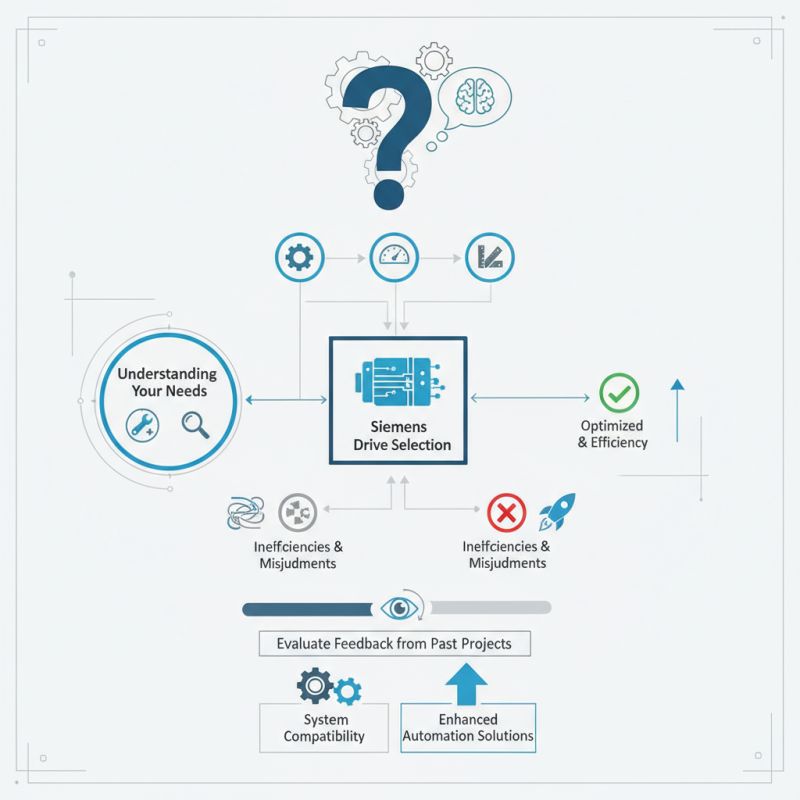
Basically, the process boils down to understanding what your system needs—like, what kind of load you’re dealing with, the speeds, how precise you need things to be, all that. If you pick the right Siemens Servo Drive, it could make a real difference in how productive your setup is. But, on the flip side, messing up can cause some serious inefficiencies. A lot of mistakes happen because folks don’t really have a good grip on what their specific application demands.
Another thing to keep in mind is to review feedback from past projects. It’s easy to overlook how important system compatibility is. Each Siemens Servo Drive has its own specs, and those need to match up properly with your equipment. Looking back at what worked—or didn’t—before can save you from making the same mistakes again and help you make smarter choices down the line, ultimately leading to better automation solutions.
Understanding Siemens Servo Drives and Their Applications
Siemens servo drives play a vital role in modern automation. These drives optimize motion control in various applications, such as robotics and CNC machines. Research indicates that the global servo drive market is projected to grow at a CAGR of 6.9% from 2021 to 2026. This growth demonstrates the increasing reliance on precise and efficient systems.
Applications of Siemens servo drives extend beyond basic automation. Industries utilize these systems to enhance productivity and reduce downtime. For instance, packaging lines often use servo drives for high-speed operations. However, miscalculating the torque requirements can lead to inefficiencies. It's essential to analyze load characteristics thoroughly to prevent unexpected performance issues.
Considering alternatives like Fanuc Servo Drive can also offer valuable insights. These drives provide robust solutions and can complement Siemens offerings in some scenarios. Ultimately, selecting the right servo drive requires careful assessment of specific operational needs and potential system integration challenges. This approach ensures optimal performance and reliability across various applications.
Key Factors to Consider When Selecting a Servo Drive
Selecting a servo drive for automation can be complex. Key factors must guide your decision. One vital consideration is the load requirements. Knowing the specific torque and speed needed for your application shapes the right choice. Different drives handle varying loads differently, impacting performance.
Another critical element is compatibility with existing systems. Ensure your chosen servo drive can integrate smoothly with current equipment. A mismatch may lead to inefficiencies. Additionally, assess your control interface options. Some applications demand a specific type of communication protocol, so identifying this early on saves time.
Lastly, evaluate the reliability and support of the drive manufacturer. Research customer reviews and expert opinions. A trusted brand often indicates durability and service quality. While it’s tempting to choose based on price, consider long-term implications. Investing wisely in a Delta Servo Drive can enhance overall system efficiency. Reflect on these factors, and you'll be better positioned to make informed decisions.
Evaluating Motor Compatibility with Siemens Servo Drives
Selecting the right servo drive for automation requires careful consideration of motor compatibility. Understanding the motor specifications is crucial. Each motor has distinct characteristics: torque, speed, and size. Evaluate these factors against the servo drive you'll use. An incompatible match can lead to inefficiencies.
Compatibility includes electrical ratings and control systems. Servos need to match voltage and current ratings of the motor. A mismatch here can cause overheating or failure. Also, consider feedback systems. The right communication protocol is vital for performance. Digital or analog signals can significantly impact control precision.
It’s also worth reflecting on your application needs. Not all drives fit every motor type. Sometimes, a drive may seem ideal but may lack performance in specific scenarios. Testing various combinations can reveal nuances that aren’t immediately apparent. Keep records of performance data to guide future selections.
Assessing Control Requirements for Automation Systems
When selecting a servo drive for automation, control requirements are crucial. Understanding motion control needs ensures optimal performance. Factors include speed, torque, and precision. An application needing high-speed operations may benefit from a compact servo drive. Look for integrated features that simplify installation and maintenance.
Real-world applications vary widely. Some systems require smooth acceleration and deceleration. Others focus on tight positioning accuracy. Delta Ac Servo Drives, for instance, can be fine-tuned for such tasks. However, it’s essential to assess whether the chosen drive meets specific operational demands. Consider environmental factors too. Operating temperature and space constraints may influence decisions.
Gathering data from similar applications can help guide choices. Seek input from industry experts. Comparing different drives can also reveal hidden limitations. Some drives might excel in one area but fall short in another. This reflection can lead to improved system performance in automation projects. Focus on adaptability and scalability to future-proof your system.
Choosing between Direct and Indirect Drive Solutions
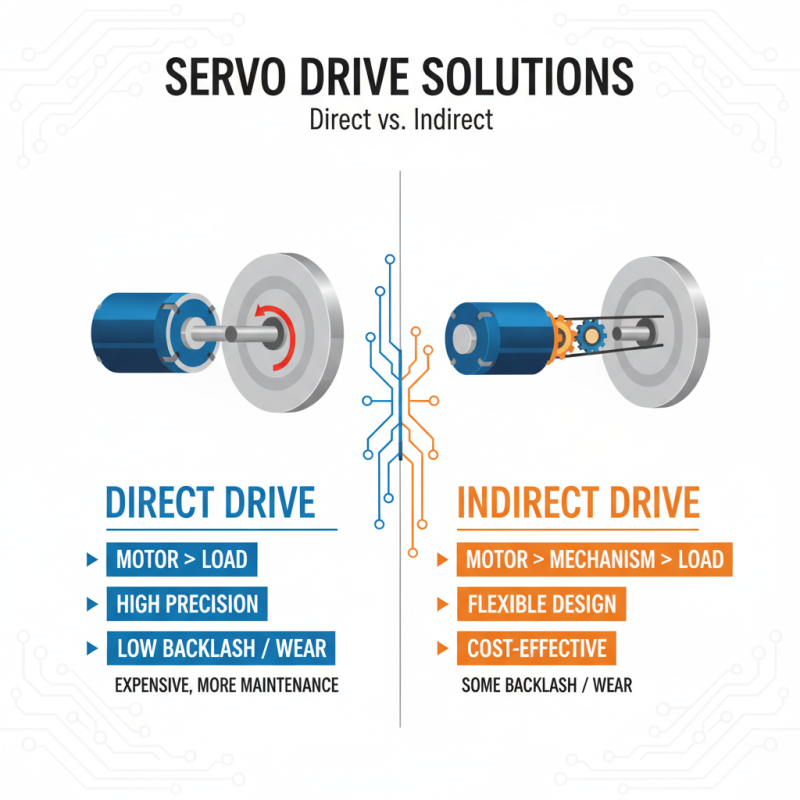
When selecting a servo drive for automation, understanding the differences between direct and indirect drive solutions is crucial. Direct drive systems connect the motor shaft directly to the load. This setup minimizes the backlash and mechanical wear. They provide high precision and responsiveness, making them ideal for applications requiring tight control. However, they can be more expensive and may require more maintenance.
On the other hand, indirect drive solutions utilize gears or belts between the motor and the load. This approach can offer more flexibility in applications with varying load requirements. Indirect drives may be less precise, but their versatility can be beneficial in certain settings. They often come at a lower initial cost, posing a compelling option for budget-conscious projects.
While both systems have their merits, it’s essential to reflect on your specific needs. Consider factors like load dynamics, space constraints, and budget. What works well in one scenario may not be suitable for another. Balancing precision with cost is often challenging, yet necessary for optimizing your automation process. Make informed decisions based on careful consideration of these factors.
Understanding Feedback Device Options for Precision Control
When selecting a servo drive, feedback devices play a critical role in ensuring precision control. These devices inform the servo system of the motor's position, speed, and direction. Industry studies show that a significant 82% of automation errors stem from inaccurate feedback systems. Choosing the right feedback device can make a profound impact on performance.
Many feedback options are available. Encoders, resolvers, and linear sensors each serve distinct needs. Encoders are favored for their high accuracy and speed, especially in applications requiring rapid adjustments. In contrast, resolvers provide robustness in harsh environments but may lack the precision of encoders. For example, the encoder's resolution can be as high as 100,000 counts per revolution, enhancing performance significantly over traditional systems. Yet, selecting an encoder that fits your specific application is essential.
It’s crucial to analyze your specific needs closely. The choice of feedback device directly influences the system's effectiveness. Missteps in this process can lead to costly downtimes—an unfavorable scenario for operational efficiency. Automation systems like the Mitsubishi Servo Drive may benefit from an integrated feedback loop, ensuring peak performance. Balancing precision and operational conditions is essential for optimal automation results.
How to Select Servo Drive for Your Automation Needs? - Understanding Feedback Device Options for Precision Control
| Drive Type |
Feedback Device |
Precision Level |
Application Area |
Cost Estimate |
| AC Servo Drive |
Incremental Encoder |
High |
Robotics, CNC Machines |
$500 - $1500 |
| DC Servo Drive |
Absolute Encoder |
Medium |
Automated Guided Vehicles, Small Machinery |
$300 - $800 |
| Step Servo Drive |
Rotary Encoder |
Low to Medium |
3D Printers, Small Automation Systems |
$200 - $600 |
| Brushless Servo Drive |
Synchronous Encoder |
Very High |
High-Precision Machinery, Aerospace |
$800 - $2500 |
Analyzing Budget Constraints and Long-Term Costs of Servo Systems
When choosing servo systems for automation, budget constraints play a crucial role. You need to balance initial investment and long-term costs. A lower-priced option may seem attractive, but hidden expenses can arise.
Maintenance, energy consumption, and potential downtimes can quickly escalate your total cost of ownership.
Tip: Conduct a total cost analysis. Factor in not only the purchase price but also operational costs over time. This will give a clearer picture of your investment.
Long-term reliability must also be considered. A cheaper drive may not offer the lifespan you expect. Components may wear out faster, leading to higher replacement costs. It's wise to research warranty periods and support options. Ultimately, selecting the right drive goes beyond the initial price.
Tip: Review user experiences and testimonials. Engaging with a community can unveil potential drawbacks and advantages that may not be in the product specifications. Consider asking for case studies from your suppliers.
FAQS
: Siemens servo drives optimize motion control in applications like robotics and CNC machines.
The global servo drive market is expected to grow at a CAGR of 6.9% from 2021 to 2026.
They enhance productivity and reduce downtime, especially in high-speed operations like packaging lines.
Miscalculating torque can lead to inefficiencies and unexpected performance issues in automation systems.
Careful assessment of operational needs and potential integration challenges ensures optimal performance and reliability.
Balance initial investment with long-term costs, including maintenance and energy consumption.
A lower-priced drive may have hidden costs and shorter lifespan, leading to higher replacement expenses.
Engaging with a community can reveal potential drawbacks and advantages not mentioned in specifications.
Conduct a total cost analysis including all operational costs over time next to the purchase price.
Long-term reliability is crucial; components that wear out quickly can lead to unforeseen costs and downtime.
Conclusion
Selecting the appropriate Siemens Servo Drive for automation needs involves a comprehensive understanding of their applications and functionalities. Key factors to consider include the compatibility of the motor, which ensures optimal performance, and the specific control requirements of the automation system. Evaluating whether to choose a direct or indirect drive solution can significantly impact the system's efficiency and effectiveness.
Additionally, it's crucial to understand the options available for feedback devices that enhance precision control, as well as to analyze budget constraints and the long-term costs associated with implementing servo systems. By thoroughly assessing these elements, one can make an informed decision that aligns with both current needs and future plans for automation.