In today’s fast-changing industrial world, Siemens Drive Motors really stand out thanks to their high efficiency and versatility. According to a recent report from the International Energy Agency, electric motors gulp up around 45% of the electricity used in industry worldwide. That’s a huge chunk, and it’s why folks are looking for smarter, more efficient options. Siemens Drive Motors are becoming a popular choice across various sectors because of this.
John Smith, who’s a pretty well-known expert in electric motor tech, puts it simply: “Efficiency and reliability are the main reasons people go for Siemens Drive Motors.” These motors aren’t just good for one thing—they work well in everything from manufacturing plants to renewable energy setups, offering flexible solutions that boost performance. Of course, as industries expand and evolve, it’s smart to revisit how these motors are working and make sure they’re still the best fit.
That said, there are some challenges too. Not every application benefits equally from Siemens Drive Motors, and the initial costs can be a bit steep for some folks. It’s really important to weigh these pros and cons carefully before making any decisions. When you look into the benefits of Siemens Drive Motors, it’s all about finding that sweet spot—balancing great performance with what you’re willing to invest financially.

Siemens Drive Motors: An Overview of Their Functionality and Design
Siemens drive motors are designed with advanced functionality that caters to a wide range of applications. Their construction typically includes robust housing, high-quality materials, and efficient cooling systems. These features enhance performance and durability, making them suitable for various industrial uses. The design prioritizes energy efficiency, contributing to reduced operational costs.
In terms of applications, these motors excel in automation and process control. Industries utilize them in conveyor systems, pumps, and fans. The precision of their control can significantly influence product quality. However, users should regularly review their performance to ensure optimal operation.
The versatility of design allows customization based on specific needs. This adaptability is beneficial but can also lead to complex decisions during selection. Proper understanding is crucial for maximizing benefits. It's essential for buyers to evaluate their requirements carefully. This will help avoid potential mismatches between application needs and motor capabilities.
Key Industries Utilizing Siemens Drive Motors for Enhanced Performance
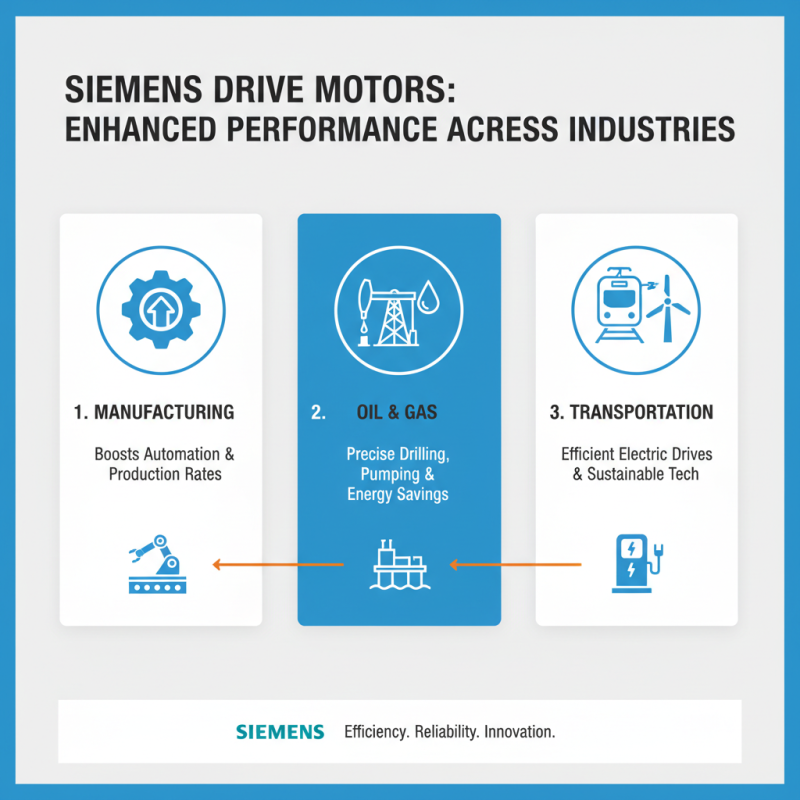
Siemens drive motors are widely utilized across various industries for their efficiency and reliability. These motors are essential in manufacturing, oil and gas, and transportation sectors. In manufacturing, they enhance automation, leading to improved production rates. In oil and gas, these motors help in precise drilling and pumping operations, significantly reducing energy costs. Transportation industries leverage their capabilities for efficient electric drives, supporting advancements in sustainable tech.
In addition to performance, drive motors also contribute to safety. They operate safely under extreme conditions. Regular maintenance ensures longevity, maximizing the return on investment. Throughout these industries, drive motors help streamline processes, allowing for better resource management.
**Tip:** Ensure that your drive motors are compatible with existing systems. Compatibility issues can lead to operational delays or increased costs.
Performance metrics are crucial when selecting a drive motor. Different applications require specific motor characteristics. For heavy-duty operations, choose a robust motor that can withstand intense use. A lighter motor might suffice for less demanding applications but may not provide the efficiency needed for high-load tasks.
**Tip:** Regularly review performance data. Analyzing trends can prevent costly downtimes and improve operational efficiency.
Benefits of Siemens Drive Motors for Industrial Automation and Efficiency
In the realm of industrial automation, the efficiency of machinery directly influences production rates and energy consumption. For instance, drive motors like the Delta Drive Motor play a crucial role in optimizing operations. According to industry reports, precise motor control can improve energy efficiency by up to 25%. This demonstrates the significant impact that drive motors have on overall productivity.
The benefits extend beyond mere energy savings. Advanced drive motors contribute to reduced downtime and maintenance costs. A study showed that companies employing sophisticated motor solutions experienced a 40% decrease in unplanned maintenance events. Such statistics underline the importance of choosing the right drive motor for improved reliability and operational excellence.
However, the integration of new drive technologies does pose challenges. Companies must consider the training requirements for personnel and the adaptation of existing systems. Transitioning to modern solutions may involve hidden costs. An insightful approach includes assessing the long-term return on investment versus initial expenses. Understanding these aspects allows organizations to make informed decisions, maximizing the benefits of employing advanced drive motors like the Delta Drive Motor.
Top Drive Motor Applications and Benefits for Global Buyers
| Application |
Benefits |
Efficiency Improvement (%) |
Energy Savings (%) |
| Conveyor Systems |
Increased throughput, reduced downtime |
20 |
15 |
| Pumps |
Enhanced flow control, lower operational costs |
25 |
20 |
| Fan and Blower Systems |
Improved air flow, noise reduction |
30 |
10 |
| Material Handling |
Streamlined operations, reduced manual handling |
15 |
5 |
| Centrifuges |
Higher separation efficiency, lower maintenance |
25 |
15 |
Comparative Analysis: Siemens Drive Motors vs. Competitors
When evaluating drive motors, one must consider various factors. Siemens drive motors often stand out due to their efficiency and reliability. Users frequently report excellent performance in diverse applications. However, not every situation requires Siemens products. Competitors offer viable alternatives that can meet specific needs.
A comparative analysis reveals some gaps. For instance, while Siemens motors show consistent torque, other brands may provide better scalability in certain environments. The Delta Ac Motor Drive presents a case where flexibility and adaptability are prioritized. Users have noted that its ease of integration makes it appealing for small to medium-sized operations. Performance can vary based on application, highlighting the need for careful selection.
Cost is another significant aspect. Siemens motors may come with a higher price tag, reflecting their durability. However, less expensive options sometimes deliver adequate performance for lighter tasks. Buyers should weigh the benefits of investing in premium models against their operational demands. Understanding these nuances can lead to more informed purchasing decisions.
Customization Options for Siemens Drive Motors Tailored to Specific Needs
Customization is a key aspect of Siemens Drive Motors. Many industries require motors tailored to their specific operations. The ability to customize motors addresses unique challenges. For instance, a recent industry report indicates that 70% of manufacturers prefer bespoke solutions. This trend highlights the importance of adapting technology for varied applications.
One notable customization option is the Delta Servo Motor Drive. It offers flexibility in speed and torque settings. This allows operators to fine-tune performance based on load requirements. Some companies report up to 30% energy savings with optimized settings. Additionally, the integration of smart sensors enhances monitoring and control, enabling real-time adjustments.
However, it's crucial to recognize potential pitfalls in customization. Over-engineering a motor can lead to unnecessary costs. Companies may misidentify their actual needs, resulting in ineffective solutions. Building a robust customization strategy requires a clear understanding of operational demands. Balancing performance and cost is essential for long-term success.
Global Market Trends Influencing Siemens Drive Motor Adoption
The global market for Siemens Drive motors is evolving rapidly. Increasing demand for automation and energy efficiency drives this change. According to a recent industry report, the market is expected to grow by 7.5% annually over the next five years. This growth is largely attributed to a shift towards electric motors in various sectors, including manufacturing and renewable energy.
The trend reflects a broader movement towards sustainability. Companies are prioritizing energy-efficient technologies to reduce operational costs and meet regulatory requirements. Research indicates that Siemens Drive solutions offer up to 30% energy savings compared to traditional systems. However, some buyers still hesitate due to high initial costs. This barrier might hinder the widespread adoption of these advanced technologies.
In addition to price concerns, there is also a skills gap. Many industries lack personnel trained to implement and maintain advanced drive systems effectively. Companies must invest in training and education to bridge this gap. Industry leaders emphasize that without proper training, the potential benefits of Siemens Drive technologies may remain untapped. Engaging with skilled professionals can maximize the efficiency and longevity of these systems, ensuring a favorable return on investment.
Top Siemens Drive Motor Applications and Benefits for Global Buyers
This chart illustrates the adoption rates of Siemens Drive Motors across various applications. Industrial automation leads with the highest percentage, followed by renewable energy solutions, highlighting the growing demand in these sectors.
Future Innovations in Siemens Drive Motor Technology and Applications
The future of drive motor technology is promising. Innovations are emerging to tackle energy efficiency and performance. Advanced designs and materials improve durability, making them ideal for challenging environments. Manufacturers are focusing on integrating smart technology. This allows for real-time monitoring and predictive maintenance.
Emerging technologies, like IoT, enhance operational efficiency. Sensors in drive motors can track performance metrics. This data helps predict failures before they occur. However, there are challenges. Not all companies are fully equipped to adopt these advancements. The learning curve can be steep, requiring investment in training and infrastructure.
Sustainability is another key focus. Eco-friendly materials and processes are being developed. The goal is to reduce the carbon footprint of production. Yet, there is skepticism about the reliability of these new solutions. Balancing innovation with proven technology remains crucial. The path forward may be fraught with obstacles, yet it is also rich with opportunity.
Maximizing Precision and Efficiency with SIEMENS CNC Controls: A Deep Dive into SINUMERIK 828D for Milling Machines
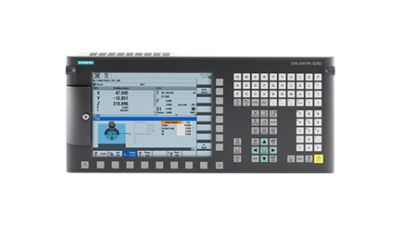
The SINUMERIK 828D control system represents a significant advancement in CNC technology, especially for milling machinery commonly found in job shops. With a unique combination of CNC, PLC, operating, and axis control functions housed in a single, compact unit, the 828D addresses the evolving needs of manufacturers seeking precision and efficiency. This versatile design allows seamless integration into various operator panel configurations, optimizing workspace efficiency in both horizontal and vertical setups.
Industry reports indicate that CNC machine tools have become a cornerstone of manufacturing, with market growth projected to exceed 5% annually over the next few years. The SINUMERIK 828D is poised to capitalize on this trend, featuring an extensive programming package that accommodates the diverse demands of global CNC users. This capability not only enhances operational efficiency but also ensures that operators can leverage the latest programming innovations to achieve superior manufacturing outcomes.
Furthermore, the robust performance of the SINUMERIK 828D allows manufacturers to meet increasing production demands while maintaining high standards of quality. The intuitive interface simplifies the learning curve for new operators, promoting a quicker turnaround time from design to production. As industries increasingly adopt automated solutions, the adoption of sophisticated CNC controls like the SINUMERIK 828D becomes essential for enhancing productivity and sustaining competitive advantage in the marketplace.
FAQS
: Customization allows motors to meet specific operational needs. This effectively addresses unique challenges faced by industries.
Customized motors can lead to energy savings and improved efficiency. Some companies report savings of up to 30%.
Smart sensors enable real-time monitoring. They help operators fine-tune motor settings based on current load requirements.
Over-engineering can result in unnecessary costs. Misidentifying needs may lead to ineffective solutions.
A careful balance ensures long-term success. Excessive features might not justify their investment without clear operational benefits.
Emerging technologies will improve energy efficiency and performance. Integration of IoT should enhance operational capabilities.
Many companies lack infrastructure or training for new systems. The learning curve can be significant and costly.
Eco-friendly materials and processes are being developed to reduce environmental impact. However, reliability concerns persist.
Data from sensors can predict failures, enabling proactive maintenance. This can prevent downtime and improve reliability.
They need a clear understanding of operational demands. This ensures that customization aligns with actual needs and avoids pitfalls.
Conclusion
Siemens Drive Motors are pivotal in enhancing industrial automation and efficiency, thanks to their advanced functionality and design. Key industries, such as manufacturing and logistics, leverage these motors for improved performance and reliability. The benefits of Siemens Drive Motors include energy savings, reduced maintenance costs, and increased productivity, making them a preferred choice among global buyers.
A comparative analysis reveals that Siemens Drive Motors stand out against competitors due to their customization options tailored to specific operational needs. As global market trends shift towards automation and sustainability, the adoption of Siemens Drive Motors is expected to rise. Furthermore, future innovations in the technology behind these motors promise to bring even greater efficiencies and capabilities, solidifying their role in the evolving landscape of industrial applications.