Picking out the top Delta Servo Motor suppliers in 2026 isn’t just about scanning online prices and going with the cheapest option. You really need to dig a bit deeper—check if the product is genuine, see what kind of tech support they offer, whether they have the stock you need, how their warranty works, and if they’ve got experience integrating these motors into your systems. Delta Electronics is still one of the big players to keep an eye on, especially since their servo systems are designed for precise motion control in stuff like packaging, machine tools, and factory automation. That said, availability can vary a lot depending on where you’re shopping from. Sometimes, a supplier might say they have the product “in stock,” but you might still need confirmation from your region or local distributer, so don’t take it at face value.
This guide takes a look at the usual suspects—Delta Electronics, AutomationDirect, Mouser Electronics, DigiKey, and RS—where getting the right product and support might look a little different depending on who you buy from. It also covers trusted automation distributors and system integrators who can help with everything from figuring out the right motor size and drive setup to handling encoder feedback and getting things up and running smoothly. Little details really do matter. For example, using the right cable length can save you a lot of headaches during installation, and having the right firmware can cut down troubleshooting time. Good documentation is also super important.
When you’re actually making a purchase, make sure you’ve got the current model numbers, voltage specs, torque curves, connector types, and delivery timelines. No single list will be perfect—the market changes, stock levels vary, and regional authorizations can influence things. So, it’s wise to double-check each supplier through official Delta resources and your local sales channels before hitting that ‘buy’ button. Also, practical testing is usually worth it—especially if the motor needs to run smoothly and reliably during long, demanding production runs. Remember, a cheaper price upfront doesn’t always mean lower operating costs in the long run. The best supplier is often the one that offers genuine Delta Servo Motors, responsive tech support, clear terms, and dependable after-sales service once it’s installed—that stuff really counts.

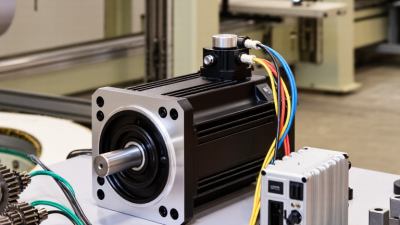
A delta servo motor is a precision drive system used for fast, controlled motion. It combines a motor, encoder, drive, and motion controller. The motor creates rotation, while the encoder reports shaft position in real time. The drive compares actual movement with the commanded position and corrects errors within milliseconds. This closed-loop action helps machines place parts accurately, even during rapid acceleration.
Picture a packaging line moving small cartons. The servo motor may rotate, stop, reverse, and repeat hundreds of times per hour. Its encoder detects a slight position change, such as a few pulses of delay. The drive then adjusts current and speed. This response supports smooth indexing, accurate cutting, and controlled robotic movement. Torque, speed range, encoder resolution, and thermal capacity deserve careful checking. A motor that looks powerful on paper may still perform poorly with an unsuitable gearbox or cable.
Supplier quality matters as much as motor specifications in 2026. Experienced suppliers should provide sizing tools, wiring diagrams, software support, replacement parts, and clear testing data. Ask how they verify vibration, heat, overload response, and communication stability. Field experience often reveals problems that brochures miss. In practice, no setup is perfect. Poor grounding or aggressive tuning can cause noise, hunting, or unexpected stops. I would also question impressive efficiency claims unless independent test conditions are available. Reliable selection means matching the complete servo system to the machine, not choosing a motor by price alone.
A leading Delta Ac Servo Motor supplier is judged by more than catalog size. In factory projects, engineers examine torque curves, encoder resolution, overload capacity, and thermal behavior. The supplier should provide clear datasheets, wiring diagrams, parameter lists, and verified compatibility details. Vague specifications create expensive delays. Real expertise appears when application engineers ask about load inertia, cycle time, gearbox backlash, and ambient temperature. They should explain trade-offs, not simply recommend the highest-rated motor. Small details matter.
Reliability also depends on evidence. Look for documented quality procedures, traceable testing, stable production controls, and consistent inspection records. A credible supplier can share sample test reports and explain vibration, heat, and acceleration testing. Independent certifications can support trust, but certificates alone prove little. Ask how failures are analyzed and how corrective actions are communicated. Response speed matters during commissioning, when a miswired feedback cable can stop a production cell. Practical support should include setup guidance, tuning advice, replacement planning, and accessible technical staff.
A strong supplier also protects long-term performance. It should offer realistic lead times, spare-parts visibility, firmware information, and maintenance training. Local service may reduce downtime, though it does not guarantee deeper expertise. I would test support before signing: send a technical question and assess the reply. Some suppliers appear impressive in presentations but become vague under pressure. That is a warning. Price matters, yet the cheapest motor may cost more through unstable tuning, rejected parts, and lost production hours. Record every assumption before approval.
In 2026, the Delta servo motor suppliers that stand out are not judged by catalog size alone. Strong suppliers provide verified torque curves, encoder specifications, and realistic delivery estimates. Their engineers can explain overload behavior in plain language. That matters when a machine runs twelve hours daily.
A reliable supplier should support sizing before purchase. For example, a Delta 400w Servo Motor may suit a compact conveyor, indexing table, or light packaging axis. However, motor selection depends on inertia, acceleration, duty cycle, and gearbox ratio. Experienced suppliers request these details instead of pushing the fastest sale. They also provide wiring diagrams, parameter guides, and replacement advice. Small details prevent long downtime.
Tips: Ask for a sample calculation and confirm the warranty process. Check whether technical support responds with practical answers. Request test data at your intended speed. One attractive price can hide missing cables, tuning work, or weak after-sales service. I have found that delivery promises sometimes sound stronger than the actual stock situation. Therefore, verify inventory in writing and inspect the connector, brake, and encoder options before ordering. A supplier may appear professional online, yet respond slowly when a real fault appears. That gap deserves attention.
| Evaluation Dimension | 2026 Procurement Benchmark | Why It Matters for Delta Servo Applications | Recommended Evidence to Request | Suggested Weight |
|---|---|---|---|---|
| Motion-control performance | Fast position, speed, and torque loops with stable performance under changing loads | Supports accurate indexing, electronic gearing, tension control, and coordinated multi-axis motion | Published frequency-response data, settling-time test results, and application references | 20% |
| Encoder and feedback capability | At least 17-bit feedback for general automation; higher-resolution options for demanding positioning | Higher feedback resolution can improve low-speed smoothness and positioning repeatability | Encoder resolution, feedback protocol, repeatability specification, and cable compatibility | 12% |
| Network and controller integration | Support for widely used industrial Ethernet or real-time motion networks, depending on machine architecture | Reduces integration effort and enables synchronized operation with PLCs and motion controllers | Supported protocol list, ESI/GSD files, function blocks, API documentation, and interoperability test records | 15% |
| Power and motor range | Low-voltage and 200–240 V AC options, with higher-voltage variants where required by machine size | Allows the same platform approach to cover compact machines through higher-inertia industrial axes | Rated torque, peak torque, overload duration, inertia ratio, duty cycle, and sizing software | 12% |
| Environmental protection | Motor protection commonly targeted at IP65 or higher for exposed machine environments | Helps protect against dust, coolant, and accidental water exposure when correctly installed | IEC 60529 IP rating, permissible temperature range, humidity limits, vibration data, and installation instructions | 8% |
| Functional safety | Safety functions such as Safe Torque Off, with certification appropriate to the machine risk assessment | Can simplify machine safety design and reduce reliance on additional switching hardware | Safety certificates, safety manual, STO parameters, and compliance references to IEC 61800-5-2 or applicable standards | 10% |
| EMC and regulatory compliance | Documented conformity for the target market and installation guidance for conducted and radiated emissions | Improves reliability in electrically noisy factories and supports regulatory approval | Declaration of conformity, EMC test reports, IEC 61800-3 classification, and filter recommendations | 8% |
| Software and commissioning | Free or accessible configuration tools, guided tuning, diagnostics, and parameter backup functions | Shortens commissioning time and helps maintenance teams troubleshoot motion faults | Software availability, tuning workflow, alarm database, simulator, manuals, and training resources | 7% |
| Service, availability, and lifecycle | Regional technical support, spare-parts planning, published lead times, and documented product lifecycle policy | Reduces downtime and helps control total cost of ownership over the machine lifecycle | Warranty terms, service locations, repair process, stock policy, obsolescence notices, and response-time targets | 8% |
| Total Evaluation Weight | 100% | |||
Product range now separates leading servo motor suppliers more clearly than price alone. The International Federation of Robotics recorded 541,302 industrial robot installations worldwide in 2023. This demand favors suppliers offering complete motion platforms, not isolated motors. Strong portfolios usually cover low-inertia, medium-inertia, and high-torque motors. They also include matching drives, cables, encoders, motion controllers, and software. A Delta Servo Motor Drive, for example, should be assessed beside its motor compatibility, network options, and tuning tools.
MarketsandMarkets projects the global servo motors and drives market to reach about USD 18.2 billion by 2028. Suppliers with broader ranges can serve packaging, CNC, electronics, and material-handling equipment from one platform. Look for power ratings from compact sub-400-watt units to several-kilowatt systems. EtherCAT, CANopen, pulse control, and safety functions also reveal practical coverage. Wider is not always better. A catalog may contain many models, yet lack clear sizing charts or regional support. Field testing matters. Check acceleration at the machine’s real load, not only the brochure rating. One overlooked cable length can create noise, heat, or unstable positioning. That is where supplier comparisons become less tidy—and more honest.
This anonymized benchmark compares the product-range coverage typically used when evaluating leading Delta-compatible servo motor suppliers in 2026. The index is scored from 0 to 100 across major product categories; it measures portfolio breadth rather than sales, market share, or supplier performance.
In 2026, leading Delta Servo suppliers serve factories that demand accurate, repeatable motion. Their systems support packaging lines, CNC machines, printing equipment, and electronic assembly. A motor may move a robotic arm by millimeters, hundreds of times per minute. In food processing, sealed designs and easy cleaning matter more than peak speed. In textile plants, stable torque protects delicate threads and reduces material waste.
Warehousing and logistics also use Delta Servo systems for conveyors, sorting units, and automated storage equipment. Medical equipment manufacturers need quiet, controlled movement in pumps, scanners, and laboratory machines. Renewable energy projects may use servo drives for tracking panels or positioning inspection tools. Supplier expertise matters here. Engineers must match motor torque, encoder feedback, duty cycles, and network protocols. A technically impressive system can still fail when heat, dust, or poor tuning is overlooked.
Tips: Ask suppliers for application data, not only catalog ratings. Test acceleration under real loads. Check service response times and spare-part availability. Small details matter. I have seen projects focus heavily on motor speed while ignoring cable routing and cabinet temperature. That mistake can create vibration, alarms, and costly downtime. Buyers should also request commissioning guidance and maintenance records. No supplier fits every industry perfectly, and that is worth admitting before signing a contract.
Selecting the right Delta servo motor supplier requires more than comparing prices or published torque. The International Federation of Robotics reported 541,302 industrial robot installations worldwide in 2023. This growth increases demand for stable motion control, faster support, and reliable replacement parts.
Request measured torque-speed curves, thermal derating data, encoder specifications, and braking performance. Confirm compatibility with your controller, fieldbus, safety functions, and existing cables.
MarketsandMarkets projects the global servo motors and drives market to grow at more than 8% annually through 2029. Buyers should therefore assess long-term supply capacity, not only today’s quotation.
Ask for batch traceability, ISO-certified quality processes, and documented failure analysis. A polished datasheet is not enough.
Check service response with a practical test. Send the supplier a real application profile, including load inertia, duty cycle, ambient temperature, and positioning tolerance. A capable engineering team should return calculations, not generic recommendations.
Review warranty exclusions carefully. Some low-cost offers become expensive after commissioning, tuning, or encoder replacement.
A useful warning: Peak torque can hide poor continuous performance under heat.
Even experienced buyers can overlook cabinet ventilation or cable bending radius. That mistake may appear months later. Independent testing or a pilot installation can expose these weaknesses before full deployment. Evaluate references from similar machines, delivery history, firmware control, and spare-parts availability over several years.
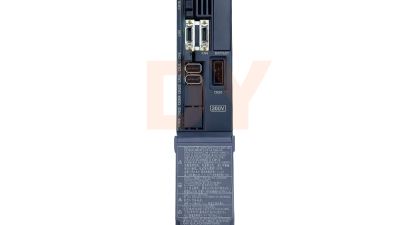
The MDS-D-V1-80 is a single-axis AC servo drive designed for industrial automation systems and CNC machinery. With a rated power output of 4.5 kW, it controls one servo motor and supports accurate, responsive motion control for demanding production environments. Its compact configuration can help simplify cabinet layouts, while its robust design is suitable for continuous operation where stable speed, torque, and positioning performance are important.
Typical applications include CNC machine tools, automated production lines, material-handling equipment, cutting systems, and other machinery that requires controlled rotary movement. The drive can contribute to smooth acceleration and deceleration, consistent motor operation, and improved process repeatability. Its single-axis structure is especially practical when a machine uses an independent motor for a specific spindle or motion function.
When selecting this servo unit, users should first confirm that the motor’s rated power and electrical requirements match the 4.5 kW drive capacity. Compatibility with the machine controller, feedback system, communication interface, installation space, and cooling method should also be checked. The expected load profile, operating speed, duty cycle, ambient conditions, and required positioning accuracy are important factors as well. Proper sizing and parameter configuration can help achieve reliable performance and reduce unnecessary stress on the motor and drive.
A reliable supplier provides torque curves, encoder details, wiring diagrams, and parameter lists. It explains compatibility clearly. Small details matter. Ask how failures are tested, recorded, and corrected.
Check load inertia, cycle time, gearbox backlash, and ambient temperature. Review overload capacity and thermal behavior. Ask about cable length and cabinet temperature. These details can affect vibration and positioning.
Not always. A strong range may include motors, drives, cables, encoders, controllers, and software. However, many models are useless without sizing charts or support. Compare real machine performance, not only catalog ratings.
Practical systems may support EtherCAT, CANopen, pulse control, and safety functions. The correct option depends on the machine architecture. Check controller compatibility before approval. A wide list does not guarantee smooth integration.
These systems support packaging, CNC equipment, printing, electronics, and textile machinery. They also serve conveyors, sorting units, and automated storage equipment. Medical and renewable energy applications may require quieter, controlled movement. Each industry has different environmental demands.
Test acceleration with the machine’s actual load. Measure heat, vibration, positioning stability, and cycle consistency. Do not rely only on brochure speed. The result may be less impressive.
Support should include setup instructions, tuning advice, wiring checks, and technical access. Fast responses matter when feedback cables are miswired. Request replacement plans and spare-part visibility. Test support before signing.
Not necessarily. A cheap motor may create unstable tuning, rejected parts, or production delays. Compare total operating risk, service response, and maintenance needs. I would record every assumption before approval.
This guide explains what a Delta Servo Motor is, how it converts electrical signals into precise motion, and why it is essential for high-speed, accurate automation. It outlines the main qualities of a leading supplier, including product reliability, motion-control performance, technical support, customization options, delivery capability, and long-term service. The article also compares leading suppliers in 2026 according to product range, covering servo motors, drives, controllers, accessories, and integrated systems.
In addition, the guide examines how these suppliers support industries such as manufacturing, robotics, packaging, electronics, machine tools, and material handling. It highlights the importance of matching motor power, torque, speed, feedback systems, environmental protection, compatibility, and total operating cost with the intended application. By using these criteria, buyers can select a dependable Delta Servo Motor supplier that delivers suitable technology, responsive support, stable quality, and strong value throughout the equipment’s service life.