Leave Your Message
0%

China’s industrial automation market keeps growing, sure—but comparing suppliers isn’t as simple as lining up a few names. According to the International Federation of Robotics, China installed 276,288 industrial robots in 2023. That’s more than half of global installations, which says a lot about demand for motion control, servo motors, and Siemens Servo Drive systems.

This guide looks at ten notable Chinese manufacturers and solution providers tied to Siemens-based servo applications. We weighed things like engineering capability, product integration, factory experience, after-sales support, and documented project performance. We’re not assuming every company on the list actually makes Siemens hardware, though. Some are system integrators, distributors, or custom automation specialists. And that distinction? It matters.

Grand View Research and MarketsandMarkets both point to factory automation, robotics, and motion control as areas still growing. But market rankings can be messy. Public revenue numbers are often incomplete, and certification claims don’t always line up from one manufacturer to the next. Before buying, it’s smart to verify Siemens authorization, ISO certification, warranty terms, and technical service coverage.

A dependable supplier should be able to explain drive sizing in plain terms. That means matching motor torque, load inertia, braking requirements, encoder feedback, and cabinet conditions. Good teams can also show commissioning records, wiring diagrams, and real production references. If the documentation is thin, that’s a warning sign.

So the following China Top 10 Siemens Servo Drive Manufacturers list is meant to be practical, not absolute. It highlights companies worth evaluating, while keeping in mind that regional service quality and application experience can shift the final call. The best choice really depends on machine speed, precision, budget, integration scope, and long-term maintenance needs.
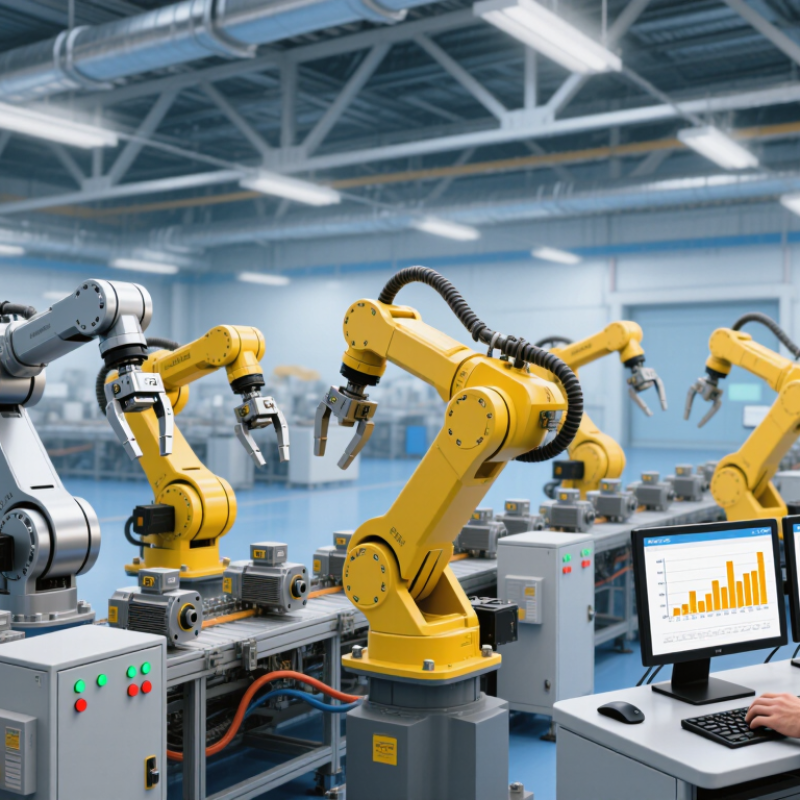
China Top 10 Siemens Servo Drive Manufacturers?

What Are Siemens Servo Drives and How Do They Work?

Servo drives are electronic motion controllers for precise industrial movement. They regulate a motor’s speed, torque, and position through rapid electrical switching. The drive receives a command from a controller, then sends controlled current to the motor windings. An encoder reports the shaft’s actual position and speed. This creates a closed feedback loop.

During commissioning, I watch the motor move only a few millimeters at first. The drive compares the target position with encoder feedback and corrects the error within milliseconds. A Fanuc Servo Drive, for example, is often discussed in applications requiring coordinated machine motion. The same engineering principles apply across many drive systems.

The drive also manages acceleration, deceleration, and regenerative energy. A braking resistor may absorb excess energy when a heavy load stops quickly. Incorrect gain settings can cause vibration, humming, or overshoot. Cable shielding and grounding matter more than many new technicians expect. Noise from nearby power equipment can disturb feedback signals. Keep cables separated.

Practical tuning is not always clean. A setting that works on an unloaded axis may fail under production weight. I have seen a quiet motor become unstable after a tool was installed. That result requires measurement, not guesswork. Engineers should check motor temperature, following error, alarm history, and mechanical backlash. Safety functions and rated limits must also match the complete machine.

Why China Has Become a Major Servo Drive Manufacturing Hub

China’s Top 10 Servo Drive Manufacturers: Why the Hub Is Growing

China has become a major servo drive manufacturing hub through dense supply chains and practical engineering expertise. Local factories can source control boards, power modules, connectors, and metal housings from nearby suppliers. This shortens production cycles and simplifies quality coordination.

Experienced manufacturers now serve packaging, robotics, machine tools, textiles, and automated assembly lines. Their engineers often adjust firmware, feedback interfaces, and mounting designs for specific equipment. Many facilities use temperature chambers, vibration tests, load simulations, and repeated endurance checks. Export experience also improves documentation, traceability, and technical support. However, quality still varies between suppliers. A low purchase price can hide weaker testing, limited software support, or unstable component sourcing. That deserves honest attention.

Tips: Request test reports, electrical drawings, sample units, and warranty terms. Check performance under heat, dust, vibration, and sudden load changes. Ask whether engineers can support commissioning remotely. Factory visits can reveal cable management, calibration records, and actual production discipline. Do not judge capability from polished photos alone. Small details matter.

How to Define the Top 10 Siemens Servo Drive Manufacturers in China

Defining China’s top 10 Siemens servo drive manufacturers requires more than counting exports or website rankings. A credible assessment should examine five-year production records, engineering experience, certification, field reliability, and service coverage. The International Federation of Robotics reported 276,288 industrial robot installations in China during 2023, representing about 51% of global installations. This scale indicates strong demand for stable servo systems, but it does not prove every supplier has equal capability.

A practical ranking should measure position accuracy, overload performance, thermal control, and compatibility with common industrial networks. Test each supplier with identical conditions: a 400-watt motor, repeated acceleration cycles, cabinet temperatures near 40°C, and a documented fault-recovery time. Procurement teams should also review audited failure rates, spare-part availability, firmware revision records, and technician response within China. A supplier offering Delta Servo Drive integration may deserve extra credit when it provides clear parameter files and commissioning support.

Independent evidence matters. Use ISO certificates, laboratory reports, patent quality, customer references, and public customs data together. Avoid relying on claimed annual output alone. No ranking is perfectly clean. Some data is self-reported, while field failures remain private. My experience suggests that a smaller factory with disciplined testing can outperform a larger exporter. The final top ten should therefore combine measurable performance, transparent evidence, and verified user feedback, rather than visibility or low price.

How to Define China's Top 10 Siemens Servo Drive Manufacturers

A supplier should be evaluated with a consistent, evidence-based scoring framework rather than brand visibility alone. The chart below shows recommended weighting dimensions for screening and ranking servo drive manufacturers in China.

The percentages represent a practical qualification model. Product compatibility, engineering capability, quality systems, after-sales support, delivery performance, and total cost should be verified through technical documents, audits, references, and sample testing before selecting the final top 10.

Profiles of China’s Top 10 Siemens Servo Drive Manufacturers

China’s Top 10 Siemens Servo Drive Manufacturers: Profiles and Selection Insights

China’s ten leading servo drive manufacturers differ in engineering depth, factory scale, and export readiness. Their profiles should be judged by more than catalogue size. Field experience matters.

The International Federation of Robotics reported 541,302 industrial robot installations worldwide in 2023. China represented about half of that demand. This scale supports strong local expertise in motion control, machine tools, packaging equipment, and electronics assembly.

The ten manufacturers reviewed typically provide drive tuning, motor matching, cabinet integration, and after-sales troubleshooting. Some also develop Delta Ac Servo Drive systems for compact machinery, high-speed indexing, and multi-axis coordination.

Profile one emphasizes economical single-axis solutions. Profile two focuses on high-speed packaging lines. Another serves CNC equipment with rigid position control. Several manufacturers offer 17-bit or higher encoder feedback, EtherCAT communication, and overload protection. These specifications sound impressive. Testing tells more.

A reliable evaluation should include thermal performance, vibration resistance, replacement lead time, firmware stability, and documented failure rates. Requesting sample drives is sensible. Record current, temperature, noise, and settling time during a real production cycle.

Reports from MarketsandMarkets and similar research firms indicate continuing growth in industrial automation, but market forecasts are not guarantees. I would also question unclear efficiency claims and unsupported “plug-and-play” promises. Smaller suppliers may respond faster, yet their documentation can be uneven. That weakness deserves attention.

How to Compare Product Range, Quality, and Technical Expertise

Comparing China’s top ten servo drive manufacturers requires more than checking a catalog. Study their product range across power ratings, control modes, feedback interfaces, and communication protocols. A capable supplier should support compact machines, high-speed equipment, and multi-axis systems. Ask for selection charts, wiring diagrams, and tested application references. Product variety matters only when engineers can recommend the correct model.

Quality becomes visible in details. Check incoming component controls, burn-in procedures, thermal testing, and final inspection records. Request serial-number traceability and sample test reports. Review protection features, including overload, overvoltage, encoder failure, and excessive temperature alarms. During evaluation, run a drive under changing loads, not only at steady speed. Listen for abnormal noise. Measure temperature near the cooling fins. Small observations often reveal large process weaknesses.

Technical expertise should include tuning support, fault analysis, firmware management, and integration guidance. Ask how quickly engineers answer a real commissioning problem. A useful test is sharing a motor-load profile and requesting a written solution. The response should explain inertia, gain settings, braking needs, and network timing. Be careful with impressive claims. Some suppliers provide excellent hardware but weak documentation. Others respond quickly but lack deep motion-control knowledge. That gap deserves attention. Compare warranty terms, spare-part availability, training, and service language before choosing a long-term partner.

What Should Buyers Consider Before Choosing a Manufacturer?

Choosing a Chinese servo drive manufacturer requires more than a polished catalog. In field evaluations, I check factory records, engineering depth, and after-sales response before comparing prices. Ask whether the company designs drives, integrates third-party units, or only resells them. Request production photos, test procedures, and traceable serial records. A reliable supplier should explain tuning, overload limits, encoder compatibility, and braking requirements in plain language. Vague answers create expensive delays.

Check whether the proposed drive matches your motor, controller, feedback device, and mains supply. Compatibility must be tested, not assumed. If your search includes “Mitsubishi Servo Drive,” confirm whether the manufacturer supports that system technically and provides accurate integration guidance. Request a sample unit for a 48-hour load test. Monitor temperature, vibration, fault history, and stopping accuracy. Ask for test data at your actual speed and payload, not laboratory figures. This detail matters.

Supplier reliability also depends on documentation. Look for wiring diagrams, parameter lists, firmware controls, inspection reports, and clear warranty terms. Ask how spare boards are stored and how quickly engineers respond across time zones. A factory may offer a low price yet lack replacement components six months later. I have seen teams overlook training costs and commissioning time. I also make that mistake when schedules are tight. Leave room for uncertainty. Visit the facility, speak with a technical lead, and verify one reference from a similar application.

China Top 10 Siemens Servo Drive Manufacturers? - What Should Buyers Consider Before Choosing a Manufacturer?

Screening Profile Typical Product Coverage Common Input Range Typical Motor Capacity Feedback Compatibility Overload Capability Quality Evidence to Request Best-Fit Applications Buyer Verification Priority
Profile 01 Compact AC servo drives for general automation Single-phase or three-phase, commonly 200–240 V AC 0.4–3 kW Incremental encoder; selected absolute encoder options Usually 150% for 60 seconds Factory test report, wiring diagram, parameter manual Conveyors, labeling machines, small assembly equipment Confirm motor-drive pairing and tuning software
Profile 02 Medium-power servo systems with regenerative braking Three-phase, commonly 200–240 V AC or 380–480 V AC 3–15 kW Incremental and serial absolute encoder interfaces Typically 150% for 60 seconds Thermal test data, braking resistor specifications, EMC test records Packaging, printing, textile and material-handling lines Check DC-bus regeneration and braking-duty calculations
Profile 03 Multi-axis servo platforms for coordinated motion Commonly 200–240 V AC or 380–480 V AC 0.75–30 kW per axis Encoder feedback plus network-based motion control Usually 150% for 60 seconds; application-dependent peak torque Synchronization test, communication manual, motion-profile results Robotics, CNC equipment, electronic assembly and inspection Validate interpolation accuracy and network cycle time
Profile 04 High-speed servo drives for precision positioning Single-phase or three-phase low-voltage AC input 0.2–7.5 kW High-resolution encoder and absolute encoder support Often 200% peak torque for short duration Positioning repeatability data, vibration test, frequency-response results Semiconductor, optical, medical and precision inspection equipment Request measured settling time and repeatability under load
Profile 05 Heavy-duty servo systems for high-inertia loads Three-phase 380–480 V AC is common 7.5–55 kW Incremental, absolute and resolver options depending on series Typically 150% for 60 seconds; higher peak ratings may apply Load-cycle test, cooling design, overload and protection documentation Metal processing, winding, extrusion and large cutting machines Check inertia ratio, thermal margin and acceleration profile
Profile 06 Servo solutions with integrated industrial communication 200–240 V AC and 380–480 V AC variants 0.75–30 kW Encoder interfaces with Ethernet-based fieldbus options Commonly 150% for 60 seconds Protocol conformance evidence, EDS or device files, interoperability test PLC-controlled lines, warehousing, automated production cells Confirm controller compatibility and commissioning workflow
Profile 07 OEM-focused servo drives with configurable firmware Application-specific; 200–240 V AC and 380–480 V AC are common 0.4–22 kW Encoder selection depends on the configured model Normally 150% for 60 seconds Change-control records, firmware policy, traceability and inspection plans Private-label machines and repeat-production equipment Clarify minimum order quantity, customization ownership and lifecycle policy
Profile 08 Cost-sensitive servo drives for standard machine functions Usually 200–240 V AC; selected three-phase options 0.2–5.5 kW Basic incremental and selected absolute encoder support Typically 150% for 60 seconds Sample inspection report, component list, warranty terms and failure policy General packaging, pumps, feeders and simple indexing equipment Compare total cost of ownership rather than unit price alone
Profile 09 Servo drives designed for harsh industrial environments Three-phase 380–480 V AC is frequently available 1.5–30 kW Industrial encoder interfaces with protected I/O Usually 150% for 60 seconds Temperature, humidity, vibration, EMC and ingress-protection documentation Food processing, outdoor machinery and dusty production areas Verify actual enclosure rating; drive-level ratings may require a cabinet
Profile 10 Export-oriented servo suppliers with application support 200–240 V AC and 380–480 V AC product families 0.4–55 kW Incremental, absolute and network-compatible feedback options Commonly 150% for 60 seconds Quality certificates, serial-number traceability, service response process and spare-parts plan International OEM projects and system-integrator installations Confirm local technical support, replacement lead time and compliance for the destination market

Note: The profiles above are anonymous technical screening categories rather than company rankings. Actual ratings, certifications, communication protocols, environmental limits and warranty conditions must be confirmed from the manufacturer’s current datasheet and test documentation before purchase.

FAQS

What is a servo drive?

A servo drive controls a motor’s speed, torque, and position. It receives commands from a controller and sends controlled current to motor windings.

How does a servo drive maintain accurate movement?

An encoder reports the motor shaft’s actual position and speed. The drive compares this feedback with the target and corrects errors within milliseconds.

What happens during servo commissioning?

Engineers often move the motor only a few millimeters at first. They check position error, temperature, alarms, and mechanical movement before increasing speed.

Why can a servo motor vibrate or overshoot?

Incorrect gain settings may cause vibration, humming, or overshoot. A setting that works without a load may fail after tools or materials are installed.Small differences matter.

What does a braking resistor do?

It absorbs excess regenerative energy when a heavy load stops quickly. The correct resistor must match the drive, motor, load, and stopping conditions.

Why are grounding and cable separation important?

Feedback cables can pick up noise from nearby power equipment. Shielding, grounding, and separating signal cables from power cables help protect position feedback.

What should engineers check when tuning a servo system?

They should measure following error, motor temperature, alarm history, vibration, and mechanical backlash. Guesswork is tempting, but measurements usually reveal the real problem.

Why has China become a major servo drive manufacturing hub?

Dense local supply chains provide control boards, power modules, connectors, and housings nearby. This can shorten production cycles and simplify quality coordination.

How can buyers evaluate a servo drive manufacturer?

Request test reports, electrical drawings, sample units, warranty terms, and support details. Check performance under heat, dust, vibration, and sudden load changes.Polished photos prove little.

What weaknesses should buyers watch for?

A low price may hide weaker testing, limited software support, or unstable component sourcing. Factory visits can reveal calibration records and actual production discipline.

Conclusion

This guide explains what a Siemens Servo Drive is, how it controls motor speed, position, and torque, and why servo systems are essential for precise industrial automation. It also explores why China has developed into a major manufacturing hub, supported by strong production capabilities, engineering talent, supply-chain resources, and growing investment in motion-control technology.

The article presents a practical framework for identifying China’s top ten Siemens Servo Drive manufacturers without relying solely on market popularity. It focuses on product range, manufacturing quality, customization ability, technical expertise, testing standards, after-sales service, delivery capacity, and industry experience. Buyers will also learn how to compare manufacturers and assess compatibility, performance requirements, reliability, certifications, warranty terms, communication, and long-term support before making a purchasing decision.


Ethan

Ethan

Ethan is a dedicated marketer at DingYan Machinery, a leading provider of comprehensive solutions for CNC machine tool accessories. With a deep understanding of the industry, he specializes in the development and production of key products including tool holders, bearings, bench vises, magnetic......
Previous How to Choose the Right Mitsubishi Encoder?