When you're diving into projects that need a good mix of precision and efficiency, choosing the right CNC Robot Arm is totally a big deal for making sure things go smoothly. As more industries jump on the automation bandwagon, getting to know the different options out there can really make a difference in how productive and accurate your work turns out. I mean, Dr. Emily Carter, who's pretty much an expert in robotic automation and teaches at the Robotics Institute, once said, “The future of manufacturing heavily depends on integrating CNC Robot Arms for better performance and growth.” That pretty much highlights how important it is to make smart choices when picking the right robotic tool for your needs.
A solid CNC Robot Arm can really help streamline your processes, slash labor costs, and improve the overall quality of your outputs—whether you're into manufacturing, assembly, or other applications. But let’s be honest: with so many models out there, figuring out which one’s best for you can feel pretty overwhelming, especially if you're not super familiar with the specs, capabilities, or even the common pitfalls. That’s why I put together this ultimate guide—to help you understand the differences and make a well-informed decision based on what you actually need. With insights from industry pros and practical tips sprinkled in, you’ll be way better equipped to tap into the full potential of CNC Robot Arms and really level up your workflow.

Understanding CNC Robot Arms and Their Applications
CNC (Computer Numerical Control) robot arms have revolutionized various industries by automating intricate tasks with precision and efficiency. These robotic systems are widely utilized in manufacturing, automotive, aerospace, and even medical sectors. According to a report by Grand View Research, the global CNC robot arm market was valued at approximately $4.4 billion in 2020 and is projected to expand at a compound annual growth rate (CAGR) of around 9.4% from 2021 to 2028. This growth is driven by the increasing demand for automation to enhance production lines and reduce labor costs.
Understanding the applications of CNC robot arms is crucial in selecting the right system for specific projects. These versatile tools can perform tasks such as machining, welding, painting, and assembly. For instance, in the automotive industry, CNC robot arms are essential for tasks like body welding and surface finishing, ensuring consistency and quality. A study by the International Federation of Robotics estimates that the automotive sector accounts for over 30% of all operational industrial robots globally, highlighting the significant role these arms play in enhancing operational efficiency and product quality. As industries continue to embrace digital transformation, the demand for CNC robot arms is expected to rise, providing businesses with the opportunity to optimize workflows and achieve greater precision in their operations.
Ultimate Guide to Choosing the Best CNC Robot Arm for Your Projects
| Model |
Payload Capacity (kg) |
Reach (mm) |
Degrees of Freedom |
Application |
| CNC-Arm A |
5 |
500 |
6 |
Assembly |
| CNC-Arm B |
10 |
800 |
6 |
Welding |
| CNC-Arm C |
7 |
600 |
5 |
Pick & Place |
| CNC-Arm D |
15 |
900 |
7 |
Inspection |
| CNC-Arm E |
20 |
1200 |
6 |
Packaging |
Key Features to Consider When Choosing a CNC Robot Arm
When selecting a CNC robot arm for your projects, several key features should be at the forefront of your decision-making process. First and foremost is the payload capacity, which refers to the maximum weight the robot can handle. It's crucial to assess the materials and components you plan to work with, ensuring that the arm can adequately support the demands of your tasks. Additionally, consider the reach of the robot arm, as this will determine how far it can perform operations in your workspace. A longer reach can offer more versatility but might also require more space.
Another significant feature to examine is the precision and repeatability of the robot arm. High precision is essential for detailed work, while repeatability ensures consistent results over time. Be sure to check the specifications related to these factors to match them with your particular project needs.
**Tips:** When evaluating the features, create a checklist of your project requirements to simplify comparisons between different models. Don’t forget to factor in ease of integration with existing systems and software compatibility, as this can save substantial time during setup. Always consider support and warranty options, which can be critical in ensuring your CNC robot arm performs reliably over its lifespan.
Types of CNC Robot Arms: Comparing Different Models
When selecting a CNC robot arm, it's crucial to understand the various types available, as each model serves different applications and industries. The most common classifications include Cartesian, SCARA, articulated, and delta robot arms. Cartesian robot arms are characterized by their linear movements along the X, Y, and Z axes, making them ideal for applications requiring precision in flat, three-dimensional space. These robots are particularly useful in tasks like milling and laser cutting, where accuracy is paramount.
On the other hand, SCARA (Selective Compliance Assembly Robot Arm) robots are notable for their rotational capabilities, allowing them to operate in a semi-vertical plane. This makes them a popular choice for assembly tasks, particularly in electronic manufacturing, where speed and flexibility are essential. Articulated robot arms, resembling a human arm with joints, offer a greater range of motion and are excellent for complex manipulation tasks, including welding and painting. Lastly, delta robots, with their unique structure of arms connected to a common base, provide exceptional speed and precision, making them suitable for high-speed pick-and-place applications in packaging and food processing industries.
Comparison of Different Types of CNC Robot Arms
This chart illustrates the maximum payload capacity of various types of CNC robot arms, helping you to make an informed decision based on your project's requirements.
Evaluating Precision and Accuracy in CNC Robot Arms
When evaluating CNC robot arms for precision and accuracy, several key parameters must be considered to ensure they meet project requirements. Precision refers to the repeatability of the robot's movements, which can be quantified by the cumulative error during a series of operations. A recent industry report highlighted that top-performing CNC robotic systems achieve a repeatability rate of ±0.01 mm, an essential metric for tasks requiring high-fidelity machining or assembly. Ensuring that the selected CNC robot arm meets or exceeds this standard is crucial for projects that demand tight tolerances.
Accuracy, on the other hand, relates to the robot's ability to reach a desired position within a specific workspace. Accurate positioning is vital, especially in applications like material handling and precision cutting. The same industry findings indicate that robotic systems designed for specialized tasks can realize accuracy within ±0.05 mm. This level of precision is particularly advantageous in industries such as aerospace or automotive, where even minor deviations can lead to substantial impacts on safety and performance.
Therefore, project managers should analyze both the specified precision and accuracy of CNC robot arms in relation to their intended applications. Utilizing robots that demonstrate consistent performance within these parameters can significantly enhance productivity and quality, ultimately leading to better project outcomes and cost efficiency.
Budget Considerations: Cost-Effective CNC Solutions
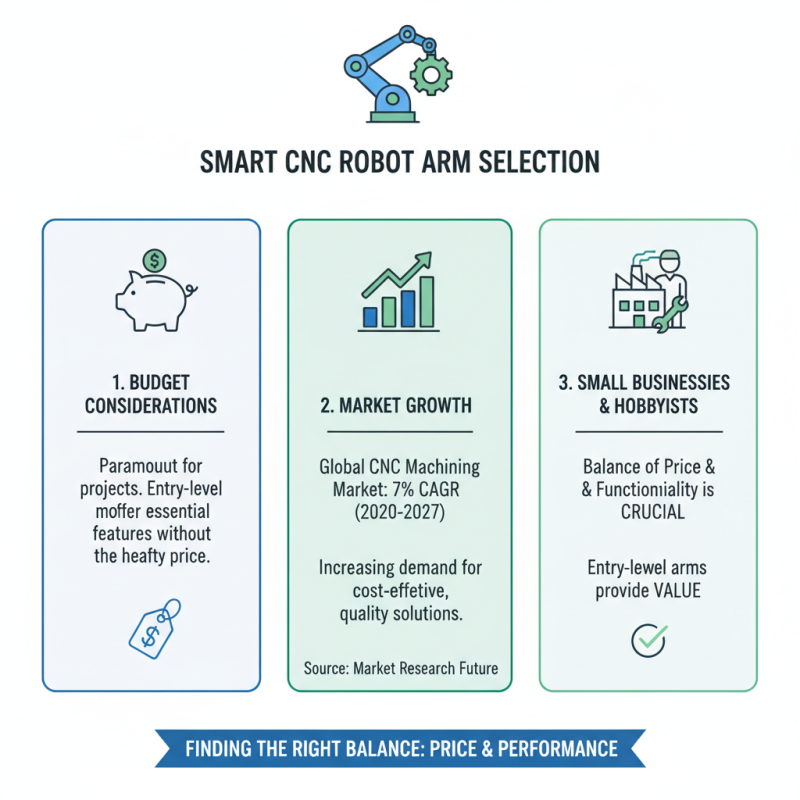
When selecting a CNC robot arm for your projects, budget considerations are paramount. According to a recent report by Market Research Future, the global CNC machining market is expected to grow significantly, with an anticipated CAGR of 7% from 2020 to 2027. This growth highlights the increasing demand for cost-effective solutions that do not compromise quality. For small businesses or hobbyists, finding a balance between price and functionality is crucial; thus, entry-level CNC robot arms can provide essential features without the hefty price tag associated with high-end models.
Cost-effective options are available that still deliver precision and reliability. In 2022, a study published in the Journal of Manufacturing Science and Engineering indicated that investing in mid-range CNC robot arms can reduce operational costs by up to 30%, compared to traditional manufacturing methods. By automating processes, companies can not only increase production rates but also minimize human error, leading to better overall quality and reduced waste. Therefore, exploring budget-friendly CNC solutions allows users to leverage advanced technology without overshooting their financial limits, enabling them to allocate resources effectively across their projects.
Maintenance and Support for Your CNC Robot Arm
When investing in a CNC robot arm, understanding the importance of maintenance and support is crucial for ensuring its longevity and optimal performance. Regular maintenance routines should include thorough inspections of the mechanical and electrical components, checking for wear and tear, and ensuring that all joints and motors are functioning correctly. Establishing a schedule for maintenance can help prevent unexpected downtimes and costly repairs.
Additionally, staying updated with the latest software versions and firmware is essential, as these updates can improve performance and resolve existing issues.
Moreover, having access to reliable support services enhances the overall user experience with your CNC robot arm. This support may come in the form of online resources, customer service hotlines, and community forums where users can share experiences and solutions. A responsive support system is vital, especially when troubleshooting operational challenges or seeking advice on advanced functionalities. Prioritizing vendors that offer comprehensive support and maintenance packages can lead to smoother operations and more successful project outcomes, allowing users to maximize the capabilities of their CNC robot arms.
Choosing the Right Software for Your CNC Projects
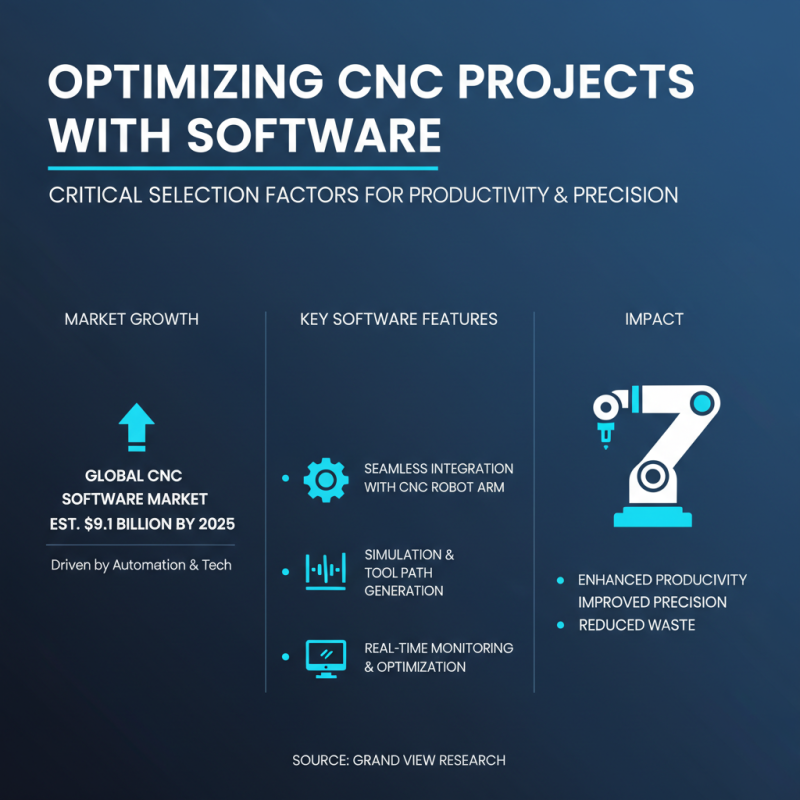
When selecting the right software for CNC projects, it’s critical to understand the specific demands of your operations and how various software can enhance productivity and precision. An industry report from Grand View Research estimates that the global CNC software market is expected to reach $9.1 billion by 2025, driven by advancements in manufacturing technologies and a growing desire for automation. This expansion underscores the importance of selecting software that not only integrates effectively with your CNC robot arm but also supports features such as simulation, tool path generation, and real-time monitoring.
Choosing the right software is also contingent upon compatibility with your chosen CNC robot arm. According to a survey conducted by MarketsandMarkets, about 70% of manufacturers cite compatibility with existing systems as a top priority when investing in new technology. Therefore, it's essential to evaluate software solutions that provide comprehensive support for various file formats, robust design capabilities, and user-friendly interfaces. By investing time in selecting high-quality software tailored to your project requirements, you can significantly enhance operational efficiency and output quality, ultimately leading to the successful execution of your CNC projects.
Maximizing Precision and Efficiency in Milling Operations: Insights from Industry Reports on SIEMENS SINUMERIK 828D CNC Controls
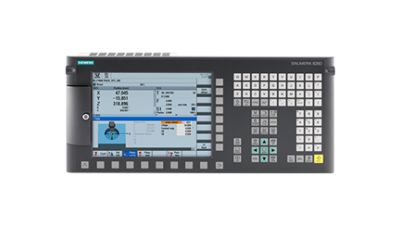
In the competitive landscape of modern milling operations, the need for precision and efficiency is paramount. Industry reports indicate that adopting advanced CNC controls can significantly enhance manufacturing output, reduce waste, and streamline workflow. The SINUMERIK 828D has emerged as a preferred choice among job shops looking to elevate their machining processes. With its robust capabilities for standardized milling, turning, and grinding, this control solution integrates CNC, PLC, operating, and axis control functions into a single, compact unit that can seamlessly fit into various operator environments.
The extensive programming functionalities of the SINUMERIK 828D not only cater to the diverse needs of the global CNC market but also empower operators to maximize productivity without compromising on quality. Reports from industry analysts suggest that leveraging such versatile CNC systems can lead to substantial reductions in cycle times and an increase in dimensional accuracy, critical factors for maintaining a competitive edge. Furthermore, the emphasis on user-friendly interfaces ensures that operators can easily adapt and optimize machining strategies, paving the way for innovation in manufacturing practices.
As job shops continue to face challenges in meeting client demands with efficiency, the SINUMERIK 828D stands out by offering scalable solutions that address both current and future manufacturing needs. By integrating advanced technology with intuitive design, this CNC control not only enhances operational capabilities but also positions businesses to respond swiftly to market dynamics and customer requirements. Thus, investing in such CNC solutions represents a strategic move towards achieving higher standards of precision and efficiency in milling operations.
FAQS
: The main types of CNC robot arms include Cartesian, SCARA, articulated, and delta robots, each suited for different applications and industries.
Cartesian robot arms have linear movements along the X, Y, and Z axes, making them ideal for precise tasks like milling and laser cutting in three-dimensional space.
SCARA robots feature rotational capabilities, allowing them to operate in a semi-vertical plane, making them suitable for assembly tasks in electronic manufacturing due to their speed and flexibility.
Articulated robot arms resemble a human arm with joints, providing a greater range of motion, making them excellent for complex manipulation tasks such as welding and painting.
Delta robots are known for their exceptional speed and precision due to their unique structure, which makes them ideal for high-speed pick-and-place applications in packaging and food processing.
Regular maintenance is crucial for ensuring the longevity and optimal performance of CNC robot arms by checking for wear and tear, inspecting components, and preventing unexpected downtimes.
Users should seek reliable support services such as online resources, customer service hotlines, and community forums for troubleshooting and advice, which enhance the overall user experience.
Key considerations when selecting CNC software include compatibility with the robot arm, features like simulation and tool path generation, and how it can enhance productivity and precision.
Compatibility with existing systems is a top priority for many manufacturers, making it essential to evaluate software solutions that support various file formats and provide user-friendly interfaces.
The global CNC software market is expected to reach $9.1 billion by 2025, driven by advancements in manufacturing technologies and an increasing desire for automation.
Conclusion
In the "Ultimate Guide to Choosing the Best CNC Robot Arm for Your Projects," the article offers a comprehensive overview of CNC robot arms and their versatile applications across various industries. It begins by explaining the fundamental aspects of CNC robot arms, highlighting their functionality in automated tasks. Key features such as precision, payload capacity, and ease of programming are essential considerations when selecting the right model.
The guide further categorizes different types of CNC robot arms, comparing their specifications and performance. It emphasizes the importance of evaluating factors like precision and accuracy to ensure optimal results for specific projects. Budgeting plays a crucial role, as it outlines cost-effective CNC solutions without compromising quality. Lastly, it addresses the significance of maintenance and support, along with choosing appropriate software, to maximize the efficiency of CNC robot arms in your operations.