Why choose Cnc Parts for global manufacturing? The answer begins with repeatability, not slogans. A CNC machine can follow the same digital drawing across suppliers, shifts, and production regions. It can cut aluminum brackets, stainless-steel shafts, and complex housings with controlled tolerances. That consistency supports stronger product development and fewer surprises during assembly.
Industry data supports this direction. Grand View Research estimates that the global computer numerical control machine market reached approximately USD 83.3 billion in 2023. Its report also projects continued growth through 2030. Deloitte’s 2024 Smart Manufacturing and Operations Survey found that 86% of manufacturers view smart manufacturing as an important competitiveness driver within five years. These figures do not guarantee success. Reports use different scopes and methods. Still, they show why digital production remains strategically important.
Cnc Parts also improve sourcing flexibility. Engineers can send one validated CAD file, inspection plan, and material specification to qualified manufacturers in different countries. Coordinate measuring machines can verify critical dimensions before shipment. ISO 9001 procedures, material certificates, and ASME Y14.5 GD&T practices add useful control. The details matter: a 0.02-millimeter mismatch can stop a bearing from seating correctly. Yet CNC machining is not automatically perfect. Tool wear, thermal expansion, unclear drawings, and rushed supplier selection can still create costly failures. A practical buyer should request first-article inspection, process capability evidence, and clear communication records. That takes time. Sometimes, it feels slower than choosing the lowest quotation. In real manufacturing, however, the cheapest part is rarely the cheapest outcome.
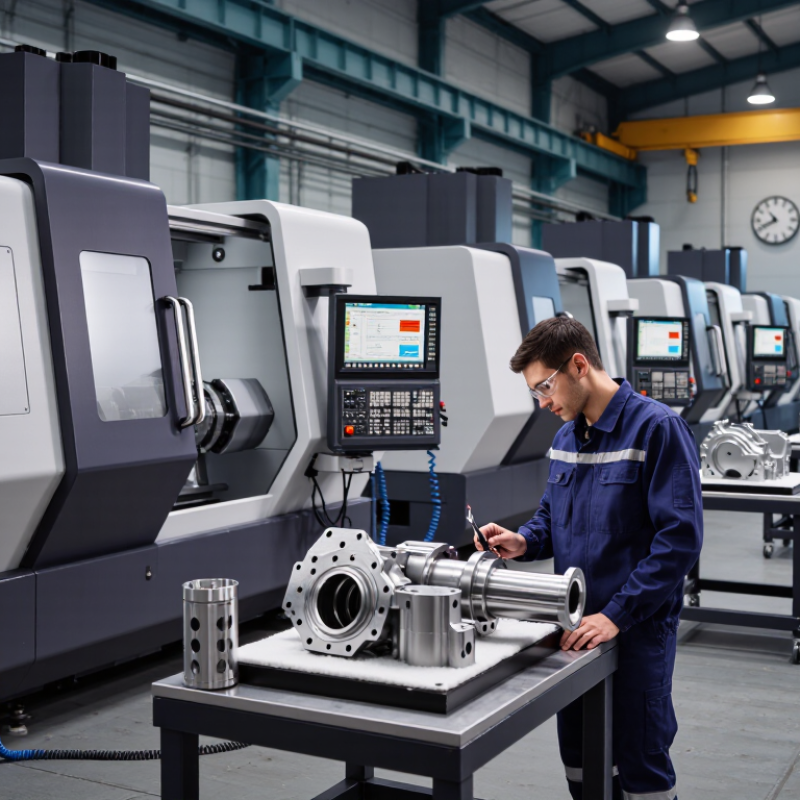
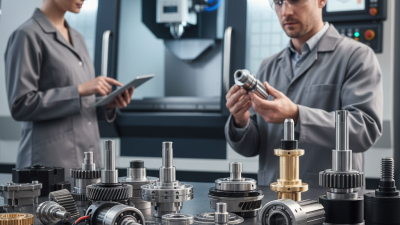
CNC parts are physical components made by computer-controlled cutting machines. A CAD model guides precise tool movements across metal, plastic, or composite stock. Milling creates flat faces and pockets. Turning shapes shafts and round profiles. Drilling produces accurate holes. The finished part can match the same digital design across different countries and production sites.
Deloitte’s 2024 Smart Manufacturing and Operations Survey found that 86% of manufacturers consider smart manufacturing important for future competitiveness. CNC machining supports this shift through digital programs, repeatable processes, and measurable inspection data. A validated CAD file can travel quickly from an engineering team to a qualified regional machine shop. UNCTAD’s Review of Maritime Transport reports that over 80% of global merchandise trade by volume moves by sea. Regional CNC production can reduce dependence on long shipping routes when schedules become unstable.
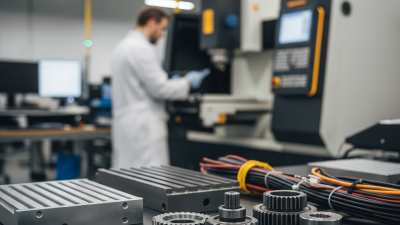
On a practical shop floor, engineers specify tolerances, surface finishes, materials, and inspection points. Operators then check a machined housing with calipers, gauges, or coordinate measuring equipment. Material certificates and inspection records also help buyers trace each batch. CNC is not automatically cheaper. A poorly designed part can waste tools, increase scrap, and delay assembly. The overlooked detail is manufacturability. Engineers should review tool access, wall thickness, and clamping before release. That extra review often prevents expensive corrections later.
CNC parts give international manufacturers a dependable way to repeat complex designs across different production sites. In practical projects, a digital drawing can guide machines with consistent dimensions, clear tool paths, and measurable tolerances. This reduces variation between batches. It also makes replacement parts easier to produce when equipment operates far from the original supplier.
Reliable documentation matters just as much as machining accuracy. Engineers can specify material grades, surface finishes, inspection points, and acceptable tolerances before production begins. Quality teams may use coordinate measuring equipment, thread gauges, and visual checks to verify each shipment. Fanuc Cnc Parts can be included in sourcing plans when buyers need compatible, accurately machined components for automated equipment. However, compatibility should never rely on a part name alone. Drawings, revision numbers, dimensions, and machine requirements still need careful review.
International production also benefits from flexible order volumes. CNC machining supports prototypes, small batches, and repeat orders without creating expensive forming tools. Protective packaging can prevent scratches, moisture damage, and bent edges during long transport. Lead times can still shift because of material shortages, inspection delays, or shipping changes. That is the less comfortable reality. A well-planned process reduces these risks, but it cannot remove every uncertainty. Teams should record inspection results and review failed samples honestly. Small errors often reveal larger communication gaps.
| Key Advantage | Relevant Data Dimension | Typical CNC Manufacturing Data | Value in International Production | Important Consideration |
|---|---|---|---|---|
| High dimensional accuracy | Typical machining tolerance | Approximately ±0.01 to ±0.05 mm for many precision CNC milling and turning operations, depending on the machine, material, geometry, tooling, and inspection method. | Supports interchangeable parts and reduces adjustment work when components are produced at different facilities. | Final tolerance should be defined on the engineering drawing; not every feature can be manufactured to the tightest range. |
| Excellent repeatability | Part-to-part consistency | Modern CNC equipment commonly provides repeatability in the micrometre-to-hundredth-millimetre range when properly calibrated and maintained. | Helps maintain consistent dimensions across prototype, pilot, and production batches. | Consistency also depends on tool wear, workholding, temperature control, and process monitoring. |
| Broad material compatibility | Machinable material categories | Compatible materials include aluminium, steel, stainless steel, brass, copper, titanium, engineering plastics, and selected composite materials. | Manufacturers can select materials according to strength, weight, corrosion resistance, thermal performance, and local availability. | Cutting parameters, tooling, coolant requirements, and achievable tolerances vary by material. |
| Digital production transfer | Input and process format | Parts are generally programmed from digital CAD/CAM data and converted into machine instructions, allowing geometry to be reproduced without physical templates. | Enables international suppliers to work from the same controlled design files and revision history. | Revision control, file verification, datum definition, and drawing standards must be managed carefully. |
| Flexible production volume | Suitable order range | CNC machining is commonly used for one-off prototypes, replacement parts, pilot runs, and low-to-medium production volumes. | Manufacturers can validate a design before committing to dedicated tooling or high-volume forming processes. | For very large volumes, injection molding, stamping, casting, or other processes may offer a lower unit cost. |
| Shorter design-change cycle | Tooling dependency | Many CNC parts can be revised through updated CAD/CAM programs without manufacturing a dedicated mold or die. | Reduces the impact of engineering changes and supports faster product updates across multiple markets. | Major geometry changes can still require new fixtures, cutting tools, inspection plans, or process validation. |
| Complex geometry capability | Machining-axis options | Three-axis, four-axis, and five-axis CNC processes can produce slots, pockets, angled surfaces, contours, and multiple-sided features. | Allows more functions to be integrated into a single component and can reduce assembly requirements. | Part orientation, tool access, workholding, and machine capacity affect feasibility and cost. |
| Reduced manual variability | Process automation | Automated tool paths, programmed cutting parameters, probing, and inspection routines reduce dependence on repeated manual operations. | Improves process standardization between shifts, production sites, and international suppliers. | Automation does not eliminate the need for skilled programming, setup, maintenance, and quality personnel. |
| Quality traceability | Inspection and documentation | Production can be supported by coordinate-measuring-machine reports, first-article inspection, material certificates, and process records. | Provides documented evidence for incoming inspection, supplier qualification, and cross-border quality control. | Required documents and acceptance criteria should be agreed before production begins. |
| Efficient material planning | Material usage pattern | CNC machining is a subtractive process: material is removed from bar stock, plate, billet, or a preformed blank to create the final part. | Material selection and stock-size planning can be standardized across different production regions. | Machining creates chips and may use more raw material than near-net-shape processes for some geometries; metal chips can often be collected for recycling. |
| Reliable global sourcing | Supplier transferability | Standardized drawings, 3D models, tolerances, materials, surface finishes, and inspection criteria can define the part independently of a specific supplier. | Facilitates multi-supplier sourcing, regional production, and contingency planning. | Equivalent machines and processes may still produce different results unless capability is verified through sample parts and inspection data. |
| Integrated surface finishing | Post-machining options | CNC parts can be combined with deburring, polishing, anodizing, plating, powder coating, heat treatment, and other finishing operations. | Enables parts to meet functional, cosmetic, wear, and corrosion-resistance requirements for different markets. | Finishing can alter dimensions, appearance, and material properties, so allowances and specifications should be defined in advance. |
In global manufacturing, Cnc Machining Parts are valued for repeatable accuracy and stable production results. A programmed cutting tool follows digital geometry with controlled movements. This reduces variation between production batches. Tight fits matter. For example, a shaft may need to slide smoothly into a bearing without unwanted play. Small dimensional errors can create noise, vibration, or early wear. From production experience, consistent setup is as important as machine capability.
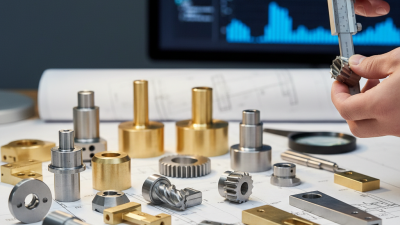
Precision begins before cutting starts. Engineers review drawings, tolerances, material specifications, and finishing requirements. Operators then secure the workpiece and check tool offsets carefully. Calipers, micrometers, and coordinate measuring equipment verify critical dimensions. These checks should happen during production, not only after completion. Traceable material records also support reliable quality control. Still, measurement systems require proper calibration, and rushed inspections can miss subtle defects.
Consistent quality depends on controlling the whole process. Identical programs, stable fixturing, and documented settings help reproduce the same result. That consistency supports assembly across different facilities and time zones. However, CNC machining is not perfect. Heat, tool wear, and material movement can affect accuracy. A thoughtful manufacturer reviews these risks instead of assuming every part will behave identically. Operators should record deviations, investigate their causes, and adjust the process before small errors become expensive production problems.
CNC parts support global manufacturing because one digital design can produce consistent components across different facilities. Material selection determines more than appearance. It affects strength, weight, heat resistance, corrosion performance, and machining cost.
Aluminum works well for lightweight brackets, housings, and moving assemblies. It cuts quickly and offers useful corrosion resistance. Steel provides higher load capacity for shafts, fixtures, and structural parts. Stainless steel suits wet or chemically exposed environments, although it can require slower cutting and sharper tooling. Brass machines cleanly and supports electrical applications. Engineering plastics reduce friction and electrical conductivity. They may deform under heat, however. No material is perfect.
Design flexibility is another major advantage. CNC machining can create pockets, threads, angled faces, thin walls, and precise bores. A practical design still needs accessible tool paths and sensible corner radii. Extremely deep cavities often increase cost and reduce accuracy. I have seen prototypes fail because designers ignored clamping space. That mistake is easy to prevent. Clear drawings should specify tolerances, surface finish, thread standards, and inspection points. When sourcing Fanuc Parts or similar replacement components, matching material grade and dimensional data is essential. A small hardness difference can change wear behavior. Thermal expansion also matters when parts operate near heat sources. Engineers should review the design after the first test batch, because real cutting results can expose assumptions that looked reasonable on screen.
Material selection affects part weight, strength, corrosion resistance, cost, and machining strategy. CNC machining supports complex geometries, tight tolerances, and rapid design changes across a wide range of engineering materials.
The chart compares representative room-temperature densities for commonly machined materials. Actual values vary by alloy grade, temper, and manufacturing specification. Lower-density materials can reduce part weight, while higher-density materials may provide increased mass, durability, or wear resistance.
Across global manufacturing industries, CNC parts translate digital designs into repeatable metal or polymer components. In automotive plants, machined housings and brackets must survive vibration, heat, and constant assembly. Aerospace suppliers demand tight tolerances, traceable inspections, and stable material behavior. A tiny hole can affect an entire flight-control assembly. That is why process records matter as much as cutting speed. Experienced teams check tool wear, coordinate systems, and surface finish before shipment. They also compare first-article measurements with the drawing, not memory.
Medical equipment requires clean surfaces, consistent dimensions, and carefully controlled materials. CNC parts for surgical instruments or diagnostic frames often need smooth edges and dependable fit. In robotics, joint components must align precisely while handling repeated movement. Energy equipment adds another challenge: parts may face pressure, corrosion, or wide temperature changes. I have found that a strong inspection plan prevents expensive surprises, especially when parts cross borders. However, inspection alone cannot repair a poor design. Engineers should review wall thickness, tool access, and realistic tolerances early.
Global production also depends on communication. A clear 3D model helps, but it can still hide unclear datums or unfinished notes. Language differences may create small misunderstandings. Small errors become costly. Reliable suppliers confirm material certificates, packaging methods, and delivery requirements in writing. They use calibrated equipment and retain inspection data for later review. No process is flawless. Unexpected distortion, setup mistakes, or late design changes can still occur. Open reporting is better than pretending perfection.
Selecting a reliable CNC parts supplier requires more than comparing prices. A capable supplier should understand tolerances, material behavior, surface finishes, and production risks. Ask for inspection records, material certificates, and sample reports before approving a large order. These documents reveal more than polished sales language.
Look for practical experience with international shipping, packaging, and customs paperwork. A strong supplier explains lead times clearly and reports problems before they become expensive delays. Their engineers should review drawings, identify weak dimensions, and suggest manufacturable changes. Small details matter. For example, poorly protected threads can arrive damaged after a long sea journey.
Traceability is also essential. Each batch should connect to a work order, inspection result, and material source. This helps teams investigate failures quickly. Suppliers handling Fanuc Spare Parts should confirm compatibility, revision details, and storage conditions before shipment. A photograph alone is not enough.
Communication deserves careful testing. Send a technical question and observe the response time and accuracy. Vague answers may signal weak production control. In my experience, even reliable suppliers sometimes miss a deadline or misunderstand a drawing. That is why written approvals, milestone checks, and realistic buffers remain necessary. No process is perfect. Continuous review protects quality.
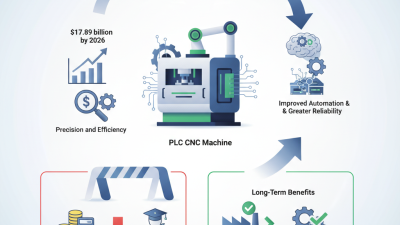
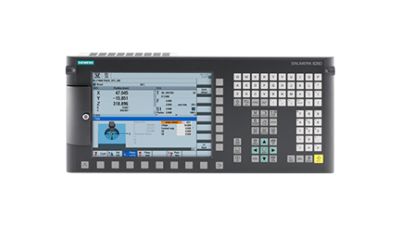
The 2024 smart manufacturing survey highlights a clear shift toward connected, flexible, and easier-to-use production systems. Manufacturers are increasingly looking for CNC platforms that can support digital workflows while remaining practical for everyday job-shop operations. In this environment, a compact panel-based CNC solution for milling, turning, and grinding can help standardize machine control without demanding a large footprint. By combining CNC, PLC, operating, and axis-control functions in one unit, it simplifies panel design and supports both horizontal and vertical operator-panel layouts.
For milling businesses, this type of control is well suited to standardized machines that must handle varied production requirements. Powerful CNC functions and an extensive programming package support global machining applications, from routine production to more complex workshop tasks. Operators can work with a consistent interface, while machine builders benefit from a compact architecture that fits different housing designs. As smart manufacturing continues to emphasize adaptable equipment, streamlined operation, and scalable digital integration, this CNC solution offers a practical foundation for modern job-shop milling.
CNC parts are components cut by computer-controlled machines from metal, plastic, or composite materials. A digital design guides the tools.
Milling creates flat surfaces and pockets. Turning shapes shafts and round profiles. Drilling produces accurate holes.
One validated CAD file can guide production at several qualified facilities. This helps maintain consistent dimensions across different locations.
It can shorten dependence on long shipping routes. However, material shortages, inspections, and transport changes may still delay delivery.
Drawings should include materials, tolerances, surface finishes, inspection points, and revision numbers. Tool access and clamping details also matter.
Operators may use calipers, gauges, thread gauges, or coordinate measuring equipment. Records can confirm dimensions and trace each production batch.
No. Poor wall thickness, limited tool access, or weak clamping can increase scrap and tool costs. Cheap production can become expensive later.
Yes. It can produce prototypes, small batches, and repeat orders without expensive forming tools. Results still depend on accurate drawings.
Protective packaging can reduce scratches, moisture damage, and bent edges. Packaging is easy to overlook, but damaged parts still create delays.
Failed samples may reveal unclear drawings, communication gaps, or overlooked manufacturing limits. Teams should review the evidence honestly, not hide it.
Cnc Parts are precision-engineered components produced through computer-controlled machining processes, making them highly valuable for global manufacturing. They support international production by delivering accurate dimensions, repeatable results, and dependable performance across different locations and production stages. CNC machining can maintain consistent quality through programmed tool paths, controlled tolerances, and systematic inspection, helping manufacturers reduce errors, material waste, and delays.
A wide range of materials, including metals, plastics, and specialized alloys, can be used to create Cnc Parts for different applications. Their design flexibility allows manufacturers to produce simple components as well as complex shapes tailored to specific equipment and requirements. These parts serve many industries, such as automotive, electronics, medical equipment, aerospace, and industrial machinery. When selecting a reliable supplier, businesses should consider machining capabilities, material expertise, quality-control procedures, production capacity, communication, delivery reliability, and support for custom designs. This combination helps ensure efficient cooperation and stable results in international manufacturing projects.