










Beyond 3-Axis When Do You Need More CNC Power
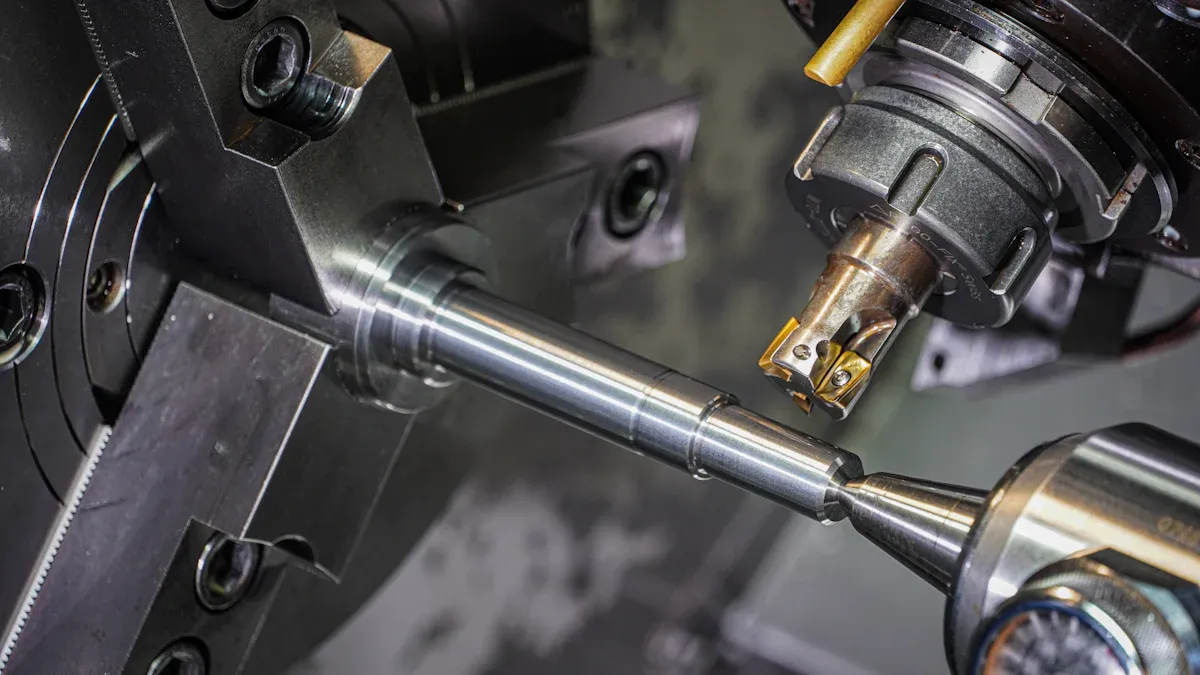
When part complexity increases, manufacturers often require advanced machining capabilities. Production efficiency demands reduced cycle times and fewer setups. Achieving superior precision and a flawless surface finish becomes paramount for many projects. Current limitations in existing machinery can restrict design freedom and innovation. Choosing the right CNC systems suitable for these challenges is crucial. Reliable cnc spare parts also ensure continuous operation and optimal performance.
Key Takeaways
- 3-axis CNC machines are good for simple parts. They are also affordable and easy to use.
- 4-axis CNC machines add a rotating axis. This helps make parts faster and with better surfaces.
- 5-axis CNC machines offer the most movement. They make very complex parts in one step.
- More axes mean higher costs. This includes the machine, tools, software, and training.
- Choose your CNC machine based on part shape. Also consider how many parts you need to make.
- Advanced CNC machines save money over time. They reduce errors and make better parts.
- Industries like aerospace and medical use 5-axis machines. They need very precise and complex parts.
- Hybrid systems combine different ways to make parts. They can print and cut materials in one machine.
Understanding 3-Axis CNC: The Foundation of Machining Systems
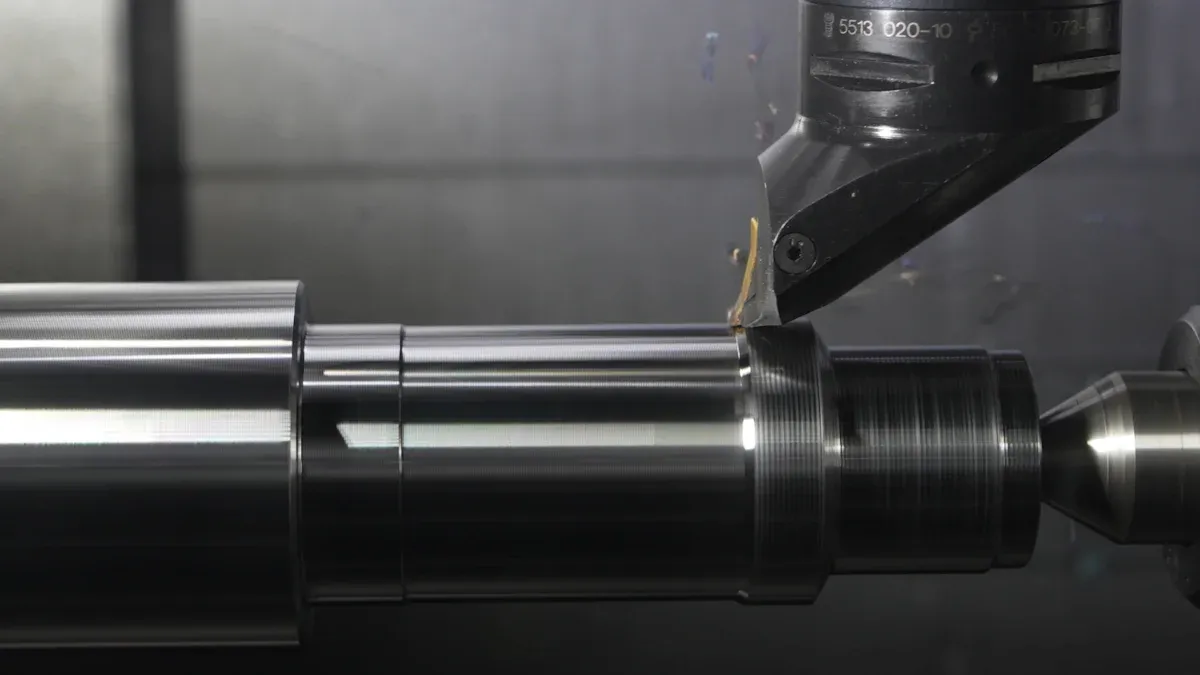
Core Capabilities and Movement Principles
X, Y, and Z Linear Motion Explained
A 3-axis CNC machine operates along three linear axes: X, Y, and Z. The X-axis controls left-to-right movement. The Y-axis manages front-to-back motion. The Z-axis dictates up-and-down movement. These three axes allow the cutting tool to move in a straight line across a workpiece, removing material to create a desired shape. This fundamental setup forms the basis for most machining operations.
Fundamental Machining Operations
Operators use 3-axis machines for various essential tasks. They perform face milling to create flat surfaces. They execute pocketing to carve out internal cavities. Drilling holes and tapping threads are also common operations. These machines excel at producing parts with relatively simple, prismatic geometries.
Advantages of 3-Axis Systems Suitable for Basic Needs
Cost-Effectiveness and Accessibility
3-axis CNC machines represent a cost-effective entry point into automated manufacturing. Their simpler mechanical design and control systems make them more affordable than multi-axis alternatives. Many manufacturers find these systems suitable for their initial investment. This accessibility allows smaller businesses to adopt CNC technology.
Simplicity in Programming and Operation
Programming a 3-axis machine is generally straightforward. Operators learn the software and controls quickly. This simplicity reduces training time and operational complexity. New users can become proficient in a shorter period.
Broad Applicability for Standard Parts
These machines handle a wide range of standard parts. They efficiently produce components for many industries. Examples include brackets, plates, and basic housings. Their versatility makes them a workhorse in many machine shops.
Inherent Limitations Driving the Need for More Axes
Restricted Part Geometry and Features
3-axis machines face limitations with complex part geometries. They struggle with deeply recessed features, organic surfaces, and multi-angled details. These designs are difficult or impossible to machine without multiple setups. Restricted tool access often prevents complete machining in one go.
Necessity for Multiple Workpiece Setups
Machining all sides of a complex part often requires multiple setups. Operators must re-position and re-clamp the workpiece several times. This process increases labor time and introduces potential for error. Each new setup adds to the overall production cycle.
Accumulation of Positional Errors
Every time an operator re-positions a workpiece, a small amount of positional error can accumulate. These errors compound with each setup. This leads to reduced accuracy in the final part. Maintaining tight tolerances becomes challenging.
Limited Tool Access to Undercuts
3-axis machines have limited tool access. They cannot easily reach undercuts or features at steep compound angles. True undercuts often necessitate specialized tooling or different machine types. This restriction limits design freedom for engineers.
Stepping Up to 4-Axis: Enhanced Efficiency in Machining Systems
Introducing the A-Axis: Rotary Motion
How the Fourth Axis Adds Flexibility
A 4-axis CNC machine introduces a fourth axis of motion, typically designated as the A-axis. This axis provides rotary movement around the X-axis. It allows the machine to rotate the workpiece, enabling the cutting tool to access different sides or features without manual re-positioning. This added flexibility significantly expands machining capabilities. Manufacturers gain the ability to machine complex parts more efficiently.
Continuous vs. Indexing 4-Axis Operations
Operators utilize 4-axis machines in two primary modes: indexing and continuous. In indexing mode, the machine rotates the workpiece to a specific angle, then locks it in place. The cutting tool performs operations on that fixed face. This method works well for machining features on multiple distinct sides of a part. In continuous mode, the workpiece rotates simultaneously while the cutting tool engages the material. This allows for helical milling, contouring around a cylinder, or creating complex curved surfaces.
Key Benefits of 4-Axis Systems Suitable for Production
Significant Reduction in Setup Times
4-axis machines dramatically reduce the need for multiple workpiece setups. Operators can machine several sides of a part in a single clamping. This eliminates the time spent on re-fixturing and re-aligning the workpiece. Reduced setup times directly translate to increased machine uptime and overall productivity.
Improved Surface Finish on Contoured Parts
Continuous 4-axis machining creates smoother surface finishes on contoured or cylindrical parts. The tool maintains constant contact with the rotating workpiece, avoiding the small steps or marks that can occur with indexed operations. This results in higher quality parts with better aesthetic appeal.
Machining Multiple Sides in Fewer Operations
The ability to rotate the workpiece allows the machine to access features on multiple sides. This means fewer operations are necessary to complete a part. Manufacturers can produce more complex geometries without transferring the part between different machines or setups. This streamlines the entire manufacturing process.
Increased Production Throughput and Automation
By reducing setups and combining operations, 4-axis machines significantly increase production throughput. They process parts faster and with less manual intervention. This makes them ideal for higher volume production environments and facilitates greater automation in the manufacturing workflow.
Ideal Applications for 4-Axis Machining
Cylindrical and Shaft-Like Components
4-axis machines excel at producing cylindrical and shaft-like components. They efficiently machine features such as keyways, flats, or holes around the circumference of a shaft. Examples include camshafts, drive shafts, and various types of rollers.
Fixture and Jig Machining
Manufacturers often use 4-axis machines to create complex fixtures and jigs. These tools require precise features on multiple planes. The rotary axis allows for accurate machining of all necessary angles and surfaces in one setup.
Engraving and Complex Contouring
The continuous rotary motion makes 4-axis machines perfect for engraving on curved surfaces. They also handle complex contouring tasks, such as creating molds with rotational symmetry or intricate decorative patterns on cylindrical objects.
Mastering Complexity with 5-Axis: Unmatched Precision in Machining Systems
The Addition of B or C-Axis: Simultaneous Rotary Motion
Understanding the Fifth Axis's Role
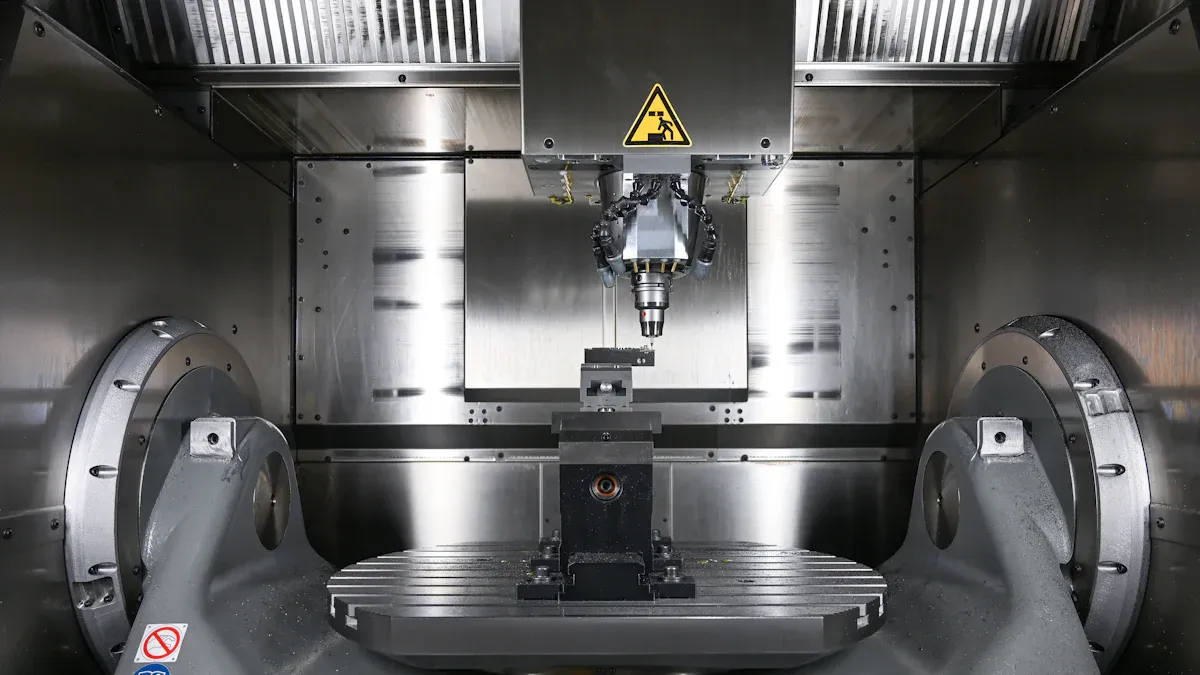
A 5-axis CNC machine introduces a fifth axis of motion. This axis is typically a B-axis or a C-axis. The B-axis rotates around the Y-axis. The C-axis rotates around the Z-axis. These additional rotary axes allow the cutting tool or the workpiece to tilt and rotate simultaneously. This creates highly dynamic and flexible machining capabilities.
Tilting and Rotating Workpiece for Optimal Access
The ability to tilt and rotate the workpiece or the tool provides optimal access to complex part features. The machine can position the cutting tool at virtually any angle relative to the workpiece. This eliminates many limitations found in 3-axis and 4-axis machining. It allows for machining intricate geometries in a single setup.
Transformative Advantages of 5-Axis Systems Suitable for Intricate Parts
Single-Setup Machining for Complete Parts
5-axis machines offer significant benefits through single-setup machining. They allow manufacturers to complete parts entirely in one clamping. This leads to faster cycle times. It also ensures dimensional accuracy. This capability reduces lead times and allows for machining complex parts efficiently.
Access to Undercuts and Highly Complex Features
These machines provide unparalleled access to undercuts and highly complex features. The tool can reach areas that would be impossible with fewer axes. This opens up new possibilities for product design and innovation.
Utilization of Shorter, More Rigid Tools
The ability to tilt the tool or workpiece allows for the use of shorter cutting tools. Shorter tools are more rigid. This reduces vibration during machining. It also improves surface finish and extends tool life.
Superior Surface Quality and Aesthetic Finish
5-axis machining often produces superior surface quality. The continuous, fluid motion of the tool across complex curves minimizes tool marks. This results in a smoother, more aesthetically pleasing finish.
Higher Accuracy and Repeatability for Critical Components
The reduction in setups minimizes the accumulation of errors. This leads to higher accuracy and repeatability. These qualities are crucial for critical components in demanding industries.
When 5-Axis Becomes Essential for Production
Aerospace Components with Complex Geometries
5-axis machining is essential for aerospace components. These parts often have complex geometries. Examples include turbine parts, engine components, and structural brackets. Manufacturers also use it for tight-tolerance aerospace brackets with weight-reduction pockets.
Medical Implants Requiring High Precision
The medical industry relies on 5-axis machines for implants. These devices require extremely high precision and intricate shapes. Examples include custom prosthetics and surgical tools.
Mold and Die Making for Intricate Cavities
Mold and die makers use 5-axis technology to create intricate cavities. These molds often feature complex curves and fine details. The machines produce high-quality molds for various industries.
Impellers and Turbines with Bladed Structures
5-axis machines are ideal for impellers and turbines. These parts feature complex bladed structures. The machines efficiently produce the precise aerodynamic shapes required for optimal performance. These systems suitable for advanced manufacturing needs.
Beyond 5-Axis: Niche Applications and Future Trends in Machining Systems
Manufacturers constantly seek new ways to push the boundaries of production. While 5-axis machines offer incredible versatility, some specialized applications demand even more advanced capabilities. This leads to the exploration of systems with six or more axes. These highly sophisticated machines often integrate with other technologies. They represent the cutting edge of manufacturing.
Exploring 6-Axis and More for Specialized Needs
Robotic Integration for Enhanced Automation
Six-axis systems often involve robotic integration. A robotic arm holds the workpiece or the tool. This provides additional degrees of freedom. Robots can manipulate parts in complex ways. They also automate loading and unloading tasks. This enhances overall automation in the manufacturing process. Such integration improves efficiency and reduces manual labor.
Specialized Manufacturing Processes
Beyond traditional milling, multi-axis systems support specialized processes. These include grinding, polishing, and even additive manufacturing. They handle complex geometries with extreme precision. These machines cater to industries with unique demands. Examples include optics, medical devices, and high-performance aerospace components.
Advanced Machining Concepts and Hybrid Systems
Integration with Additive Manufacturing
The future of machining involves combining different technologies. Integrating additive manufacturing with CNC systems creates powerful hybrid capabilities. For example, a hybrid system combining Fused Deposition Modeling (FDM) with abrasive milling significantly improves part quality. Dimensional accuracy can increase by 71% to 99% when comparing the FDM part to the final part after abrasive milling. The average surface roughness (Ra) also sees an improvement of up to 91.3%. This combination allows for rapid prototyping and precise finishing.
Multi-Process Hybrid Machining
Multi-process hybrid machining combines additive and subtractive methods in one machine. The DMG MORI LaserTec 65 hybrid machining center exemplifies this. It integrates generative laser surfacing with 5-axis milling. This system quickly produces blanks through additive processes. Then, it performs precise subtractive machining. This enables the creation of highly complex and personalized components. This unique combination of laser surfacing and milling through powder nozzles offers new application and geometric possibilities. Additive manufacturing processes are up to 20 times faster than powder bed methods. These systems offer unparalleled flexibility and efficiency. They represent a significant leap in manufacturing technology.
Decision Framework: Choosing Your CNC Power and Systems Suitable for Your Needs
Selecting the right CNC machine involves careful consideration of several factors. Manufacturers must align their choice with specific production demands and long-term strategic goals. This framework helps evaluate the optimal CNC power for various applications.
Part Complexity and Geometric Requirements
Simple Prismatic Parts vs. Complex Contours
The geometry of a part dictates the necessary number of CNC axes. Simple prismatic parts, featuring flat surfaces and straight edges, typically require only 3-axis machining. These machines excel at basic tasks like cutting sharp edges, boring, milling slots, tapping, and drilling holes. However, they offer limited capability for intricate detailing or depth. They also provide lower feature accuracy and reduce the complexity of machined surfaces due to restricted tool access.
For parts with complex contours, such as those found in molds or aerospace components, more axes become essential. A 4-axis machine handles cutting holes, cutting along an arc, and carving cutouts, especially on sides or around a cylinder. It also performs high-quality precision engravings, milling, and drilling on these types of parts.
Intricate Designs and Undercuts
Intricate designs and undercuts demand the advanced capabilities of 5-axis or even higher-axis machines. These machines handle highly precise and complex products. They perform simultaneous machining of five sides or more. Industries like medical technology, R&D, architecture, aerospace, military, automotive, and creative arts frequently use them. They also excel at drilling holes at compound angles.
| CNC Axis Type | Suitable Part Complexity / Tasks |
|---|---|
| 3-Axis | Simple tasks, cutting sharp edges, boring, milling slots, tapping, drilling holes; limited for intricate detailing or depth, lower feature accuracy, reduced complexity of machined surfaces. |
| 4-Axis | Cutting holes, cutting along an arc, carving cutouts (especially on sides or around a cylinder), high-quality precision engravings, milling, drilling. |
| 5-Axis | Highly precise and complex products, simultaneous machining of five sides or more, used in medical technology, R&D, architecture, aerospace, military, automotive, creative arts, drilling holes at compound angles. |
| 7-Axis | Long, slender, and heavily detailed parts, extraordinarily complex shapes and features, high accuracy without post-fabrication processes, useful in aerospace and military industries. |
| 9-Axis | Fully-finished complex products in a single setup, turning and milling along various planes with incredible accuracy, eliminates secondary fixtures and manual loading, common for implantable medical devices, complex aerospace parts, surgical tools, dental implants. |
It is important to note the inherent limitations of some systems. For 3-axis machines, manufacturers observe lower feature accuracy and a lessened ability to perform intricate machining. They also experience a reduction in available complexity of machined surfaces due to limited tool access to the part. This restricts freedom of movement. Conversely, 5-axis machines present their own challenges. CAD/CAM programming for these machines can be extremely complicated. They also represent a large investment for purchasing and maintaining. Furthermore, they require expensive tooling solutions and exceptionally skilled CNC machine operators.
Production Volume and Efficiency Goals
Low Volume, High Mix Production
For low-volume, high-mix production, manufacturers often prioritize flexibility and quick changeovers. A 3-axis machine can be cost-effective for prototyping or small batches of simple parts. However, a 4-axis or 5-axis machine offers greater versatility. It reduces the need for multiple setups, even for varied part geometries. This flexibility allows shops to handle a wider range of jobs with fewer machine changes.
Medium to High Volume Manufacturing
Higher production volumes often justify the investment in more advanced machines. These machines offer enhanced efficiency and speed. For medium to high volume manufacturing, 4-axis and 5-axis machines significantly improve throughput. They reduce the need for part repositioning. This results in shorter production times and enhanced accuracy compared to 3-axis systems.
| Feature | 3-Axis CNC Machine | 4-Axis CNC Machine | 5-Axis CNC Machine |
|---|---|---|---|
| Production Efficiency | Lower, Requires Multiple Setups | Higher, Reduces Setup Time | Highest, Completes Multi-Sided Machining in One Setup |
Cycle Time Reduction and Throughput Optimization
Advanced CNC systems directly contribute to cycle time reduction and throughput optimization. A 5-axis machine enhances efficiency by allowing for more intricate designs. It also reduces the need for part repositioning. This results in shorter production times and enhanced accuracy compared to 3-axis and 4-axis systems. By completing multi-sided machining in a single setup, these machines minimize idle time and maximize cutting time. This leads to higher overall productivity.
Budgetary Considerations and Investment Returns
Initial Machine Acquisition Costs
The initial acquisition cost of a CNC machine varies significantly with the number of axes. 3-axis machines represent the most affordable entry point. They offer a lower barrier to entry for many businesses. As the number of axes increases, so does the complexity of the machine's mechanics and control system. This drives up the price. A 5-axis machine requires a substantial capital investment. Manufacturers must weigh this cost against the potential for increased capabilities and efficiency.
Tooling, Fixturing, and Software Expenses
Beyond the machine itself, manufacturers must consider associated costs. Tooling expenses can increase with more complex machines. While 5-axis machines can use shorter, more rigid tools, the variety and specialized nature of these tools might add to the overall cost. Fixturing also becomes more complex for multi-axis operations. Simple clamps suffice for 3-axis work. However, advanced workholding solutions are often necessary for 4-axis and 5-axis machines to ensure stability during complex movements. Software expenses are another critical factor. Basic CAM software supports 3-axis programming. However, 4-axis and especially 5-axis programming requires more sophisticated and often more expensive CAM packages. These advanced software solutions are crucial for generating efficient and collision-free toolpaths.
Programming and Operator Training Costs
The complexity of multi-axis machines extends to programming and operator training. Programming a 3-axis machine is relatively straightforward. It requires less specialized knowledge. However, 4-axis and 5-axis programming demands a higher level of expertise. Operators must understand complex toolpath generation, collision avoidance, and machine kinematics. This necessitates significant investment in training. Highly skilled CNC machine operators are essential for maximizing the potential of advanced multi-axis systems suitable for their needs. This training ensures efficient operation and prevents costly errors.
Required Precision, Tolerances, and Surface Finish
The required precision, tolerance, and surface finish of a part significantly influence the choice of CNC machine. Manufacturers must carefully evaluate these factors. They ensure the selected machine can meet the product's quality standards.
Standard vs. Tight Tolerances
Different projects demand varying levels of dimensional accuracy. Standard tolerances allow for a wider range of deviation. Tight tolerances require extremely precise dimensions. The type of CNC machine directly impacts the achievable tolerance.
| CNC Machine Type | Precision/Tolerance Level | Complexity of Shapes |
|---|---|---|
| 3-axis | Basic tasks, simpler shapes | Simple designs |
| 4-axis | More accuracy than 3-axis | More complex shapes, angled cuts |
| 5-axis | Very precise, very tight tolerances | Very precise and complicated shapes |
A 3-axis CNC machine handles basic tasks and simpler shapes. It achieves good precision for these less complex designs. However, its capabilities limit it when parts demand intricate detailing or depth. For parts with more complex shapes and angled cuts, a 4-axis machine offers greater accuracy than a 3-axis system. When projects demand very precise and complicated shapes, a 5-axis machine becomes essential. These machines achieve very tight tolerances. Both 3-axis and 5-axis CNC machines can handle tight tolerance requirements, often ±0.01 mm or better. However, 3-axis machines achieve this precision on simple geometries. Five-axis machines create highly accurate parts with complex geometries. This distinction is crucial for selecting the right equipment.
Aesthetic Requirements and Surface Quality
The aesthetic appearance and functional performance of a part often depend on its surface quality. Some parts require a smooth, blemish-free finish. Others tolerate a rougher texture. The number of axes on a CNC machine directly affects the achievable surface finish.
A 3-axis machine produces good surface finishes on flat or gently curved surfaces. However, when machining complex contours or steep angles, tool marks can become visible. The tool often takes many small steps to approximate a curve. This leaves a less smooth finish.
A 4-axis machine improves surface finish on contoured parts, especially cylindrical ones. The continuous rotation of the workpiece allows the tool to maintain a more consistent cutting angle. This reduces the appearance of tool marks. It creates a smoother, more uniform surface.
Five-axis machines offer superior surface quality. They achieve this through several advantages. The machine can orient the tool optimally relative to the workpiece surface. This allows for the use of shorter, more rigid tools. Shorter tools vibrate less. They produce a finer finish. The continuous, simultaneous movement of multiple axes also enables smoother toolpaths across complex, free-form surfaces. This minimizes abrupt changes in cutting direction. It results in an aesthetically pleasing finish. These advanced systems suitable for industries like aerospace and medical devices often require flawless surface quality.
Cost-Benefit Analysis: Justifying Investment in Advanced Systems Suitable for Growth
Businesses often consider upgrading their CNC machines. They need to understand the financial benefits of investing in advanced systems. A cost-benefit analysis helps justify this investment. It shows how more axes can lead to growth and profitability.
Evaluating Return on Investment for More Axes
Reduced Labor and Setup Costs
Advanced CNC machines significantly reduce labor and setup costs. Multi-axis machines perform more operations in a single setup. This means operators spend less time manually repositioning parts. Fewer setups also reduce the risk of human error. This efficiency saves labor hours and improves overall productivity.
Increased Throughput and Production Capacity
Investing in multi-axis CNC machines directly increases throughput and production capacity. These machines complete parts faster. For example, advanced CAM software like SolidCAM's iMachining technology can reduce machining time by up to 70%. One case study showed a 60% reduction in cycle time for a roughing process. This improved cutting time from 30 minutes to 12 minutes on a 3-axis CNC machine. Such optimizations directly enhance production efficiency. They allow businesses to produce more parts in less time.
Enhanced Part Quality and Reduced Rework
Advanced CNC systems improve part quality and reduce rework. On-machine inspection tools, like the FARO GagePlus, increase productivity and quality. They allow for tighter tolerances with fewer errors. Operators inspect parts directly on the machine. This saves considerable time and material. It also reduces frustration. Eric Wenger, owner of Express Manufacturing, stated that on-machine inspection "really helps us a lot." It ensures confidence in parts before removal from the machine. This leads to significant cost savings.
| Benefit | Description | Impact |
|---|---|---|
| Consistent Quality | Guarantees product conformity across every batch. | Zero Defect Assurance for critical components. |
| Increased Throughput | Faster turnaround due to reduced manual adjustments and quicker setup. | Potential 15-30% reduction in cycle time. |
| Cost Savings | Minimized errors, rework, and scrap material waste. | Typical ROI within 6 to 12 months on high-volume runs. |
Long-Term Strategic Advantages
Expanding Manufacturing Capabilities
Investing in more axes expands a company's manufacturing capabilities. It allows businesses to produce more complex parts. They can achieve micron-level accuracy (2-5 microns) for intricate components. This reduces setup times and improves overall efficiency. It also ensures consistent results for demanding industries. Businesses can shorten lead times and minimize waste. This provides cost-efficient solutions. It also offers precision, reliability, and long-term supply confidence for customers. These capabilities enable high-mix, low-volume precision parts production. They also contribute to sustainability through less scrap and energy consumption.
Attracting More Complex Projects
Advanced CNC systems attract more complex projects and clients. Machines like the Anilam S1100 and Eumega milling machines achieve high precision. They create custom parts and jigs. This capability helps manufacturers meet exact client specifications. They also meet stringent quality standards. This is essential for attracting complex projects in demanding industries. These include automotive and aerospace. The ability to maintain tight tolerances produces intricate components. This ensures better performance, reliability, and longevity. It directly appeals to clients with sophisticated needs.
- Computerized Precision: Ensures unparalleled precision for complex and intricate aluminum components.
- State-of-the-Art Machinery: Leverages cutting-edge CNC machines with advanced tooling and technology.
- Customized Tooling: Provides tailored tooling solutions for specific geometries and requirements of aluminum components.
- Multi-Axis Machining: Enables simultaneous cutting and handling of complex geometries.
- Tight Tolerances: Delivers components that meet the most demanding specifications.
- Diverse Application: Serves industries like automotive and aerospace by producing critical, high-precision, and lightweight components.
Investing in advanced CNC milling equipment positions companies as market leaders. It allows them to handle both complex and simple design requirements. Skilled CNC milling machinists operate the latest multi-axis CNC equipment. They consistently produce high-quality, accurate, and consistent products. This is crucial for attracting clients with diverse and challenging projects.
Future-Proofing Your Operations
Investing in advanced CNC systems future-proofs operations. Technology evolves rapidly. Businesses need to adapt to new demands. Multi-axis machines offer flexibility. They handle future part designs and material innovations. This strategic investment ensures a company remains competitive. It also allows for continuous growth and innovation in manufacturing.
Real-World Applications and Case Studies of Multi-Axis Systems Suitable for Industry Leaders
Manufacturers across various industries leverage multi-axis CNC systems. They achieve precision, efficiency, and complexity in their products. These real-world examples demonstrate how different axis configurations meet specific production demands.
Automotive Industry Examples
Engine Blocks on 3-Axis Machines
Automotive manufacturers often use 3-axis machines for engine blocks. These machines perform fundamental operations. They mill flat surfaces, drill bolt holes, and bore cylinder liners. The prismatic nature of engine blocks makes them suitable for 3-axis machining. This approach provides cost-effective production for these foundational components.
Manifolds and Housings on 4-Axis Machines
Manifolds and various housings require more complex machining. Manufacturers use 4-axis machines for these parts. The rotary axis allows the machine to access multiple sides of the component. It creates intricate internal passages and mounting features. This reduces the need for multiple setups. It also improves efficiency in production.
Turbochargers and Powertrain Components on 5-Axis Machines
Turbochargers and advanced powertrain components demand high precision and complex geometries. 5-axis machines are essential for these parts. They create intricate impeller blades and turbine housings. These machines ensure optimal performance and fuel efficiency. They handle the complex curves and tight tolerances required for modern automotive systems.
Medical Device Manufacturing
Simple Brackets and Plates on 3-Axis
The medical device industry uses 3-axis machines for simpler components. These include basic brackets, plates, and instrument handles. These parts often have straightforward geometries. 3-axis machining provides the necessary precision for these less complex medical devices.
Bone Plates and Orthopedic Implants on 4-Axis
Bone plates and certain orthopedic implants benefit from 4-axis machining. These parts often feature contours or holes on multiple surfaces. The rotary axis allows for efficient machining of these features. It ensures accurate fit and function for patient recovery.
Custom Prosthetics and Surgical Tools on 5-Axis
5-axis CNC machining is crucial for creating complex, contoured shapes in a single setup. This makes it ideal for fabricating patient-specific implants. It also produces bone plates with multiple curvature radii. Parts requiring full-surface finishing also benefit. Multi-axis CNC platforms (4- and 5-axis) access tight corners and complex profiles. This improves accuracy and efficiency in intricate medical part production. Examples include:
- Patient-specific implants
- Bone plates with multiple curvature radii
- Contoured implants
- Custom surgical guides
Aerospace Component Production
Basic Structural Parts on 3-Axis
Aerospace manufacturers use 3-axis machines for basic structural parts. These include bulkheads, ribs, and simple brackets. These components often have flat surfaces and straightforward designs. 3-axis machining provides a reliable and efficient method for their production.
Landing Gear Components on 4-Axis
Landing gear components require machining on multiple faces. They often feature complex bore patterns or mounting points. 4-axis machines handle these parts effectively. They reduce setups and maintain high precision. This ensures the structural integrity of critical aircraft systems.
Blisks, Impellers, and Turbine Blades on 5-Axis
5-axis machining is indispensable for advanced aerospace components. These include blisks, impellers, and turbine blades. These parts feature highly complex aerodynamic shapes. They require extreme precision and surface finish. 5-axis machines create these intricate structures. They ensure optimal performance and efficiency in aircraft engines. Specific components include:
- Blisks
- Turbines
- Blades
- Impellers
- Ports
- Inlets
Manufacturers choose the best number of axes based on specific production needs. They must balance part complexity, production efficiency, and overall cost. This balance is crucial for success. Investing in more axes unlocks new capabilities. It also provides competitive advantages. Strategic planning ensures CNC systems are future-proof. It also makes them adaptable for evolving demands.
FAQ
What is the main difference between 3-axis and 5-axis CNC?
A 3-axis CNC machine moves a tool along X, Y, and Z linear paths. It works well for flat or simple parts. A 5-axis machine adds two rotary axes. This allows the tool or workpiece to tilt and rotate. It machines complex shapes and undercuts in one setup.
When should a business consider upgrading from 3-axis to 4-axis?
Businesses should consider upgrading when they need to machine multiple sides of a part without re-clamping. A 4-axis machine reduces setup times. It also improves surface finish on contoured parts. This increases production throughput for cylindrical or shaft-like components.
Do 5-axis machines always produce a better surface finish?
Yes, 5-axis machines often produce superior surface finishes. They orient the tool optimally to the workpiece. This allows for shorter, more rigid tools. These tools vibrate less. The continuous motion across complex curves also minimizes tool marks.
Are there any downsides to using a multi-axis CNC machine?
Multi-axis machines have higher initial costs. They also require more expensive tooling and software. Programming them is more complex. Operators need specialized training. These factors represent a significant investment for businesses.
What industries benefit most from 5-axis machining?
Industries like aerospace, medical device manufacturing, and mold and die making benefit greatly. They produce parts with complex geometries and tight tolerances. Examples include turbine blades, custom prosthetics, and intricate mold cavities.
How does multi-axis machining reduce production costs?
Multi-axis machining reduces costs by minimizing setups and labor. It increases throughput. It also improves part quality. This leads to less rework and material waste. These efficiencies result in significant long-term savings for manufacturers.
What is a hybrid machining system?
A hybrid machining system combines different manufacturing processes in one machine. For example, it integrates additive manufacturing (like 3D printing) with subtractive machining (like milling). This allows for rapid part creation and precise finishing. It creates complex components efficiently.