










Exploring the Latest Innovations from FANUC and Siemens in 2025
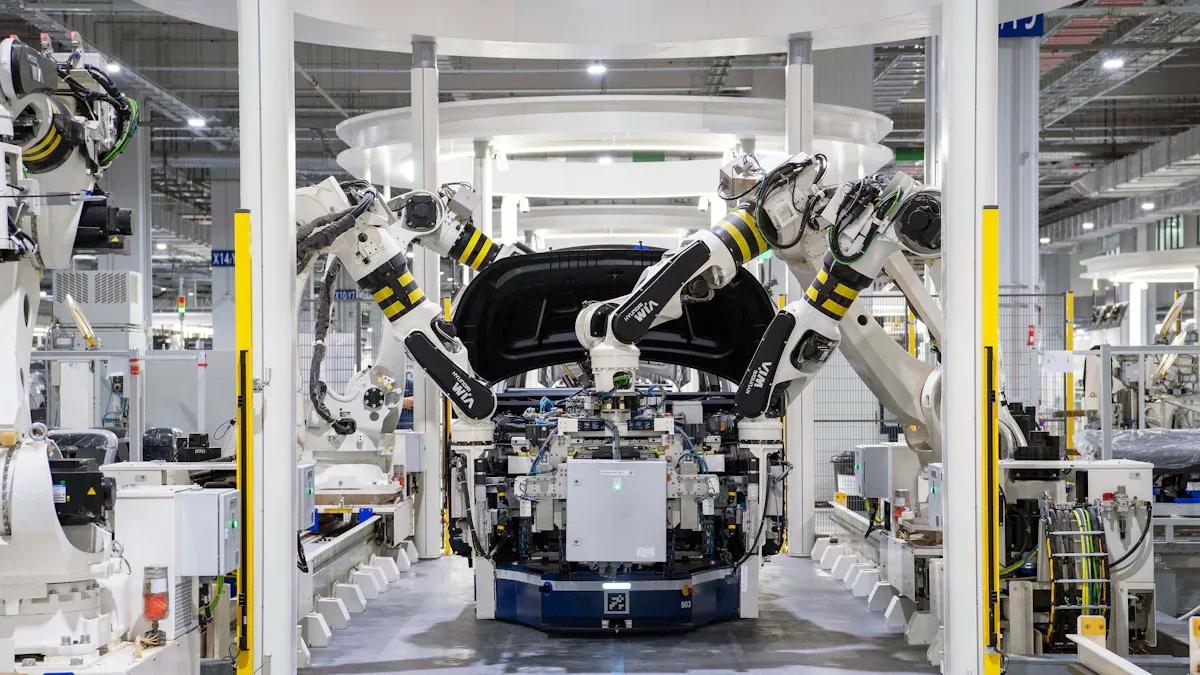
In 2025, FANUC and Siemens lead the charge in automation technology innovations. Their advancements significantly enhance manufacturing efficiency. For instance, the global industrial automation market is projected to reach impressive heights, with over 70% of manufacturers implementing automation solutions. Notably, FANUC's AI-driven error detection reduces defect rates by 35%. The ongoing comparison of FANUC and Siemens technologies reveals their commitment to optimizing production processes and driving industry standards forward.
Key Takeaways
- FANUC's AI-driven error detection reduces defect rates by 35%, enhancing product quality in manufacturing.
- Siemens uses machine learning algorithms to improve robotic pathing, leading to more efficient operations.
- Collaborative robots (cobots) from FANUC and Siemens enhance safety and versatility in various manufacturing environments.
- Digital twin technology allows manufacturers to create virtual replicas of assets, enabling real-time monitoring and optimization.
- Both companies prioritize sustainability, focusing on energy efficiency and eco-friendly practices to reduce emissions.
- Investing in AI and digital twins can significantly improve operational efficiency and reduce costs for manufacturers.
- The integration of advanced vision systems enhances automation processes, allowing for greater accuracy in complex tasks.
- Staying updated on automation technologies is crucial for manufacturers to maintain a competitive edge in the evolving landscape.
AI and Machine Learning Advancements

Error Detection Technology
In 2025, FANUC and Siemens have made significant strides in error detection technology through the application of artificial intelligence (AI). These advancements enable manufacturers to identify and rectify issues in real-time, leading to enhanced production quality and efficiency.
Siemens employs AI algorithms integrated into industrial equipment sensors. These sensors continuously monitor operations, detecting failures as they occur. This proactive approach facilitates predictive maintenance, allowing manufacturers to address potential issues before they escalate.
FANUC collaborates with NVIDIA to utilize deep learning models. These models empower robots to recognize anomalies in their movements, predicting equipment failures before they happen. This capability not only minimizes downtime but also enhances overall operational efficiency.
The results of these innovations are impressive. Siemens has achieved a defect rate of 99.99885% in their Amberg Electronics Plant, showcasing near-zero defects due to AI-driven quality control. Similarly, FANUC's AI-enabled robots leverage advanced vision systems to refine their quality inspection algorithms in real-time. This leads to a notable reduction in defect rates while simultaneously increasing throughput.
Intelligent Process Optimization
FANUC and Siemens also focus on intelligent process optimization, utilizing machine learning to enhance manufacturing operations. This approach allows for smarter decision-making and improved resource management.
| Benefit | Description |
| Extend machine lifespan | Predicts breakages and allows for early repairs. |
| Improve safety | Addresses issues like overheating or malfunctioning components. |
| Optimize maintenance cost | Enables targeted repairs and replacements rather than blanket overhauls. |
Siemens analyzes sensor data using AI to predict equipment breakdowns. This capability allows for timely maintenance scheduling, saving costs and enhancing operational efficiency.
FANUC utilizes machine learning for robotics, enabling robots to learn tasks through reinforcement learning. This method enhances efficiency in remote manufacturing and heavy assembly industries.
Siemens employs AI to predict equipment failures by analyzing sensor data. This proactive maintenance strategy saves time and reduces costs.
The efficiency gains from these intelligent process optimizations are substantial. For instance:
- Predictive maintenance reduces unplanned downtime, improving cost control.
- Automating quality control testing decreases scrap rates, enhancing product quality.
- Continuous production cycles with minimal manual intervention increase overall yields.
These advancements not only streamline operations but also contribute to a more sustainable manufacturing environment. As manufacturers adopt these technologies, they can expect significant returns on investment, with best-in-class companies reporting a 13% ROI from AI projects, far exceeding the industry average of 5.9%.
Vision Systems Innovations
Advanced Image Recognition
In 2025, FANUC and Siemens have revolutionized vision systems through advanced image recognition technologies. These innovations enhance automation processes, allowing machines to perform complex tasks with greater accuracy.
FANUC integrates artificial intelligence into its vision systems. This integration enables robots to execute intricate tasks such as bin picking and quality inspection. The AI algorithms analyze images in real-time, allowing robots to adapt to varying conditions and improve their performance over time.
Siemens has developed the Robot Pick AI, which empowers robots to handle unknown objects without prior training. This capability significantly reduces setup times and increases flexibility on the production floor. Robots can now identify and manipulate diverse items, streamlining operations and enhancing productivity.
The advancements in image recognition lead to substantial improvements in manufacturing efficiency. Companies report reduced error rates and increased throughput due to these technologies.
3D Vision Capabilities
The introduction of 3D vision capabilities marks another significant leap in automation technology. Both FANUC and Siemens have made strides in this area, enabling machines to perceive their environment in three dimensions.
FANUC's 3D vision systems utilize advanced sensors and cameras to create detailed spatial maps. This technology allows robots to navigate complex environments and perform tasks that require depth perception. For instance, robots can now accurately pick items from shelves or assemble components with precision.
Siemens enhances its 3D vision capabilities by incorporating machine learning algorithms. These algorithms enable robots to learn from their experiences, improving their ability to recognize and interact with objects in three-dimensional space. This adaptability leads to more efficient workflows and reduced cycle times.
The following table summarizes the latest advancements in vision systems technology from both companies:
| Company | Advancement Description |
| FANUC | Integration of AI in vision systems for complex tasks like bin picking and inspection. |
| Siemens | Development of Robot Pick AI enabling robots to handle unknown objects without prior training. |
These innovations in vision systems not only improve operational efficiency but also enhance the overall quality of products. As manufacturers adopt these technologies, they can expect to see significant gains in productivity and a reduction in operational costs. The future of automation looks promising with these advancements paving the way for smarter manufacturing solutions.
Collaborative Robots (Cobots)
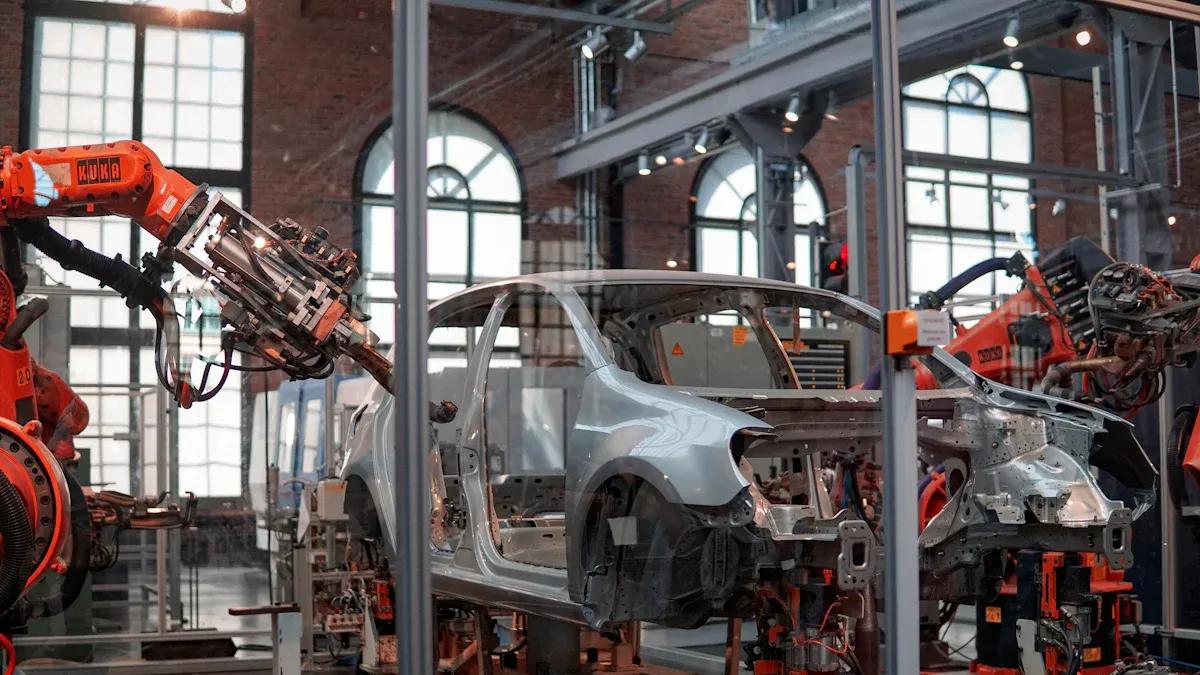
Collaborative robots, or cobots, have transformed the landscape of automation in 2025. FANUC and Siemens have introduced advanced models that enhance safety and versatility in various manufacturing environments.
Safety Enhancements
Safety remains a top priority in the development of cobots. FANUC and Siemens have integrated several safety features to comply with international standards. These enhancements ensure that cobots can operate alongside human workers without posing risks. The following table outlines key safety standards relevant to collaborative robots:
| Safety Standard | Description |
| ISO 10218 | Sets baseline safety requirements for industrial robots, covering design, installation, and operation. |
| ISO/TS 15066 | Addresses safety requirements for collaborative robots, defining force limits and risk assessment. |
| ANSI/RIA R15.06 | Additional standard relevant to safety in robotics, ensuring compliance and safety in operations. |
These standards guide manufacturers in implementing safe practices. For instance, cobots equipped with force-limiting technology can detect contact with humans and automatically reduce their speed or stop, preventing injuries.
Versatile Applications
The versatility of cobots allows them to be deployed across various sectors. In 2025, FANUC and Siemens cobots are making significant impacts in diverse manufacturing environments. Their applications include:
- Food Processing: Cobots assist in cooking, portioning, and packaging, ensuring consistency and food safety.
- Automotive Assembly: Companies like BMW and Ford utilize cobots for complex assembly tasks, enhancing precision and efficiency.
The following ordered list highlights the key features of new collaborative robot models released by FANUC in 2025:
- CRX-10iA/L Paint Cobot: Designed for painting, coating, and dispensing with a payload of up to 50 KG and a reach of 1,889 mm.
- CRX-10iA/L Cobot: Demonstrates automotive kitting using vision sensors for accurate component picking.
- CRX-20iA/L Cobot: Utilizes advanced line tracking for loading and unloading tasks in a dual cobot paint application.
- CRX-30iA Cobot: Features end-of-arm adhesive metering for precise dispensing applications.
- CRX-10iA/L Cobot: Integrated with a 7th axis rail for enhanced flexibility in collaborative arc welding.
These models showcase the adaptability of cobots in high-mix, low-volume tasks across industries such as electronics, medical devices, and aerospace. The global collaborative robot market is projected to grow at a rate of 20.6% in 2025, indicating a strong recovery and increasing demand for these innovative solutions.
As manufacturers embrace these advancements, they can expect improved productivity and enhanced safety in their operations. The future of cobots looks promising, with FANUC and Siemens leading the way in creating safer and more versatile automation solutions.
Digital Twin Technology
Digital twin technology has emerged as a game-changer in manufacturing, allowing companies to create virtual replicas of physical assets. This innovation enables real-time monitoring and optimization of production processes. In 2025, both FANUC and Siemens have made significant advancements in this area.
Simulation and Modeling
Simulation and modeling play crucial roles in digital twin technology. These processes allow manufacturers to visualize operations before implementation. Siemens has developed Process Simulate, which integrates digital models of assembly line components. This tool enables engineers to accurately model operations, leading to enhanced efficiency.
- Engineers can debug systems using simulation, reducing the need for physical prototypes. This approach saves time and resources.
- The upgraded Programmable Logic Controller (PLC) improves control and communication with robotic cells, resulting in increased speed and efficiency.
FANUC's Smart Digital Twin tools also contribute to this field. These tools allow for offline program execution and analysis, enhancing machine performance and part quality.
- Support staff can verify tool path issues without needing to travel physically, which reduces costs and downtime.
- Collaboration between engineers and manufacturers becomes more efficient, leading to faster testing and implementation of new processes.
Impact on Design and Development
The impact of digital twin technology on design and development cycles is profound. Companies experience measurable benefits that enhance their operations. The following table summarizes some of these impacts:
| Measurable Impact | Description |
| Optimize Performance | Enhances energy efficiency through insights into turbine aerodynamics and environmental interactions. |
| Reduce Maintenance Costs | Implements predictive maintenance to minimize unplanned downtime and extend component lifespan. |
| Support Sustainable Growth | Enables design and scaling of wind farms for maximum energy production with minimal environmental impact. |
| Shorten Development Cycles | Allows virtual testing and validation of designs, reducing reliance on physical prototypes. |
Siemens has partnered with NVIDIA to enhance manufacturing capabilities through edge AI. This collaboration enables real-time simulation and diagnostics, significantly increasing inference speeds. As a result, manufacturers can optimize production processes and reduce energy consumption.
Despite these advancements, manufacturers face challenges when integrating digital twin technology. Common issues include communication problems due to disparate devices and standardization challenges in data formats. Additionally, automating updates for large-scale processes can be complex, and timing events for entire production lines poses difficulties.
Sustainability Initiatives
Energy Efficiency Improvements
Both companies have made significant strides in enhancing energy efficiency within their operations. FANUC has achieved notable recognition for its sustainability efforts. The company received a Platinum rating from Ecovadis, placing it in the top 1% of over 150,000 companies assessed globally. Additionally, FANUC has been named to the CDP ‘A List’ for climate transparency for the second consecutive year. Their greenhouse gas (GHG) reduction targets have been validated by the Science Based Targets initiative (SBTi).
| Achievement | Description |
| Platinum Rating | FANUC received a Platinum rating for sustainability by Ecovadis. |
| CDP ‘A List’ | Named to the CDP ‘A List’ for climate transparency for the second year. |
| GHG Reduction Targets | Greenhouse gas reduction targets validated by the Science Based Targets initiative. |
| Top 100 Global Innovators | Recognised as one of the Top 100 Global Innovators 2025 by Clarivate. |
Siemens is also making significant contributions to energy efficiency. The company collaborates with Paragon Resources to scale a hydrogen production process that utilizes recycled aluminum. This innovative process does not require fossil fuels or external electricity, supporting energy-intensive industries in their transition to net zero emissions.
Eco-friendly Manufacturing Practices
FANUC and Siemens promote various eco-friendly manufacturing practices that yield impressive outcomes. FANUC focuses on energy-saving initiatives and carbon neutrality. Their efforts have led to a reduction in greenhouse gas emissions and an optimization of factory operations. Since 1995, FANUC has reduced power consumption by up to 35%, resulting in an improved working environment and increased productivity.
| Company | Eco-Friendly Practices | Reported Outcomes |
| FANUC | Energy saving and carbon neutrality initiatives. | Improved working environment and reduced power consumption by up to 35%. |
| Siemens | Solutions that optimize energy consumption and reduce waste. | Enhanced sustainability in manufacturing processes. |
Siemens also emphasizes solutions that optimize energy consumption and minimize waste. Their commitment to sustainability enhances the overall efficiency of manufacturing processes, contributing to a more sustainable future.
As both FANUC and Siemens continue to innovate in sustainability, they set a benchmark for the industry. Their initiatives not only address environmental concerns but also demonstrate that sustainable practices can lead to improved operational efficiency and profitability.
Comparison of FANUC and Siemens Technologies
Key Differentiators
Performance and Precision:
- FANUC is recognized for its top-tier performance, precision, and reliability. This makes it ideal for high-volume production environments where consistency is crucial.
- Siemens emphasizes its open digital platform, Xcelerator, which integrates various technologies for a collaborative industrial approach. This platform allows for seamless communication between different systems.
Scalability:
- FANUC systems are designed to scale easily from prototyping to production without needing to rewrite code. This flexibility supports manufacturers as they grow and adapt to changing market demands.
- Siemens' Xcelerator platform supports scalability through its integration with multiple tech providers. This ensures that businesses can expand their capabilities without significant disruptions.
Integration Capabilities:
- FANUC supports a wide range of machine tool brands, allowing for seamless integration across different systems. This compatibility enhances operational efficiency and reduces downtime.
- Siemens' Xcelerator serves as a collaborative hub, integrating software, hardware, and services. This holistic approach fosters a more connected manufacturing environment.
The comparison of FANUC and Siemens highlights their distinct approaches to automation technology. Each company brings valuable solutions to the table, catering to various industry needs.
Future Trends
Looking ahead, several trends are expected to shape the future of automation technologies beyond 2025. The integration of blockchain technology is anticipated to enhance supply chain transparency and efficiency. This will ensure accountability and traceability in automated systems.
FANUC is likely to maintain its leadership in the automation sector, particularly in the automotive and electronics industries. The demand for precision and speed in manufacturing continues to grow, aligning with the predicted trends of AI-driven automation. The widespread adoption of the Industrial Internet of Things (IIoT) will enhance operational efficiency and decision-making in factories.
Moreover, the rise of AI in automation is set to revolutionize manufacturing processes. This technology will enable smarter decision-making and real-time problem-solving. The IIoT will create a more connected ecosystem, facilitating end-to-end automation and resource optimization across various industries.
As FANUC and Siemens continue to innovate, their technologies will play a crucial role in shaping the future of manufacturing. Companies that embrace these advancements will likely gain a competitive edge in the evolving landscape of automation.
In 2025, FANUC and Siemens have introduced groundbreaking innovations that reshape the automation landscape. Key advancements include:
- FANUC's AI-driven error detection, which reduces defect rates by 35% in electronics assembly.
- Siemens' machine learning algorithms that enhance robotic pathing in real-time.
The future of automation looks promising. The integration of AI and digital twins transforms manufacturing processes, promoting flexibility and sustainability. Industry experts recommend focusing on connectivity and implementing applications that provide good payback.
As manufacturers navigate this evolving landscape, embracing these technologies will be crucial for maintaining a competitive edge. The time to adopt is now. 🌟
FAQ
What are the main innovations from FANUC and Siemens in 2025?
FANUC and Siemens introduced AI-driven error detection, advanced vision systems, and collaborative robots. These innovations enhance manufacturing efficiency and improve product quality.
How does AI improve manufacturing processes?
AI enhances manufacturing by enabling real-time error detection and intelligent process optimization. This leads to reduced defect rates and improved operational efficiency.
What role do collaborative robots play in manufacturing?
Collaborative robots, or cobots, work alongside human operators. They enhance safety and versatility, allowing for efficient task execution in various manufacturing environments.
How does digital twin technology benefit manufacturers?
Digital twin technology allows manufacturers to create virtual replicas of physical assets. This enables real-time monitoring, simulation, and optimization of production processes.
What sustainability initiatives are being implemented by FANUC and Siemens?
Both companies focus on energy efficiency improvements and eco-friendly manufacturing practices. Their initiatives aim to reduce greenhouse gas emissions and promote sustainable operations.
How can manufacturers adopt these new technologies?
Manufacturers can start by assessing their current processes and identifying areas for improvement. They should consider investing in AI, digital twins, and collaborative robots to enhance efficiency.
What are the expected future trends in automation?
Future trends include the integration of blockchain for supply chain transparency and the continued rise of AI in automation. These developments will further optimize manufacturing processes.
Why is it important to stay updated on automation technologies?
Staying updated on automation technologies helps manufacturers maintain a competitive edge. Embracing innovations can lead to improved efficiency, reduced costs, and enhanced product quality.