










How Heidenhain grating rulers enhance precision
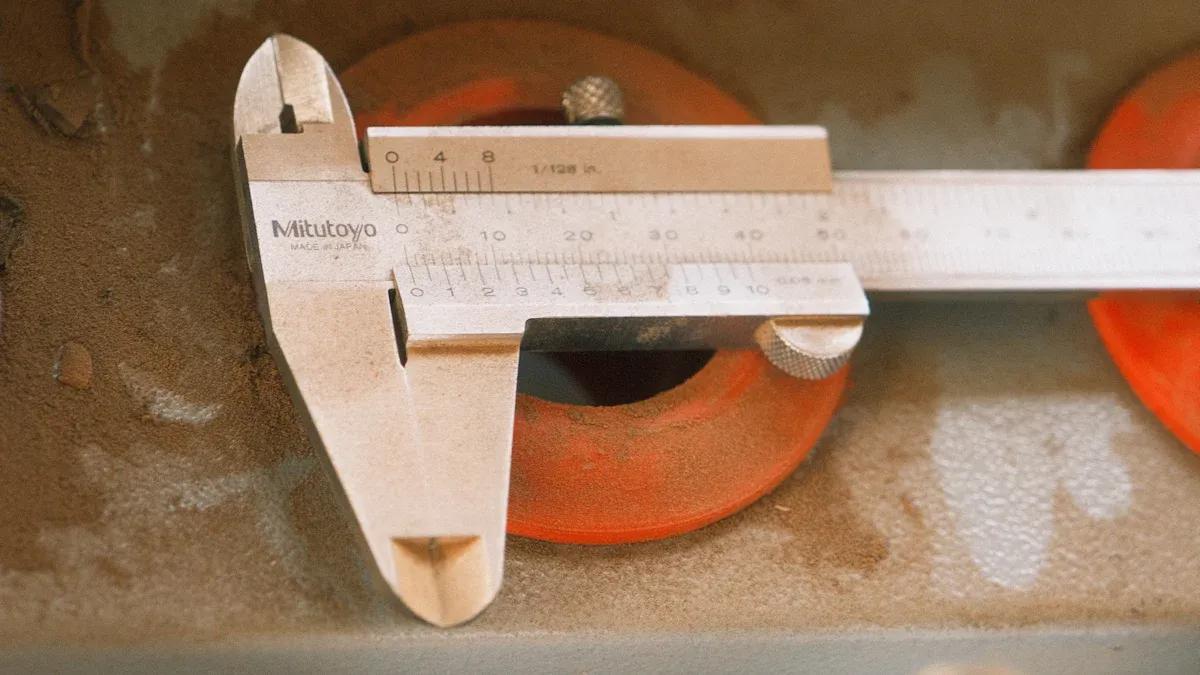
Heidenhain grating rulers play a vital role in achieving high precision in measurement. These advanced tools find applications across various industries, including manufacturing and metrology. By utilizing cutting-edge technology, they deliver accurate results, ensuring that processes run smoothly and efficiently. The reliability of these rulers enhances overall productivity, making them indispensable in modern measurement practices.
Key Takeaways
- Heidenhain grating rulers provide high precision measurements, achieving a resolution of up to 5.0 µm, essential for industries like CNC machining.
- These rulers utilize advanced optical grating technology, converting displacement into electrical signals for real-time monitoring and adjustments.
- Their robust construction allows them to operate effectively in harsh environments, with an IP67 rating for dust and moisture resistance.
- Heidenhain grating rulers enhance manufacturing processes by integrating real-time feedback systems, improving part quality and reducing material waste.
- In metrology, these rulers ensure high accuracy in calibration processes, maintaining the integrity of measurement systems over time.
- The rulers support automation in robotics, enabling precise movements and better synchronization for increased productivity.
- Heidenhain grating rulers contribute to smart manufacturing by providing data that optimizes production workflows and supports predictive maintenance.
- Their user-friendly installation and compatibility with existing systems minimize downtime, making upgrades to measurement systems efficient.
Overview of Heidenhain Grating Rulers
Heidenhain grating rulers serve as essential tools in precision measurement. These devices utilize optical grating technology to provide accurate position feedback in various applications. They function by converting linear or angular displacement into electrical signals, which can then be processed by control systems. This functionality allows for real-time monitoring and adjustment, ensuring that machinery operates at optimal levels.
Key Features
Measurement Technology
Heidenhain grating rulers employ advanced measurement technology that enhances their performance. The single-field scanning technology allows for a large scanning area, making these rulers less sensitive to contamination. This feature helps maintain measurement accuracy even in polluted environments. Tests indicate that the encoder continues to deliver high-quality signals despite significant contamination, ensuring that position errors remain below specified accuracy levels.
Resolution and Accuracy
The resolution of Heidenhain grating rulers reaches an impressive 5.0 µm (5 microns), enabling sub-micron accuracy in critical applications. This level of precision is vital in industries such as CNC machining, where even the slightest deviation can lead to significant errors. The output signal's stability in single-field scans results in minimal amplitude changes, which directly enhances measurement accuracy.
| Feature | Specification | Benefit |
| Technology | Optical Grating | High precision and immunity to magnetic interference |
| Amplifier Type | Optical | Eliminates electrical noise for stable readings |
| Material | Aluminum Alloy | Durable, lightweight, and corrosion-resistant |
| Resolution | 5.0 µm (5 micron) | Enables sub-micron accuracy in critical applications |
| Measurement Range | Up to 2440 mm (model-specific) | Supports long-stroke applications like CNC machines |
| Environmental Rating | IP67 (assumed based on Heidenhain standards) | Operates in dusty or wet environments |
Environmental Resistance
Heidenhain grating rulers are designed to withstand harsh conditions. Their construction often includes materials like aluminum alloy, which offers durability and corrosion resistance. With an environmental rating of IP67, these rulers can operate effectively in dusty or wet environments, making them suitable for a wide range of industrial applications.
Applications of Heidenhain Grating Rulers in Various Industries
Manufacturing
Precision in Machining
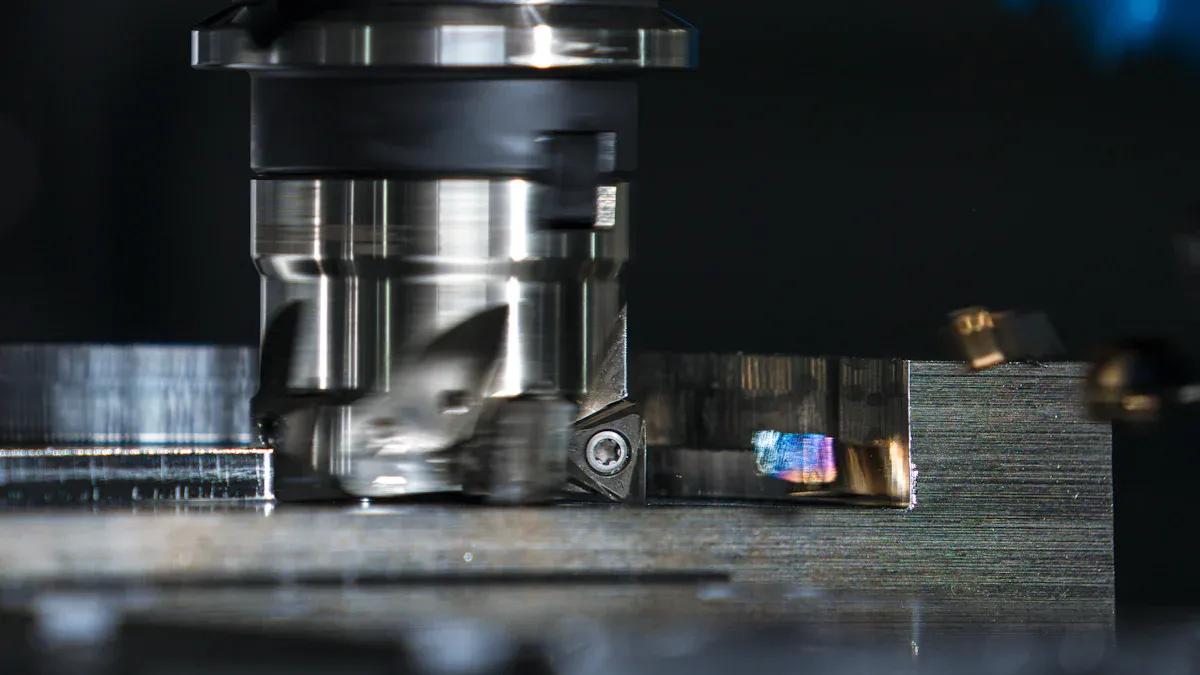
In the manufacturing sector, the demand for high-precision machining continues to rise. Industries such as automotive, aerospace, electronics, and medical devices rely heavily on accurate measurement systems. Heidenhain grating rulers play a crucial role in this context. They offer features that improve machining precision, including:
- Enhanced resolution and durability.
- Integrated temperature compensation to maintain accuracy under varying conditions.
- Real-time data capabilities that align with the trends of Industry 4.0 and IoT.
These advancements contribute to better precision in machining, ensuring that even the most intricate components are manufactured to exact specifications.
Assembly Line Accuracy
Heidenhain grating rulers also enhance accuracy in assembly line operations. By integrating precision element probes and position sensors, manufacturers can achieve real-time feedback on machining errors. This setup allows the machine tool to automatically compensate for inaccuracies, leading to improved part quality. As one expert noted:
"Error compensation method involves installing precision element probes, position sensors, grating rulers, and other equipment on CNC machine tools to feedback the machining error of the machine tool to the CNC system in real-time. The machine tool automatically compensates for the machining accuracy, improving the machining accuracy of parts and greatly saving the cost of raw materials."
The manufacturing sector's reliance on grating ruler sensors underscores their importance in ensuring high accuracy and efficiency.
Metrology
Calibration Processes
In metrology, Heidenhain grating rulers provide high-accuracy measurements across multiple degrees of freedom. Their ability to deliver real-time deviation readings allows for adjustments that account for thermal expansions and mechanical deviations. Key benefits include:
- Improved overall system accuracy.
- Enhanced reliability in measurement processes.
These features make Heidenhain grating rulers essential tools for calibration processes, ensuring that measurement systems maintain their integrity over time.
Testing Equipment
Testing equipment also benefits from the precision offered by Heidenhain grating rulers. Their high-resolution measurements enable accurate assessments of various instruments and devices. This capability is crucial for maintaining quality standards in production and ensuring compliance with industry regulations.
Robotics
Automation Systems
Heidenhain grating rulers are integral to robotics, particularly in motion control systems. They enable precise movements, which are essential for enhancing automation accuracy in robotic arms and automated systems. The use of these rulers ensures that robots perform tasks with high fidelity, reducing errors and increasing productivity.
Control Mechanisms
In addition to motion control, Heidenhain grating rulers contribute to the effectiveness of control mechanisms in robotics. Their precise feedback allows for better coordination and synchronization of robotic movements, leading to smoother operations. This precision is vital in applications where timing and accuracy are critical.
Semiconductor Manufacturing
Role in Production
In semiconductor manufacturing, precision is paramount. Heidenhain grating rulers significantly enhance production efficiency by providing high-precision measurement systems crucial for automated processes. These rulers facilitate accurate positioning and movement control, which are essential in the fabrication of semiconductor devices. The growing demand for automation and precision in this sector drives the adoption of Heidenhain grating rulers, leading to improved process control.
- Enhanced Accuracy: The rulers deliver precise measurements, ensuring that each step in the manufacturing process meets stringent specifications.
- Increased Automation: Their integration into automated systems allows for seamless operation, reducing the likelihood of human error.
- Improved Yield Rates: By minimizing measurement errors, manufacturers can achieve higher yield rates, ultimately leading to cost savings.
The market for grating rulers is projected to grow significantly, indicating a strong trend towards increased automation and precision in manufacturing sectors, including semiconductors.
Quality Control
Quality control is another critical area where Heidenhain grating rulers excel. These rulers provide real-time feedback on the manufacturing process, allowing for immediate adjustments to maintain quality standards. Their high-resolution measurements enable manufacturers to detect deviations early, preventing defects from reaching the final product.
- Consistent Monitoring: Continuous measurement ensures that any variations are promptly addressed.
- Data-Driven Decisions: The data collected from these rulers supports informed decision-making, enhancing overall production quality.
- Regulatory Compliance: Accurate measurements help manufacturers comply with industry regulations, ensuring that products meet safety and performance standards.
Medical Devices
Precision in Diagnostics
In the medical device industry, precision is critical for diagnostics and treatment. Heidenhain grating rulers contribute significantly to this field by ensuring that diagnostic equipment operates with the utmost accuracy. Their ability to provide precise measurements allows for reliable test results, which are essential for patient care.
- Accurate Imaging: In imaging devices, precise measurements enhance the quality of images, aiding in accurate diagnoses.
- Reliable Testing: Diagnostic tests depend on accurate measurements to ensure that results are valid and trustworthy.
- Patient Safety: High precision in medical devices directly correlates with improved patient safety and treatment outcomes.
Equipment Calibration
Calibration of medical devices is vital to ensure their accuracy and reliability. Heidenhain grating rulers play a crucial role in this process by providing the necessary precision for calibrating various types of equipment. Their high-resolution measurements allow technicians to adjust devices accurately, ensuring they function correctly.
- Enhanced Accuracy: The rulers provide precise feedback, allowing for accurate adjustments during calibration.
- Reduced Downtime: Quick and efficient calibration processes minimize equipment downtime, ensuring that devices are available for use when needed.
- Improved Compliance: Regular calibration with high-precision tools helps maintain compliance with regulatory standards in the medical field.
Benefits of Using Heidenhain Grating Rulers
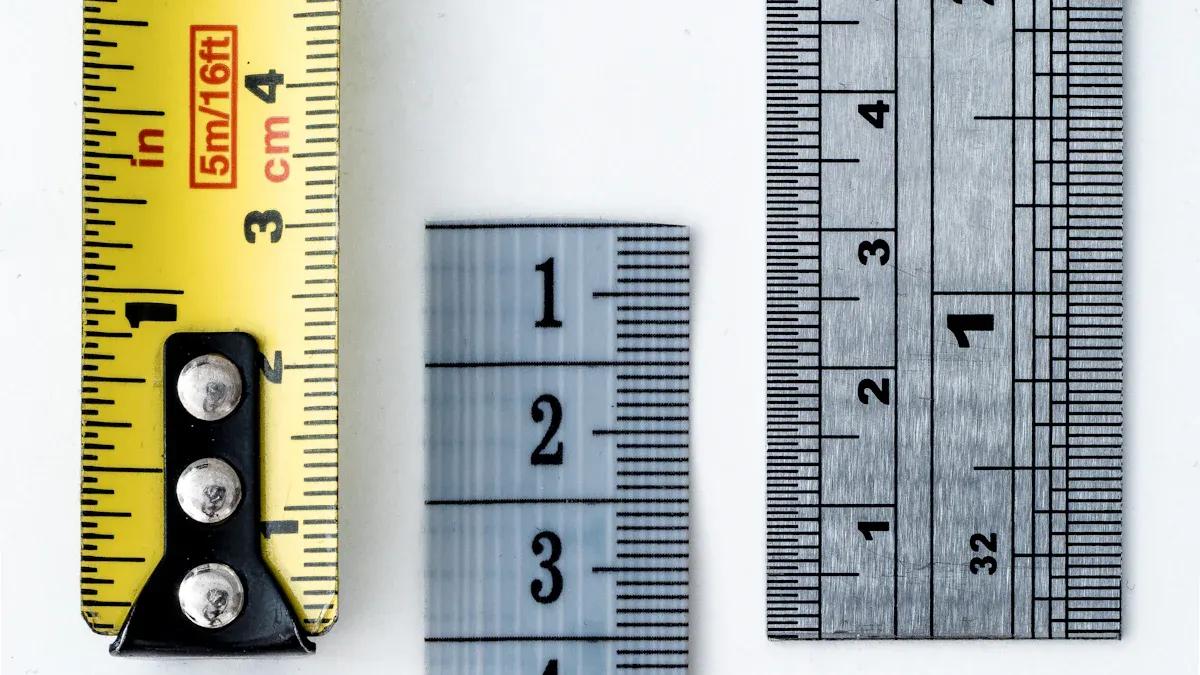
Heidenhain grating rulers offer numerous benefits that enhance measurement precision and operational efficiency across various industries. Their design and technology contribute to high accuracy, reliability, and seamless integration into existing systems.
Accuracy
High Precision Measurement
Heidenhain grating rulers achieve high precision measurements, making them indispensable in applications where accuracy is critical. With a resolution of up to 0.1 µm, these rulers ensure that even the smallest positional changes are detected. This level of precision is vital in sectors such as aerospace and medical device manufacturing, where tolerances are stringent.
The following features highlight their accuracy:
- High-Precision Position Measurement: Achieves micron-level accuracy for critical position measurements.
- Optical Amplifier Technology: Delivers reliable performance in environments with electromagnetic interference.
- Durable Construction: Built to withstand harsh environments, ensuring longevity in industrial applications.
Error Reduction
Error reduction is another significant advantage of using Heidenhain grating rulers. Their advanced technology minimizes the likelihood of measurement errors, which can lead to costly mistakes in production. By providing real-time feedback, these rulers allow operators to make immediate adjustments, thus maintaining high standards of quality.
Reliability
Durability in Harsh Conditions
Heidenhain grating rulers are designed to perform reliably in challenging environments. Their robust construction ensures they can withstand dust, moisture, and temperature fluctuations. This durability is crucial for industries that operate in less-than-ideal conditions, such as manufacturing and semiconductor production.
- Heidenhain encoders utilize TRUE IMAGE TECHNOLOGY to maintain performance under liquid contamination and condensation. This technology improves sensor optics, reducing diffraction and diffusion for accurate position feedback without needing purge air.
- The LC xx6 series of linear scales are designed to be robust, featuring an optimized scanning system for better performance in contaminated environments.
Consistent Performance
Consistent performance is a hallmark of Heidenhain grating rulers. They maintain accuracy and reliability even when environmental conditions change. This consistency is essential for industries that require continuous operation without interruptions.
- The new scanning design reduces the need for air-purge, which lowers the CO2 footprint by 99%. This advancement enhances convenience and reduces costs associated with closed-loop position measurement.
Ease of Integration
Compatibility with Existing Systems
Integrating Heidenhain grating rulers into existing measurement systems is straightforward. Their design allows for compatibility with various machinery and equipment, making them a versatile choice for manufacturers.
For example, the LS187 incremental position measuring grating ruler is utilized for high precision and non-contact measurements in a brake master cylinder detection system. Its accuracy of ±5 μm, along with a measuring length range of 140–3040 mm, showcases its adaptability to various measurement needs.
User-Friendly Installation
Installation of Heidenhain grating rulers is user-friendly, allowing for quick setup and minimal downtime. This ease of installation is particularly beneficial for companies looking to upgrade their measurement systems without extensive training or modifications.
Features such as dustproofing and protection against cutting fluid spattering enhance their reliability in harsh environments, ensuring that users can depend on their performance.
Comparison of Heidenhain Grating Rulers with Other Measurement Tools
Traditional Measurement Methods
Limitations of Analog Tools
Traditional analog measurement tools, such as calipers and micrometers, have served industries for decades. However, they exhibit several limitations that hinder precision and efficiency. These tools often rely on manual readings, which can introduce human error. Additionally, analog tools lack the ability to provide real-time data, making it difficult to monitor changes during operations. Their sensitivity to environmental factors, such as temperature and humidity, can also affect accuracy.
Advantages of Digital Solutions
Digital measurement tools, including Heidenhain grating rulers, address many of the shortcomings associated with analog methods. They offer enhanced accuracy, often achieving resolutions in the sub-micron range. Digital solutions provide immediate feedback, allowing operators to make timely adjustments. Furthermore, these tools are less prone to environmental influences, ensuring consistent performance across various conditions.
Other Digital Measurement Tools
Performance Comparison
When comparing Heidenhain grating rulers to other digital measurement tools, performance stands out as a critical factor. Heidenhain rulers excel in accuracy and reliability, making them a preferred choice in precision-driven industries. Other digital tools, such as magnetic rulers, may offer certain advantages, such as better environmental resistance. However, they often fall short in terms of accuracy.
| Feature | Heidenhain Grating Ruler | Magnetic Ruler |
| Accuracy | ± 0.005mm | ± 0.01mm |
| Environmental Sensitivity | Sensitive to temperature | Better environmental resistance |
| Service Life | Relatively short | Relatively long |
| Cost-Effectiveness | Advantageous up to 3m | More cost-effective over 2m |
Cost-Effectiveness
Cost-effectiveness is another important consideration when evaluating measurement tools. Heidenhain grating rulers provide significant advantages for applications requiring high precision. Their cost-effectiveness shines in shorter measurement ranges, particularly up to 3 meters. Conversely, magnetic rulers may prove more economical for longer distances, but they compromise on accuracy. This trade-off highlights the importance of selecting the right tool based on specific application needs.
Future Trends in Measurement Technology
Innovations in Heidenhain Grating Ruler Technology
Heidenhain continues to lead the way in measurement technology through innovative advancements. Recent developments focus on enhancing user experience and improving measurement accuracy. Notable innovations include:
| Innovation | Description |
| StateMonitor software | Heidenhain is enhancing its StateMonitor software based on machine shop needs and customer feedback. |
| EnDat 3 encoder interface | Heidenhain has launched EnDat 3, a new version of its absolute position encoder interface. |
These innovations reflect Heidenhain's commitment to meeting the evolving demands of the industry. The StateMonitor software allows operators to monitor machine performance in real-time, facilitating proactive maintenance and minimizing downtime. The EnDat 3 interface enhances communication between devices, ensuring seamless integration and improved data accuracy.
Emerging Applications
Industry 4.0 Integration
The integration of Heidenhain grating rulers into Industry 4.0 frameworks marks a significant trend in measurement technology. As industries embrace digital transformation, the need for precise and reliable measurement systems becomes paramount. Heidenhain grating rulers play a crucial role in this evolution by providing accurate data that supports smart manufacturing processes.
Manufacturers can leverage real-time data from grating rulers to optimize production workflows. This capability allows for immediate adjustments based on performance metrics, leading to enhanced efficiency and reduced waste. The ability to connect measurement systems to the Internet of Things (IoT) further amplifies these benefits, enabling predictive maintenance and data-driven decision-making.
Smart Manufacturing Solutions
Smart manufacturing solutions rely heavily on advanced measurement technologies. Heidenhain grating rulers contribute to this landscape by offering high precision and reliability. Their integration into automated systems allows for seamless operation, reducing the likelihood of human error.
In smart factories, grating rulers facilitate the automation of quality control processes. They provide continuous feedback on production quality, enabling manufacturers to detect deviations early. This proactive approach not only improves product quality but also enhances overall operational efficiency.
As industries continue to evolve, the demand for precise measurement tools will only increase. Heidenhain grating rulers stand at the forefront of this transformation, driving innovation and setting new standards for accuracy and reliability in measurement technology.
Heidenhain grating rulers significantly enhance precision across various industries. Their advanced technology ensures high accuracy in measurement, making them indispensable tools in fields such as semiconductor manufacturing and CNC machining. Industry experts recognize that these rulers minimize the need for manual recalibration, thereby boosting system reliability.
| Feature | Description |
| Advanced Technology | Heidenhain products utilize cutting-edge technology for precision measurement. |
| Engineering Expertise | Decades of experience in engineering contribute to the reliability of their measurement tools. |
| Industry Applications | Their solutions are used in high-performance applications across various industries. |
| Commitment to Quality | The company emphasizes exceptional accuracy and reliability in their products. |
In summary, Heidenhain grating rulers offer unmatched performance, making them a preferred choice for precision measurement.
FAQ
What are Heidenhain grating rulers?
Heidenhain grating rulers are precision measurement tools that utilize optical grating technology. They convert linear or angular displacement into electrical signals, providing accurate position feedback for various applications.
How accurate are Heidenhain grating rulers?
Heidenhain grating rulers achieve a resolution of up to 5.0 µm, enabling sub-micron accuracy. This level of precision is essential in industries where even minor deviations can lead to significant errors.
In which industries are Heidenhain grating rulers used?
Heidenhain grating rulers find applications in manufacturing, metrology, robotics, semiconductor manufacturing, and medical devices. Their ability to provide precise measurements makes them indispensable across these sectors.
How do Heidenhain grating rulers compare to traditional measurement tools?
Unlike traditional analog tools, Heidenhain grating rulers offer digital precision and real-time feedback. They minimize human error and provide consistent performance, making them superior for high-accuracy applications.
Are Heidenhain grating rulers easy to install?
Yes, Heidenhain grating rulers feature user-friendly designs that allow for quick installation. Their compatibility with existing systems ensures minimal downtime during upgrades.
What maintenance do Heidenhain grating rulers require?
Heidenhain grating rulers require minimal maintenance due to their robust construction. Regular cleaning and periodic checks for alignment can help maintain their accuracy and reliability.
Can Heidenhain grating rulers operate in harsh environments?
Yes, Heidenhain grating rulers are designed to withstand harsh conditions. Their durable materials and environmental ratings, such as IP67, allow them to function effectively in dusty or wet environments.
How do Heidenhain grating rulers contribute to Industry 4.0?
Heidenhain grating rulers support Industry 4.0 by providing real-time data for smart manufacturing processes. Their integration into automated systems enhances efficiency and enables predictive maintenance, driving operational improvements.