










Japanese Systems 2026: Mitsubishi and Fanuc's Worldwide Application Scope
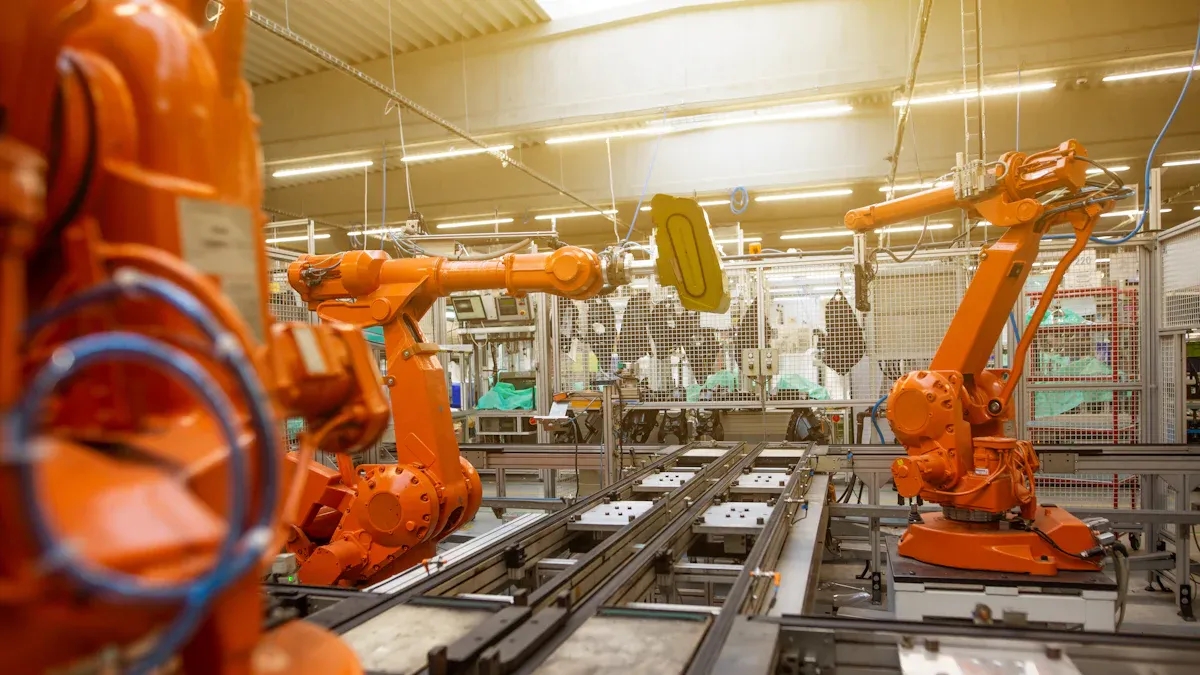
By 2026, Mitsubishi, Fanuc will solidify their global application scope in Japanese systems. They will achieve this through advanced automation, robotics, and control technologies. These companies will dominate key industrial sectors worldwide. For instance, Fanuc's advanced fanuc cnc systems will drive manufacturing efficiency. Their integrated solutions, often incorporating precision components like the Heidenhain Encoder, ensure high accuracy. This expansion directly addresses their anticipated global reach and technological focus, cementing their leadership.
Key Takeaways
- Mitsubishi and Fanuc will lead global industrial automation by 2026. They use advanced robotics and AI.
- Both companies use AI and machine learning. This helps factories predict problems and run better.
- IoT and edge computing connect machines worldwide. This allows remote control and monitoring.
- Advanced robots and collaborative systems make factories more flexible and safe. They help humans and robots work together.
- Mitsubishi and Fanuc offer green technologies. These solutions help save energy and protect the environment.
- Their systems are key for cars, electronics, and warehouses. They also help build smart cities.
- Strong global support and constant innovation keep them leaders. They build trust with customers.
The Current Global Footprint (2024-2025): Setting the Stage for 2026
Mitsubishi's Diverse Industrial Automation Portfolio
Mitsubishi Electric holds a significant position in industrial automation. The company offers a broad product portfolio. This includes programmable logic controllers (PLCs), human-machine interfaces (HMIs), servo systems, and industrial robots. Their global presence is strong, particularly in Asia.
Global Presence in PLCs and HMIs
Mitsubishi's PLCs and HMIs are widely adopted across various industries. These control systems manage complex manufacturing processes. Their reliability and user-friendliness make them a preferred choice for factories worldwide.
Servo Systems and Industrial Robots Worldwide
The company's servo systems provide precise motion control. Manufacturers use them in applications requiring high accuracy and speed. Mitsubishi also supplies industrial robots. These robots perform tasks like assembly, welding, and material handling. Their advanced precision engineering offers unparalleled accuracy and speed.
Key Regional and Industry Focus
Mitsubishi focuses on key regions such as Asia, Europe, and North America. They serve diverse industries. These include automotive, electronics, food and beverage, and infrastructure. Their commitment to digital transformation and sustainable solutions appeals to many clients. A diversified portfolio offers resilience against market changes.
Fanuc's Dominance in Robotics and CNC Systems
Fanuc is a global leader in factory automation. The company specializes in robotics and CNC machinery. They are known for their robust and reliable systems.
Worldwide Market Share in Industrial Robots
Fanuc commands a substantial worldwide market share in industrial robots. Their yellow robots are recognizable in factories globally. These robots perform a wide range of tasks, from heavy lifting to delicate assembly.
Global Installations of CNC Controls
Fanuc's CNC controls are installed in millions of machines worldwide. These controls provide high-speed processing power. This allows for rapid execution of complex machining programs, beneficial in high-volume production. They also ensure exceptional accuracy and finish. This meets stringent quality standards, ideal for industries like aerospace.
Strategic Deployment of Robomachines
Fanuc strategically deploys its Robomachines. These include Robodrill (machining centers), Roboshot (electric injection molding machines), and Robocut (wire-cut EDMs). These machines offer integrated solutions for precision manufacturing. Fanuc's reputation for reliability and user-friendly interfaces makes them suitable for high-volume production environments.
Synergies and Competitive Landscape for Mitsubishi and Fanuc
Mitsubishi and Fanuc, while competitors in some areas, also exhibit complementary global strategies. Both companies benefit from strong brand recognition, especially in Asia.
Complementary Global Strategies
Mitsubishi offers a broad industrial automation portfolio. Fanuc specializes in robotics and CNC. This allows them to address different, yet often interconnected, aspects of factory automation. Their technological expertise in areas like power electronics and advanced materials strengthens their combined impact.
Position Relative to Other Global Players
Both companies maintain a strong position relative to other global players. They differentiate themselves through continuous innovation and product quality. Their commitment to digital transformation and sustainable solutions gives them an edge.
Market Share Dynamics
Mitsubishi and Fanuc consistently hold significant market shares in their respective domains. Their long-standing presence and reputation for quality contribute to stable market dynamics. They continue to invest in R&D, ensuring they remain at the forefront of industrial automation technology.
Technological Advancements Driving 2026 Global Scope for Mitsubishi and Fanuc
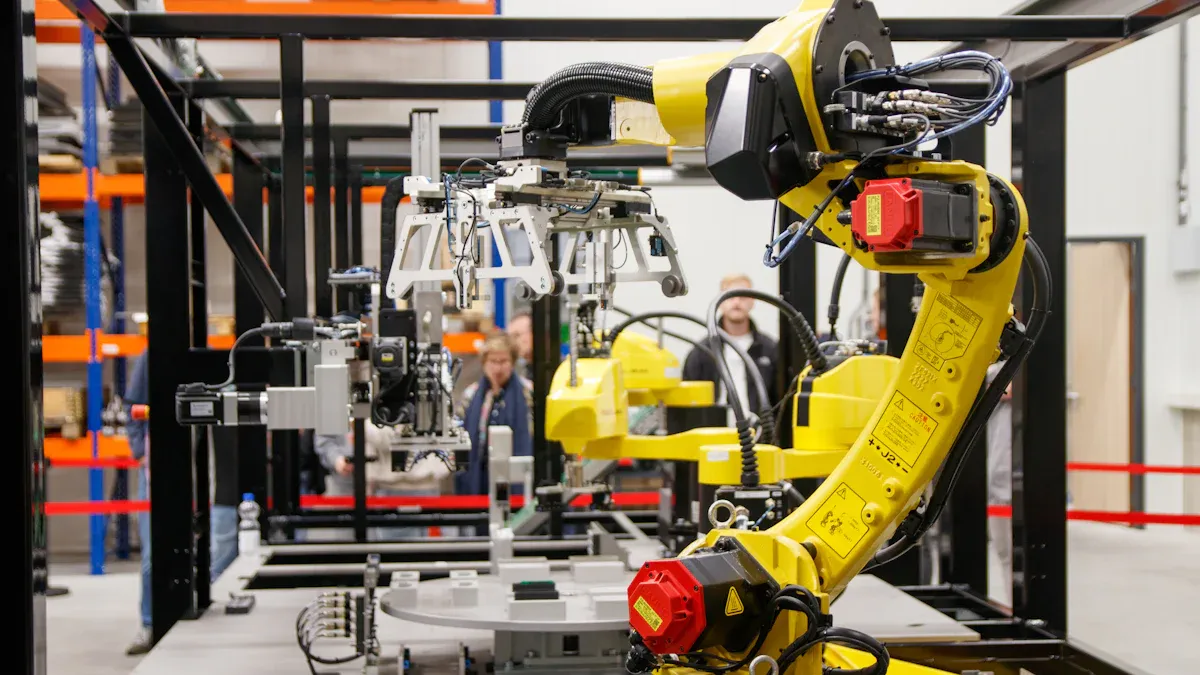
Technological advancements will drive the global scope for Mitsubishi, Fanuc by 2026. These companies actively integrate cutting-edge technologies. They focus on AI, IoT, and advanced robotics.
AI and Machine Learning Integration
Artificial intelligence (AI) and machine learning (ML) are transforming industrial automation. These technologies make systems smarter and more efficient.
Mitsubishi's e-F@ctory and AI Applications
Mitsubishi's e-F@ctory system uses AI applications. It includes AI-powered predictive maintenance solutions. These solutions use sensor data and machine learning models. They predict equipment failures. This reduces unplanned downtime. It also optimizes maintenance schedules. The system also employs AI-driven computer vision systems. These systems perform automated quality control. They inspect manufactured components quickly. They identify defects, inconsistencies, and misalignments in real-time. AI also helps with energy optimization. It monitors and analyzes energy consumption patterns. AI-controlled variable frequency drives (VFDs) adjust motor speeds dynamically. This happens based on real-time load requirements. This enhances energy efficiency.
Fanuc's FIELD System and Predictive Maintenance
Fanuc's FIELD (FANUC Intelligent Edge Link and Drive) system also integrates AI and ML. It features built-in analytics. It uses machine learning models. These models train specifically on manufacturing equipment behavior patterns. The system provides AI-driven analytics. This helps factories make smarter decisions.
Optimized Production and Autonomous Operations
These AI and ML integrations lead to optimized production. They enable autonomous operations. Factories can run more efficiently. Machines can predict their own needs. This reduces human intervention.
IoT and Edge Computing for Enhanced Connectivity
The Internet of Things (IoT) and edge computing enhance connectivity. They expand global reach for industrial systems.
Role of IoT Platforms in Global Reach
IoT platforms play a crucial role in global reach. Mitsubishi Electric Corporation and Fanuc Corporation have formed Edge Computing Consortiums in Japan. These consortiums develop edge computing products. They also standardize solutions. The MachineMetrics Edge Platform offers proprietary connectors. These connectors are specifically for Fanuc and Mitsubishi. They enable plug-and-play universal data collection. This helps discrete manufacturing. deviceWISE EDGE by Telit Cinterion is another platform. Both Mitsubishi and Fanuc use it. It collects real-time data from devices. These devices include PLCs, CNCs, robots, and sensors. It offers over 400 drivers.
Edge Devices for Remote Monitoring
Edge devices are important for remote monitoring. They process data closer to the source. This reduces latency. It also improves response times.
Control Across Diverse Geographical Locations
IoT and edge computing allow control across diverse geographical locations. Companies can monitor and manage operations from anywhere. This ensures consistent performance globally.
Advanced Robotics and Collaborative Systems
Advanced robotics and collaborative systems will redefine manufacturing. They bring new levels of automation and flexibility.
Innovations in Cobots and Vision Systems
Innovations in cobots and vision systems are significant. FANUC has made advancements in vision systems. They integrate artificial intelligence (AI) for advanced image recognition. This allows their robots to perform complex tasks. Examples include bin picking and quality inspection. Accuracy is enhanced. AI algorithms enable real-time image analysis. Robots adapt to varying conditions. They improve performance over time. FANUC also introduced 3D vision capabilities. They use advanced sensors and cameras. This creates detailed spatial maps. Robots perceive their environment in three dimensions. This technology helps tasks needing depth perception. These tasks include picking items from shelves. They also include assembling components with precision. FANUC offers various CRX cobots. The CRX-10iA/L Paint Cobot paints, coats, and dispenses. It has a 50 KG payload and 1,889 mm reach. The CRX-10iA/L Cobot demonstrates automotive kitting. It uses vision sensors for accurate component picking. The CRX-20iA/L Cobot uses advanced line tracking. It performs loading and unloading tasks. This happens in a dual cobot paint application. The CRX-30iA Cobot features end-of-arm adhesive metering. This allows precise dispensing applications. The CRX-10iA/L Cobot integrates with a 7th axis rail. This enhances flexibility in collaborative arc welding.
Mobile Robots for Global Logistics
Mobile robots will play a big role in global logistics. Automated Guided Vehicles (AGVs) and Autonomous Mobile Robots (AMRs) transport goods. They move materials within factories and warehouses.
Impact on Manufacturing by 2026
By 2026, these advancements will significantly impact manufacturing. Factories will become more flexible. They will be more efficient. They will also be safer. Robots and humans will work together seamlessly.
Sustainable and Energy-Efficient Solutions
Mitsubishi and Fanuc actively develop sustainable and energy-efficient solutions. These efforts address growing global demands for environmental responsibility. They also help industries reduce operational costs.
Focus on Green Technologies
Both companies prioritize green technologies in their product development. Mitsubishi, for example, invests in next-generation servo systems. These systems promise enhanced precision and adaptability. They also focus on consuming less power. Mitsubishi implements high-performance energy-saving modes in its servo systems. This significantly reduces electricity use during operation. Furthermore, Mitsubishi offers an energy-saving S-PM geared motor. This motor specifically improves the energy efficiency of belt conveyors. These conveyors are common in many industrial settings. Fanuc also designs its robots and CNC machines for optimal energy use. They build components with high efficiency. This minimizes waste heat and power consumption.
Appeal in Environmentally Conscious Markets
These sustainable solutions hold strong appeal in environmentally conscious markets. Many countries now have strict regulations on industrial energy consumption. Companies using Mitsubishi and Fanuc technologies can meet these standards more easily. Customers also increasingly prefer suppliers who demonstrate environmental stewardship. Green technologies enhance a company's brand image. They also provide a competitive advantage. This appeal extends across Europe, North America, and parts of Asia. These regions show strong commitments to reducing carbon footprints.
Energy Management Systems
Mitsubishi and Fanuc provide advanced energy management systems. These systems monitor and optimize energy use across entire factories. They collect data from various machines and processes. Then, they analyze this data to identify areas for improvement. For instance, a system might suggest adjusting production schedules. This can shift energy-intensive tasks to off-peak hours. This reduces electricity costs. These systems also integrate with smart grids. They allow factories to participate in demand-response programs. This further enhances energy efficiency and sustainability.
Key Global Application Sectors by 2026 for Japanese Systems
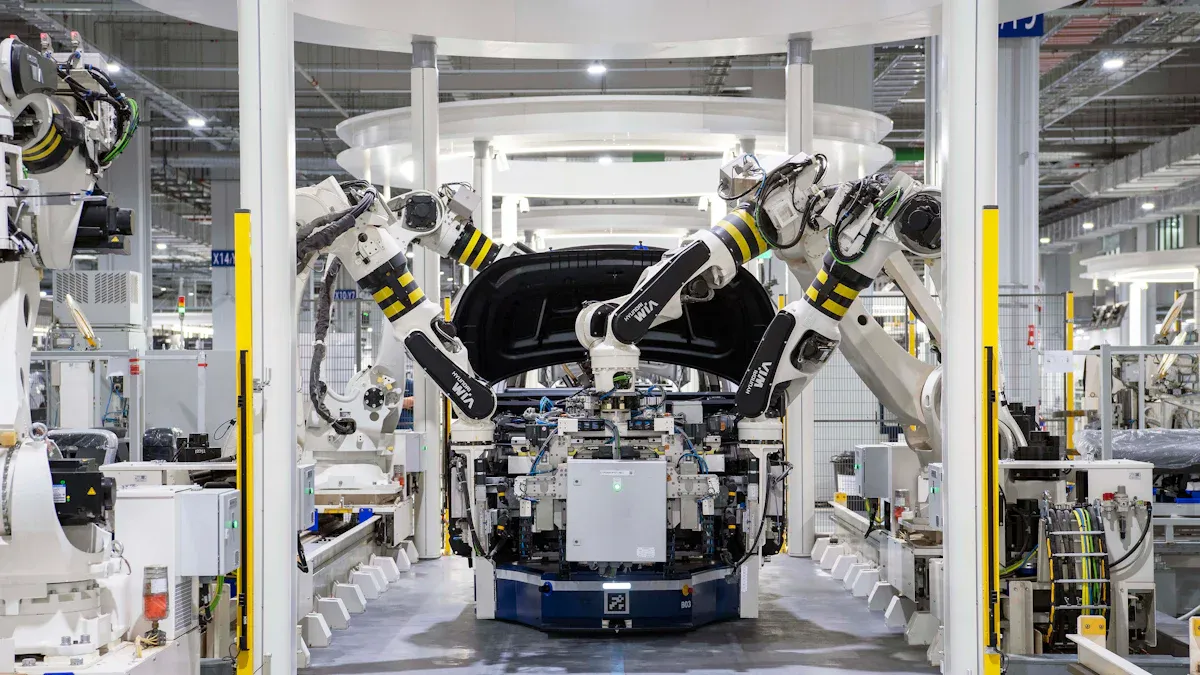
Japanese systems will find widespread application across critical global sectors by 2026. Mitsubishi and Fanuc technologies will drive efficiency and innovation in these industries.
Automotive and Electric Vehicles (EVs)
The automotive industry, especially the rapidly expanding electric vehicle (EV) sector, heavily relies on advanced automation. Mitsubishi and Fanuc play a critical role in this global manufacturing landscape.
Critical Role in Global Automotive Manufacturing
Industrial robots are essential for modern automotive production. They perform tasks requiring high precision and speed. The automotive industry remains the primary adopter of these technologies. High-volume production requirements in assembly lines demand micron-level precision in welding and painting applications. Mitsubishi and Fanuc provide many of these crucial automation solutions. For example, FANUC America Corporation introduced the M-950iA/500 in November 2024. This high-performance industrial robot lifts components up to 500 kg. It has a 2,830 mm reach. This robot is suitable for demanding tasks like welding, drilling, and palletizing. It further strengthens automation capabilities in the automotive and EV sectors.
EV Battery Production and Assembly Lines
The growth of electric vehicles creates new demands for automation. EV battery production and assembly lines require specialized robots and control systems. These systems handle delicate battery cells and modules with extreme accuracy. The global robot servo motion control system market sees strong leadership from Japanese companies. Yaskawa Electric, Mitsubishi Electric, and FANUC together hold approximately 45% of this market. These companies are key industry players. They leverage extensive product portfolios and global distribution networks. They lead in high-precision servo systems for industrial robotics applications. This includes those used in automotive and EV manufacturing.
Presence Across Asia, Europe, and North America
Mitsubishi and Fanuc have a significant presence in automotive manufacturing across major continents. Their systems are integral to factories in Asia, Europe, and North America. Key players in the automotive robot market include FANUC Corporation and Mitsubishi Electric Corporation. Other significant companies are ABB Ltd., KUKA AG, Yaskawa Electric Corporation, Epson Robots, Comau S.p.A., Denso Wave Incorporated, Universal Robots A/S, Staubli International AG, and Kawasaki Heavy Industries Ltd. This broad presence ensures their technologies support global automotive production.
Electronics and Semiconductor Manufacturing
Electronics and semiconductor manufacturing demand extreme precision and high levels of automation. Mitsubishi and Fanuc offer specialized solutions for this sector.
Precision Automation for Microelectronics
Manufacturing microelectronics requires incredibly precise movements and controls. Mitsubishi Electric's MAISART (AI State-of-the-Art Technology) offers advanced solutions. Its Edge AI enables real-time decision-making at the device level. This provides instant responses to anomalies. It also optimizes quality control and efficiency. Reinforcement Learning AI fine-tunes precision control mechanisms. This maximizes chip yield rates in semiconductor manufacturing. Deep Learning integrates into image recognition and defect detection systems. These systems ensure product quality control. They analyze micro-level defects in materials and electronics.
Meeting Global Demand and High Automation Needs
The global demand for electronics and semiconductors continues to rise. This necessitates highly automated production lines. Mitsubishi's e-F@ctory concept, driven by AI, provides comprehensive factory automation. Predictive Maintenance forecasts equipment failures using sensor data and machine learning models. This reduces downtime and optimizes maintenance schedules. For example, AI-enabled CNC systems predict spindle wear. AI-Powered Automated Quality Control uses AI-driven computer vision systems. These systems inspect manufactured components for defects, inconsistencies, and misalignments in real-time. AI-powered X-ray inspection systems for circuit boards detect hidden soldering flaws. Fanuc also leverages AI in robotics and industrial automation. They emphasize AI-powered cobots, intelligent supply chains, and automated assembly lines. These general AI applications also benefit electronics and semiconductor manufacturing.
Advanced Material Handling
Advanced material handling is crucial in electronics and semiconductor factories. Robots precisely move delicate components and wafers. They ensure minimal contamination and damage. Mitsubishi and Fanuc robots perform these tasks with high reliability. Their systems integrate seamlessly into cleanroom environments.
Logistics and Warehousing Automation
The logistics and warehousing sectors are undergoing a rapid transformation. Automation is key to meeting the demands of global supply chains. Mitsubishi and Fanuc contribute significantly to this evolution.
Expansion into Automated Guided Vehicles (AGVs)
Automated Guided Vehicles (AGVs) are becoming common in warehouses and distribution centers. These vehicles transport goods along predefined paths. They improve efficiency and reduce labor costs. Mitsubishi and Fanuc provide control systems and components for AGVs. Their technologies ensure reliable navigation and precise movement.
Autonomous Mobile Robots (AMRs)
Autonomous Mobile Robots (AMRs) offer even greater flexibility than AGVs. AMRs navigate dynamic environments without fixed paths. They use sensors and AI to avoid obstacles and find optimal routes. These robots are essential for modern, flexible warehousing operations. Mitsubishi and Fanuc's advanced robotics and AI capabilities support the development and deployment of AMRs.
Robotic Picking Solutions for Global Supply Chains
Robotic picking solutions are revolutionizing order fulfillment. Robots use advanced vision systems and grippers to identify and pick individual items. This significantly speeds up the picking process. It also reduces errors. These solutions are vital for e-commerce and global supply chains. They ensure fast and accurate delivery of goods worldwide. Mitsubishi and Fanuc's innovations in cobots and vision systems directly contribute to these advanced picking solutions.
Infrastructure and Smart Cities
Mitsubishi and Fanuc technologies extend beyond factory floors. They play a vital role in developing smart infrastructure and urban environments. These systems contribute to more efficient and sustainable cities worldwide.
Mitsubishi's Contributions to Smart Infrastructure
Mitsubishi Electric actively contributes to smart infrastructure projects. The company offers a comprehensive suite of solutions. Its GENESIS Software Suite enables rapid deployment of digitalization projects. This includes enterprise-wide intelligent control systems. It also provides data historization, situational awareness, and enterprise analytics. Mitsubishi's Intelligent Buildings Software Stack (IBSS) is a cloud-based software. It creates a virtual, data-driven replication of physical buildings. This models relationships between people, places, and devices into a semantic data digital twin. IBSS offers centralized visualization and control. It also provides cost management through energy optimization. The software ensures technological integration with various protocols like BACnet, OPC, and IoT. It includes features for tenant satisfaction and workplace management.
Mitsubishi also provides Facility AnalytiX. This is a complete, ongoing commissioning software solution. It uses advanced Fault Detection and Diagnostics (FDD) technology. This reduces costs and improves operational efficiency. The company's Automation Hardware Portfolio includes controllers, drives, CNC, and robots. These are for total factory automation. They also contribute to smart building infrastructure.
Mitsubishi Electric offers comprehensive solutions for data center gray space. These include:
- Variable Frequency Drives (VFDs): These provide precise motor control and energy optimization.
- Human-Machine Interfaces (HMIs): These are for operational control and monitoring.
- Programmable Logic Controllers (PLCs): These handle automation and control tasks.
- Low Voltage Switchgear (LVS): This ensures reliability and efficiency in power distribution. The company's software solutions include SCADA/DCIM (Supervisory Control and Data Acquisition/Data Center Infrastructure Management). This unifies heterogeneous installations. It monitors facility health. It also provides insights for energy reduction.
Building Automation and Energy Management
Mitsubishi's systems are crucial for advanced building automation. They manage heating, ventilation, and air conditioning (HVAC). They also control lighting and security systems. These integrated solutions optimize building performance. They reduce energy consumption significantly. The focus on energy management helps buildings achieve sustainability goals. This makes them more cost-effective to operate.
Urban Developments Worldwide
Mitsubishi's technologies support large-scale urban developments. They enable smart city initiatives globally. These initiatives include intelligent transportation systems. They also cover public safety and utility management. The company's robust infrastructure solutions create more livable and efficient urban environments.
Emerging Markets and Niche Applications
Mitsubishi and Fanuc are expanding their reach into new geographical areas. They also target specialized industries. This strategic growth ensures their continued global dominance.
Penetration into Southeast Asia and Africa
Both Mitsubishi and Fanuc actively penetrate emerging markets. These regions offer significant growth potential for industrial automation. FANUC CORPORATION is a major player in the emerging technologies in manufacturing market. Mitsubishi Electric Corporation is also among the major players in this market. Mitsubishi Electric specifically expands its global footprint. It focuses on high-growth markets in Asia and Latin America. Southeast Asia and Africa represent key areas for this expansion. These markets are industrializing rapidly. They seek advanced automation solutions to boost productivity.
Specialized Industries like Food & Beverage
Mitsubishi and Fanuc systems find applications in specialized industries. The food and beverage sector benefits greatly from automation. Robots handle delicate products. They ensure hygiene and consistency. Automated systems manage packaging and logistics. This improves efficiency and reduces waste. These solutions meet strict regulatory standards in food processing.
Medical Devices and Pharmaceuticals
The medical devices and pharmaceutical industries demand extreme precision and sterile environments. Mitsubishi and Fanuc provide critical automation for these sectors. Robots perform intricate assembly tasks for medical devices. They handle sensitive materials in pharmaceutical production. These systems ensure high quality and compliance with stringent industry regulations. Their precision and reliability are indispensable for these life-critical applications.
Strategic Global Expansion and Partnerships for Mitsubishi and Fanuc
Mitsubishi and Fanuc actively pursue strategic global expansion. They form partnerships to strengthen their worldwide presence. These efforts ensure their continued leadership in industrial automation.
Regional Market Strategies
Both companies develop specific strategies for different regions. They understand that each continent has unique demands.
Tailored Approaches for Different Continents
Mitsubishi and Fanuc tailor their approaches for various continents. In Asia, they focus on rapid industrialization and manufacturing growth. They offer solutions for high-volume production. In Europe, they emphasize advanced automation and sustainability. They meet strict environmental regulations. North America sees a focus on smart manufacturing and digital transformation. These tailored strategies help them meet local market needs effectively.
Considering Local Regulations and Labor Costs
Companies must consider local regulations. They also look at labor costs. Mitsubishi and Fanuc adapt their offerings. They provide solutions that comply with local laws. They also help businesses optimize operations based on labor availability and cost. This includes offering more automated solutions in regions with high labor costs.
Addressing Industrial Needs
Each region has specific industrial needs. For example, the automotive sector dominates in some areas. Electronics manufacturing is strong in others. Mitsubishi and Fanuc develop products and services. These offerings directly address these diverse industrial requirements.
Collaborations and Acquisitions
Strategic collaborations and acquisitions are vital for global growth. They enhance technological capabilities and market reach.
Strategic Alliances for Global Presence
Fanuc maintains important partnerships. They work with NVIDIA for deep learning applications. This collaboration improves their AI capabilities in robotics. Fanuc also established Kitov AI. This venture focuses on advanced vision inspection systems. Mitsubishi Corporation formed a joint venture. It is called Preferred Computing Infrastructure. This venture works with Preferred Networks and Internet Initiative Japan. They commercialize secure AI infrastructure. Mitsubishi Motors also entered an agreement. They will procure Electric Vehicles (EVs) from Foxtron. Foxtron is a subsidiary of Foxconn. These alliances expand their global footprint.
M&A Activities for Technological Capabilities
Both companies engage in mergers and acquisitions (M&A). These activities help them acquire new technologies. They also gain specialized expertise. This keeps them at the forefront of innovation.
Joint Ventures and R&D Partnerships
Joint ventures and research and development (R&D) partnerships are common. They allow companies to share resources. They also share risks. This accelerates the development of new solutions. These partnerships are crucial for staying competitive.
Service and Support Networks
A strong global service network is essential. It supports the widespread application of their technologies.
Importance of Global Service Infrastructure
A robust global service infrastructure is very important. It ensures customers receive timely support. This includes maintenance, repairs, and technical assistance. This infrastructure helps sustain customer satisfaction.
Sustaining and Expanding Application Scope
Excellent service sustains and expands application scope. When customers trust the support system, they adopt more technologies. This leads to broader use of Mitsubishi and Fanuc products.
Technical Training and Customer Support
Both companies invest in technical training. They also provide strong customer support. This ensures users can operate their systems effectively. It also helps them troubleshoot issues. This commitment to support builds long-term customer relationships.
Competitive Advantages and Future Outlook for Japanese Systems
Innovation and R&D Investment
Continuous Development of Core Technologies
Mitsubishi and Fanuc consistently invest in research and development. They focus on core technologies. This includes advanced robotics, AI, and control systems. Their commitment ensures their products remain at the forefront of industrial automation. They continuously refine existing technologies. They also explore new frontiers.
Future-Proofing Solutions
These companies design their solutions for the future. They anticipate industry needs. They also adapt to technological shifts. This future-proofing approach helps customers stay competitive. It also ensures long-term relevance for their products.
Patent Portfolios
Mitsubishi and Fanuc hold extensive patent portfolios. These patents protect their innovations. They also demonstrate their technological leadership. This intellectual property gives them a significant competitive edge in the global market.
Brand Reputation and Reliability
Trust in Japanese Engineering
Customers worldwide trust Japanese engineering. Mitsubishi and Fanuc embody this trust. Their products are known for precision and durability. This reputation for quality builds strong customer loyalty.
Mitsubishi Electric's brand reputation comes from its broad automation portfolio. This portfolio integrates robotics, motion control, and electrical systems. Its MELFA industrial robots and MELSEC PLCs are well-known for accuracy and long-term reliability. They perform especially well in electronics and automotive manufacturing. The company's e-F@ctory platform further enhances its standing. It facilitates smart manufacturing through robotics, sensors, and IT systems. Mitsubishi Electric contributes significantly to Japan's position as the world's largest industrial robot manufacturer. Its robotics exports and technological leadership reinforce its reputation. Japanese engineering reliability and global support underpin this success.
FANUC's brand reputation and reliability come from its position as a top supplier of industrial robots and CNC automation systems. Millions of installations globally use their products. The company is known for its immense scale and inherent reliability. It focuses strategically on high-volume production environments. These factors are critical for its widespread adoption and trust in global markets. FANUC Corporation's reputation in robotic packaging systems also comes from its comprehensive service support. It focuses on long-term reliability and minimum maintenance needs. The company offers specialized packaging robot variants. These include robots for food, pharmaceutical, and general packaging. These robots directly address the critical need for uptime in packaging operations. This commitment to robust solutions and dedicated support makes FANUC a technology leader in this segment. Mitsubishi Electric's brand reliability in servo motors comes from its advanced technology. This includes cutting-edge control algorithms and sensor technologies. Advanced encoders provide precise position feedback. The company offers a wide product range. This includes high-power and high-torque options. Integrated servo drive systems simplify design and installation. Its global service network provides timely and professional after-sales support. This minimizes downtime and builds customer trust worldwide.
Long-Term Customer Relationships
Both companies build long-term relationships with their customers. They provide consistent support and reliable products. This approach fosters loyalty and repeat business.
Global Quality Standards
Mitsubishi and Fanuc adhere to strict global quality standards. Their manufacturing processes ensure high-quality products. This commitment to excellence strengthens their global market position.
Addressing Global Challenges
Labor Shortages and Automation Solutions
Automation solutions from Mitsubishi and Fanuc help address global labor shortages. FANUC partners with NVIDIA on 'Physical AI' robotics. This makes robots more intelligent and adaptable. It reduces reliance on human labor for complex tasks. This collaboration aims to make advanced robotics accessible. Small and medium-sized enterprises (SMEs) can adopt automation. This helps them address labor challenges. 'Physical AI' allows robots to learn, reason, and work alongside humans. They perform tasks that previously required human variability. Mitsubishi Electric is a major player in the industrial robot industry. It drives innovation through AI integration and cloud connectivity. These advancements help industries boost productivity. They also adapt to labor challenges.
Supply Chain Resilience
Their automation solutions also enhance supply chain resilience. Factories can quickly adapt to changing demand. They cut production costs and shorten lead times. Reliable and flexible robots make this possible. Mitsubishi Electric invests in sustainable robotics and modular automation cells. These support digitalized, energy-efficient operations. They enable manufacturers to improve uptime. They also accelerate changeovers and scale production efficiently.
Environmental Compliance and Sustainability
Mitsubishi and Fanuc prioritize environmental compliance. They also focus on sustainability. Their energy-efficient products and green technologies help customers meet environmental regulations. This commitment supports a more sustainable future for manufacturing.
By 2026, Mitsubishi, Fanuc will have significantly expanded their global application scope in Japanese systems. Continuous innovation in AI, IoT, and robotics drives this growth. Strategic market penetration also plays a key role. Their technologies will become indispensable across diverse industries worldwide. They will cement their leadership in industrial automation. They will also contribute to global manufacturing efficiency and sustainability.
FAQ
What are Mitsubishi and Fanuc's core contributions to industrial automation?
Mitsubishi provides diverse industrial automation, including PLCs, HMIs, and servo systems. Fanuc dominates robotics and CNC systems. Both companies offer advanced solutions for factory efficiency and precision manufacturing.
How do AI and Machine Learning enhance their systems?
AI and ML enable predictive maintenance, optimizing production and reducing downtime. Mitsubishi's e-F@ctory and Fanuc's FIELD system use AI for smarter decision-making and autonomous operations. This significantly improves efficiency.
Which key sectors will heavily use their Japanese systems by 2026?
By 2026, the automotive, EV, electronics, semiconductor, logistics, and warehousing sectors will heavily use their systems. Infrastructure and smart cities also benefit. These industries demand high precision and automation.
How do Mitsubishi and Fanuc address sustainability?
Both companies focus on green technologies and energy-efficient solutions. They develop next-generation servo systems and optimize energy use in machines. This helps industries meet environmental standards and reduce operational costs. ♻️
What role do IoT and Edge Computing play in their global reach?
IoT platforms and edge devices enable remote monitoring and control across diverse locations. They collect real-time data from machines. This enhances connectivity and allows companies to manage global operations efficiently.
How do they ensure product reliability and customer trust?
They ensure reliability through continuous R&D investment and strict global quality standards. Their strong brand reputation for Japanese engineering builds customer trust. They also provide extensive service and support networks worldwide.
Do Mitsubishi and Fanuc collaborate or primarily compete?
Mitsubishi and Fanuc primarily compete in some areas, but they also have complementary global strategies. Mitsubishi offers a broad automation portfolio. Fanuc specializes in robotics and CNC. They both benefit from strong brand recognition.