










The 2026 Battle of the Beams Fagor vs Heidenhain Linear Encoders
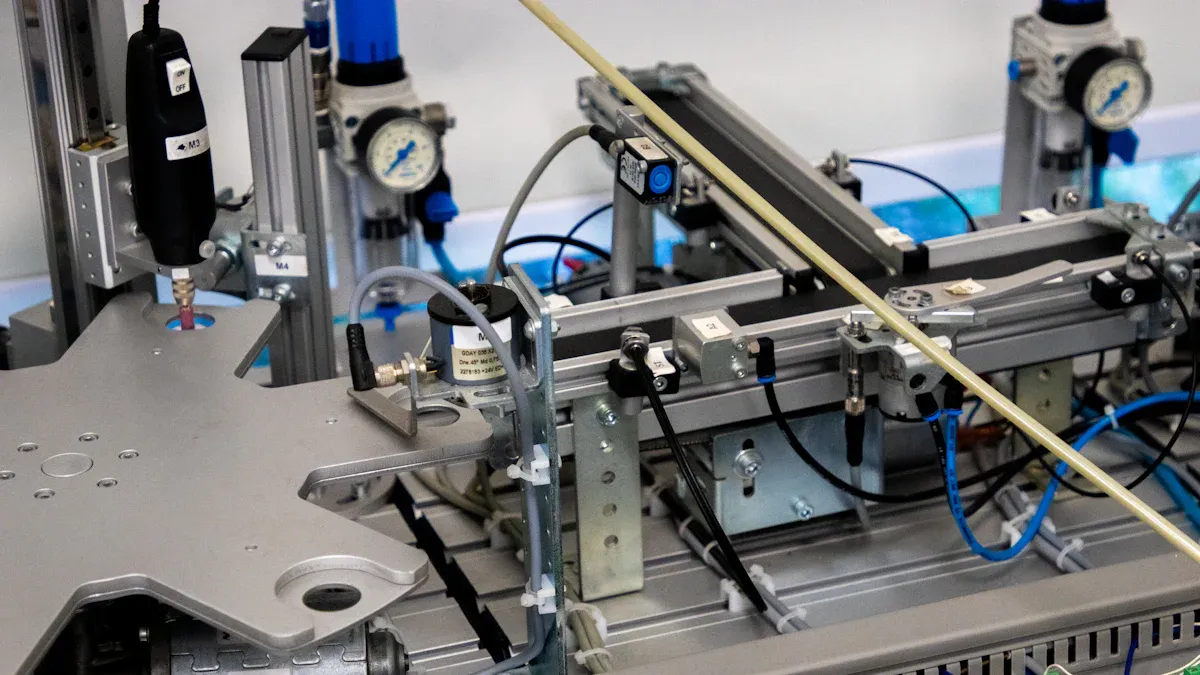
By 2026, Fagor linear encoders will achieve a performance level second only to Heidenhain. This remarkable ascent stems from significant advancements. Fagor integrates cutting-edge sensor technology, refined signal processing, and enhanced manufacturing precision. These innovations enable the fagor grating ruler to reach new heights. They propel Fagor's rise in the market.
Key Takeaways
- Fagor linear encoders will nearly match Heidenhain's performance by 2026.
- Fagor improves its encoders with better sensors, smarter signal processing, and new materials.
- Fagor encoders will achieve very high accuracy, down to tiny measurements.
- They will work well in tough factory conditions, resisting dirt and vibrations.
- Fagor offers high performance at a lower cost, giving businesses good value.
- This competition will lead to better and cheaper options for everyone.
- Fagor's G2 Series shows their advanced technology and high precision.
- Future Fagor encoders will connect with AI and smart systems for better use.
The Current Landscape: Heidenhain's Dominance and Fagor's Position (2024)
The linear encoder market currently sees Heidenhain as a clear leader. They set the benchmark for precision and reliability. However, Fagor steadily builds its presence, offering compelling alternatives.
Heidenhain's Established Strengths in Linear Encoders
Heidenhain has built its reputation on decades of innovation and consistent performance. Their products define high standards in many industries.
Unrivaled Accuracy and Resolution
Heidenhain linear encoders deliver exceptional precision. Exposed linear encoders from Heidenhain achieve accuracy grades down to ±0.5 µm. This level of detail is critical for demanding applications. Heidenhain linear encoders also offer a resolution down to 1 nm. They form position values rapidly within 5 µs. For absolute position values over the entire measuring length, a resolution down to 10 nm is achievable. Heidenhain encoders are known for high precision, achieving resolutions as fine as 1 micron or better. They incorporate advanced error correction and self-monitoring features. These features maintain long-term stability and precision.
Proven Reliability and Durability
Heidenhain encoders are built to last. They withstand harsh industrial environments. Their robust construction ensures consistent operation. The Heidenhain ST1278 High-Precision Linear Encoder has an estimated Mean Time Between Failures (MTBF) of 35,000 hours. This impressive figure demonstrates their commitment to durability.
Extensive Application Range
Heidenhain encoders serve a vast array of applications. They power high-precision machine tools, metrology equipment, and advanced automation systems. Their versatility makes them a preferred choice across many sectors.
Fagor Linear Encoders' Current Standing
Fagor linear encoders are making significant strides. They offer a strong alternative in a competitive market. Fagor focuses on innovation and customer value.
Strong Value Proposition
Fagor provides excellent performance at a competitive price point. This strategy makes high-precision measurement accessible to a broader range of manufacturers. Businesses find Fagor encoders a smart investment.
Emerging Technological Capabilities
Fagor continuously invests in research and development. They integrate new sensor technologies and advanced signal processing. These efforts position them for future growth and enhanced performance.
Niche Market Penetration
Fagor has successfully penetrated specific market segments. They excel in areas where their balance of performance and cost creates significant value. Their current accuracy specifications show their capability:
| Characteristic | Value |
|---|---|
| Accuracy | 5µm |
This solid foundation prepares Fagor for its ambitious goals by 2026.
Fagor Linear Encoders' Strategic Technological Advancements for 2026
Fagor embarks on an exciting journey of innovation. The company strategically advances its linear encoder technology. These advancements will propel Fagor to new heights in precision and performance. Fagor focuses on three key areas: enhanced sensor technology, advanced signal processing, and material science innovations. These pillars form the foundation for Fagor's future success.
Enhanced Sensor Technology for Fagor Linear Encoders
Fagor significantly upgrades its sensor technology. These improvements lead to more accurate and reliable position feedback. The company pushes the boundaries of what sensors can achieve.
Miniaturization of Sensor Elements
Fagor engineers develop smaller sensor elements. These tiny components allow for more compact encoder designs. Miniaturization also enables higher density sensing. This means the encoder collects more data points along the measuring length. More data points translate directly into finer resolution and improved accuracy. Smaller sensors also integrate more easily into diverse machine architectures.
Improved Signal-to-Noise Ratio
A clean signal is crucial for high precision. Fagor dramatically improves the signal-to-noise ratio (SNR) in its sensors. They achieve this through advanced sensor design and superior electromagnetic shielding. A higher SNR means the encoder's signal stands out clearly from any background interference. This results in more stable and reliable position readings, even in electrically noisy environments.
Advanced Optoelectronic Components
Fagor integrates cutting-edge optoelectronic components. These include new light sources and detectors. The new components offer greater stability and efficiency. They also boast extended operational lifetimes. These advanced parts ensure consistent light intensity and detection accuracy. This directly enhances the overall performance and longevity of Fagor linear encoders.
Advanced Signal Processing Algorithms in Fagor Linear Encoders
Fagor develops sophisticated algorithms. These algorithms transform raw sensor data into highly accurate position information. They represent a significant leap in digital intelligence.
Real-time Error Correction Techniques
Fagor's new algorithms identify and correct minor errors in real-time. These errors can arise from environmental factors or slight mechanical imperfections. The system continuously monitors and adjusts. This ensures consistent accuracy across varying operating conditions. Machines maintain their precision, regardless of external influences.
High-Order Interpolation Methods
Fagor implements high-order interpolation methods. These methods extract more precise position data from the sensor signals. They effectively increase the encoder's resolution beyond its physical grating pitch. This allows Fagor to achieve nanometer-scale readouts. High-order interpolation pushes the limits of measurement detail.
Digital Filtering for Noise Reduction
New digital filtering techniques effectively remove unwanted noise. This includes electrical interference and mechanical vibrations. The filters process the signal, isolating the true position data. This results in a cleaner, more stable output signal. A stable signal is essential for demanding, high-precision applications.
Material Science Innovations for Fagor Linear Encoders
Fagor explores new materials. These materials enhance the physical integrity and performance of its encoders. Material science plays a vital role in achieving superior durability and stability.
Low Thermal Expansion Substrates
Fagor utilizes substrates with extremely low thermal expansion coefficients. These materials resist changes in size due to temperature fluctuations. This ensures the encoder maintains its accuracy across a wide range of operating temperatures. Thermal stability is critical for consistent performance in industrial settings.
Durable Protective Coatings
New, highly durable protective coatings safeguard the sensitive internal components. These coatings shield against dust, moisture, and aggressive chemicals. They significantly enhance the encoder's longevity and reliability. Machines can operate confidently in harsh industrial environments.
Optimized Grating Materials
Fagor develops optimized materials for its gratings. These materials offer superior optical properties. They also provide better adhesion and improved resistance to wear. The grating maintains its integrity and precision over extended periods. This ensures long-term accuracy and consistent performance.
Manufacturing Precision and Assembly of Fagor Linear Encoders
Fagor's journey to the forefront of linear encoder technology relies heavily on its manufacturing prowess. The company transforms its innovative designs into tangible products through meticulous precision and advanced assembly techniques. These processes ensure every Fagor linear encoder meets the highest standards.
Ultra-High Precision Grating Fabrication
Fagor pioneers new methods in grating fabrication. They create the intricate patterns on the encoder scales with incredible accuracy. Advanced lithography techniques allow Fagor to etch lines at an atomic level of precision. This process ensures the grating's integrity and consistency across its entire length. Such ultra-high precision directly translates into superior accuracy and resolution for the final product. Fagor's commitment to this foundational step sets a new benchmark for quality.
Automated Assembly and Calibration
Fagor embraces automation in its assembly lines. Robots handle delicate components with unwavering consistency. This minimizes human error and speeds up production. Automated systems also perform rigorous calibration for each encoder. They use laser interferometers to fine-tune performance. This ensures every unit delivers optimal accuracy and repeatability. This meticulous process guarantees that Fagor linear encoders perform flawlessly from the moment they leave the factory.
Tighter Tolerance Control
Fagor implements stringent tolerance control throughout its manufacturing process. They use advanced metrology equipment to measure every component with extreme precision. This ensures all parts fit together perfectly. Tighter tolerances reduce variations between individual encoders. This consistency builds trust and reliability. Fagor's dedication to controlling every minute detail ensures a superior product. This commitment empowers users to achieve their most ambitious goals.
Key Performance Metrics: How Fagor Linear Encoders Close the Gap by 2026
Fagor's strategic advancements are not just theoretical. They translate directly into superior performance metrics. By 2026, Fagor will significantly narrow the performance gap with industry leaders. These improvements empower manufacturers to achieve unprecedented levels of precision and efficiency.
Accuracy: Achieving Sub-Micron Precision with Fagor Linear Encoders
Accuracy stands as a cornerstone of high-performance measurement. Fagor dedicates significant resources to perfecting this critical metric. The company aims for sub-micron precision across its product lines.
Reduction of Periodic Errors
Fagor implements advanced optical designs and sophisticated manufacturing processes. These innovations minimize periodic errors. Periodic errors are small, repeating deviations in position measurement. Reducing these errors ensures a smoother, more consistent output signal. This leads to a truer representation of the actual position.
Improved System Linearity
Fagor engineers enhance the linearity of their encoder systems. Linearity describes how closely the encoder's output matches the actual physical displacement. Through meticulous calibration and refined sensor geometry, Fagor achieves exceptional linearity. This means the encoder provides accurate readings across its entire measuring length.
Enhanced Repeatability
Repeatability is crucial for consistent manufacturing processes. Fagor focuses on improving the ability of its encoders to deliver the same measurement repeatedly under identical conditions. This involves stable component materials and robust assembly techniques. High repeatability builds confidence in automated systems.
Resolution: Pushing Nanometer-Scale Readouts with Fagor Linear Encoders
Resolution defines the smallest change in position an encoder can detect. Fagor pushes the boundaries of resolution, aiming for nanometer-scale readouts. This level of detail unlocks new possibilities for precision control.
Finer Grating Pitches
Fagor develops gratings with increasingly finer pitches. The pitch refers to the distance between the lines on the encoder scale. A finer pitch means more lines per unit of length. This directly increases the raw resolution of the encoder. It allows the sensor to detect smaller movements.
Advanced Interpolation Factors
Fagor employs advanced interpolation algorithms. These algorithms divide the signal period into many smaller increments. This process effectively multiplies the physical resolution of the grating. High-order interpolation factors enable Fagor to achieve nanometer-scale readouts from its sensors.
Stable Signal Generation
A stable signal is vital for high-resolution measurements. Fagor ensures its optoelectronic components generate exceptionally stable and clean signals. This stability prevents signal fluctuations from being misinterpreted as position changes. It guarantees reliable and precise nanometer-level detection.
Speed and Dynamic Response of Fagor Linear Encoders
Modern machinery demands not only precision but also speed. Fagor linear encoders deliver both. They offer rapid data acquisition and minimal latency. This ensures seamless integration into high-speed applications.
High-Frequency Signal Processing
Fagor integrates high-frequency signal processing capabilities into its encoders. These powerful processors handle data at incredibly fast rates. They quickly convert raw sensor signals into precise position information. This allows machines to operate at higher speeds without sacrificing accuracy.
Reduced Latency
Latency refers to the delay between a physical movement and the encoder's output signal. Fagor significantly reduces this latency. Optimized electronics and efficient algorithms minimize processing time. Lower latency means the control system receives position feedback almost instantaneously. This improves dynamic control and machine responsiveness.
Compatibility with High-Velocity Axes
Fagor designs its encoders for compatibility with high-velocity axes. Their robust construction withstands the stresses of rapid acceleration and deceleration. The advanced signal processing maintains accuracy even at extreme speeds. This makes Fagor linear encoders ideal for demanding applications like laser cutting and high-speed machining.
Environmental Robustness of Fagor Linear Encoders
Fagor understands the tough conditions in industrial settings. They design their encoders to thrive in these challenging environments. By 2026, Fagor linear encoders will set new standards for durability. They will ensure reliable operation where other systems might fail.
Resistance to Contaminants
Industrial environments often contain dust, oil, and coolant. Fagor engineers develop superior sealing technologies. These seals create a strong barrier. They prevent contaminants from reaching sensitive internal components. Advanced housing designs also repel debris. This ensures the encoder's optical and electronic parts remain clean. Machines can operate continuously without interruption from environmental particles. This robust protection extends the lifespan of the encoder. It also maintains measurement accuracy over time.
Vibration and Shock Immunity
Machines in factories often experience vibrations and shocks. Fagor builds its encoders with robust mechanical structures. These structures absorb and dissipate energy from impacts. Special mounting techniques further isolate the encoder from machine vibrations. Internal dampening systems also reduce the effects of sudden movements. This design ensures the encoder delivers stable and accurate readings. It performs consistently even under dynamic loads. This immunity to mechanical stress guarantees reliable performance in demanding applications.
Temperature Stability
Temperature fluctuations can affect measurement accuracy. Fagor uses materials with very low thermal expansion. These materials resist changes in size when temperatures shift. This ensures the encoder's scale remains precise across a wide operating range. Advanced electronic compensation also helps. It adjusts for any minor thermal effects. This meticulous attention to thermal stability means Fagor encoders provide consistent accuracy. They perform reliably from cold starts to high operating temperatures. This allows machines to maintain precision in diverse climates and operational settings.
Comparative Analysis: Fagor Linear Encoders vs. Heidenhain in 2026
By 2026, Fagor's relentless innovation positions its linear encoders as a powerful force. They stand ready to challenge the established leader, Heidenhain. This comparison highlights Fagor's remarkable ascent.
Direct Performance Comparison of Fagor Linear Encoders
Fagor's advancements translate into tangible performance gains. They now offer capabilities previously exclusive to top-tier brands.
Accuracy and Resolution Benchmarks
Fagor achieves sub-micron accuracy. Their encoders deliver nanometer-scale resolution. This level of precision rivals Heidenhain's established benchmarks. Fagor's refined grating fabrication and advanced interpolation methods make this possible. Users can trust Fagor for critical measurements.
Speed and Dynamic Performance Metrics
Fagor encoders boast high-frequency signal processing. They offer significantly reduced latency. This allows for seamless integration into high-speed applications. Fagor systems handle rapid axis movements with exceptional stability. They ensure precise control even in dynamic environments.
Environmental Resilience Ratings
Fagor designs its encoders for endurance. They demonstrate superior resistance to contaminants like dust and oil. Their robust construction provides excellent immunity to vibration and shock. Fagor encoders maintain stable performance across wide temperature fluctuations. This ensures reliable operation in harsh industrial settings.
Cost-Benefit Analysis of Fagor Linear Encoders
Fagor presents a compelling economic argument. They offer high performance without the premium price tag.
Fagor's Value Proposition at Near-Heidenhain Performance
Fagor delivers performance remarkably close to Heidenhain's. Yet, they do so at a more accessible price point. This creates immense value for manufacturers. Businesses can achieve high precision without overstretching their budgets.
Total Cost of Ownership (TCO)
Fagor's durability and reliability contribute to a lower Total Cost of Ownership. Their robust design minimizes maintenance needs. Long operational lifespans reduce replacement frequency. This translates into significant long-term savings for users.
Return on Investment (ROI)
Investing in Fagor encoders yields a strong Return on Investment. Their combination of high performance and competitive pricing maximizes productivity. Businesses experience improved output quality and reduced downtime. This quickly recoups the initial investment.
Application Suitability for Fagor Linear Encoders
Fagor's enhanced capabilities open doors to a wider range of demanding applications.
Where Fagor Will Excel (e.g., mid-to-high precision CNC, automation, linear motor stage applications)
Fagor will excel in mid-to-high precision CNC machining. They are ideal for advanced automation systems. Linear motor stage applications will also benefit greatly from Fagor's precision. Their performance meets the rigorous demands of these sectors.
Specific Industrial Use Cases
Fagor encoders find perfect homes in various industrial settings. They enhance precision in semiconductor manufacturing. They improve accuracy in medical device production. Quality control and inspection systems also benefit from their reliability.
Fagor's Strengths in Machine Tool and Metrology Sectors
Fagor strengthens its position in the machine tool sector. Their encoders provide the accuracy needed for modern machining centers. In metrology, Fagor offers reliable solutions for precise measurement and calibration. They empower industries to achieve new levels of excellence.
Fagor Linear Encoders: Advantages and Prominent Models
Fagor's commitment to innovation brings forth a new era of precision. They offer compelling advantages for manufacturers seeking advanced solutions. Fagor empowers industries to achieve greater success.
Fagor Linear Encoders' Unique Selling Points
Fagor distinguishes itself through thoughtful design and strategic market positioning. These unique aspects make Fagor a preferred choice for many applications.
Robust Design for Harsh Environments
Fagor engineers build their encoders for resilience. They withstand the toughest industrial conditions. Superior sealing technology protects internal components from dust, oil, and coolants. Robust mechanical structures absorb vibrations and shocks. This ensures consistent, accurate performance in challenging settings. Fagor encoders deliver reliability where it matters most.
Flexible Integration Options
Fagor designs its encoders for seamless integration. They offer various interfaces and mounting configurations. This flexibility allows manufacturers to easily incorporate Fagor encoders into diverse machine architectures. Whether upgrading existing systems or designing new ones, Fagor provides adaptable solutions. This simplifies installation and reduces setup time.
Competitive Pricing Strategy
Fagor offers exceptional performance at a competitive price point. This strategy makes high-precision measurement accessible to a broader market. Manufacturers gain access to advanced technology without significant capital investment. Fagor delivers outstanding value, maximizing return on investment for its customers.
Highlighted Fagor Linear Encoder Model: Fagor G2 Series
The Fagor G2 Series stands as a testament to Fagor's engineering prowess. It embodies the company's advancements in precision and reliability. This series offers cutting-edge features for demanding applications.
Key Features and Specifications (e.g., 0.1 µm resolution, 10 m/s speed)
The Fagor G2 Series offers a versatile range of models. These include G2A (SSI), G2AS (SSI for SIEMENS®), G2AF (FANUC®), G2AM (MITSUBISHI®), G2AP (PANASONIC®), G2AD (FeeDat®), G2AD + EC-PA-DQ (DRIVE-CLiQ® for SIEMENS®), and G2AB (BiSS®). They provide both incremental and absolute measurement options. Incremental models use a 20 μm-pitch graduated glass tape. Absolute models utilize optical reading of sequential binary code.
Key specifications include:
- Glass thermal expansion coefficient: Approximately 8 ppm/K.
- Measuring resolution: Ranges from 0.0025 μm to 0.1 μm, depending on the interface.
- Output signals: 1 Vpp for incremental.
- Maximum cable length: 75m for 1 Vpp, 100m for G2A/G2AS/G2AD, 30m for G2AF/G2AM/G2AP/G2AB.
- Supply voltage: 5 V ± 10%, <250 mA (without load).
- Accuracy: ± 5 μm/m or ± 3 μm/m.
The G2 Series features a small reader head. It includes air intake and connectors at both ends. A threaded head allows for various mounting options without nuts. The design targets high-standard environments regarding speed and vibration. Special securing points (TDMS™) reduce errors. They ensure accuracy and repeatability. Measuring lengths range from 140 mm to 3040 mm.
Performance Capabilities
The Fagor G2 Series delivers exceptional performance. It achieves resolutions as fine as 0.0025 µm. This allows for incredibly precise position feedback. Its robust design ensures stable operation even at high speeds. The G2 Series maintains accuracy and repeatability under dynamic conditions.
Target Applications and Benefits
The Fagor G2 Series excels in mid-to-high precision applications. It is ideal for CNC machine tools, automation systems, and linear motor stages. Its high accuracy and robust design benefit metrology equipment and inspection systems. Users gain improved product quality, reduced downtime, and enhanced operational efficiency.
Implications for Industry and Future Trends of Fagor Linear Encoders
Fagor's advancements create a ripple effect across many industries. Their innovations inspire progress and reshape future technological landscapes. This shift brings exciting opportunities for everyone.
Impact on Key Industrial Sectors
Fagor's enhanced linear encoders empower critical industries. They drive new levels of precision and efficiency. This helps businesses achieve their highest potential.
Machine Tool Manufacturing
Machine tool manufacturers gain immense benefits. Fagor linear encoders provide the accuracy needed for complex machining tasks. This leads to higher quality parts and reduced waste. Manufacturers can produce intricate components with greater confidence. Their machines operate more reliably and precisely.
Metrology and Inspection Systems
Metrology and inspection systems become more powerful. Fagor's sub-micron accuracy ensures precise measurements. This is crucial for quality control and scientific research. Inspection systems can detect even the smallest deviations. This guarantees product integrity and boosts consumer trust.
Robotics and Automation
Robotics and automation systems achieve new levels of performance. Fagor encoders offer rapid feedback and high resolution. This allows robots to move with greater speed and precision. Automated processes become more efficient and reliable. Industries can deploy advanced automation solutions with confidence.
Increased Competition and Innovation in Linear Encoders
Fagor's rise sparks a new era of competition. This healthy rivalry drives continuous innovation. Everyone benefits from this dynamic market.
Market Dynamics Shift
Fagor's strong performance changes the market. Customers now have more high-quality options. This encourages other manufacturers to improve their offerings. The market becomes more vibrant and responsive to user needs.
Driving Further Technological Advancements
Competition pushes all companies to innovate. Manufacturers invest more in research and development. They seek new ways to enhance accuracy, speed, and durability. This constant pursuit of excellence benefits the entire industry.
Benefits for End-Users
End-users receive significant advantages. They gain access to more advanced and cost-effective solutions. This allows them to improve their own products and processes. Businesses can achieve higher precision and greater efficiency.
The Path Forward: What's Next for Linear Encoder Technology Beyond 2026
The journey of innovation continues beyond 2026. Linear encoder technology will evolve further. It will integrate with new systems and explore novel principles.
Integration with AI and IoT
Future linear encoders will integrate with Artificial Intelligence (AI) and the Internet of Things (IoT). This allows for smart monitoring and predictive maintenance. Encoders can provide data for real-time process optimization. Machines will become more intelligent and self-aware.
Further Miniaturization
The trend towards miniaturization will continue. Encoders will become even smaller and more compact. This enables integration into tighter spaces and smaller devices. Miniaturized encoders will power the next generation of precision instruments.
New Sensing Principles
Researchers explore exciting new sensing principles. These advancements promise even greater capabilities.
- Developers are working on advanced magnetic sensing principles.
- They also focus on advanced optical sensing principles.
- Non-contact measurement technologies are gaining traction.
- Engineers are developing multi-axis sensing capabilities in a single device. These innovations will redefine what linear encoders can achieve.
By 2026, Fagor's targeted technological advancements will position its Fagor linear encoders as a formidable contender. This remarkable progress means Fagor will achieve performance levels remarkably close to Heidenhain's established benchmark. This exciting shift offers industries a compelling alternative. It drives innovation across the board and expands high-precision application possibilities for everyone.
FAQ
What drives Fagor's performance improvements by 2026?
Fagor's advancements stem from enhanced sensor technology, sophisticated signal processing, and precise manufacturing. These innovations elevate their accuracy and reliability. They position Fagor as a formidable contender in the market.
How do Fagor linear encoders achieve sub-micron accuracy?
Fagor achieves this through reduced periodic errors, improved system linearity, and enhanced repeatability. Their advanced grating fabrication also plays a crucial role. This meticulous engineering ensures exceptional precision.
Can Fagor encoders handle harsh industrial environments?
Yes, Fagor designs its encoders with robust protection. They resist contaminants, withstand vibrations and shocks, and maintain stability across varying temperatures. This ensures reliable operation in challenging settings.
What is the Fagor G2 Series, and what are its key features?
The Fagor G2 Series represents Fagor's advanced models. It offers resolutions down to 0.0025 µm and various interfaces. Its robust design ensures high-speed, precise operation.
How will Fagor's rise impact the linear encoder market?
Fagor's increased competitiveness will intensify market dynamics. This drives further innovation across the industry. End-users will benefit from more advanced and cost-effective solutions.
What advantages do Fagor linear encoders offer over competitors?
Fagor provides near-Heidenhain performance at a competitive price. They offer robust design, flexible integration, and a strong return on investment. This makes them a compelling choice for many applications.
Will Fagor linear encoders integrate with future technologies like AI and IoT?
Yes, Fagor plans to integrate with AI and IoT. This will enable smart monitoring and predictive maintenance. Encoders will provide data for real-time process optimization. This prepares them for future industrial demands.