










The Heidenhain Advantage Why They're Unrivaled in Linear Encoders
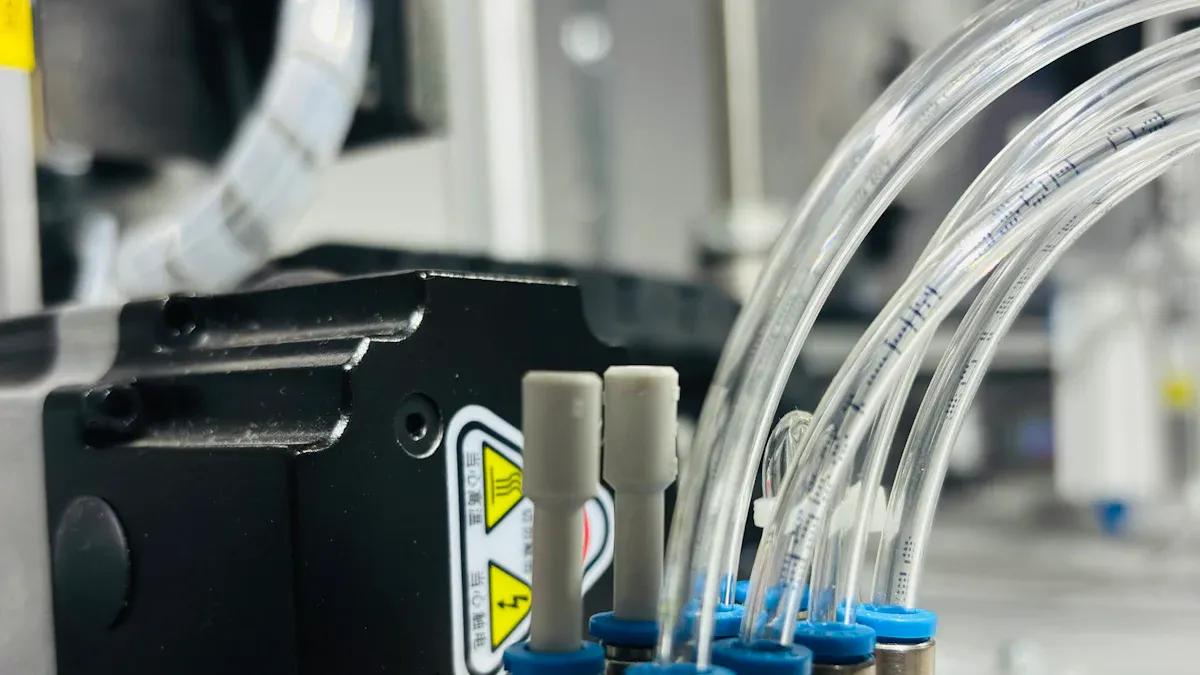
Heidenhain leads the field in precision measurement technology. By 2025, the company will achieve undisputed leadership in linear encoder technology. This advanced technology sets industry standards. Manufacturers globally depend on Heidenhain for accuracy and reliability. Their strong position reflects continuous innovation and commitment to quality.
Key Takeaways
- Heidenhain linear encoders give exact position feedback. They are important for machines that need high accuracy.
- Heidenhain uses special ways to measure. These ways include light waves and strong optical systems. This makes their encoders very precise and tough.
- Heidenhain makes different types of encoders. Some are for dirty places. Others are for super-accurate jobs like making computer chips.
- Heidenhain encoders help machines work better. They can tell you when a machine needs fixing. This saves time and money.
- Heidenhain makes sure its products are top quality. They test everything a lot. This means their encoders last a long time.
- Many big industries use Heidenhain encoders. These include factories, chip makers, and robot companies. They help these industries make things better and faster.
The Critical Role of Linear Encoders in Precision Applications
What Linear Encoders Deliver
Unparalleled Precision Position Measurement
Linear encoders provide exact position feedback. They directly measure the position of linear axes. This method bypasses mechanical components that can introduce errors. Such direct measurement eliminates potential inaccuracies from backlash, pitch error, or heating of the recirculating ball screw. This makes them essential for applications needing rigorous position accuracy and high machining speeds.
Essential Feedback for Advanced Motion Control
Linear encoders offer crucial feedback for advanced motion control systems. They enhance CNC machining accuracy by providing precise feedback on the stage's exact position to the controller. This feedback allows the controller to correct for any residual motion errors or thermal effects. Consequently, it improves the machine's overall accuracy and resolution.
Why Heidenhain's Accuracy is Paramount
Direct Impact on Manufacturing Quality
Heidenhain's accuracy directly impacts manufacturing quality. Linear encoders are crucial for CNC machines to achieve high tolerances, often exceeding 0.0001 inches. Unlike rotary encoders on motors, linear encoders track the actual cutting-tool position. This compensates for mechanical issues like wear, slippage, or backlash. A significant accuracy limitation, thermal expansion, can be addressed by using a second, shorter encoder axis perpendicular to the main axis. This senses and corrects for such movements.
Driving Automation Efficiency and Reliability
High accuracy drives automation efficiency and reliability. Precise position data from linear encoders ensures automated systems perform tasks correctly every time. This reduces errors and waste in production. Reliable feedback from encoders, like those from Heidenhain, means machines operate consistently. This leads to higher throughput and dependable output in automated processes.
Heidenhain's Foundational Technological Superiority in Linear Encoders

Heidenhain's leadership in linear encoder technology stems from its superior foundational principles. The company consistently develops and refines its core technologies. These advancements ensure unmatched performance and reliability in demanding applications.
Heidenhain's Unmatched Measurement Principles
Interferential Scanning for Highest Resolution
Heidenhain employs interferential scanning for the highest resolution. This method uses the interference of light waves to generate measurement signals. It allows for extremely fine subdivisions of the grating period. This results in highly precise position values, crucial for ultra-accurate applications. The principle enables resolutions down to the nanometer range.
Photoelectric Scanning for Robustness
Photoelectric scanning provides robust performance. This principle involves a light source illuminating a scale grating. A sensor reads the light passing through or reflected by the grating. This method offers excellent signal quality and high immunity to external disturbances. It ensures reliable operation even in challenging industrial environments.
Heidenhain's Advanced Optical Systems
DIADUR and SUPRADUR Scales for Durability
Heidenhain's DIADUR and SUPRADUR scales set industry standards for durability. SUPRADUR scales feature a grating style. This style consists of precisely measured layers of glass and reflective material. This construction offers high tolerance to contaminants. It resists oil, dust, and fingerprints. These contaminants do not interfere with the light-based, non-contact scanning principle. For vacuum applications, the scale and reader head reticle material can be ZERODUR. This material helps improve accuracy by eliminating thermal growth. Heidenhain's manufacturing processes, spanning over 63,000 sqm, involve optimizing material usage. The company implements measures to reduce raw material and energy consumption. Recycling plays a significant role in their manufacturing processes.
Superior Contamination Resistance
Heidenhain's optical systems offer superior contamination resistance. Several design features contribute to this robustness:
- Magnetic scanning provides high contamination tolerance.
- TRUE IMAGE technology ensures clear scale readings. It works even with liquid contamination like condensation and droplets. This technology eliminates typical optical distortions. It often removes the need for purge air systems.
- The TCI 2000 features contamination-resistant scanning. It also offers wide mounting and operating tolerances, high shaft speeds, and excellent positioning accuracy.
- An inductive scanning method offers high resistance to contamination and vibration loads.
Heidenhain's Versatile Digital and Analog Interfaces
High-Speed Data Transmission Capabilities
Heidenhain encoders feature high-speed data transmission capabilities. They provide rapid and reliable communication between the encoder and the control system. This fast data transfer is essential for dynamic applications. It ensures real-time feedback, which is critical for high-speed machining and automation. These capabilities support efficient and responsive machine operation.
Seamless Compatibility with Diverse Control Systems
Heidenhain encoders offer seamless compatibility with diverse control systems. They support various digital and analog interfaces. This versatility allows easy integration into existing machine architectures. Manufacturers can connect these encoders to a wide range of CNC controls, PLCs, and motion controllers. This broad compatibility simplifies system design and upgrades.
Heidenhain's Precision and Durability Across Linear Encoder Product Lines
Heidenhain offers a comprehensive range of linear encoders. These encoders meet diverse industrial needs. They provide both precision and durability across various product lines. Each series is engineered for specific applications, ensuring optimal performance.
Heidenhain's Enclosed Linear Encoders for Harsh Environments
Enclosed linear encoders protect the measuring standard and scanning unit. A rugged housing shields them from dust, chips, and splash water. This design makes them ideal for harsh industrial environments.
LS Series for Machine Tools (e.g., LS 186, LS 486)
The LS series encoders are robust and reliable. Machine tool manufacturers widely use them. These encoders provide accurate position feedback for milling, turning, and grinding machines. Models like the LS 186 and LS 486 offer high accuracy and withstand demanding conditions. They ensure consistent performance in workshops.
LC Series for High Accuracy (e.g., LC 200, LC 400)
The LC series provides exceptional accuracy within an enclosed housing. These encoders are perfect for applications requiring very precise measurements. The LC 200 and LC 400 models deliver high resolution and repeatability. They are often found in high-precision machine tools and measuring equipment. Their enclosed design protects the delicate internal components.
Heidenhain's Exposed Linear Encoders for Ultra-High Accuracy
Exposed linear encoders operate without a protective housing. This design allows for direct measurement with minimal influence from mechanical components. They achieve the highest levels of accuracy.
LIP Series for Semiconductor Industry (e.g., LIP 382, LIP 481)
The LIP series encoders are designed for ultra-high accuracy. The semiconductor industry relies on them for critical processes. These encoders enable precise wafer positioning and micro-assembly. Models like the LIP 382 and LIP 481 offer resolutions down to the nanometer range. They are essential for manufacturing tiny electronic components.
LIDA Series for Metrology (e.g., LIDA 400, LIDA 200)
The LIDA series encoders excel in metrology applications. They provide extremely accurate measurements for inspection systems and calibration equipment. The LIDA 400 and LIDA 200 models offer high resolution and excellent signal quality. These encoders are crucial for quality control and research. Many applications benefit from the ultra-high accuracy of exposed linear encoders. These include:
- Machine Tools: Milling machines, lathes, grinding machines, and 5-axis machining demand high precision for accurate part production.
- Automation: Automation applications often require precise positioning for repetitive tasks.
- Electronics: Manufacturing and testing in the electronics industry benefit from ultra-high accuracy for miniature components.
- Robotics: Robotic systems, especially those performing delicate or precise operations, rely on accurate feedback.
- Medical: Encoders for medical technology ensure precision for diagnostics, treatment, and device operation. The LIC 3100 series, with its high accuracy and a small measuring step of 10 nm, suits linear axes with high traversing speeds. Its versatility means many applications benefit from its robust and accurate performance. It enables both high speeds and long measuring lengths.
Heidenhain's Specialized Linear Encoders
Heidenhain also offers specialized linear encoders. These encoders cater to specific measurement needs. They provide either absolute or incremental position information.
Absolute Position Measurement (e.g., LC 100, LC 200)
Absolute linear encoders provide a unique position value immediately upon power-up. They do not require a reference run. This feature saves time and increases efficiency. Models like the LC 100 and LC 200 offer absolute position feedback. Heidenhain's absolute linear encoders maintain position information after power loss. They remember their position even after a power outage. This design eliminates the need for a battery backup to prevent data loss. It ensures continuous position monitoring.
Incremental Position Measurement (e.g., LS 100, LS 400)
Incremental linear encoders determine position by counting measuring steps from a reference point. They require a reference run after power-up to establish their initial position. The LS 100 and LS 400 are examples of incremental encoders. They are cost-effective and suitable for many applications.
Here is a comparison of incremental and absolute encoders:
| Feature | Incremental Encoders | Absolute Encoders |
|---|---|---|
| Positioning | Relative to a start position; requires reference mark | Continuous, unique position data; maintains position after power loss |
| Application Focus | Primarily speed control | High-precision applications; no movement desired during startup (e.g., large machinery) |
| Startup Behavior | Needs to move past a reference mark to establish position | Provides exact location immediately without a reference mark |
Heidenhain's Innovation Driving Future Linear Encoder Performance
Heidenhain consistently pushes the boundaries of linear encoder technology. The company's ongoing innovation ensures its products remain at the forefront. These advancements drive future performance and meet evolving industry demands.
Heidenhain's Continuous Research and Development
Advancements in Miniaturization
Heidenhain actively pursues miniaturization in its encoder designs. Smaller encoders fit into compact machine spaces. This allows for more streamlined and efficient machine designs. Miniaturization also reduces the overall weight of components. This benefits applications requiring high dynamics and reduced inertia.
Enhanced Environmental Protection
The company focuses on enhancing environmental protection for its encoders. This includes developing robust designs that resist harsh industrial conditions. Encoders feature improved sealing against dust, chips, and liquids. They also withstand extreme temperatures and vibrations. This ensures reliable operation in challenging environments.
Heidenhain's Smart Encoder Technology
Integrated Diagnostic and Monitoring Capabilities
Heidenhain's smart encoder technology offers more than just position feedback. These encoders integrate advanced diagnostic and monitoring capabilities. For example, intelligent rotary encoders like the ECI 1323/1335 Splus include a built-in accelerometer. This accelerometer detects vibrations. It helps plan maintenance intervals based on valid operating data. The EnDat data interface further integrates these encoders into motion control systems. It provides fast, intelligent data to optimize machine performance and reliability. The ECI 1323 Splus and EQI 1335 Splus also support up to three external temperature sensors. All data transmits via the EnDat 3 interface. This reduces the need for additional sensors and simplifies cabling. The KCI 419 Dplus rotary encoder even connects to a brake's armature plate. It detects brake stroke, status, and wear levels. It also monitors temperature to analyze malfunctions.
Predictive Maintenance Integration
Smart encoder technology directly supports predictive maintenance. By continuously monitoring machine health, encoders help anticipate potential failures. The integrated diagnostics provide early detection of critical vibrations. This allows for online condition monitoring in high-wear automation systems. The EnDat interface's extensive diagnostic capabilities integrate encoders into troubleshooting routines. This significantly enhances system reliability. This proactive approach minimizes downtime and extends machine lifespan.
Heidenhain's Industry 4.0 Readiness
Seamless Integration into Digital Workflows
Heidenhain encoders are ready for Industry 4.0. They offer seamless integration into digital workflows. Their advanced interfaces, like EnDat 3, enable high-speed digital communication. This allows machines to share data efficiently. This connectivity is crucial for modern automated factories.
Data Analytics for Process Optimization
Heidenhain's Industry 4.0-ready encoders provide rich data for process optimization. They transmit position values and sensor data. They offer up to 15 additional information slots per communication. Users can access the encoder memory during normal operation. This provides extensive system monitoring. The encoders support automatic system installation and diagnostics. They also offer online encoder diagnostics. This data, combined with other sensor information, forms the basis for condition monitoring and predictive maintenance. Mobile access to diagnostics and storage of operating status data further enhance data acquisition. The EnDat 3 interface, featured in encoders like the KCI 120 Dplus, supports advanced diagnostics. This enables reliable position measurement and reduces cabling complexity in robotic automation cells.
Heidenhain's Unwavering Commitment to Quality and Reliability in Linear Encoders
Heidenhain builds its reputation on consistent quality and reliability. The company ensures every linear encoder meets the highest standards. This commitment guarantees long-lasting performance for customers.
Heidenhain's Rigorous Manufacturing Standards
Heidenhain maintains strict control over its production processes. This approach ensures precision and durability in every product.
In-House Production of Key Components
Heidenhain manufactures many critical components in-house. This vertical integration allows tight control over material quality and production tolerances. It ensures each part meets exact specifications. This method reduces reliance on external suppliers. It also guarantees the consistent quality of the final linear encoder.
Extensive Testing and Validation
Every Heidenhain linear encoder undergoes extensive testing. This validation process confirms performance and reliability. The company's measurement lab holds DAkkS accreditation. This accreditation complies with DIN EN ISO/IEC 17025 for calibrating linear and angle encoders. Heidenhain calibrates and verifies its measuring devices according to ISO 9001 requirements. These certifications highlight their dedication to precise measurement and quality management.
Heidenhain's Global Service and Support Network
Customers worldwide benefit from Heidenhain's extensive support system. This network ensures continuous operation and expert assistance.
Expert Technical Support and Application Assistance
Heidenhain provides expert technical support. Engineers offer guidance on product selection and integration. They help customers optimize encoder performance in specific applications. This assistance ensures users get the most from their Heidenhain products.
Long-Term Product Availability and Longevity
Heidenhain commits to long-term product availability. This commitment means customers can rely on spare parts and replacements for many years. It supports the longevity of their machinery. This approach reduces obsolescence risks and protects customer investments.
Heidenhain's Customer Trust and Industry Recognition
Heidenhain has earned deep trust from its customers. The industry widely recognizes its superior products.
Preferred Supplier Status in Critical Industries
Many critical industries consider Heidenhain a preferred supplier. These industries demand the highest precision and reliability. They include:
- CNC machines
- Semiconductor manufacturing
- Metrology applications
- Precision machining
- Robotics
- Automation industries
- Aerospace
- Medical device manufacturing
- Scientific research
Proven Success Through Real-World Applications
Heidenhain encoders demonstrate proven success in real-world applications. Their performance in demanding environments builds customer confidence. This track record shows the reliability and accuracy of their linear encoders. Customers trust Heidenhain to deliver consistent results.
Heidenhain's Impact Across Key Industries with Linear Encoders
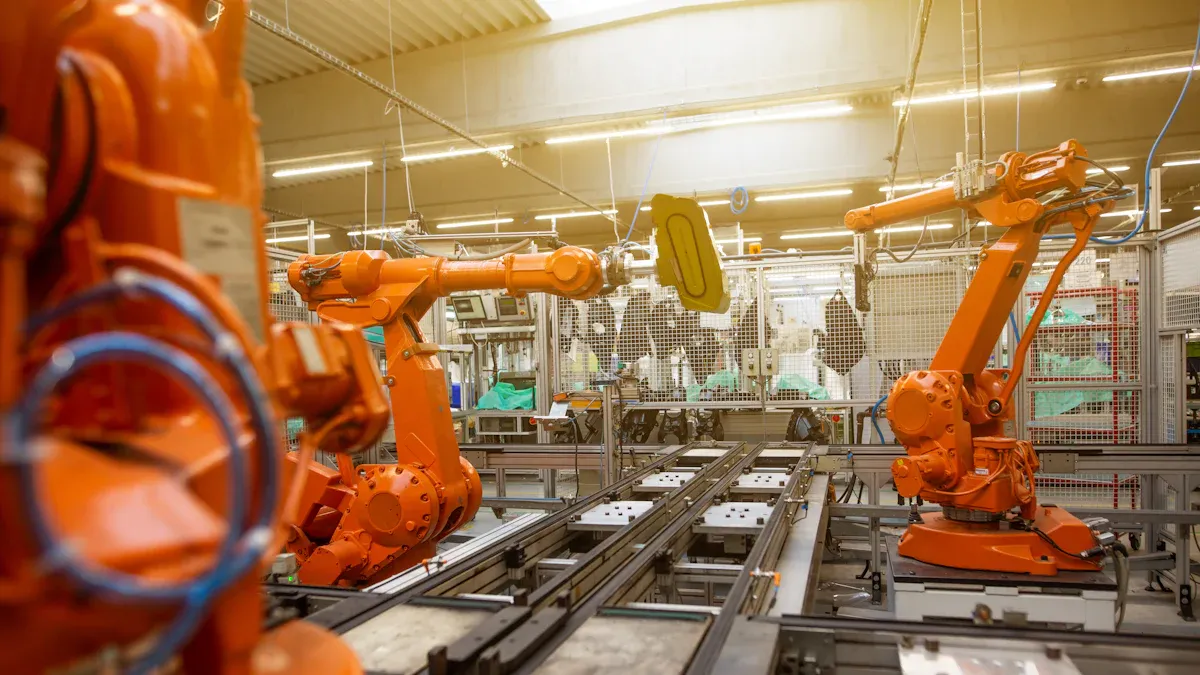
Heidenhain linear encoders play a crucial role in many advanced industries. They provide the precision and reliability these sectors demand. Their technology drives innovation and improves performance across diverse applications.
Heidenhain in Machine Tool Manufacturing
Enhancing CNC Precision and Performance
Heidenhain linear encoders significantly enhance CNC machine precision. They provide direct position feedback, which is vital for accurate machining.
- Enclosed linear encoders shield sensitive scales and scanning instruments from chips and coolant. This ensures consistent, precise location feedback to the control system.
- Linear encoders effectively address reversal errors or axial drift. Thermal expansion during long production runs or transitions between roughing and finishing can cause these issues. Unlike rotary and angle encoders, linear encoders account for axial deformation. This prevents the production of out-of-spec parts.
- Absolute linear encoders provide immediate, specific positioning information to the control upon power-on. This eliminates the need to zero out machine components like spindle heads or work tables before starting operations.
- Incremental linear encoders, especially those with distance-coded reference marks, allow quick, simple re-establishment of the datum point after power-on. This ensures accurate positioning for subsequent operations.
Improving Production Throughput and Efficiency
These encoders also boost production throughput and efficiency. Their robust design and quick response times contribute to faster, more reliable operations.
- Sealed linear encoders protect against dust, chips, and splash fluids. This maintains precision in machine tool operations.
- Incremental linear encoders from Heidenhain use reference marks, including distance-coded ones. This simplifies and speeds up datum re-establishment after switch-on. It contributes to operational efficiency and precision.
- Absolute linear encoders deliver the current position value without requiring any prior movement. They transmit this absolute value through interfaces like EnDat. This ensures immediate and accurate positioning.
Heidenhain in Semiconductor and Electronics
Enabling Ultra-Precise Wafer Positioning
The semiconductor industry relies on extreme precision. Heidenhain encoders enable ultra-precise wafer positioning. This is critical for manufacturing tiny electronic components.
| Feature | Specification |
|---|---|
| Model | Heidenhain MT12 Linear Encoder (MT-12) |
| Resolution | Up to 1 µm |
| Accuracy | ± 3 µm |
| Measuring Length | Up to 3040 mm |
| Scale Period | 20 µm |
| Signal Period | 1 µm |
| Output Signals | TTL, 1 Vpp, EnDat, or Fanuc |
Heidenhain's MULTI-DOF technology measures multiple degrees of freedom. It provides positioning accuracy better than 200 nm for semiconductor production equipment. This advanced technology is crucial for the high precision required in manufacturing components like computer chips. It directly impacts their memory and computing capacity.
Ensuring Micro-Assembly Accuracy
The same ultra-high precision extends to micro-assembly tasks. Encoders ensure components align perfectly. This prevents defects and improves product yield in electronics manufacturing.
Heidenhain in Metrology and Measurement
Powering High-Accuracy Inspection Systems
Heidenhain encoders power high-accuracy inspection systems. These systems are essential for quality control in many industries. They provide the precise data needed to verify product specifications.
Supporting Critical Calibration and Quality Control
Heidenhain encoders support critical calibration and quality control processes in metrology.
- Heidenhain encoders are recognized for their high precision. This is crucial for applications demanding the utmost accuracy.
- They achieve resolutions of 1 micron or better. Advanced error correction and self-monitoring capabilities support this.
- These features ensure long-term stability and precision. These qualities are vital for critical calibration and quality control in metrology.
Heidenhain in Automation and Robotics
Heidenhain linear encoders are indispensable in modern automation and robotics. They provide the critical precision and reliability these dynamic industries demand. Their technology enables robots to perform complex tasks with exceptional accuracy.
Facilitating Precise Robot Arm Movement
Heidenhain encoders significantly enhance the precision of robot arm movements. They provide direct and accurate feedback on position. This feedback allows robots to execute intricate maneuvers with high repeatability. Articulated robots, for example, achieve repeatability of ±0.1 mm or even better, as defined by ISO 9283. Advanced calibration techniques allow tool center point movements to repeat within several hundredths of a millimeter. The use of secondary encoders on all robot axes further improves accuracy. Linear encoders also position the robot relative to the workpiece. This combination significantly enhances accuracy at the tool center point. Appropriately equipped industrial robots can then execute precise machining and handling tasks. This level of control is vital for delicate operations in manufacturing.
Optimizing Automated Assembly Lines
Heidenhain linear encoders optimize automated assembly line performance. They precisely measure the position of linear axes. This measurement occurs without mechanical interference. This capability allows machines to achieve exceptional positioning accuracy. It also increases machining speed. These factors directly optimize robotic operations. Encoders are vital in robotic motion control. They provide accurate feedback on position and speed. This feedback is crucial for robots to understand their location and movement. It ensures precise and efficient operation within automated assembly lines. Encoders generate signals to track the movement of different robot parts. This contributes to overall performance optimization. Their reliability ensures consistent operation, reducing errors and improving throughput in automated processes.
The company maintains its leadership in linear encoders. This comes from constant innovation, high quality, and versatile applications. Heidenhain consistently pushes technological boundaries. It delivers precise and reliable solutions across many industries. This commitment establishes the "Heidenhain Advantage." It sets the standard for linear encoder technology worldwide.
FAQ
What is a linear encoder?
A linear encoder measures linear position. It provides precise feedback for motion control systems. This technology ensures accurate movement in machines. Heidenhain encoders offer direct measurement, enhancing precision.
Why are Heidenhain linear encoders considered superior?
Heidenhain encoders use advanced measurement principles like interferential scanning. They feature durable scales (DIADUR, SUPRADUR) and superior contamination resistance. Their versatile interfaces and continuous innovation also set them apart. 🏆
What is the difference between enclosed and exposed linear encoders?
Enclosed encoders protect the measuring standard from harsh environments. They suit machine tools. Exposed encoders operate without housing. They offer ultra-high accuracy for applications like semiconductor manufacturing and metrology.
How do Heidenhain encoders support Industry 4.0?
Heidenhain encoders integrate seamlessly into digital workflows. They provide high-speed data transmission and diagnostic capabilities. This enables data analytics for process optimization and predictive maintenance. 📊
What industries widely use Heidenhain linear encoders?
Many industries rely on Heidenhain encoders. These include machine tool manufacturing, semiconductor production, metrology, and automation. They provide critical precision for these demanding applications.
What is the difference between absolute and incremental encoders?
Absolute encoders provide a unique position value immediately upon power-up. They do not need a reference run. Incremental encoders determine position by counting steps from a reference point. They require a reference run.
How does Heidenhain ensure the quality of its linear encoders?
Heidenhain maintains rigorous manufacturing standards. They produce key components in-house. Extensive testing and validation processes ensure high quality. Their DAkkS accreditation further confirms their commitment