










The Ultimate Showdown FANUC and Mitsubishi in Turkish Manufacturing
By 2026, the Turkish manufacturing market will likely see either FANUC or Mitsubishi holding a stronger competitive position. This analysis will project which industrial automation giant is better poised for dominance. The strategic reasons behind this projection are clear. The outcome will hinge on their adaptability to local demands, technological advancements, and market penetration strategies. Both MIISUBISHI and FANUC offer strong solutions.
Key Takeaways
- FANUC leads in robotics and CNC systems in Turkey. It has a strong network for service and support.
- Mitsubishi Electric grows in PLCs, HMIs, and integrated solutions. It focuses on energy efficiency and smart factories.
- Both companies serve major Turkish industries. These include automotive, metalworking, and packaging sectors.
- Government incentives help Turkish manufacturers. These programs encourage investment in automation technology.
- After-sales support is very important. Quick spare parts and fast service keep factories running.
- Sustainability is a growing trend. Both companies must offer green automation solutions.
- The Turkish market needs flexible solutions. Companies must adapt to local demands and offer customized products.
Current Market Footprint of FANUC or Mitsubishi in Turkey (2024-2025)
FANUC's Established Presence and Strengths
Robotics Market Share and Leadership
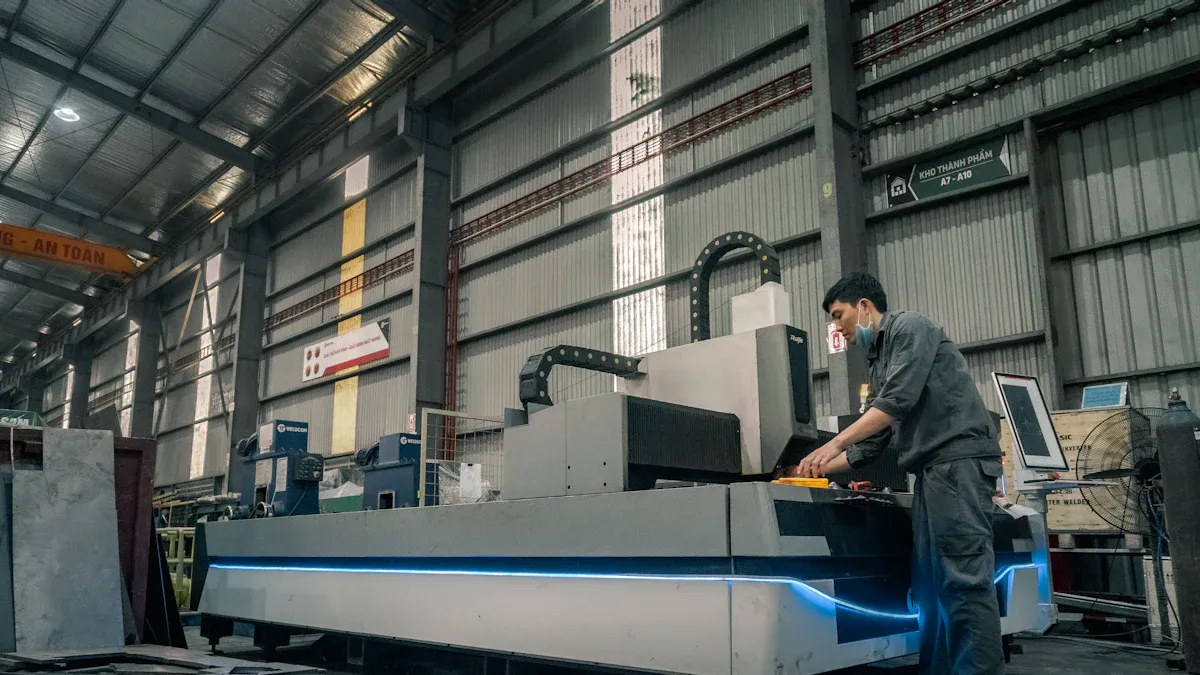
FANUC holds a strong position in Turkey's robotics market. Many manufacturers rely on FANUC robots for various tasks. Arge Robotics, for instance, acts as a system integrator, providing service and installation for FANUC Robotics robots across Turkey. This network helps maintain FANUC's leadership in the sector.
CNC Systems Dominance in Machining
FANUC also dominates the CNC systems market for machining applications. Its control systems are crucial for precision manufacturing. DingYan Machinery, a supplier of CNC machine tool accessories, offers all parts for famous CNC controller brands, including FANUC. This ensures Turkish manufacturers have access to essential components for their FANUC-powered machines.
Robust Service and Support Network
A strong service and support network underpins FANUC's market presence. Companies like Berk Elektronik provide repair and maintenance services specifically for FANUC robots. They also offer solutions for CNC machines, socks and textile machines, and printing and packaging machines, which often integrate FANUC components. This comprehensive support ensures operational continuity for users.
Mitsubishi's Growing Influence and Strategic Areas
PLC and HMI Adoption Across Industries
Mitsubishi Electric shows growing influence, particularly in the adoption of PLCs (Programmable Logic Controllers) and HMIs (Human Machine Interfaces). These components are vital for controlling and monitoring industrial processes. Turkish industries increasingly integrate Mitsubishi's reliable PLC and HMI solutions into their operations.
Drive Systems Penetration and Energy Solutions
Mitsubishi's drive systems are also gaining traction. These systems control motors and other moving parts in machinery. The company also provides energy solutions, helping manufacturers improve efficiency. This focus on energy management appeals to Turkish businesses looking to reduce operational costs.
Integrated Automation Solutions Growth
Mitsubishi emphasizes integrated automation solutions. These solutions combine various technologies to create seamless manufacturing processes. This approach helps Turkish factories achieve higher levels of automation and efficiency.
Key Industries Served by FANUC or Mitsubishi
Automotive Sector Engagement and Automation Needs
Both FANUC and Mitsubishi significantly engage with Turkey's automotive sector. FANUC's control systems are critical for mold manufacturing, injection molding, metal processing, and assembly lines within automotive production. Mitsubishi Electric also provides numerous robotic solutions for the automotive industry, addressing rapid production and assembly needs.
Metalworking and Machining Applications
FANUC's presence is particularly strong in metalworking and machining. Its CNC systems are used for producing standard and special parts in pressing, drilling, and assembly processes. This includes manufacturing items like blanking punches, stepped punches, and various pins for metal processing. CSS Engineering utilizes FANUC products in their industrial automation solutions for these applications.
Packaging and Logistics Automation
The packaging and logistics sectors also benefit from both companies. Berk Elektronik offers repair services for printing and packaging machines that often use FANUC components. Mitsubishi Electric provides high-tech automation products for various stages of packaging, such as bottling, vertical and horizontal packaging, and labeling.
Textile and Food Processing Modernization
Modernization efforts in textile and food processing industries also involve these automation giants. Berk Elektronik supports socks and textile machines with FANUC components. Mitsubishi Electric's automation solutions serve the food and medicine industries, offering robotic solutions for rapid production, dosing, and packaging. The choice between FANUC or Mitsubishi often depends on the specific automation needs of these diverse sectors.
Technological Strengths and Offerings: FANUC or Mitsubishi
FANUC's Core Competencies and Innovation
Precision Robotics Technology and AI Integration
FANUC excels in precision robotics technology. Their robots perform tasks with high accuracy. They also integrate artificial intelligence (AI) into their systems. This AI helps robots learn and adapt, making them more efficient in complex manufacturing processes. This integration allows for smarter automation.
Advanced CNC Systems for High-Performance Manufacturing
FANUC offers advanced CNC systems. These systems are vital for high-performance manufacturing. They provide precise control for machining operations. Manufacturers rely on FANUC CNCs for their speed and reliability. These systems ensure consistent quality in production.
Collaborative Robot Solutions for Flexible Production
FANUC also provides collaborative robot solutions, known as cobots. These robots work safely alongside human operators. Cobots offer flexibility in production lines. They can adapt to changing manufacturing needs. This makes them valuable for businesses seeking agile production methods.
Mitsubishi's Integrated Automation and Digitalization
iQ Platform Capabilities for Seamless Integration
Mitsubishi's iQ Platform offers powerful capabilities for seamless integration. This platform is compatible with PAC PackML solutions. This means it can integrate with standardized packaging machine control. PackTags standardize communication and management processes for production data. This includes machine status and workpiece information. The iQ Platform enables seamless integration of machines from different manufacturers. It reduces startup times and helps with automatic production line start/stop. This leads to more efficient troubleshooting. The platform features a powerful, scalable control architecture. It also includes high-speed and accurate mechatronics, such as smart servo and robotic solutions. AI tools help machines learn and improve. Data connectivity and visualization provide customizable presentations of key performance and maintenance metrics. The MELSEC-iQ platform PLC is a key component in automated quality control solutions. It works with system-matched components like SCARA robots and MAPS SCADA software.
e-F@ctory Concept for Smart Manufacturing
Mitsubishi promotes its e-F@ctory concept. This concept aims to create smart manufacturing environments. It connects various factory components. This allows for real-time data exchange and optimized operations. The e-F@ctory helps businesses achieve higher levels of efficiency and productivity.
Energy Solutions and Efficiency in Industrial Operations
Mitsubishi focuses on energy solutions. They help industries improve energy efficiency. Their products reduce power consumption in industrial operations. This focus benefits manufacturers by lowering operational costs. It also supports sustainable practices.
Digital Manufacturing Solutions and IoT Connectivity
Mitsubishi provides digital manufacturing solutions. These solutions include IoT connectivity. They allow machines to communicate and share data. This connectivity enables data-driven decision-making. It helps manufacturers optimize their processes and predict maintenance needs.
Comparative Analysis of Product Portfolios for Turkish Needs
Robotics and Motion Control Systems
FANUC's CNC control systems offer a high-speed CPU architecture. This CPU operates at the millisecond level for ultra-precise motion control. They support Ethernet, Profibus, and Profinet industrial communication protocols. FANUC systems also provide simultaneous 5-axis interpolation support for complex surface machining. They include automatic tool changing and tool path optimization to accelerate production processes. FANUC CNC systems are widely used in the automotive, electronics, and defense industries. Mitsubishi Electric also provides high-speed CNC control solutions. These solutions serve the automotive and electronics industries. Both companies offer robust options for Turkish manufacturers.
PLCs, Industrial PCs, and HMI Solutions
Mitsubishi has a strong presence in PLCs and HMIs. Their solutions are widely adopted across various industries. FANUC also offers reliable control systems, often integrated with their CNC and robotic solutions. The choice between FANUC or Mitsubishi often depends on the specific integration needs of a factory.
Servo Systems and Drives Performance
Both companies offer high-performance servo systems and drives. These components are crucial for precise motion control in machinery. Their systems provide accuracy and speed. This ensures efficient operation in demanding industrial applications.
Software, Connectivity, and Data Analytics
Both FANUC and Mitsubishi offer software solutions. These solutions enhance connectivity and data analytics. Mitsubishi's e-F@ctory and iQ Platform emphasize integrated data management. FANUC also provides software for robot programming and system monitoring. These tools help Turkish manufacturers leverage data for better decision-making.
Strategic Approaches and Market Penetration: FANUC or Mitsubishi
FANUC's Distribution and Support Network in Turkey
Direct Sales Channels and Customer Engagement
FANUC uses direct sales channels in Turkey. This allows them to engage directly with customers. They understand specific manufacturing needs. This direct approach helps build strong customer relationships. It also ensures tailored solutions for complex projects.
Authorized Integrators and Partnership Ecosystem
FANUC works with a network of authorized integrators. These partners implement FANUC's automation solutions. This expands FANUC's reach across various industries. The partnership ecosystem includes suppliers like DingYan Machinery. DingYan Machinery provides essential parts for FANUC CNC controllers. This ensures comprehensive support for end-users.
Technical Support Infrastructure and Repair Centers
FANUC maintains a robust technical support infrastructure. They have established repair centers in Turkey. These centers provide quick service and minimize downtime. Companies like Berk Elektronik offer specialized repair and maintenance for FANUC robots and CNC machines. This strong support network ensures operational continuity for manufacturers.
Training and Education Programs for Workforce Development
FANUC invests in training and education programs. These programs develop a skilled workforce. They teach operators and engineers how to use FANUC technologies. This helps Turkish manufacturers maximize their investment in automation. It also addresses the need for skilled labor in the industry.
Mitsubishi's Partnership Models and Localized Solutions
Localized Solutions Development and Customization
Mitsubishi focuses on developing localized solutions. They customize their offerings for the Turkish market. This approach ensures their products meet specific local demands. It makes their automation solutions more relevant and effective for Turkish businesses.
OEM and System Integrator Collaborations
Mitsubishi collaborates extensively with OEMs. They also partner with system integrators. These collaborations embed Mitsubishi's technology into various industrial machines. This broadens their market penetration. It also provides integrated solutions for diverse applications.
Global and Regional Alliances for Market Expansion
Mitsubishi leverages its global alliances. They also form strategic regional partnerships. These alliances help expand their market presence in Turkey. They bring advanced technologies and best practices to local manufacturers.
Customer-Centric Approach and Value Proposition
Mitsubishi adopts a customer-centric approach. They prioritize understanding customer needs. They offer strong value propositions. This builds trust and loyalty among Turkish manufacturers. Their focus is on delivering solutions that provide clear benefits.
Pricing Strategies and Value Propositions of FANUC or Mitsubishi
Cost-Effectiveness of Automation Solutions
Both FANUC and Mitsubishi offer cost-effective automation solutions. They aim to provide significant value for the investment. This helps Turkish manufacturers justify their automation spending. Their solutions contribute to improved efficiency and reduced operational costs.
Total Cost of Ownership (TCO) Analysis
Manufacturers consider the total cost of ownership (TCO). This includes initial purchase, installation, maintenance, and energy consumption. Both companies highlight the long-term cost savings of their products. They demonstrate how their solutions offer a favorable TCO.
Return on Investment (ROI) for Manufacturers
Businesses seek a high return on investment (ROI) from automation. FANUC and Mitsubishi showcase how their technologies improve productivity. They reduce waste and enhance product quality. This leads to a faster ROI for manufacturers.
Customization, Scalability, and Future-Proofing
Their solutions are highly customizable. They can adapt to specific production needs. They also offer scalability for future growth. This ensures long-term relevance. It protects manufacturers' investments in automation technology.
Factors Influencing 2026 Market Position for FANUC or Mitsubishi
Turkish Economic Outlook and Industrial Growth
Key Industrial Growth Sectors and Investment Trends
Turkey's industrial landscape continues to evolve, with several sectors showing significant growth and attracting substantial investment. The automotive industry remains a cornerstone, driving demand for advanced automation in production lines and component manufacturing. Renewable energy, defense, and white goods sectors also experience expansion, requiring modern manufacturing techniques. These growth areas present fertile ground for automation providers. Manufacturers in these sectors actively seek solutions that enhance efficiency, reduce costs, and improve product quality. This sustained investment trend directly influences the market for industrial automation.
Impact of Exchange Rate Stability on Imports
The stability of the Turkish Lira's exchange rate significantly impacts the cost of imported automation equipment. Both FANUC and Mitsubishi primarily import their advanced robotics and CNC systems. A stable exchange rate provides predictability for manufacturers planning automation investments. Conversely, volatility can increase costs, making long-term planning challenging and potentially delaying adoption. Manufacturers often weigh the immediate cost against the long-term benefits of automation, making exchange rate stability a critical factor in their purchasing decisions.
Overall Investment in Manufacturing and Automation
Overall investment in Turkish manufacturing, particularly in automation, shows a positive trajectory. Turkish companies increasingly recognize the necessity of automation to remain competitive globally. This includes investments in robotics, advanced CNC machines, integrated control systems, and digital manufacturing solutions. Government policies and private sector initiatives encourage this shift towards more automated and intelligent production. This growing investment pool creates a larger market for both established and emerging automation technologies.
Government Initiatives and Industry 4.0 Adoption
Digital Transformation Policies and Incentives
The Turkish government actively promotes digital transformation and Industry 4.0 adoption within its manufacturing sector. These policies aim to modernize industries, increase productivity, and foster innovation. Various incentives encourage companies to invest in advanced technologies. These initiatives create a supportive environment for automation providers.
Automation Incentives and Subsidies
Turkish manufacturers benefit from several automation incentives and subsidies. These programs aim to accelerate the adoption of advanced manufacturing technologies.
| Support Element | Türkiye's Century Development Move | Sectoral Incentive System | Regional Incentives |
|---|---|---|---|
| Customs Duty Exemption | ✓ | ✓ | |
| VAT Exemption | ✓ | ✓ | |
| Tax Reduction | ✓ | ✓ | |
| Interest or Dividend Support | ✓ | ✓ | |
| Machine Support | ✓ | ||
| Investment Location Allocation | ✓ | ✓ | |
| Social Security Premium Employer’s Share Support | ✓ (within the scope of Regional Incentives) | ✓ (within the scope of Regional Incentives) | ✓ |
| Social Security Premium Support (For Region 6) | ✓ (within the scope of Regional Incentives) | ✓ (within the scope of Regional Incentives) | ✓ |
Türkiye's Century Development Move includes three sub-programs: Technology Initiative Program, Local Development Initiative Program, and Strategic Initiative Program. The Technology Initiative Program supports investments in priority products or technologies identified by the Ministry of Industry and Technology. A new 'Machinery Support' element provides a direct cash grant of 25% of the cost for machinery and equipment with a unit price of TL 2 million or more, up to a maximum of 240 million TL, not exceeding 15% of the fixed investment amount. However, this machinery support cannot combine with interest or profit share support under this program. The Local Development Initiative Program evaluates projects on a case-by-case basis. Conditions for interest/profit share support and machinery support are similar to the Technology Move Program.
Additional support comes from various organizations:
-
KOSGEB (Small and Medium Enterprises Development and Support Administration) provides support for SMEs. This particularly applies to robotic projects at the prototype stage and in production lines. Key programs include:
- Teknoyatırım Support Program
- Strategic Product Program
- R&D, Ür-Ge, and Innovation Supports
- Non-repayable grants can go up to 60% depending on the project.
-
Ministry of Industry and Technology offers various support packages within the industry automation grant program. These include:
- Efficiency Improvement Projects (VAP)
- Digital Transformation Supports
- Grant opportunities of up to 75% for priority technology areas in projects with TÜBİTAK.
- Additional support for automation systems developed with domestic software and hardware.
Further incentives include:
- Investment Incentive Certificate: This allows companies to benefit from tax reduction, customs duty exemption, VAT exemption, and interest rate reduction.
-
Regional Incentives: Higher rates of incentives are offered for investments in less developed regions (e.g., 5th or 6th region). These include:
- SSI employer premium support
- Income/corporate tax reduction
- Investment location allocation
- Interest or profit share support
-
Tax Advantages:
- VAT exemption
- Customs duty exemption
- Corporate tax reduction (up to 50% depending on investment size)
-
SSI Supports:
- Employer premium reduction (up to 10 years)
- Additional incentives for creating new employment
- R&D and Digital Transformation Supports: These are available through TÜBİTAK, KOSGEB, and the Ministry of Industry and Technology. The TÜBİTAK TEYDEB program offers up to 75% grants for robotic software development, AI-integrated systems, and sensor-based automation solutions.
- Additional Supports for Domestic Machine Purchases: Extra incentives for machines purchased from domestic manufacturers include VAT exemption and customs duty exemption, and potentially higher tax reduction rates.
Local Content Requirements and Domestic Production
The Turkish government also emphasizes local content requirements and supports domestic production. Policies encourage manufacturers to source components and solutions from within Turkey where possible. This can influence the strategies of international automation providers. They might consider localizing production or forming stronger partnerships with Turkish suppliers. This focus on domestic capabilities could create opportunities for local integrators and developers.
Skilled Labor Availability and Training Programs
Workforce Training Programs for Automation Technologies
The availability of a skilled workforce is crucial for the successful adoption of automation technologies. Turkish industries require workers who can operate, maintain, and program advanced robotic and CNC systems. Training programs play a vital role in developing these necessary skills. A 'Skill-Based Talent Development: A Five-Stage Model' helps organizations address skill gaps and adapt to technological transformations. This model emphasizes skill-based strategies, upskilling, and advanced technology implementations.
Technical Education Partnerships and Skill Development
Partnerships between technical education institutions and industry are essential for skill development. Universities and vocational schools collaborate with automation companies to design curricula that meet industry needs. These collaborations ensure that graduates possess the practical skills required for modern manufacturing environments. Such partnerships help bridge the gap between academic learning and industrial application.
Addressing Automation Skill Gaps in the Workforce
Addressing automation skill gaps in the workforce remains a significant challenge for Turkish manufacturing. As technology advances rapidly, the demand for specialized skills outpaces the current supply. Companies and educational institutions must work together to provide continuous training and upskilling opportunities. This ensures that the workforce can effectively utilize new automation solutions.
Note: If you would like more information or a customized training program for your organization, please feel free to contact us. Our professional team is ready to provide tailored solutions that meet your specific needs. The ability of Turkey to develop and retain a skilled workforce will significantly influence the market position of FANUC or Mitsubishi by 2026.
After-Sales Support and Service Quality: A Decisive Factor
After-sales support and service quality significantly influence a manufacturer's decision. Companies need reliable partners who can keep their operations running smoothly. Excellent support ensures minimal downtime and maximizes productivity. This factor often becomes a decisive element in choosing an automation provider.
Spare Parts Availability and Logistics
The quick availability of spare parts is crucial for any manufacturing operation. Delays in receiving parts can halt production, leading to significant financial losses. Automation providers must establish efficient logistics networks to deliver components rapidly. For instance, companies supporting Mitsubishi components in Turkey demonstrate strong capabilities. QUAPARTS, a specialist in truck and bus spare parts, handles Mitsubishi-Fuso components. They ensure fast delivery through a streamlined supply chain and logistics system. Their warehouse in Ankara, located near Esenboğa International Airport, allows for same-day dispatch of most orders. They also partner with international courier companies for reliable deliveries to over 40 countries. Similarly, YAF Diesel provides genuine, OEM, and reconditioned Mitsubishi MET 53 SC turbocharger parts. They maintain extensive stock for fast response to urgent requirements from Turkey. Their services include in-house testing, calibration, and inspection of turbocharger components. They also offer global delivery, ensuring rapid and reliable dispatch to ports worldwide. These examples show how a robust ecosystem supports the availability of critical components, which is vital for Turkish manufacturers.
Response Times and Downtime Reduction Strategies
Fast response times from service teams are essential. When a machine breaks down, every minute of inactivity costs money. Automation providers implement strategies to reduce downtime. These strategies include having local service technicians and clear escalation procedures. Quick diagnosis and repair minimize production interruptions. Companies that offer rapid on-site support or immediate remote assistance gain a competitive edge. Manufacturers prioritize partners who can get their systems back online quickly.
Remote Diagnostics and Technical Support Capabilities
Modern automation systems often include remote diagnostics capabilities. This technology allows service engineers to troubleshoot issues from a distance. They can connect to machines over the internet, identify problems, and sometimes even fix them without an on-site visit. This capability significantly reduces response times and travel costs. Strong technical support teams, available via phone or online portals, also provide immediate assistance. They guide operators through troubleshooting steps. This remote support is a key factor in maintaining continuous operation and reducing the need for physical interventions.
Maintenance Contracts and Guarantees for Reliability
Comprehensive maintenance contracts offer manufacturers peace of mind. These agreements typically include regular inspections, preventive maintenance, and guaranteed response times. They ensure the longevity and optimal performance of automation equipment. Providers also offer guarantees for their products and services. These guarantees build trust and demonstrate confidence in their technology. Manufacturers often prefer partners who offer clear, reliable maintenance plans and strong warranties. This commitment to long-term support ensures the reliability of their automation investments.
Projected Market Scenarios for 2026: FANUC or Mitsubishi Dominance
The competitive landscape in Turkish manufacturing will likely evolve in several ways by 2026. Three main scenarios emerge for FANUC and Mitsubishi. Each scenario depends on their strategic investments, technological advancements, and market adaptation.
Scenario 1: FANUC Maintains Dominance in Robotics/CNC
Continued Leadership in Core Automation Segments
FANUC will likely maintain its strong position in robotics and CNC systems. The company plans to expand its "FANUC Next to the Domestic Machine Manufacturer" project. This initiative aims to increase the use of its CNC and robotic solutions across Turkey. FANUC prioritizes AI-supported robots and efficient production systems. It also focuses on digital factories. The company offers solutions based on data analytics, IoT, and machine learning. These tools support flexible and efficient operations. FANUC emphasizes collaborative robots (cobots). These robots work safely with humans. They offer easy integration and cost-effectiveness for small and medium-sized enterprises (SMEs). FANUC also highlights high-speed and energy-efficient industrial robots. These are crucial for the automotive, white goods, and electronics manufacturing sectors. The company implements machine learning and IoT-supported FANUC CNC systems. These systems provide smarter, more efficient, and predictable maintenance. FANUC develops software and integration technologies for digital twin and smart factory solutions. These offerings aim for flexible, error-free, and optimized manufacturing processes.
Strong Brand Loyalty and Established Reputation
FANUC benefits from strong brand loyalty in Turkey. Manufacturers trust its established reputation for reliability and precision. Years of consistent performance have built this trust. Many Turkish companies have invested in FANUC equipment. They value the proven track record and consistent quality. This loyalty creates a significant barrier for competitors.
Expanding Service Reach and Technology Center Impact
FANUC significantly expands its service reach in Turkey. The company plans to open a new 10,300 square meter technology center in Sancaktepe in the first half of 2024. This center will feature a showroom for product exhibition and operation. It will also include an academy and application center. These facilities will train qualified personnel. The center will house FANUC's second repair center and retrofit area in Europe. This expansion strengthens FANUC's support infrastructure. It ensures faster service and better training for Turkish manufacturers.
Scenario 2: Mitsubishi Gains Ground with Integrated Solutions
Increased Adoption of Integrated Automation Platforms
Mitsubishi Electric could gain significant market share through its integrated automation platforms. The iQ Platform offers seamless integration capabilities. This platform connects various factory components. It allows for efficient data exchange and optimized operations. Turkish manufacturers increasingly seek comprehensive solutions. They want to streamline their production processes. Mitsubishi's integrated approach meets this demand effectively.
Success of Strategic Partnerships and Localized Offerings
Mitsubishi's strategy involves strong partnerships and localized solutions. The company collaborates with local OEMs and system integrators. These partnerships help embed Mitsubishi technology into diverse industrial machines. Mitsubishi also focuses on customizing its offerings for the Turkish market. This ensures its products meet specific local needs. This approach makes its automation solutions more relevant and effective for Turkish businesses.
Strong Focus on Digitalization and Smart Factory Solutions
Mitsubishi places a strong emphasis on digitalization and smart factory solutions. Its e-F@ctory concept aims to create intelligent manufacturing environments. This concept connects factory components for real-time data exchange. Mitsubishi Electric has an ongoing project with the Manufacturing and Automation Research Center (MARC) at Koc University. This project is titled "Robotic Additive Manufacturing and Automation." This collaboration began in 2018 and continues beyond 2026. MARC's mission includes developing and transferring innovative manufacturing concepts to production. Its research areas include Advanced Manufacturing, such as Additive Manufacturing, and Mechatronics and Automation, including Process Automation and Industrial Robotics. This partnership highlights Mitsubishi's commitment to advanced manufacturing and digitalization in Turkey.
Scenario 3: Niche Specialization and Co-existence for FANUC or Mitsubishi
Complementary Market Segments and Applications
Both FANUC and Mitsubishi could find success through niche specialization. They might focus on complementary market segments. For example, FANUC could dominate heavy-duty robotics and precision CNC machining. Mitsubishi could excel in integrated factory automation, PLCs, and energy management solutions. This allows both companies to thrive without direct head-to-head competition in all areas. Their strengths often align with different industrial needs.
Emerging Niche Opportunities for Both Players
Emerging niche opportunities exist for both companies. FANUC sees potential in AI-supported robots. These robots will make machines smarter. They will optimize production processes with real-time data analysis. FANUC also aims to provide efficient production systems. These systems offer smarter, more efficient, and sustainable industrial automation. Digital factories represent another niche. This includes data analytics, IoT, and machine learning-based solutions. These support flexible and efficient operations. Collaborative robots (cobots) are prioritized for their ability to work safely with humans. They offer easy integration into flexible manufacturing. They are also cost-effective for SMEs. High-speed and energy-efficient industrial robots are crucial for more efficient and sustainable manufacturing. This is especially true in the automotive, white goods, and electronics sectors. Advanced CNC systems with machine learning and IoT support will enhance operational continuity. They provide smarter, more efficient, and predictable maintenance solutions. Software and integration technologies for digital twin and smart factory solutions aim to provide more flexible, error-free, and optimized manufacturing processes. Mitsubishi also has niche opportunities in areas like energy solutions and specific integrated platforms.
Potential for Collaborative Projects and Hybrid Solutions
This scenario also allows for collaborative projects. Companies might combine the strengths of both FANUC and Mitsubishi. For instance, a factory could use FANUC robots for assembly. It could then integrate them with Mitsubishi PLCs for overall process control. Hybrid solutions could offer Turkish manufacturers the best of both worlds. This approach leverages each company's core competencies. It provides comprehensive and highly optimized automation systems.
Emerging Trends Impacting Competition Between FANUC or Mitsubishi
Several emerging trends will significantly shape the competition between FANUC and Mitsubishi in Turkish manufacturing. These trends demand adaptability and innovation from both industrial automation giants. The companies must respond effectively to these evolving market dynamics.
Digitalization, IoT Integration, and Data-Driven Manufacturing
Digitalization, IoT integration, and data-driven manufacturing are transforming the industrial landscape. Manufacturers increasingly seek solutions that connect machines, collect data, and provide actionable insights. This allows for optimized production processes, predictive maintenance, and improved efficiency. Both FANUC and Mitsubishi offer platforms and tools to support these advancements. Companies that offer superior data analytics and seamless IoT connectivity will gain a competitive edge.
Sustainability and Green Manufacturing Practices
Sustainability and green manufacturing practices are becoming paramount for Turkish industries. Manufacturers face increasing pressure to reduce their environmental footprint and adopt eco-friendly processes. This trend influences investment decisions in automation.
The Istanbul Leather and Leather Products Exporters' Association prioritizes sustainable consumption and production practices. They integrate environmental and social considerations into production. They also promote responsible consumption to reduce the environmental footprint. Specific actions include:
- Sustainable sourcing and raw material management by promoting ethically sourced and alternative materials.
- Resource efficiency and waste reduction through optimizing material use, recycling, and waste management systems.
- Product design for sustainability by promoting durable, environmentally friendly products and circular design.
- Consumer awareness and responsible consumption through education on sustainable options and ethical purchasing.
- Collaboration and participation with stakeholders across the leather value chain.
- Monitoring and reporting sustainability performance, including resource consumption, waste generation, and emissions.
The Turkish Ready-to-Wear and Apparel Sector also has a Sustainability Strategy and Action Plan. This plan aligns with EU sustainability policies and legal regulations. It focuses on green, digital, and circular transformation. This helps maintain competitiveness in the EU market and global supply chain. Sustainability efforts in this industry structure around three main axes: Sustainability Management, Sustainable Production, and Sustainable Supply Chain.
- Sustainable Production aims for efficient natural resource use and waste minimization. It also reduces energy and resource consumption. It limits harmful chemicals. This approach promotes climate and environmentally friendly alternative materials, digitalization, and eco-design. It takes a holistic view from raw material to final product.
- Sustainable Supply Chain requires businesses to manage their entire supply chain sustainably. This goes from suppliers to post-consumer stages. It involves collaboration with purchasing groups, brands, and retailers. This reduces waste and energy. It creates an environmentally sensitive supply chain and improves labor standards.
- Sustainability Management involves developing strategies to manage and reduce environmental and social impacts. This includes establishing a sustainability management system. It calculates environmental footprint, sets reduction targets, and reports them across the supply chain.
The Turkey Green Deal Action Plan, published by the Ministry of Trade in 2021, outlines strategies to increase sustainability in industry. This plan promotes energy efficiency, renewable energy use, environmentally friendly production techniques, and circular economy principles. Key steps for Turkish industry include:
- Increasing Energy Efficiency through investments and carbon emission reduction.
- Utilization of Renewable Energy sources like solar, wind, and hydroelectric power.
- Applying Circular Economy Practices such as recycling, reuse, and environmentally friendly production processes.
- Reducing Carbon Footprint to comply with the European Green Deal's carbon border tax. This requires shifts to renewable energy, effective waste management, and environmentally conscious production.
Both FANUC and Mitsubishi must demonstrate how their automation solutions contribute to these green initiatives. This includes energy-efficient robots, optimized production processes, and waste reduction technologies.
Customization and Flexibility Demands in Production
Turkish production increasingly demands more flexible and customizable settings and functions. This applies to different materials and products. It helps adapt to market diversity. Automation providers must offer solutions that can quickly reconfigure for varying production needs.
| System Type | Customization Level | Flexibility | Target Business Size |
|---|---|---|---|
| Modular Palletizing | Broader | Reprogrammable for different tasks, adaptable to variable production processes | All (small to large) |
| Plug&Play Palletizing | Limited | Works with different product groups, programmable for changing production needs | Small and Medium |
| Turnkey Palletizing | Comprehensive | Customized for large-scale businesses | Large |
Ser Mekatronik, for example, designs finishing machines with efficiency, energy saving, and digitalization in mind. They also offer various options for flexibility and customization. This suits different products and materials. They emphasize providing flexible and customizable solutions. This meets changing customer demands and optimizes processes for various materials. Automation solutions that offer modularity, easy reprogramming, and quick changeovers will be highly valued. Both FANUC and Mitsubishi must continue to innovate in this area.
Cybersecurity in Industrial Automation Systems
Cybersecurity has become a critical concern for industrial automation systems in Turkey. The increasing connectivity of operational technology (OT) environments introduces new vulnerabilities. Protecting these systems from cyber threats is essential for maintaining production continuity and data integrity.
- Vulnerabilities target SCADA systems. Mitsubishi Electric, for instance, has faced high severity vulnerabilities in its systems.
- Advanced Persistent Threats (APTs) exploit VPN vulnerabilities in OT organizations worldwide. This includes those critical to aerospace supply chains.
- Industrial Control Systems (ICS) and OT require special controls and a separate cybersecurity budget. This is due to critical infrastructure alerts.
- The Cyber Security Competency Model in the Energy Sector is expanding. It includes more facilities. This covers electricity generation facilities communicating with TEİAŞ SCADA/EMS. It also includes those with Black-Start features. This indicates recognition of previously unaddressed areas.
The Fourth Industrial Revolution brings technological innovations like artificial intelligence, the Internet of Things, and big data. These make industrial espionage more sophisticated and harder to detect. Both physical industrial secrets and strategic information stored in digital environments are targets. This poses significant security risks to industrial automation systems. Preventing major economic and collateral damage spread through networks and conduits is crucial. This damage can result from hostility, malfeasance, or accident. Safeguarding availability through effective security controls is also vital. Both FANUC and Mitsubishi must prioritize robust cybersecurity features in their products and solutions. They must also offer services that help manufacturers secure their OT environments. This includes secure communication protocols, threat detection, and incident response capabilities.
By 2026, the competitive landscape between FANUC and Mitsubishi in Turkish manufacturing will depend on their adaptation to local demands. Investment in robust service infrastructure and comprehensive, future-proof automation solutions will be critical. The ultimate leader will be the company that best aligns with Turkey's evolving industrial needs. They must also meet technological aspirations, demonstrating superior value and support.
FAQ
What is the main focus of FANUC in Turkish manufacturing?
FANUC primarily focuses on robotics and CNC systems. They hold a strong market share in these areas. Their solutions are crucial for precision manufacturing. FANUC also emphasizes AI integration and collaborative robots.
How does Mitsubishi Electric contribute to Turkish industries?
Mitsubishi Electric provides integrated automation solutions. They are strong in PLCs, HMIs, and drive systems. The company also promotes its e-F@ctory concept. This helps create smart manufacturing environments.
Which industries do both FANUC and Mitsubishi serve in Turkey?
Both companies serve key sectors. These include automotive, metalworking, and packaging. They also contribute to textile and food processing modernization. Their technologies meet diverse automation needs across these industries.
What role do government incentives play in automation adoption?
Government incentives and subsidies encourage automation. These programs help Turkish manufacturers invest in advanced technologies. They aim to modernize industries and increase productivity. This creates a supportive environment for automation providers.
Why is after-sales support important for manufacturers?
After-sales support is crucial for operational continuity. Quick spare parts availability and fast response times minimize downtime. Remote diagnostics and maintenance contracts ensure reliability. Manufacturers prioritize partners with excellent service quality.
How do sustainability trends affect automation choices?
Sustainability trends push manufacturers to adopt eco-friendly practices. Automation solutions must contribute to reducing environmental footprints. This includes energy-efficient robots and waste reduction technologies. Both companies must show how their products support green initiatives.
What is the significance of localized solutions for the Turkish market?
Localized solutions meet specific Turkish market demands. They make automation offerings more relevant and effective. Companies that customize their products gain a competitive edge. This approach builds trust with local manufacturers.