










Top CNC Controller Brands & Fanuc Components Used by Leading Machine Tool Makers in 2025
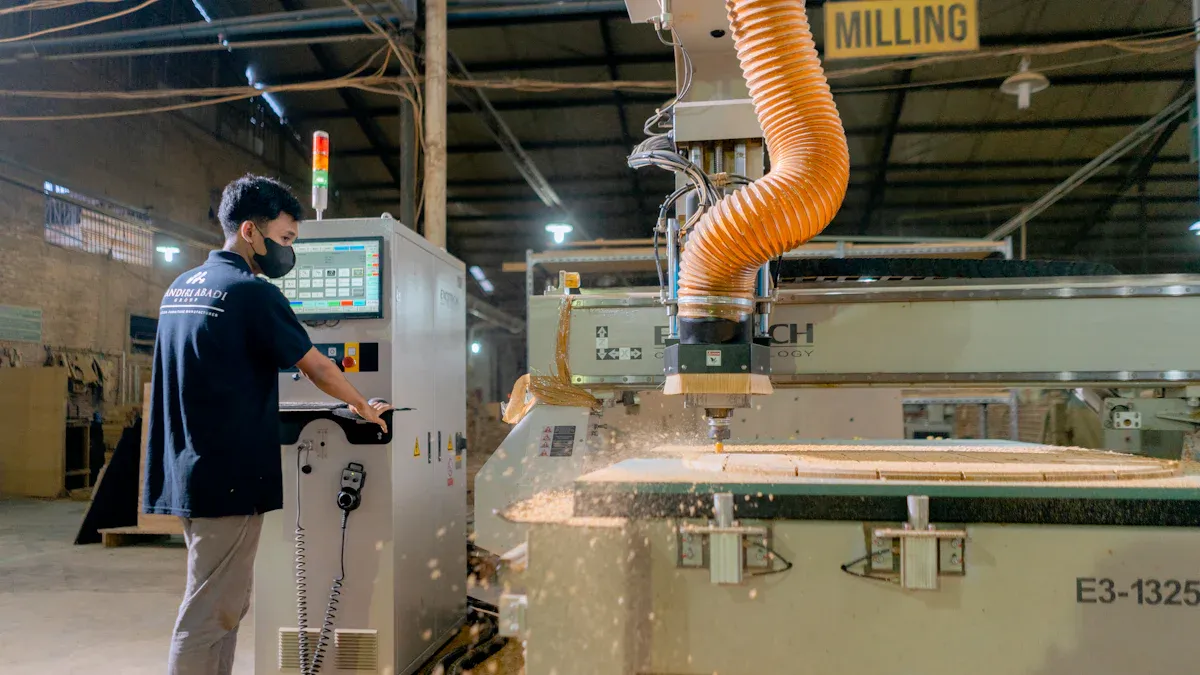
Modern manufacturing thrives on precision and efficiency. Leading machine tool makers rely on advanced cnc controller brands to achieve this. Fanuc Corporation commands approximately 65% of the global CNC controller market share, demonstrating its widespread impact. Siemens AG also maintains a significant presence, alongside Mitsubishi Electric Corporation and Bosch Rexroth AG, who all offer extensive product portfolios. These top brands provide critical features and applications that empower manufacturers. DingYan Machinery proudly supplies dependable, high-quality spare parts for these essential systems, ensuring seamless operations for all.
Key Takeaways
- FANUC leads the CNC controller market. It offers reliable systems for many industries.
- Siemens provides powerful CNC solutions. These solutions use digital twin technology and integrate with factory systems.
- Heidenhain controllers ensure high precision. They are used for complex machining tasks.
- Mitsubishi Electric offers advanced automation. Their M800/M80 series improves machining speed and efficiency.
- Bosch Rexroth combines CNC control and drives. Their MTX platform handles complex motion control.
- Fanuc servo motors and spindle motors are crucial. They provide power and precision for machine tools.
- Future CNC technology will use AI and machine learning. This will improve maintenance and machining.
- Leading manufacturers choose these brands for reliability and precision. They also value easy integration and new technology.
Top CNC Controller Brands in 2025
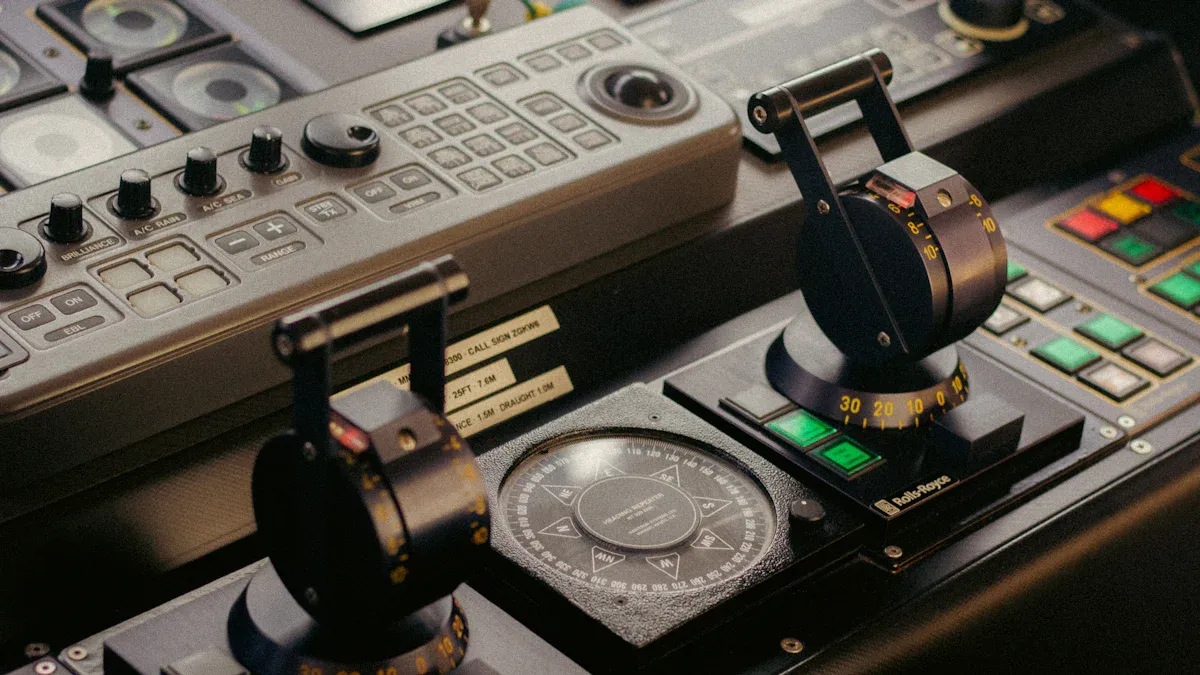
FANUC: A Dominant CNC Controller
FANUC stands as a true leader in the CNC controller market. Its systems empower manufacturers worldwide. They consistently deliver exceptional performance and reliability.
Key Features and Innovations
FANUC's FA Series CNC systems are renowned for their high reliability and efficiency. These controllers handle a wide range of tasks. They manage basic machining operations and intricate manufacturing processes for aerospace and automotive components. A significant technological advancement is their seamless integration with robotic systems. This enables solutions for material handling and machine tending alongside traditional machining. In 2023, FANUC expanded its collaborative robot (cobot) integration. This allows robots to work alongside CNC machines for tasks like material handling, assembly, and inspection. This innovation enhances production line flexibility and efficiency, especially for small-to-medium enterprises (SMEs).
Widespread Applications
FANUC CNC controllers find use across many industries. Automotive manufacturing relies on their precision. Tool and die making benefits from their speed. High-volume production in electronics, consumer goods, and heavy equipment plants also utilizes these controllers. Machine tool builders use FANUC CNC controllers for specialized machines. These include those developed for alternative fuels efforts. For example, MJC Engineering, a US manufacturer of CNC metal forming machines, switched to FANUC controls. They built a machine for Kawatex, a Japanese metal fabricator. This machine produces aluminum liners for high-pressure hydrogen cylinders, supporting next-generation fuels initiatives.
Siemens: Powerful CNC Controller Solutions
Siemens offers powerful CNC controller solutions. They drive industrial automation forward with innovation and robust technology.
SINUMERIK Control Systems
Siemens utilizes advanced digital twin technology for CNC applications. This enables full process simulation. It optimizes the engineering process and allows for simultaneous process steps. This significantly reduces time to the first part and the need for costly physical prototypes. The open architecture of Siemens controls provides machine builders with flexibility. They can modify or create custom cycles and Human-Machine Interface (HMI) screens. Siemens CNC solutions run multi-function gear machines with numerous axes. This facilitates the production of near-finished parts. It also allows for incorporating customized CNC hardware automation and software. The CNC acts as a communication portal for real-time metrology. It analyzes manufactured gears against CAD files and makes instant compensatory adjustments to cutting parameters. This capability forms a foundational step towards machine learning and AI in manufacturing. The SINUMERIK CNC, a global standard in premium machine tool controls, features high-performance hardware and intelligent control algorithms. It also includes premium drive and motor technology. This ensures dynamic performance and machining precision. The operating system of the CNC adapts easily. It integrates robots and handling systems, making it highly adaptable to various machine technologies.
Digitalization Integration
Siemens integrates digitalization into its systems. SINUMERIK Integrate for Production is a comprehensive software suite for CNC shopfloor management. It facilitates networking of machines to capture and transparently evaluate production data. This offers a centralized platform with modules for machine tool data analysis and management. It connects machinery to company-level IT systems. These include Manufacturing Execution Systems (MES), Product Lifecycle Management (PLM) systems, and other Siemens digital manufacturing software. Digital twins of machine tools are crucial for optimizing machine manufacturer's engineering processes. They enable parallel execution of process steps, improving efficiency. Siemens integrates new technologies like AI, edge, and cloud connections into its systems. It sets up digital twins for machines, plants, products, and production lines. The SINUMERIK ONE digital native CNC with V6.20 software simplifies machine tool operation. It reduces wear and increases manufacturing productivity, making it optimal for digital transformation. Its Y-turning function enables turning from the Y-axis. This increases feed rate by up to 3x for higher productivity. The Advanced Rapid Movement function optimizes movement time between machining operations. It potentially speeds up overall machining by up to 10% without program changes. Reduced Dynamic Mode is a CNC function that minimizes machine wear and boosts availability. It automatically reduces operation if an axis overheats, then returns to full load when stable. Hardware innovations include keyboards and Machine Control Panels (MCPs) available in larger sizes (15" to 24"). These match HMI design. New SIMATIC Industrial Thin Clients (ITCs) and industrial PCs offer increased performance and higher resolution. The digital twin of SINUMERIK ONE (Create and Run MyVirtual Machine) integrates MCPs for consistent appearance and operation with the real CNC. It includes features like 3D option with second channel support, STEP format integration for complex geometries, and collision detection with NC program line identification.
Heidenhain: Precision CNC Controller
Heidenhain is synonymous with precision. Its CNC controller systems deliver exceptional accuracy for demanding applications.
TNC and iTNC Series
Heidenhain's TNC and iTNC series controllers are engineered for precision. They provide robust solutions for complex machining tasks. These controllers are highly regarded for their intuitive operation and advanced capabilities.
High-Accuracy Machining
Heidenhain controllers contribute to high-accuracy machining through several features. A precise machine kinematics model in the control ensures consistent machine accuracy. Shop-friendly calibration cycles like KinematicsOpt inspect and compensate for errors in rotary and swivel axes. The TCPM function enables optimal tool guidance for 5-axis machining. 3D-ToolComp compensates for tool radius errors, contributing to perfect part creation. Cycle 32 TOLERANCE adapts machine contour tolerances to specific machining operations. This balances accuracy and dynamic performance for perfect surfaces. Dynamic Precision functions systematically compensate for dynamic errors. They maximize the machine tool's potential accuracy, resulting in higher contour accuracy and superior surfaces. Automatable Cycle 444 measures complex 3D geometries. It probes workpieces and determines if measured points are within given tolerances, ensuring efficient part inspection. Heidenhain controllers are commonly applied in milling, turning, grinding, EDM, laser cutting, waterjet cutting, sheet-metal bending, and 3D printing machines. They are also vital in manufacturing implants, such as knee joints, hip joints, and teeth, and in the production of surgical instruments.
Mitsubishi Electric: Advanced CNC Controller Automation
Mitsubishi Electric empowers manufacturers with advanced CNC controller automation. Their systems drive innovation and efficiency across diverse industries.
M800/M80 Series Capabilities
The M800/M80 series from Mitsubishi Electric offers remarkable capabilities. These controllers feature a dedicated CNC-specific CPU. This ensures high throughput for complex machining applications. They also provide USB and SD card expansion. This allows storing and executing large, intricate machining programs. A large, capacitive touch screen makes operation intuitive and easy. The servo and spindle amplifiers meet stringent safety specifications, including EN ISO13849-1:2008 (PLd, Cat 3) and EN62061:2005 (SIL Class 2). These systems also offer enterprise connectivity. This provides valuable Overall Equipment Effectiveness (OEE) information.
The M800/M80 series introduces several innovative functions:
- OMR-CC (Optimum machine response-contour control): This feature achieves approximately 11% faster machining. It does this without losing accuracy. It adjusts control processing based on the workpiece shape.
- Cutting load control: The system automatically manages cutting load. This extends tool life and reduces cycle time.
- Tool cutting point control: This enables optimal machining. It works even with tool shape changes. It requires no program modification (available on M850VW and M850VS).
- Built-in wireless LAN: This enhances work efficiency. It allows wireless data exchange with PCs. This frees operations from time and space limits (M800VS and M80V series).
- Two-dimensional barcode engraving cycle: This facilitates automatic program/tool selection and traceability. It uses easy fixed-cycle programming.
- Intuitive operation: Multi-touch operation and a dedicated parameter adjustment screen improve machining quality.
- Customization of screens: Users can flexibly customize NC screens and applications. This includes image input and displaying external camera feeds (M800VS and M80V series).
- Support of ST language: This enables efficient PLC program creation and editing. It uses a syntax similar to conventional programming languages.
- Support for sustainability: The M800VW series includes 3D machining simulation. This checks for interference and quality before machining. It reduces waste from trial cuts.
The M800/M80 series also boasts a solid-state hard drive. This provides superior reliability, speed, and uptime. Icon-based navigation offers smartphone-like ease of use. The controllers support eight part systems, 32 axes, and eight spindles. They also offer multiple spindle synchronization set control. Super smooth surface control reduces mechanical vibration. Flexible compatibility with numerous field networks (CC-Link, PROFIBUS DP, Ethernet/IP) connects to robots, sensors, and other peripheral equipment.
The M800S is a high-grade CNC controller. It suits high-speed, high-accuracy machining. It also handles multi-axis, multi-part system control. It comes as a panel-in type with an integrated display. Its multi-CPU architecture delivers high performance and functional graphics. The M80 is a standard CNC. It offers high productivity and easy operability. It also comes as a panel-in type with an integrated display. Mitsubishi Electric provides it in packages (TypeA/TypeB) for easier selection. Both M800S and M80 feature a Windows-less display for easy operation.
Smart Manufacturing Focus
Mitsubishi Electric's CNC strategy strongly aligns with smart manufacturing principles. Their Integrated Machine Analytics (IMA) C70 Adapter exemplifies this commitment. This plug-and-play solution enables real-time remote monitoring and diagnostics of CNC machine data. It significantly enhances operational efficiency in complex manufacturing environments. The IMA C70 Adapter is fully compliant with MTConnect standards. This allows seamless integration with client applications. It provides real-time visibility into critical machine data. This empowers manufacturers to make faster, smarter decisions. It also improves efficiency and reduces downtime. This directly supports the data-driven and optimized aspects of smart manufacturing.
Bosch Rexroth: Integrated CNC Controller and Drive
Bosch Rexroth delivers integrated CNC controller and drive solutions. They provide powerful platforms for complex manufacturing challenges.
MTX Control Platform
The MTX control platform from Bosch Rexroth stands out for its distinguishing features. It combines a high-performance dual-core processor with decentralized intelligence. This ensures fast reaction times. The platform includes numerous Additive Manufacturing (AM)-specific CNC functions. Intelligent temperature control is one example. It features 3D online simulation with collision recognition. This visualizes construction time, positioning, and printing head travel. The MTX platform supports standardized G code from any slicer software. Integrated NC encoding systems protect manufacturer-specific know-how. Its open system architecture, with Open Core Interface, allows easy workflow integration by machine operators. It seamlessly fits into simulation environments as 'hardware in the loop'.
The Human-Machine Interface (HMI) features quick access to operating functions. It provides continuous visualization of key machine and controller state information. The user interface design allows easy task group switching. Clearly-marked keys facilitate this. Data and applications for machine operation, programming, management, maintenance, and diagnosis organize into eight task groups. Multi-window technology allows switching to another task group. It does this without ending the current function. This reduces operating effort.
Complex Motion Control
Bosch Rexroth systems excel at managing complex motion control in CNC applications. Their motion and logic controllers integrate motion, robot, and logic control into a unified system. They provide extensive motion functions. These include master axes, electronic gears, electronic cams, and FlexProfile. These features enable intricate motion sequences. Robot Control within these systems offers functionalities for standard robot kinematics. It also supports custom multi-axis path interpolation.
Fanuc CNC System Components: Preferred Choices
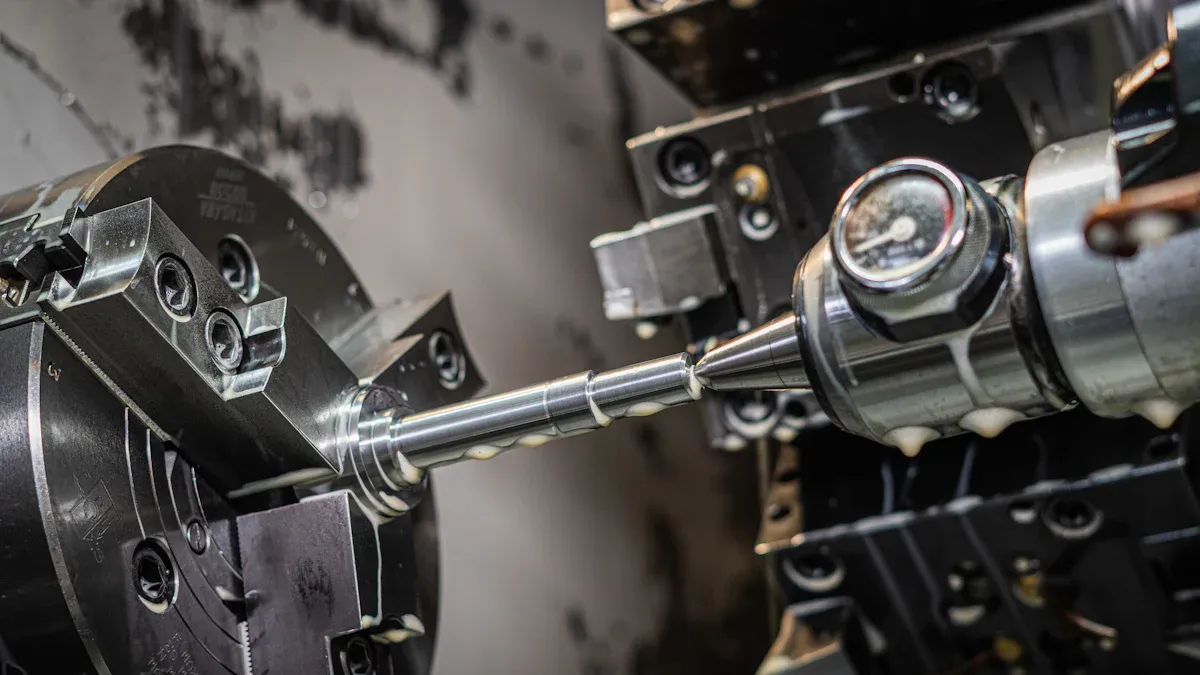
Leading machine tool manufacturers consistently choose Fanuc CNC system components. These components form the backbone of reliable and high-performance machining solutions. They deliver precision, efficiency, and durability.
Fanuc Servo Motors and Drives
Fanuc servo motors and drives are crucial for dynamic and accurate machine tool operation. They provide the power and control necessary for intricate movements.
Alpha i Series Servo Systems
The Alpha i Series servo systems represent the pinnacle of Fanuc's servo technology. These systems offer exceptional precision and robust performance. They empower machines to achieve superior accuracy and speed.
| Feature | ALPHA i-B Series Servo Motors |
|---|---|
| Motor Type | Synchronous AC Servo Motor |
| Rated Output | 0.05 kW to 30 kW |
| Rated Torque | 0.16 Nm to 191 Nm |
| Rated Speed | 1000 rpm to 6000 rpm |
| Maximum Speed | Up to 8000 rpm |
| Encoder Resolution | 1,000,000 to 16,777,216 pulses/rev (absolute) |
| Inertia | Low to Medium |
| Protection Class | IP67 (standard), IP65 (with brake) |
| Cooling Method | Natural convection or forced air cooling |
| Operating Temperature | 0°C to 40°C |
| Vibration Class | V15 |
| Insulation Class | F |
| Key Benefits | - High Resolution Encoder: Provides extremely precise position detection, leading to high accuracy and smooth motion control. - Compact Design: Smaller and lighter than previous generations, allowing for more compact machine designs and easier integration. - High Efficiency: Advanced motor design and control algorithms reduce energy consumption and heat generation. - Improved Acceleration/Deceleration: Enhanced torque characteristics enable faster acceleration and deceleration, improving machine cycle times. - Robust Construction: Designed for harsh industrial environments, offering high reliability and long service life. - Wide Range of Models: Available in various sizes and power ratings to suit diverse application requirements. - Integrated Safety Functions: Supports various safety functions for enhanced machine and operator protection. - Easy Maintenance: Designed for simplified installation and maintenance procedures. - Compatibility: Seamless integration with FANUC CNCs and other control systems. - Reduced Noise and Vibration: Optimized design minimizes operational noise and vibration for smoother machine operation. |
These motors feature high-resolution encoders. They provide extremely precise position detection. This leads to high accuracy and smooth motion control. Their compact design allows for more efficient machine layouts. They also boast high efficiency, reducing energy consumption. Manufacturers appreciate their improved acceleration and deceleration capabilities. This enhances machine cycle times. The robust construction ensures reliability in demanding industrial settings.
Beta i Series Servo Systems
The Beta i Series servo systems offer a cost-effective solution without compromising performance. They provide adequate power and torque for various machining applications. These systems help manufacturers stay within budget while achieving excellent results.
| Feature | Fanuc Beta i Series |
|---|---|
| Primary Design Focus | Cost-effective and economical machines |
| Performance | Adequate power and torque output with cost control |
| Ideal for | Various machining applications without exceeding budget |
| Spindle Motor | BETA i-B series offers remarkable cost performance for cost control |
| Budget Consideration | Suitable when budget is insufficient but Beta motor torque/power meets needs |
The Beta i Series finds use in many applications:
- Press Machines
- Die Cushions
- Loaders
- Body Assembly Line
- Wire Saws
- Winding Machines
- Filling Machines
- Packing/Wrapping Machines
- Stamping Machines
- Press Fitting Machine
- Inserter
- Printing Machine
- Various Dedicated Machines
- Replacing Hydraulic/Air Cylinders with Servo Systems
These systems are ideal for manufacturers seeking reliable performance with careful cost control. The BETA i-B series spindle motors, in particular, offer remarkable cost performance.
Fanuc Spindle Motors and Amplifiers
Fanuc spindle motors and amplifiers deliver the power and speed essential for cutting-edge machining. They ensure optimal material removal rates and surface finishes.
Bi Series Spindle Motors
Fanuc Bi-B Series spindle motors feature a direct drive mechanism. This design eliminates the need for mechanical components like belts and gearboxes. This prevents issues such as vibration and wear often induced by traditional mechanical parts. The direct drive system contributes to smoother operation and extended motor life. It also enhances machining precision.
Alpha i Series Spindle Amplifiers
Alpha i Series spindle amplifiers complement the high-performance spindle motors. They provide precise control over spindle speed and torque. These amplifiers ensure stable and efficient cutting operations. They integrate seamlessly with Fanuc CNCs. This creates a powerful and cohesive machining system. Their advanced control algorithms optimize spindle performance. This leads to superior surface finishes and reduced cycle times.
Fanuc I/O Modules and Peripheral Devices
Fanuc I/O modules and peripheral devices form the communication backbone of a CNC system. They ensure seamless data exchange and robust safety features.
I/O Link i Communication
I/O Link i communication provides a high-speed and reliable network for connecting various devices. This includes sensors, actuators, and other peripherals. It simplifies wiring and reduces installation time. This robust communication protocol ensures real-time data transfer. It enhances the overall responsiveness and efficiency of the machine tool. Manufacturers benefit from its diagnostic capabilities. These help quickly identify and resolve issues.
Integrated Safety Functions
Fanuc I/O modules incorporate advanced integrated safety functions. These features protect both operators and machinery. They ensure a secure working environment.
- Position Check: This function allows defining a 3D workspace for the robot. It restricts robot operation to a specified area. This reduces the need for physical safety barriers.
- Safe Zones: This ensures operator safety. It blocks robot access to specific areas when an operator enters. A safety input, like a safety mat, triggers this function. The robot avoids the operator's space, even if it means using a less efficient path.
- Safety Speed Check: This enables the robot to slow down under specific conditions. For example, it slows when an operator is present for a quality check or maintenance. This maintains safety while allowing limited interaction. Safety devices like mats or laser scanners can trigger this function.
- Cartesian Position Check: This defines the physical envelope of the robot and its end-of-arm tool. It allows precise restriction of robot motion within up to 32 configurable zones.
These integrated safety features provide peace of mind. They allow manufacturers to operate their machines with confidence.
Fanuc Power Supply Units
Fanuc power supply units are the unsung heroes of any CNC system. They deliver stable and reliable power, ensuring every component operates at its peak. These units are vital for maintaining consistent performance and protecting sensitive electronics.
Alpha i Power Supply Modules
The Alpha i Power Supply Modules stand as a testament to Fanuc's commitment to excellence. These modules provide the robust and clean power that high-performance CNC machines demand. They are engineered to handle the dynamic power requirements of modern manufacturing, ensuring uninterrupted operation. For instance, the A06B-6110-H026 module is remarkably energy-efficient. It features AC line regenerative capabilities, meaning it returns any excess electricity generated back to the power line. This innovative feature leads to significant savings in both energy consumption and cooling expenses. Similarly, the A06B-6140-H055 power supply module is meticulously engineered for optimal efficiency. It aims to minimize energy consumption while simultaneously maximizing productivity, empowering manufacturers to achieve more with less.
Energy Efficiency
Fanuc power supply units contribute significantly to overall system reliability and operational efficiency. Their design prioritizes stability and longevity.
- High Efficiency (96%): These units drastically reduce energy loss and operating costs. This efficiency also minimizes heat generation, which directly contributes to system stability.
- Active Power Factor Correction (PFC): PFC provides a stable and reliable power source. It reduces harmonic interference and electrical noise, preventing disruptions to other critical components.
- High Power Density: Fanuc power supplies deliver substantial power, up to 35 kW, within a compact size. This ensures high performance even in space-constrained applications.
- Fast, Precise Output Voltage Control: This feature offers reliable performance during rapid machining operations. It ensures consistent accuracy and prevents system errors, keeping production smooth.
- Robust Construction and Advanced Protection Circuitry: These units are built to handle voltage fluctuations. They maintain reliable operation, enhancing both safety and longevity for the entire system.
- Superior Thermal Management: Integrated sensors and monitoring systems ensure optimal operating temperatures. This prevents overheating and extends the lifespan of all components, safeguarding your investment.
Fanuc Human Machine Interfaces (HMIs)
Fanuc Human Machine Interfaces (HMIs) serve as the intuitive bridge between operators and complex machinery. They transform intricate data into actionable insights, making machine operation simpler and more efficient. These interfaces empower users to control, monitor, and optimize their manufacturing processes with ease.
iHMI Operator Panels
The iHMI operator panels represent a leap forward in user interaction for CNC systems. These panels offer a modern, intuitive design that simplifies complex tasks. They provide operators with clear, concise information, enabling faster decision-making and improved productivity. The iHMI maintains the familiar look and feel of older controls, ensuring easy adoption while delivering enhanced performance and reliability benefits.
User Experience
The Fanuc iHMI operator panels deliver a vastly improved user experience, making advanced manufacturing accessible to everyone.
- Easy, Intuitive, Modern Design: The iHMI offers a fresh interface for FANUC CNCs. It maintains the familiar look of older controls, ensuring easy adoption alongside performance and reliability benefits.
- Accurate Cycle Time Estimations: Enhanced 'Planning Functions' provide production run estimates with up to 5% accuracy. They quickly process CAD/CAM programs, leading to better planning and efficiency.
- Predictive Tool Usage and Lifespan: The Tool Manager monitors tool data for usage and lifespan. It facilitates quick access to information for setting offsets, creating machining simulations, and preventing collisions.
- Ease of Use: A redesigned CNC operation screen consolidates common operations. This eliminates the need to navigate multiple screens. It also includes packaged cycle commands for simpler standard operations setup.
- Part Programming Capabilities: Users can review, edit, or write G-code directly on the iHMI. It allows setting and changing setup parameters, like tool positioning, and monitoring process parameters, such as feed spindle speeds, during machining.
- Machining Simulation: Powerful simulation tools are integrated into the iHMI for program and cycle validation. They support both animated and tool track renderings, ensuring accuracy before production.
- Optimization of Machining and Programs: The Servo Viewer displays waveform graphs of key operating data, such as position, speed, and spindle torque. This helps optimize cutting conditions and machine programs, thereby shortening cycle times.
- Predictive Maintenance: Leveraging IIoT capabilities, the Maintenance Manager monitors CNC component performance. It issues alerts if a component approaches its end-of-life, linking to repair instructions in the operator's manual.
- New Hardware: The iHMI features hardware improvements such as flat-panel touch screens, soft-touch keys, and a more durable shell resistant to corrosive materials. It is available in horizontal and vertical configurations with 10.4”, 15”, or 19” panel sizes, offering flexibility for any setup.
Why Leading Manufacturers Choose These CNC Controller Brands
Leading manufacturers choose these cnccontroller brands for their incredible reliability and uptime. These systems perform consistently, even in tough industrial settings. They empower businesses to achieve new levels of productivity.
Unmatched Reliability and Uptime
Robustness in Demanding Environments
Top CNC controller brands build their systems for endurance. FANUC, for example, uses high-speed CPU architecture for ultra-precise motion control. Siemens Sinumerik integrates PLC and CNC control for centralized management. Heidenhain achieves micron-level precision with laser interferometer accuracy control. These technical features ensure machines run smoothly for long periods. Premium CNC machines, despite higher initial costs, often achieve over 98% uptime. This happens because of their strong build quality and smart maintenance features. This leads to fewer interruptions and minimal unexpected downtime. It directly helps the bottom line. Features like better rigidity and thermal stability ensure consistent adherence to tolerances. This reduces scrap and material waste, especially with expensive alloys.
Global Service and Support
These brands also offer strong support networks. This minimizes downtime. Designs that allow easy access to wear components simplify repairs. Readily available parts also help control timelines. Brands known for low failure rates and high customer satisfaction perform better long-term. They are also easier to resell or maintain.
Precision and Accuracy Capabilities
Manufacturers also value these brands for their exceptional precision. They deliver highly accurate results.
Advanced Interpolation Algorithms
Advanced interpolation algorithms greatly improve CNC precision. Dual NURBS curve interpolation, for instance, addresses limits of older methods. This algorithm uses a master-slave path control. The master curve guides the tool's main path. The slave curve adjusts tool posture. This decoupled control makes paths smoother. It reduces chord errors significantly. It also minimizes path deviation. This leads to higher precision and better surface quality in five-axis machining. The continuous small-line interpolation algorithm boosts accuracy by over 95%. It also cuts computation time by 10–15%. This optimization helps meet bow height error needs. It finds the shortest milling cutter path. This improves CNC precision and processing speed. It also reduces workpiece wear.
High-Resolution Feedback Systems
High-resolution feedback systems work with these algorithms. They provide precise data on tool position and movement. This constant feedback allows the controller to make tiny adjustments. This ensures the machine follows the programmed path exactly. It results in parts with extremely tight tolerances.
Integration and Interoperability
Seamless integration is another key reason manufacturers choose these brands. They fit well into existing automation systems.
Seamless System Integration
These CNC controller brands integrate easily with other factory equipment. For example, a Haas VF-2 CNC machine can work with a Fanuc M-10iA robot. This enables continuous operation with little human help. It increases throughput and reduces cycle times. A Mazak Quick Turn 250 can pair with an ABB IRB 2600 robot. This achieves high accuracy in loading and unloading parts. It leads to less scrap because of the robot's high repeatability. A Haas VF-4 with a Fanuc CRX-10iA robot operates energy-efficiently. This lowers costs. It also reduces downtime and labor expenses through consistent, fatigue-free work. Even a used CNC Milling Machine can integrate with a Universal Robots UR10e. This allows safe collaboration with human operators. It reduces injury risks and frees humans for higher-value tasks.
Automation Ecosystem Compatibility
These brands also offer broad compatibility. Haas typically supports RS-232 and Ethernet communications. This helps integration with platforms like Ignition. Okuma uses a special interface called OSP. Doosan often uses Fanuc controls that support standard protocols. Mazak features Mazatrol systems. Ignition supports multiple brands, including Haas, Okuma, Doosan, and Mazak. It uses MTConnect protocols. This happens if machines have the right MTConnect agents. This wide compatibility creates a cohesive automation ecosystem.
Technological Advancement and Innovation
Leading manufacturers choose these brands for their relentless pursuit of progress. These companies do not stand still. They constantly push the boundaries of what is possible in manufacturing.
Continuous R&D Investment
These top brands invest heavily in research and development. They explore new materials and design faster processors. They also create advanced algorithms. This continuous investment leads to groundbreaking innovations. Manufacturers benefit from improved performance and new capabilities. For example, new control systems offer AI-driven optimization. This allows machines to learn and adapt. They achieve even greater precision and efficiency. This dedication to R&D ensures manufacturers always have access to the most advanced tools. It helps them stay competitive in a fast-changing world.
Industry 4.0 Adaptability
These controllers are built for the future of manufacturing. They embrace Industry 4.0 principles. This means they offer seamless connectivity and robust data exchange. They integrate easily with the Industrial Internet of Things (IIoT). Manufacturers can connect their machines to cloud platforms. They monitor production in real-time. This data helps optimize processes and predict maintenance needs. Smart factory integration becomes effortless. These systems empower businesses to build intelligent, interconnected production environments. This adaptability unlocks new levels of productivity and insight.
Cost-Effectiveness Over Lifecycle
Manufacturers also select these brands for their long-term value. The initial investment pays off significantly over the life of the equipment.
Reduced Maintenance Requirements
These systems are incredibly durable and reliable. Their robust designs minimize wear and tear. This leads to fewer breakdowns and less downtime. Many controllers include advanced diagnostic tools. These tools predict potential issues before they become major problems. This proactive approach reduces unexpected maintenance costs. It also extends the service intervals. Manufacturers save money on repairs and keep their production lines running smoothly. This reliability translates directly into higher profits.
Optimized Production Efficiency
These advanced controllers dramatically boost production efficiency. They enable faster cycle times. Their precision reduces scrap material. This saves valuable resources. Many systems also feature energy-saving modes and components. This lowers operational costs. Overall, these controllers help manufacturers produce more goods, faster, and with less waste. This optimized efficiency is a key factor in their long-term cost-effectiveness. It empowers businesses to achieve peak performance and maximize their output.
Case Studies: Manufacturers and Their CNC Controller Systems
Leading machine tool manufacturers consistently push the boundaries of innovation. They achieve this by strategically integrating advanced CNC controller systems. Their choices highlight the power of combining cutting-edge technology with robust machine design.
DMG Mori: Fanuc and Siemens Integration
DMG Mori empowers manufacturers with flexible control options. They offer a diverse range of control systems. These include both Siemens and Fanuc. This allows customers to choose the best fit for their production needs.
Specific Machine Series
DMG Mori machines provide various control systems. The ERGOline X control panel supports Siemens, HEIDENHAIN, and MAPPS. It also provides access to the CELOS X manufacturing platform. For Siemens, integrated systems include SINUMERIK 840D solutionline Operate and SINUMERIK ONE. Both feature the CELOS X software platform and ERGOline X Operation Panel. Fanuc is also a readily available control system. DMG Mori vertical machining centers feature high-tech controls from SIEMENS, HEIDENHAIN, MITSUBISHI, and FANUC. This ensures precise implementation of demanding tasks and convenient operation.
Diverse Machining Benefits
DMG Mori offers control-identical shop floor programming systems. These are for external programming and education. They include Siemens SinuTrain, Run MyVirtual Machine, and FANUC & MORI AP/VP. These systems offer handling and functionality similar to the real machines. This allows for immediate use and identical adaptation to DMG Mori machines. Manufacturers gain confidence and efficiency through these integrated solutions.
Mazak: Fanuc and Mazatrol Focus
Mazak creates powerful machine tools. They achieve this through a strong synergy between their machine design and control systems. Their focus on Mazatrol and Fanuc controllers delivers exceptional performance.
Controller and Machine Design Synergy
Mazak's Mazatrol SmoothAI control integrates with Smooth Gear Cutting software. This system automatically adjusts cutting parameters. It acts when milling or turning spindle speeds deviate from the target. This synchronization prevents out-of-spec parts and boosts productivity. Rotary-axis scale feedback on both C and B axes, as seen in machines like the i-630AG, monitors this. Mazak's VC-Ez 32/50 vertical machining center features the Mazatrol SmoothEz CNC. It offers both conversational Mazatrol and EIA/ISO G-code programming capabilities. This integration allows for flexible programming.
Multi-Tasking Enhancement
The Mazatrol SmoothAI control enables complete job programming directly on the machine. This includes turning, drilling, milling, and gear-tooth machining. It eliminates the need for additional software or offline CAM systems. The Integrex i-100H ST multitasking center combines high-powered turning with full-function machining. It enables simultaneous machining with two tools. This implies a close synergy with its control system for coordinated operations.
Okuma: OSP Control and Fanuc Components
Okuma stands out with its proprietary OSP control system. They also strategically incorporate Fanuc components. This combination offers a unique blend of innovation and proven reliability.
Proprietary Control System
Okuma's OSP control system is a testament to their engineering prowess. This proprietary system offers advanced features. It provides superior control over machining processes. Manufacturers benefit from its intuitive interface and powerful capabilities. The OSP control ensures high precision and efficiency. It empowers operators to achieve complex machining tasks with ease.
Strategic Hardware Use
Okuma strategically uses Fanuc components in their machines. This includes Fanuc servo motors and drives. They integrate these reliable components with their OSP control. This approach leverages the strengths of both systems. It ensures optimal performance and durability. Manufacturers gain from the robust hardware of Fanuc. They also benefit from the advanced software of Okuma's OSP control. This creates a powerful and dependable machining solution.
Haas Automation: User-Friendly Fanuc Integration
Haas Automation empowers countless manufacturers with accessible and powerful machine tools. Their strategic integration of Fanuc controls makes advanced machining available to a wider audience. This partnership creates a winning combination for shops of all sizes.
Accessibility and Performance
Haas machines are famous for their straightforward operation. They combine this ease of use with the proven reliability of Fanuc controls. This integration means operators can quickly learn the system. They achieve consistent, high-quality results with less effort. Fanuc's robust performance ensures the machines run smoothly, delivering precision and speed. This blend of accessibility and performance allows businesses to maximize their output and achieve ambitious production goals. It truly opens doors for growth and innovation.
Popularity in Job Shops
Job shops across the globe frequently choose Haas machines. Their popularity stems from several key factors. Haas offers an excellent balance of cost-effectiveness and dependable performance. The familiar Fanuc interface reduces training time for new employees. This helps shops quickly adapt to changing demands. Furthermore, the widespread availability of parts and service for both Haas and Fanuc components ensures minimal downtime. This reliability is crucial for job shops, where every minute of operation counts. Haas machines, powered by Fanuc, become trusted partners in achieving daily production targets and expanding capabilities.
Makino: High-Performance Fanuc CNC Controller Solutions
Makino stands at the forefront of high-performance machining. They consistently deliver solutions for the most demanding applications. Their reliance on Fanuc CNC controller solutions underscores a commitment to ultimate precision and advanced manufacturing.
Precision Applications
Makino machines excel in industries requiring extreme accuracy. Aerospace, medical device manufacturing, and mold making are prime examples. These sectors demand components with incredibly tight tolerances and flawless surface finishes. Fanuc controls provide the foundational stability and processing power for these tasks. They enable Makino machines to execute complex tool paths with unparalleled precision. This capability helps manufacturers produce critical parts that meet the highest quality standards. It inspires confidence in every finished product.
Advanced Machining Strategies
Makino pushes the boundaries of machining with advanced strategies. These include high-speed machining, 5-axis simultaneous milling, and hard milling. Fanuc controls are essential for implementing these sophisticated techniques. They offer the necessary processing speed and interpolation capabilities. This allows Makino machines to achieve intricate geometries and superior material removal rates. The seamless integration of Fanuc technology helps Makino users unlock new levels of productivity and innovation. It transforms challenging designs into tangible, high-performance components.
Future Outlook for CNC Controller Technology
The future of manufacturing shines brightly with innovation. CNC controller technology stands at the forefront of this exciting evolution. It promises to unlock unprecedented levels of efficiency, intelligence, and sustainability. Manufacturers can look forward to systems that learn, adapt, and connect like never before.
AI and Machine Learning in Controls
Artificial intelligence (AI) and machine learning (ML) are transforming CNC controls. These powerful technologies empower machines to think and react with remarkable intelligence. They drive progress towards fully autonomous and optimized manufacturing processes.
Predictive Maintenance
AI revolutionizes machine upkeep. It monitors vast amounts of data from sensors embedded in machines. This allows AI to detect potential maintenance issues before they cause problems. Manufacturers can schedule repairs proactively. This significantly reduces unscheduled downtime. It keeps production flowing smoothly and efficiently. This proactive approach saves time and resources.
Adaptive Machining
AI also enables machines to adapt in real-time. It analyzes data from embedded sensors. This allows for immediate adjustments to machining parameters. Machines achieve superior precision. They automatically select optimal tools. This reduces manufacturing time and material waste. AI also assists in creating and optimizing G-code based on 3D models. It detects anomalies and chooses appropriate tool paths. This leads to faster, smarter, and more accurate CNC programming. AI automates real-time product inspection. It identifies defects and adjusts processes to improve overall quality. This reduces bottlenecks and enhances efficiency.
Enhanced Connectivity and IIoT
Connectivity forms the backbone of modern manufacturing. The Industrial Internet of Things (IIoT) connects machines and systems. This creates a seamless flow of information.
Cloud-Based Monitoring
Cloud-based monitoring offers incredible advantages. Manufacturers can access real-time data from their machines anywhere, anytime. This provides valuable insights into production performance. It allows for remote diagnostics and optimization. This connectivity empowers businesses to make informed decisions quickly.
Cybersecurity Considerations
As systems become more connected, cybersecurity becomes paramount. Protecting sensitive manufacturing data and intellectual property is crucial. Robust security measures safeguard operations from cyber threats. Manufacturers must prioritize secure networks and data encryption. This ensures the integrity and reliability of their connected systems.
Sustainable Manufacturing Initiatives
The industry embraces sustainability. CNC controller technology plays a vital role in creating greener manufacturing processes. It helps reduce environmental impact and conserve resources.
Energy-Efficient Components
New CNC components focus on energy efficiency. They consume less power during operation. This reduces electricity costs for manufacturers. It also lowers the carbon footprint of production. These advancements contribute to a more sustainable future.
Environmental Impact Reduction
CNC technology helps minimize waste. Optimized machining processes reduce material scrap. Intelligent controls manage resource consumption effectively. This leads to less waste and a smaller environmental footprint. Manufacturers can achieve their production goals while protecting the planet.
Continued Dominance of Key Players
The leading CNC controller brands maintain their market leadership through unwavering commitment. They consistently deliver innovation and value. Their strategies ensure they remain at the forefront of manufacturing technology.
Strategic Partnerships
These industry giants understand the power of collaboration. They forge strategic partnerships with other technology leaders. These alliances create comprehensive solutions for manufacturers. For example, a CNC controller company might partner with a robotics firm. This collaboration offers seamless integration of automation. It allows machines to work with robots effortlessly. Such partnerships expand the capabilities of machine tools. They provide users with integrated systems that boost productivity. These collaborations also extend market reach. They bring advanced solutions to a wider range of industries. Manufacturers benefit from these powerful synergies. They gain access to complete, optimized production ecosystems. These partnerships drive progress and unlock new possibilities for efficiency.
Product Portfolio Evolution
Leading brands continuously evolve their product portfolios. They invest heavily in research and development. This commitment ensures their offerings meet future manufacturing demands. They introduce new generations of servo motors, drives, and HMIs. These new products feature enhanced performance and greater efficiency. They also integrate cutting-edge technologies like AI and IIoT. This constant evolution provides manufacturers with the most advanced tools. It helps them stay competitive in a rapidly changing global market. Their diverse product lines cater to various needs. They serve small job shops and large-scale production facilities. This adaptability ensures every manufacturer finds the right solution. Their dedication to innovation empowers businesses to achieve their highest potential. They consistently deliver the future of manufacturing today.
Leading manufacturers choose top CNC brands like FANUC, Siemens, and Mitsubishi. They rely on essential Fanuc components such as servo motors and HMIs. These choices highlight the critical need for reliability, precision, and constant innovation in every cnccontroller. The future promises exciting advancements. AI, IIoT, and sustainable practices will shape CNC technology. This evolution empowers businesses to achieve new heights.
FAQ
💡 What are the leading CNC controller brands in 2025?
Leading brands include FANUC, Siemens, Heidenhain, Mitsubishi Electric, and Bosch Rexroth. These companies consistently deliver innovative and reliable solutions. They empower manufacturers to achieve exceptional precision and efficiency in their operations.
🚀 Why do manufacturers choose Fanuc components for their machines?
Manufacturers choose Fanuc components for their unmatched reliability and precision. Fanuc servo motors, spindle motors, and HMIs integrate seamlessly. They ensure high performance and consistent uptime. This trust in Fanuc technology drives productivity and success.
🤖 How does AI impact the future of CNC controller technology?
AI revolutionizes CNC technology through predictive maintenance and adaptive machining. It allows machines to learn and optimize processes in real-time. This leads to greater efficiency, reduced downtime, and superior product quality. AI empowers smarter manufacturing.
♻️ How do CNC controllers contribute to sustainable manufacturing?
CNC controllers promote sustainability through energy-efficient components and optimized processes. They reduce material waste and lower energy consumption. This helps manufacturers achieve their production goals while minimizing environmental impact. It creates a greener future.
⚙️ What makes Siemens SINUMERIK control systems powerful?
Siemens SINUMERIK systems offer powerful digitalization integration and advanced control algorithms. They enable full process simulation and real-time data analysis. This ensures dynamic performance and machining precision. They drive industrial automation forward.
✨ How do Heidenhain controllers ensure high-accuracy machining?
Heidenhain controllers achieve high accuracy through precise machine kinematics models and advanced compensation cycles. Features like KinematicsOpt and Dynamic Precision maximize machine potential. They deliver superior contour accuracy and surface finishes for demanding applications.
🛡️ What benefits do integrated safety functions in Fanuc I/O modules offer?
Integrated safety functions in Fanuc I/O modules protect both operators and machinery. Features like Safe Zones and Safety Speed Check ensure a secure working environment. They allow manufacturers to operate machines with confidence and peace of mind.
📈 How do leading manufacturers achieve unmatched reliability and uptime?
Leading manufacturers achieve high reliability through robust CNC controller designs and global service support. These systems endure demanding environments. Proactive maintenance and readily available parts minimize downtime. This ensures continuous, efficient production.