










Unlocking Potential Siemens or Heidenhain for Your DMG Machine
Selecting the right control system for DMG machine tools is a critical decision. It impacts operational efficiency and long-term success. Siemens AG holds a significant 15% global market share in CNC controllers, making the SIEMENS SYSTEM a prominent choice. Conversely, HEIDENHAIN SYSTEMs, particularly their TNC models, command an estimated 5–10% global market share within the CNC machine market, especially in European high-precision sectors. This guide helps manufacturers navigate the distinct advantages of each system. It aligns their choice with specific manufacturing goals.
Key Takeaways
- Choosing a control system for DMG machines is important. It affects how well your factory works.
- Siemens systems offer strong integration and automation. They are good for many industries.
- Heidenhain systems provide high precision and easy-to-use interfaces. They are great for detailed work.
- Siemens uses standard G-code programming. Heidenhain uses simpler, conversational programming.
- Both systems are good for complex 5-axis machining. They handle difficult shapes well.
- Consider your operators' skills and training needs. This helps choose the right system.
- Think about your budget and long-term support. DingYan Machinery helps with parts for both systems.
- Match the control system to your specific tasks. This helps you get the most from your machine.
Core Philosophies: Siemens vs. Heidenhain Control Systems for DMG Machine Tools
Siemens SINUMERIK: Power, Flexibility, and Integration
Overview of SINUMERIK 840D sl on DMG Machines
The Siemens SINUMERIK 840D sl control system offers a powerful solution for DMG machine tools. This system provides high performance and flexibility. Manufacturers use it for a wide range of machining tasks, from simple to complex. The 840D sl integrates seamlessly into various production environments.
Siemens' Focus on System Integration and Automation Capabilities
Siemens designs its control systems with a strong emphasis on system integration. They offer extensive automation capabilities. This allows for easy connection with other factory systems, such as robots and material handling equipment. The SINUMERIK platform supports advanced automation strategies. It helps factories achieve higher levels of productivity and efficiency.
Historical Dominance in Industrial Automation
Siemens has a long history of leadership in industrial automation. Its control systems are widely adopted across many industries. This dominance means a vast support network and a large pool of skilled operators exist. The company continuously develops new technologies. It maintains its position at the forefront of manufacturing innovation.
Heidenhain TNC: Precision, Intuition, and Workshop Orientation
Overview of TNC 640 for DMG Machine Tools
The Heidenhain TNC 640 control system is a top choice for DMG machine tools requiring high precision. This system combines milling and turning functionalities. It delivers exceptional accuracy and surface quality. The TNC 640 is particularly well-suited for complex, multi-axis machining operations.
Heidenhain's Emphasis on Operator-Friendly Interfaces
Heidenhain prioritizes operator-friendly interfaces. Its controls feature clear, intuitive designs. This makes programming and operation straightforward for machinists. The TNC 640 offers a multi-touch screen version. This enhances the user experience on the shop floor.
Niche in High-Precision Machining Applications
Heidenhain has carved out a strong niche in high-precision machining. Its controls excel in applications where accuracy is paramount. The TNC 640 provides high-end performance for perfect surfaces. It achieves exceptional accuracy. The table below highlights specific features demonstrating its precision and intuitive operation:
| Feature Category | Specific Feature |
|---|---|
| Precision | High-end performance for perfect surfaces and exceptional accuracy |
| Fast block processing time (0.5 ms) | |
| Dynamic Precision functions | |
| Precise machine kinematics model in the control | |
| Improved accuracy at the tool center point | |
| Cycle 32 TOLERANCE for adapting contour tolerances | |
| Intuitive Operation | User-friendly programming in HEIDENHAIN Klartext or with G codes |
| Version with multi-touch screen | |
| Shopfloor-friendly operation and programming | |
| Easy and efficient part inspection with Cycle 444 | |
| Intuitive, easy-to-operate user interface | |
| Extensive machining and touch-probe cycle packages | |
| Extended Workspace for PCs and external applications | |
| OCM option for optimized roughing processes and integrated cutting-data calculator |
Fundamental Design Principles and Architecture
Both Siemens and Heidenhain approach control system design with distinct philosophies. These philosophies shape their architecture and capabilities.
| Feature | Siemens SINUMERIK | Heidenhain TNC |
|---|---|---|
| Core Design Philosophy | Emphasizes rich kinematic functions and high-level commands like TRAORI for Tool Center Point control. | Focuses on advanced conversational paradigms and cycles, particularly suited for European job shops. |
Openness and Customization in Siemens Systems
Siemens systems are known for their openness. They offer extensive customization options. Users can adapt the control to specific machine requirements. This flexibility allows for integration of third-party software and hardware. It supports a wide range of applications.
Heidenhain's Integrated Hardware and Software Approach
Heidenhain adopts an integrated approach to hardware and software. This tight integration ensures optimal performance and reliability. The company designs its controls as a complete package. This provides a cohesive and stable operating environment.
User Experience and Programming on DMG Machine Tools
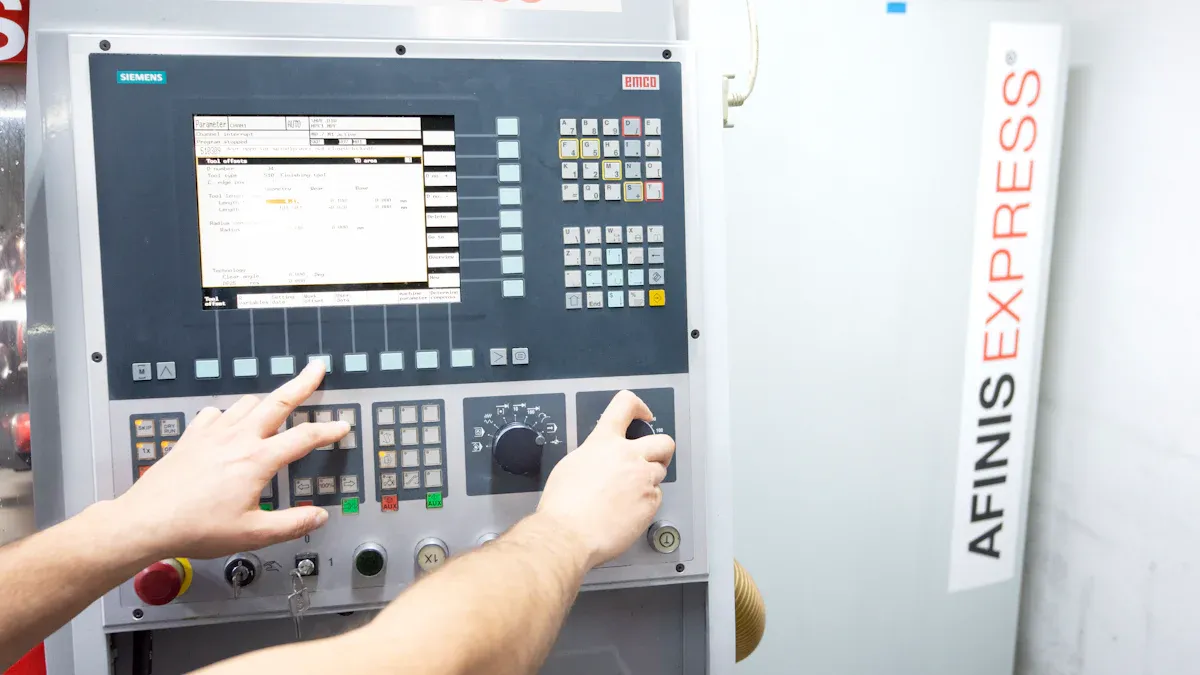
Operators interact with CNC machines daily. The control system's user experience directly impacts productivity and job satisfaction. Both Siemens and Heidenhain offer distinct approaches to interface design and programming.
Operator Interface and Learning Curve for DMG Machines
The interface of a control system determines how easily operators can set up, run, and monitor machining processes. A well-designed interface reduces errors and speeds up operations.
Siemens' Customizable and Comprehensive Screen Layouts
Siemens SINUMERIK controls provide highly customizable screen layouts. Operators can arrange information and functions to suit their preferences. These comprehensive displays offer a wealth of data. They show everything from machine status to program execution. This flexibility allows experienced users to optimize their workflow.
Heidenhain's Clear, Intuitive, and Workshop-Oriented Design
Heidenhain TNC controls emphasize a clear, intuitive, and workshop-oriented design. Their interfaces are straightforward. They guide operators through tasks with logical steps. This design philosophy makes the controls easy to understand. It helps operators quickly become proficient. The multi-touch screen versions further enhance this user-friendly experience on the shop floor.
Ease of Learning for New Operators on DMG Machine Tools
New operators often find Heidenhain's intuitive design easier to learn initially. Its workshop-oriented approach simplifies complex tasks. Siemens, with its comprehensive features, might require a longer learning period. However, its customization options offer greater depth for advanced users. The choice often depends on the existing skill set of the workforce and available training resources.
Programming Methodologies: ISO G-code vs. Conversational
The way operators program a machine significantly affects efficiency and flexibility. Siemens and Heidenhain offer different primary programming methodologies.
Siemens' Adherence to Standard ISO G-code Programming
Siemens controls primarily use standard ISO G-code programming. This method gives the programmer full control over every step of metal cutting operations. It minimizes non-cutting preparatory and safety machine movements. These movements are often characteristic of conversational-type programs.
Using ISO G-code on Siemens systems offers several advantages:
- Operators can use it immediately without needing additional programming knowledge.
- It provides identical adaptation to the real DMG MORI machine.
- Verification occurs through workpiece simulation or 3D workspace simulation. Siemens' Run MyVirtual Machine is an example.
- Handling and functionality are just like on the real machine.
- Simulation helps reduce collisions.
Heidenhain's Conversational Programming (Plain Language)
Heidenhain excels with its conversational programming, often called "plain language" programming. This method uses a more human-readable syntax. It simplifies complex machining operations.
Heidenhain's conversational programming offers distinct benefits:
- Improved Readability and Syntax: Heidenhain systems use an "h language." This conversational programming language has a much nicer syntax and more controls/options compared to standard G-code.
- Advanced Coordinate System Management: The controller provides robust management of machine coordinate systems. It allows for hundreds of named coordinate systems. Operators can load these from external files.
- Flexible Tool Libraries: Heidenhain supports large, customizable tool libraries. Operators can name and call tools by name. It also features a two-level tool table for comprehensive tool and pocket management.
- Easy Tool Size Adjustment: Operators can easily adjust tool sizes when calling a tool or for loaded tools. This simplifies feature size adjustments by editing a single line of code or a variable.
- Enhanced Safety Features: Dynamic Collision Monitoring (DCM) prevents machine crashes into critical components. These include the table, cabinet, or tool changer. Newer versions may allow fixture descriptions for added safety.
Hybrid Programming Approaches and Cycle Utilization
Both control systems support hybrid programming. This means they combine G-code with powerful pre-defined cycles. These cycles simplify common machining tasks like drilling, milling pockets, or threading. Operators can use these cycles to quickly generate complex tool paths. This reduces manual programming time and potential errors.
Advanced Features and Customization for DMG Machine Operations
Modern CNC controls offer advanced features. These features enhance productivity, precision, and automation. Both Siemens and Heidenhain provide robust options for customizing operations.
Siemens' Extensive Cycle Library and User-Defined Macros
Siemens offers an extensive cycle library and supports user-defined macros. These tools allow for highly customized and automated machining processes.
- Feature-based Programming (FBM): This automates machining operations. It recognizes geometry features using a technology database. It then creates standardized machining processes. A DMG MORI Starter Kit with a pre-configured database is available for quick implementation. Users can supplement this with customer-specific rules.
- DMG MORI MTSK (Post processor & NC simulation): This is an in-house developed Machine Tool Support Kit. It serves as a certified post-processor for creating NC code. It also provides a full-fledged NC machine simulation. This simulation uses real machine kinematics and a virtual controller based on Siemens' Common Simulation Engine (CSE). Users can customize it to specific customer needs. It includes smart templates and full integration into the NX CAM module.
- DMG MORI Technology Cycles: These exclusive cycles expand the technological scope of the machine tool. They increase productivity and enhance safety. Operators can program these cycles directly in the CAM environment. They can simulate them with a DMG MORI MTSK.
- In-process measuring: This add-on ensures process and component quality. It integrates Renishaw measurement cycles. It allows intuitive programming of measuring cycles. It also creates complex measuring loops. This enables autonomous setup or correction of machining, machine parameters, and tools for unmanned production.
Siemens also provides comprehensive virtual solutions:
- 1:1 programming & workpiece simulation: DMG MORI customization achieves this. It allows creating and checking NC programs for SINUMERIK One machines in advance, just like on the actual machine.
- 3D workspace simulation: DMG MORI Run MyVirtual Machine Operate 3D provides this. It displays processes as they would occur on the real machine. This enables collision checks to prevent costly damage.
- Comprehensive workspace verification: This ensures safety and efficiency. It detects errors, workspace limits, and collisions in advance. This leads to quick, safe, and efficient project preparation.
- Tailored to DMG MORI machines: This includes DMG MORI-specific machine customization. It adapts all necessary functions to the real machine.
- Support for various programming types: It supports Siemens Shopmill and Shopturn. It also supports turning-milling and milling-turning machines. It handles 2D, 3D, 3+2, 5-axis simultaneous, and multi-channel structure programming.
- DMG MORI technology cycles: It utilizes these cycles for programming and simulation within the virtual environment.
- Training capabilities: It provides an ideal environment for training new employees or students on machine functions and operation. This happens without needing a physical machine. It offers a virtual machine park.
Heidenhain's Powerful Standard Cycles and Q-Parameters
Heidenhain controls feature powerful standard cycles and Q-parameters. These simplify complex machining tasks and allow for flexible program adjustments.
- Individually customizable user interface: Operators can configure windows freely.
- Intuitive setup of workpieces: This uses smart probing functions and graphically supported alignment of clamping devices.
- Simple programming: Operators can program in HEIDENHAIN conversational programming or according to DIN/ISO.
- Extensive machining and touch probe cycles: These enhance operational capabilities.
- High-end performance: This ensures perfect surfaces and maximum accuracy.
- Dynamic collision monitoring: This provides realistic safety.
- HEROS operating system: This is based on Linux for maximum IT security.
- Standardized app-based user interface: This is independent of the CNC control system (CELOS X software platform).
- Possibility of connecting the machine to the company organization: This uses the CELOS X software platform.
- Application for simple operation: This extends spindle hours and increases energy efficiency (CELOS X software platform).
- Future-proof: This is thanks to online update options (CELOS X software platform).
- Prepared for CELOS Xchange cloud connection: This uses the CELOS X software platform.
- NETservice: This offers remote diagnostics and remote maintenance (CELOS X software platform).
- MDC: This provides standardized machine data output in OPC UA, MT connect, and MQ TT formats (CELOS X software platform).
- Service Agent: This is an integrated maintenance manual (CELOS X software platform).
- 24” multitouch screen: This features horizontal screen orientation (ERGOline X Operation Panel).
- Full size tactile keyboard: This is part of the ERGOline X Operation Panel.
- SMARTride potentiometer: This combines feed and rapid traverse (ERGOline X Operation Panel).
- SMARTkey: This comes in credit card format (ERGOline X Operation Panel).
- Ergonomic angle adjustment: This is a feature of the ERGOline X Operation Panel.
Adaptability for Specific Machining Tasks on DMG Machines
Both Siemens and Heidenhain controls offer high adaptability. They cater to specific machining tasks. Siemens provides extensive customization through its open architecture and FBM. Heidenhain offers powerful cycles and Q-parameters for flexible adjustments. The choice depends on the complexity of the parts and the desired level of automation.
Performance and Application Suitability for DMG Machine Tools
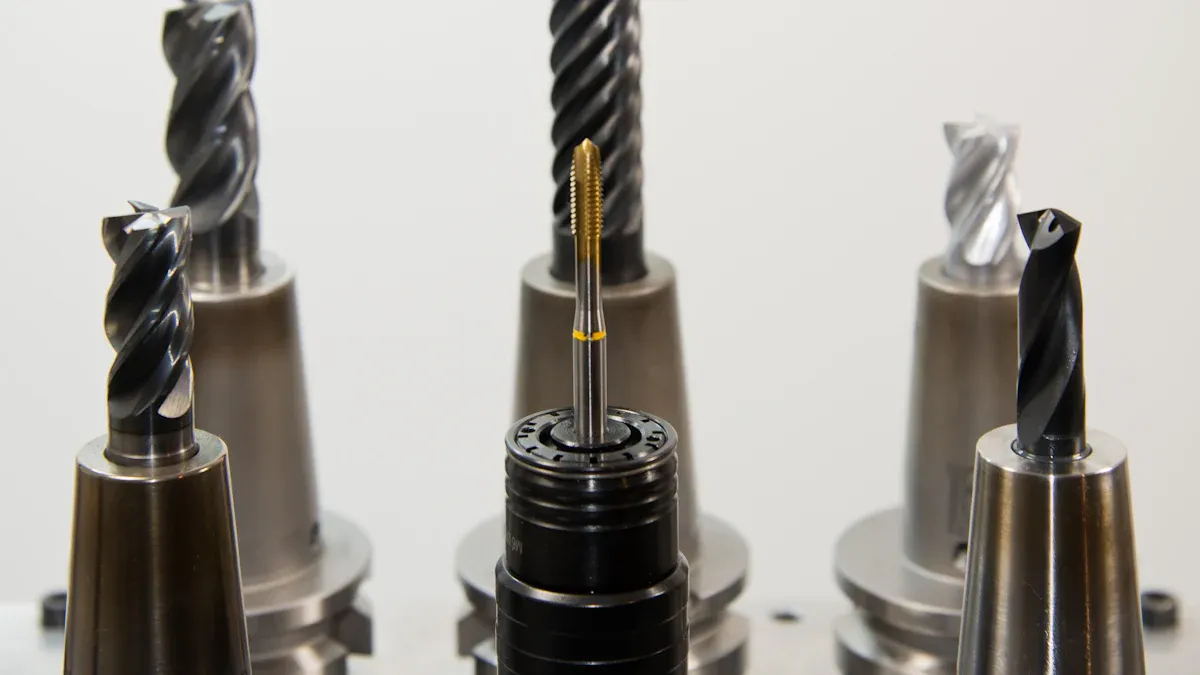
Machine performance and application suitability are crucial factors when selecting a control system for your manufacturing operations. Both Siemens and Heidenhain offer robust solutions, each with distinct strengths tailored to different production needs.
High-Speed Machining and Surface Finish Quality
Achieving high speeds and superior surface finishes is often a top priority in modern manufacturing. Control systems play a vital role in these aspects.
Dynamic Control Algorithms for Smooth Motion on DMG Machines
Both Siemens and Heidenhain controls employ advanced dynamic control algorithms. These algorithms ensure smooth and precise machine movements. Siemens SINUMERIK systems use sophisticated motion control functions. These functions minimize vibrations and optimize acceleration and deceleration profiles. Heidenhain TNC controls also feature highly dynamic control loops. These loops provide exceptional contouring accuracy, even at high feed rates. This results in less wear on the machine and better part quality.
Look-Ahead Functions and Path Optimization Capabilities
Look-ahead functions are essential for high-speed machining. They allow the control system to anticipate upcoming path changes. Siemens controls offer extensive look-ahead capabilities. These capabilities ensure continuous, smooth tool paths, especially in complex 3D geometries. Heidenhain systems also feature powerful look-ahead functions. These functions optimize the machining process by adjusting feed rates and accelerations dynamically. This prevents sudden stops and starts, which can degrade surface quality.
Achieving Superior Surface Finishes with Each System
Both systems excel at achieving superior surface finishes. Siemens controls, with their advanced interpolation and dynamic response, produce highly accurate contours. This leads to excellent surface quality. Heidenhain controls are renowned for their precision. They deliver exceptional surface finishes, particularly in mold and die applications. Their integrated hardware and software approach contributes to this high level of accuracy.
Multi-Axis and Complex Geometry Machining on DMG Machines
Modern manufacturing often requires machining complex geometries with multiple axes. Both Siemens and Heidenhain provide powerful solutions for these demanding tasks.
Simultaneous 5-Axis Machining Capabilities: Siemens vs. Heidenhain
DMG MORI machines incorporate CNC control systems from various manufacturers, including Heidenhain and Siemens. These systems are crucial for interpreting NC code into precise machine movements. They offer features like adaptive feed control, tool monitoring, and digital interfaces. These features are essential for executing complex machining strategies safely and efficiently. Heidenhain TNC 640 is recognized as a top-rated 5-axis CNC controller for complex surfacing. Siemens 840D is also recognized as a top-rated 5-axis CNC controller for complex surfacing. Both controllers utilize sophisticated algorithms to optimize tool orientation and cutting conditions.
Kinematic Transformations and Tool Center Point Management
Kinematic transformations and Tool Center Point (TCP) management are critical for multi-axis machining. Siemens 840D supports RTCP (Rotational Tool Center Point) functionality. This feature ensures the tool tip remains at the programmed point, regardless of machine axis movements. Siemens NX CAM includes a Machine Simulator module for digital twin integration. This module allows users to preview RTCP compensation effects. Siemens systems utilize a 'five-axis transformation command' as a G-code command for RTCP activation. Heidenhain systems also offer advanced TCP management. They ensure precise tool positioning and orientation during complex multi-axis movements.
Handling Complex Geometries with Precision
Both control systems handle complex geometries with exceptional precision. Siemens' powerful processing capabilities and advanced interpolation algorithms allow for accurate machining of intricate shapes. Heidenhain's integrated approach and high-resolution encoders contribute to its ability to maintain tight tolerances on complex parts. Their robust control over all axes ensures the machine executes even the most challenging tool paths accurately.
Integration with Automation and CAD/CAM Workflows
Seamless integration with automation and CAD/CAM workflows is vital for modern, efficient manufacturing. Both Siemens and Heidenhain offer strong capabilities in this area.
Siemens' Strong Connectivity with PLCs and Robotics for DMG Machines
Siemens systems integrate with PLCs and robotics through a Siemens Simatic S7 CPU and the Siemens Safety Integrated drives platform. All I/O, including RF antennas for RFID tag reading, are configured within this setup. Motion and safety functions are integrated directly into the drives. This eliminates the need for a separate troubleshooting architecture for safety networks. Communication for most I/O and automation components occurs over Profinet, with a few components utilizing Profibus.
The Siemens Sinumerik 840D solution line is a distributed, scalable, and open control system. It manages up to 31 axes of motion. It integrates CNC, HMI, PLC, closed-loop control, and communication functions into a single NC unit. This system enables the control of robotic devices for 'lights-out manufacturing' scenarios. It also offers remote monitoring capabilities via Ethernet. Sinumerik Safety Integrated provides comprehensive personnel and machine protection functions, compliant with international standards. Siemens collaborates with DMG Mori USA, Walter, and Trak Machine Tools on a next-generation part-manufacturing digital thread. This initiative involves software, machine tool building, tooling hardware, and machine tool CNC automation. It demonstrates the capabilities of the Siemens Xcelerator business platform. This collaboration focuses on designing and manufacturing next-generation electric vehicle (EV) components using both additive and traditional CNC manufacturing.
Heidenhain's Seamless Integration with CAM Systems
Heidenhain systems integrate with CAM systems by enabling the creation of NC programs within CAD/CAM environments. This includes generating NC programs for both machining operations and robot control directly in the CAM system. The HEIDENHAIN DNC interface facilitates the connection between CAM systems and DMG machines, allowing for the transfer and management of NC programs. DMG milling machines, specifically models like the DMC 60 H, are equipped with HEIDENHAIN TNC 640 and iTNC 530 controls. This ensures direct compatibility with the integrated CAM workflows. Integration allows for automatic external tool measurement based on tool geometries defined in CAM. It also enables the transfer of this tool data to the machine without manual intervention. After importing NC programs, the CAM system can perform analysis. This includes checks for deleted tools, incorrect M-codes, and proper machine selection based on resource planning.
Data Exchange and Digitalization Capabilities for Modern Manufacturing
Both Siemens and Heidenhain controls offer robust data exchange and digitalization capabilities. Siemens, with its strong industrial automation background, provides extensive connectivity options for factory-wide data integration. This supports Industry 4.0 initiatives and smart manufacturing. Heidenhain also supports various interfaces for data exchange. This allows for seamless integration into digital production environments. Both systems facilitate the collection and analysis of machine data. This enables process optimization and predictive maintenance.
Support, Training, and Total Cost of Ownership for DMG Machine Tools
Choosing a control system involves more than just features. Manufacturers must consider the long-term support, training availability, and total cost of ownership for their DMG machine tools. These factors significantly impact operational efficiency and budget.
Availability of Training and Technical Support for DMG Users
Global Reach and Service Networks for Siemens and Heidenhain
Both Siemens and Heidenhain maintain extensive global service networks. These networks ensure users receive timely support. Siemens offers an 'Easy CNC' app for iOS and Android devices. This app contains training manuals for Siemens Sinumerik CNCs, providing over 4,000 pages of instruction. It includes a G-code compatibility tool and a glossary of CNC terminology. The app also provides web-links to service, support, and CNC social media feeds, connecting users to an online community. Heidenhain also provides comprehensive global support. Its network ensures assistance for its TNC control systems worldwide.
Specialized Training Programs for Operators and Programmers
Both companies offer specialized training programs. These programs cater to operators and programmers. Siemens provides DMG MORI Siemens SinuTrain programming and training software. This software allows 1:1 programming and workpiece simulation for SINUMERIK 828/840D controls on DMG MORI machines. It is ideal for education and training, including classroom versions for schools. Training services are available and can be conducted online or in person, with the service package individually agreed upon. Heidenhain also offers various courses. These courses help users master their control systems. Such training ensures operators maximize machine potential.
DingYan Machinery's Role in Parts and Support for DMG Machine Tools
DingYan Machinery plays a crucial role in supporting DMG machine users. It works with official agents to supply original parts for global brands. These brands include Siemens and Heidenhain. DingYan Machinery offers comprehensive solutions for CNC machine tool accessories. It provides parts like systems, motor modules, servo drivers, and encoders. DingYan Machinery aims to be a one-stop supplier. It helps customers succeed in their markets.
Initial Investment vs. Long-Term Operational Costs
Purchase Price and Licensing Considerations for Control Systems
The initial purchase price of a control system varies. Siemens and Heidenhain systems have different licensing models. These models affect the upfront cost. Manufacturers should evaluate these costs against their budget.
Maintenance, Spare Parts, and Software Updates for DMG Machines
Long-term operational costs include maintenance, spare parts, and software updates. Both Siemens and Heidenhain offer maintenance plans. DingYan Machinery supplies spare parts for both systems. This ensures quick replacements and minimal downtime. Software updates are essential for new features and security. Manufacturers should understand the cost and frequency of these updates.
Cost Implications of Siemens vs. Heidenhain Components (e.g., motors, encoders)
The choice of control system impacts the cost of associated components. Motors and encoders from Siemens or Heidenhain may have different price points. These differences contribute to the overall cost of the machine.
Resale Value and Industry Standard Adoption for DMG Machine Tools
Market Perception and Demand for Each Control System
Both Siemens and Heidenhain enjoy strong market perception. Siemens is dominant in industrial automation. Heidenhain holds a niche in high-precision applications. This affects demand and resale value.
Compatibility with Existing Infrastructure and Future Upgrades
Consider compatibility with existing infrastructure. Siemens systems often integrate well with broader automation platforms. Heidenhain systems offer seamless integration with CAM workflows. Future upgrade paths are also important. Both companies continuously develop new technologies.
Making Your Decision: A Checklist for DMG Machine Tool Users
Choosing the right control system for your manufacturing operations requires careful consideration. Manufacturers must evaluate several factors. This checklist helps guide the decision-making process for your DMG machine tools.
Assessing Operator Skill Sets and Preferences
The human element plays a significant role in machine efficiency. Operator familiarity and comfort with a control system directly impact productivity.
Existing Experience with Siemens or Heidenhain Controls
Operators often have prior experience with specific control systems. A workforce already proficient in Siemens SINUMERIK or Heidenhain TNC will adapt faster. This reduces the initial learning curve. Leveraging existing expertise can lead to quicker integration and immediate productivity gains.
Willingness to Learn New Interfaces and Programming Styles
Some operators may embrace learning new systems. Others might prefer sticking to familiar interfaces. Siemens offers comprehensive, customizable layouts. Heidenhain provides clear, workshop-oriented designs. Assess your team's openness to new programming methodologies, such as ISO G-code versus conversational programming.
Impact on Workforce Productivity and Training Needs
The chosen control system directly affects workforce productivity. A system that aligns with operator skills minimizes errors and speeds up operations. Conversely, a new or unfamiliar system requires significant training investment. This can temporarily reduce output. Evaluate the long-term benefits against short-term training costs and potential productivity dips.
Defining Primary Machining Applications and Complexity
The nature of your machining tasks heavily influences the optimal control system choice.
Production Volume and Part Variety Requirements
Consider your typical production runs. High-volume, low-variety production might benefit from Siemens' robust automation capabilities. Low-volume, high-variety, or job shop environments may find Heidenhain's intuitive conversational programming more efficient for quick setups.
Required Precision and Surface Quality Standards
Both systems deliver high precision. Heidenhain often excels in applications demanding extreme accuracy and superior surface finishes, such as mold and die making. Siemens also provides advanced algorithms for excellent surface quality and dynamic control. Match the control system's strengths to your specific quality requirements.
Specific Needs for 5-Axis Machining on DMG Machines
Both Siemens and Heidenhain offer powerful 5-axis machining capabilities. Evaluate the complexity of your typical 5-axis parts. Consider features like kinematic transformations and Tool Center Point (TCP) management. Some applications might benefit from one system's specific approach to complex geometry handling.
Considering Future Growth and Automation Plans
Your long-term business strategy should guide your control system selection.
Scalability and Integration with Future Manufacturing Systems
Siemens systems are known for their strong integration with broader automation platforms, including PLCs and robotics. This makes them highly scalable for future factory automation. Heidenhain also integrates well with CAM systems, supporting efficient data exchange. Consider how the control system fits into your overall digitalization roadmap.
Potential for Lights-Out Manufacturing and Digitalization
If you plan for unattended operation or "lights-out" manufacturing, evaluate each system's capabilities for remote monitoring, data collection, and autonomous operation. Both offer robust features for digitalization, but their approaches to data exchange and connectivity may differ.
Long-Term Strategic Alignment with Control System Choice
Align your control system choice with your company's long-term strategic goals. This includes future product development, market expansion, and technological advancements. A well-chosen system supports these goals, ensuring your investment remains relevant and valuable for years to come.
Evaluating Budget and Long-Term Support Requirements
Choosing a control system involves more than just features. Manufacturers must consider the long-term support, training availability, and total cost of ownership. These factors significantly impact operational efficiency and budget.
Initial Capital Expenditure for the DMG Machine and Control
The initial purchase price of a control system varies. Siemens and Heidenhain systems have different licensing models. These models affect the upfront cost. Manufacturers should evaluate these costs against their budget. The chosen control system directly influences the overall price of the machine. This initial investment represents the first financial commitment.
Ongoing Support, Maintenance, and Training Budget Allocation
Long-term operational costs include maintenance, spare parts, and software updates. Both Siemens and Heidenhain offer maintenance plans. These plans ensure the machine operates efficiently. Software updates are essential for new features and security. Manufacturers should understand the cost and frequency of these updates. Allocating a budget for operator and programmer training is also crucial. Proper training maximizes the investment in the control system.
Access to Spare Parts and Technical Assistance (e.g., DingYan Machinery)
Reliable access to spare parts is critical. Machine downtime is costly. DingYan Machinery plays a crucial role in supporting users. It works with official agents to supply original parts for global brands like Siemens and Heidenhain. DingYan Machinery offers comprehensive solutions for CNC machine tool accessories. It provides parts such as systems, motor modules, servo drivers, and encoders. This ensures quick replacements and minimal downtime. DingYan Machinery aims to be a one-stop supplier. It helps customers succeed in their markets by providing dependable and high-quality CNC machine tool parts. Their strict service standard makes them a professional one-stop provider.
The optimal control system for your DMG machine represents a strategic choice, not a universal solution. Manufacturers must carefully weigh their operational context. They also consider operator expertise and future manufacturing goals. Compare these factors against the distinct strengths of Siemens and Heidenhain. An informed decision maximizes investment. It enhances productivity. This unlocks the full potential of DMG machine tools.
FAQ
What makes Heidenhain TNC controls operator-friendly?
Heidenhain TNC controls feature clear, intuitive designs. They guide operators through tasks with logical steps. This design philosophy makes the controls easy to understand. Operators quickly become proficient. Multi-touch screen versions further enhance the user experience on the shop floor.
Which control system is better for high-precision machining?
Heidenhain has a strong niche in high-precision machining. Its controls excel where accuracy is paramount. Siemens also provides advanced algorithms for excellent surface quality and dynamic control. Both systems deliver high accuracy for demanding tasks.
What are the main programming differences between Siemens and Heidenhain?
Siemens primarily uses standard ISO G-code programming. This gives programmers full control. Heidenhain uses conversational programming, which has a more human-readable syntax. Both systems also use powerful pre-defined cycles to simplify common tasks.
How do Siemens and Heidenhain integrate with automation systems?
Siemens systems integrate strongly with PLCs and robotics. This supports factory-wide automation. Heidenhain integrates seamlessly with CAM systems. Both offer robust data exchange for modern manufacturing. They facilitate data collection and analysis for process optimization.
What kind of global support do these control systems offer?
Both Siemens and Heidenhain maintain extensive global service networks. They offer specialized training programs for operators and programmers. DingYan Machinery supplies original spare parts for both brands. This ensures quick replacements and minimal downtime for users.
How do long-term costs compare for Siemens and Heidenhain systems?
Long-term costs include the initial purchase, maintenance, and software updates. Component costs, like motors and encoders, also differ. DingYan Machinery provides spare parts for both systems. This helps manage maintenance expenses and minimize downtime.
Which system is more suitable for complex 5-axis machining?
Both Siemens and Heidenhain offer powerful 5-axis machining capabilities. They use sophisticated algorithms to optimize tool orientation. Both systems handle complex geometries with exceptional precision. The choice often depends on specific part complexity and desired features.