










Unpacking the Role of FANUC Sensor Head Encoders
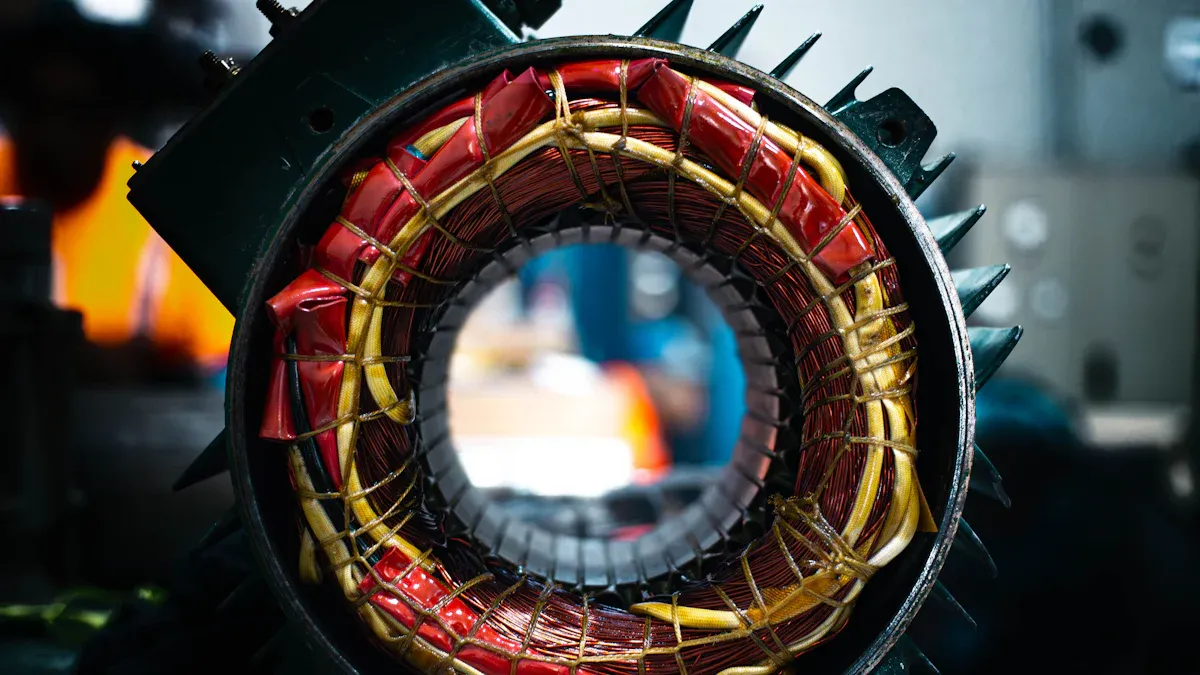
FANUC sensor head encoders play a crucial role in modern industrial automation. These specialized devices provide precise position and speed feedback. They send this information directly to FANUC robots and CNC machines. This feedback enables highly accurate motion control. The fanuc encoder achieves this by converting physical movement into reliable electrical signals.
Key Takeaways
- FANUC sensor head encoders are vital for modern industrial automation. They provide precise position and speed feedback to robots and CNC machines.
- These encoders convert physical movement into electrical signals. This allows machines to understand their exact location and speed.
- FANUC encoders come in optical and magnetic types. Optical encoders offer high precision. Magnetic encoders are robust for harsh environments.
- Encoders ensure machines move with extreme accuracy. They help robots place tools precisely and CNC machines cut materials correctly.
- They are key to closed-loop control systems. Encoders give real-time feedback. This helps machines stay on target and maintain desired movements.
- FANUC encoders improve machine efficiency. They reduce errors and optimize production times. This leads to higher quality products.
- Encoders play a critical role in safety. They enable accurate emergency stops. They also monitor machine state for safe operation.
- Proper installation and regular maintenance are important. These steps ensure encoders work reliably. They help machines run without interruption.
What is a FANUC Sensor Head Encoder?
Defining the FANUC Encoder
Converting Mechanical Motion to Electrical Signals
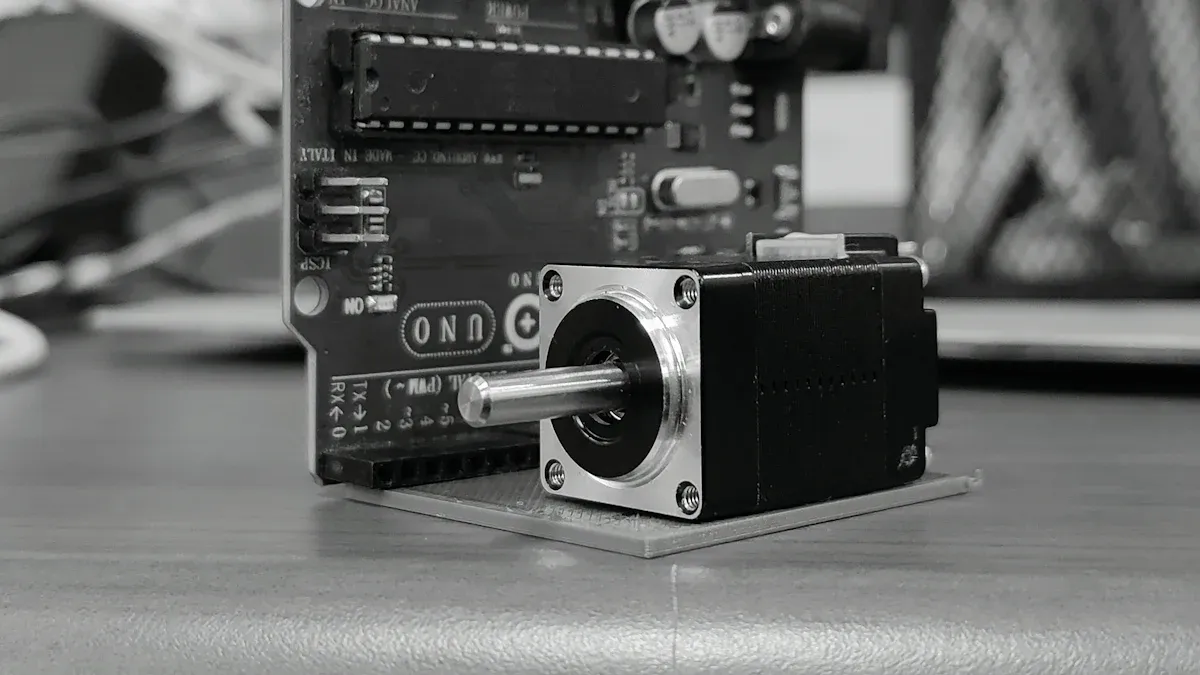
A FANUC sensor head encoder translates physical movement into electrical signals. This process allows machines to understand their exact position or speed. The encoder takes mechanical motion, like a rotating shaft or a sliding linear axis, and changes it into digital or analog electrical pulses. These pulses then travel to the machine's control system.
The Feedback Generation Mechanism
The feedback generation mechanism is crucial. As a machine part moves, the encoder's internal components interact. This interaction creates a series of electrical signals. The control system counts these signals or interprets their pattern. This gives precise information about how far or how fast the part moved. This continuous feedback loop is essential for accurate machine operation.
Key Components of a FANUC Sensor Head Encoder
Sensor Head Design (Optical vs. Magnetic)
FANUC sensor head encoders use different designs to detect motion. Optical encoders use light, while magnetic encoders use magnetic fields. Each design has specific advantages for different industrial settings.
| Feature | Optical Encoders | Magnetic Encoders |
|---|---|---|
| Design Principle | LED light through patterned code disk to photodetectors | Detect alternating magnetic poles on a rotating ring |
| Resolution | Highest available (millions of counts) | Lower ceiling (thousands of counts) |
| Accuracy | Excellent (precise photolithography) | Can be affected by temperature |
| Contamination | Sensitive (dust, oil block light) | Robust (unaffected by oil, dust, moisture) |
| Environment | Requires clean environment | Good for harsh environments (food processing, washdown) |
| Temperature | Stable (minimal drift) | Sensitive (field strength changes with temperature) |
| Robustness | Delicate (sensitive to impact) | Shock and vibration resistant |
Encoder Disc or Strip Functionality
The encoder disc or strip is a key part. In optical encoders, this disc has precise patterns of transparent and opaque lines. In magnetic encoders, it has alternating magnetic poles. As the machine part moves, the disc or strip moves with it. The sensor head reads these patterns to determine position.
Role of the Signal Processing Unit
The signal processing unit takes the raw signals from the sensor head. It cleans and converts these signals into a usable format. This unit often amplifies the signals and removes noise. It then sends the processed data to the FANUC controller. This ensures the controller receives clear and accurate information.
Distinguishing FANUC Sensor Head Encoders
Contrast with Motor Encoders in FANUC Systems
FANUC systems use different types of encoders. Motor encoders attach directly to the motor shaft. They primarily measure motor speed and rotation. Sensor head encoders, however, often mount on the machine's moving parts, not just the motor. They provide feedback on the actual position of the robot joint or machine axis.
Specific Placement and Purpose
Sensor head encoders have specific placements. They often sit on robot joints or linear axes of CNC machines. Their purpose is to give direct feedback on the exact position of these components. This direct measurement helps achieve higher accuracy than relying solely on motor encoder feedback. This fanuc encoder ensures the machine performs tasks with great precision.
Core Functions of the FANUC Encoder: Precision and Control
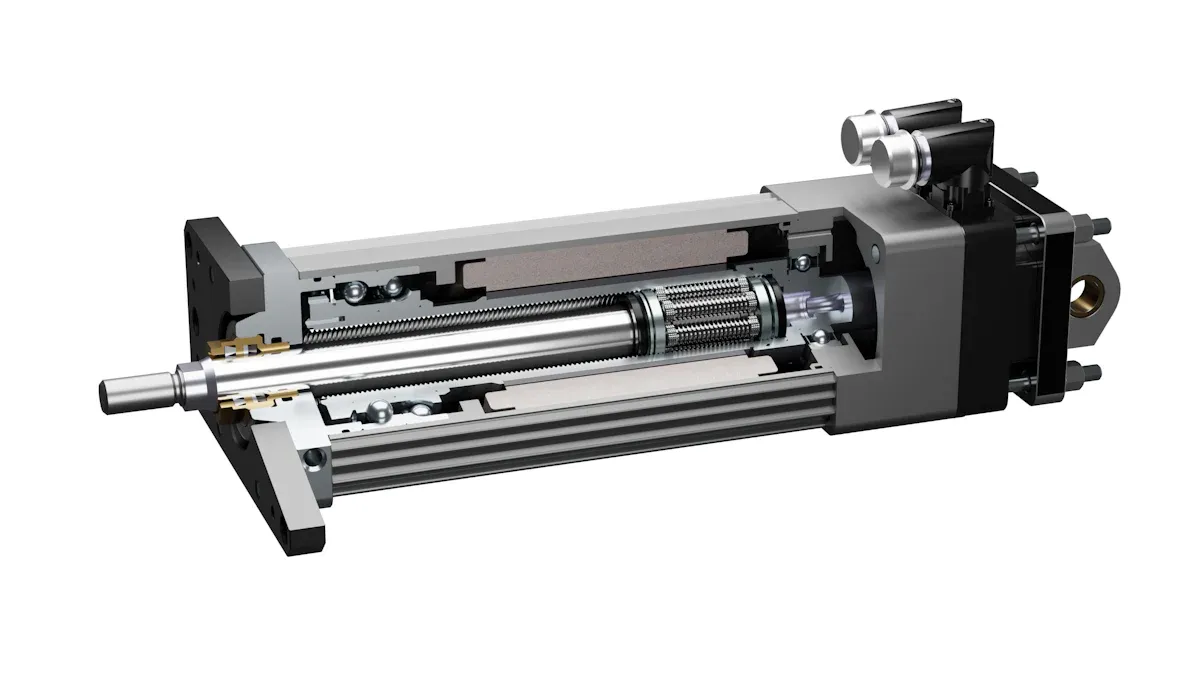
FANUC encoders perform vital tasks. They ensure machines move with extreme accuracy and control. These devices are fundamental to the high performance of industrial automation. They provide the necessary data for precise operations.
Exact Position Determination
Encoders excel at finding exact positions. They tell the machine exactly where its parts are at any moment. This capability is critical for complex manufacturing processes.
Angular Position Sensing for Robot Joints
Robot arms consist of many joints. Each joint rotates to move the arm. A FANUC encoder measures the exact angle of each joint. This precise angular data allows the robot to place tools or parts with high accuracy. It ensures the robot arm follows its programmed path perfectly.
Linear Position Sensing for Machine Axes
CNC machines often move along straight lines. These movements happen on axes like X, Y, and Z. Encoders measure the linear position of these axes. They track how far a cutting tool or workpiece has moved. This ensures the machine performs cuts or drills in the correct location. It prevents errors in the final product.
Accurate Speed Measurement
Beyond position, encoders also measure speed. This information is crucial for smooth and efficient machine operation.
Velocity Calculation for Dynamic Movements
Machines often move quickly. Encoders provide continuous data about movement. The control system uses this data to calculate the velocity of a part. This calculation helps the machine maintain a consistent speed during dynamic tasks. It ensures smooth transitions and efficient work.
Monitoring Acceleration and Deceleration
Machines do not instantly start or stop. They accelerate and decelerate. Encoders monitor these changes in speed. They provide feedback on how quickly a part speeds up or slows down. This monitoring helps prevent sudden, jerky movements. It protects machine components and ensures stable operation.
Integral to the Closed-Loop Control System
The FANUC encoder is a key part of a closed-loop control system. This system constantly checks and corrects machine movements.
Real-Time Feedback for Adjustments
A closed-loop system needs constant information. Encoders provide this information in real-time. They send immediate feedback about position and speed to the controller. The controller then compares this actual data with the desired data. It makes instant adjustments if there is any difference. This continuous feedback loop ensures the machine stays on target.
Maintaining Desired Trajectories and Speeds
Machines follow specific paths and speeds. Encoders help them maintain these programmed trajectories. They ensure the machine moves exactly as planned. If a machine drifts off course or changes speed unexpectedly, the encoder detects it. The control system then corrects the movement. This process guarantees consistent performance and high-quality output.
Ensuring Repeatability and Accuracy with FANUC Encoders
FANUC encoders are vital for machines to perform tasks consistently and without errors. They provide the data necessary for high-quality production.
Consistent Operation Across Cycles
Machines in factories perform tasks repeatedly. They must execute these tasks identically every time. This consistent performance is called repeatability. FANUC encoders deliver highly consistent feedback. This feedback helps the machine controller. The controller ensures each movement is precisely the same. This leads to reliable production. It guarantees uniform product quality across many cycles.
Repeatability means a machine can perform the same action multiple times with minimal variation. FANUC encoders are key to achieving this.
Minimizing Positional Errors
Even tiny errors in machine position can affect product quality. Positional errors happen when a machine part is not exactly where it should be. A high-resolution fanuc encoder detects these small deviations. They send real-time feedback to the controller. The controller quickly adjusts the machine's position. This closed-loop system works continuously. It keeps the machine on its exact programmed path. This process minimizes positional errors. It ensures precise manufacturing and high-quality output.
Types and Applications of FANUC Sensor Head Encoders
FANUC systems utilize different types of sensor head encoders. Each type offers specific advantages for various industrial tasks. Understanding these differences helps in selecting the right encoder for an application.
Absolute FANUC Encoders
Absolute encoders are crucial for applications demanding high reliability and precision. They provide a unique position value for every point within their operational range.
Unique Position Data Retention
Absolute encoders always know their exact position. They provide a unique position value for every point within their operational range. This means they do not lose track of their position, even if the machine loses power. Position information is retained, eliminating the need for re-calibration after a shutdown. This characteristic is beneficial for applications requiring high reliability and precision.
Ideal for Robot Joint Homing and Power Loss Recovery
This ability to retain position data makes absolute encoders ideal for robot joint homing. Robots can quickly return to a known starting position without needing to move through a full calibration cycle. They also excel in power loss recovery. When power returns, the system instantly knows the exact position of all axes. This saves time and prevents potential damage.
Incremental FANUC Encoders
Incremental encoders offer a different approach to position sensing. They focus on changes in position rather than absolute location.
Relative Displacement Measurement
Incremental encoders provide data about changes in position. They do not give an absolute location. They generate a series of pulses for each increment of movement. Each pulse corresponds to a specific amount of rotation or linear displacement. Signals are only produced when there is actual movement. This indicates a change in position relative to a starting point. To determine an absolute position, the system requires a predefined reference point.
Suited for Speed Control and Specific Linear Movements
These encoders are frequently used in scenarios where speed and direction of motion are critical. They are well-suited for speed control applications. The control system counts the pulses to determine velocity. They also work effectively for specific linear movements where the machine starts from a known home position. A fanuc encoder of this type helps track motor movements precisely.
Applications in FANUC Robotics
FANUC sensor head encoders are fundamental to the precise operation of robots. They provide critical feedback for various robotic functions.
Robot Joint Position Feedback
Encoders provide continuous feedback on the exact angular position of each robot joint. This feedback allows the robot controller to accurately command and monitor joint movements. It ensures the robot arm follows its programmed path with high precision.
Tool Center Point (TCP) Tracking
Robots perform tasks using a tool attached to their end effector. The Tool Center Point (TCP) is the critical point on this tool. Encoders contribute to accurate TCP tracking. They provide the precise joint positions needed to calculate the TCP's exact location in space. This enables the robot to perform complex tasks like welding or painting with consistent accuracy.
Applications in FANUC CNC Machines
CNC machines are indispensable tools in modern manufacturing. They execute complex tasks with remarkable precision. FANUC sensor head encoders are fundamental to these machines. They guarantee accuracy and efficiency throughout every operation. Their role ensures that each cut, drill, or turn meets exact specifications. This precision directly impacts the quality of finished parts.
Machine Axis Positioning
CNC machines precisely move cutting tools or workpieces along multiple axes. These typically include the X, Y, and Z axes. Encoders deliver continuous and exact position feedback for each of these critical axes. This feedback constantly informs the machine controller about the cutting tool's precise location. For instance, when a CNC machine drills a series of holes, the encoder confirms the drill bit's exact depth and lateral position for every single hole. This ensures the machine cuts materials with extreme accuracy. It prevents dimensional errors in the final product.
Precise axis positioning is absolutely essential for high-quality machining. It enables the creation of intricate designs and adherence to tight manufacturing tolerances. Without accurate feedback from the encoders, the machine cannot reliably perform complex milling, turning, or grinding operations. The encoder's data allows the machine to follow programmed paths with sub-micron precision. This is critical for manufacturing aerospace components or medical devices. This constant monitoring ensures the machine always knows its exact spatial coordinates. It maintains the integrity of the machining process.
Spindle Speed and Orientation Control
The spindle is a central component of any CNC machine. It securely holds and rotates the cutting tool. Encoders diligently monitor and precisely control the spindle's rotational speed. They also track its exact angular orientation. This dual control capability is vital for numerous machining processes. For example, different materials, such as aluminum or hardened steel, demand specific cutting speeds. The encoder ensures the spindle rotates at the exact revolutions per minute (RPM) required. This optimizes the cutting performance, extends tool life, and improves surface finish.
Furthermore, precise spindle orientation is indispensable for automated tool changes. The machine must align the spindle in a very specific angular position to successfully grab a new tool from the tool magazine. Encoders provide this exact rotational data to the controller. They also enable advanced operations like rigid tapping. In rigid tapping, the spindle's rotation must synchronize perfectly with the linear movement of the tap into the workpiece. This precise synchronization prevents thread damage and ensures high-quality threads. The continuous, real-time feedback from the fanuc encoder makes these complex, synchronized movements possible. This level of control significantly boosts overall productivity and consistently delivers superior product quality.
Why FANUC Sensor Head Encoders are Indispensable
FANUC sensor head encoders are not just components; they are fundamental to the success of modern automated manufacturing. They provide the critical data that allows machines to operate with unmatched precision, efficiency, and safety. Without these encoders, the advanced capabilities of FANUC robots and CNC machines would be impossible to achieve.
Enhancing Robot Movement Quality
Robots perform complex tasks. They need to move with grace and accuracy. FANUC sensor head encoders make this possible.
Smooth and Precise Trajectory Execution
Robots follow specific paths, called trajectories. These paths can be very intricate. Encoders provide continuous, real-time feedback on the robot's exact position and speed. This constant stream of data allows the robot controller to make tiny, immediate adjustments. As a result, the robot arm moves smoothly along its programmed path. It avoids jerky motions. This smooth execution is vital for tasks like welding, painting, or delicate assembly. It ensures the robot places tools or parts exactly where they need to go.
Preventing Collisions and Over-travel
Every robot has defined limits for its movement. Moving beyond these limits can cause collisions with other equipment or damage the robot itself. FANUC sensor head encoders constantly monitor the robot's position. They act as the robot's "eyes" for its own location. If the robot approaches a boundary or an obstacle, the encoder immediately signals the controller. The controller then stops or redirects the robot. This prevents costly collisions and ensures the robot operates safely within its designated workspace. It also stops the robot from moving further than its mechanical design allows, which is called over-travel.
Boosting Machine Efficiency with FANUC Encoders
Efficiency is key in manufacturing. FANUC sensor head encoders significantly improve how machines work. They help factories produce more, faster, and with better quality.
Reducing Production Errors
Errors in production lead to wasted materials and lost time. Encoders provide extremely accurate positional feedback. This precision minimizes mistakes during manufacturing processes. For example, a CNC machine cutting a part relies on encoder data to ensure every cut is in the correct place. If the machine makes a cut even a fraction of a millimeter off, the part might become scrap. By providing exact data, encoders help machines produce parts correctly the first time. This reduces the number of defective products and lowers overall production costs.
Optimizing Cycle Times
Cycle time is the total time it takes to complete one production step or one product. Faster cycle times mean higher output. Encoders contribute to optimized cycle times in several ways. They allow machines to move at their maximum safe speeds because the controller always knows the exact position and velocity. This eliminates the need for machines to slow down unnecessarily to confirm their location. Precise feedback also enables quicker transitions between different movements. This reduces idle time. Ultimately, machines complete tasks faster and more efficiently, increasing overall productivity.
Improving Product Quality and Consistency
Customers expect high-quality products that are consistent. Every item should be identical to the last. FANUC sensor head encoders are crucial for achieving this. They ensure that machines perform every operation with the same high level of accuracy, every single time. Whether it is drilling holes, milling surfaces, or assembling components, the encoder's feedback guarantees precise execution. This consistency means that all products meet the same strict quality standards. It reduces variations between items and builds customer trust.
Critical Role in Operational Safety
Safety is paramount in any industrial environment. FANUC sensor head encoders play a vital role in protecting both personnel and equipment.
Enabling Accurate Emergency Stops
In an emergency, machines must stop immediately and safely. Encoders provide the precise position data needed for accurate emergency stops. When an emergency stop signal activates, the controller uses the encoder's real-time feedback to bring the machine to a controlled halt. This prevents uncontrolled movements that could cause further damage or injury. The system knows the exact location of all moving parts, allowing for a quick and safe shutdown sequence.
Monitoring Machine State for Safe Operation
Encoders continuously monitor the machine's operational state. They track every movement, speed, and position. This constant monitoring helps detect any abnormal behavior or potential hazards. For instance, if a robot joint moves outside its expected range, the encoder detects it. The system can then trigger an alarm or initiate a safety stop. This proactive monitoring helps prevent accidents before they happen. It ensures that machines operate within safe parameters at all times, creating a safer working environment for everyone.
System Reliability and Maintenance Considerations
Industrial operations depend on consistent machine performance. FANUC sensor head encoders are vital for this reliability. Their proper function directly impacts a machine's ability to operate without interruption.
Impact of Encoder Health on Uptime
Uptime refers to the period a machine remains operational and productive. A healthy encoder provides continuous, accurate feedback. This reliable data allows the machine to perform its tasks without errors or unexpected stops. When an encoder functions correctly, it ensures smooth operation. Machines can run for extended periods, maximizing production output.
Conversely, an unhealthy encoder can severely reduce uptime. If an encoder sends intermittent or incorrect signals, the machine's controller receives faulty information. This leads to positional errors, unexpected movements, or even complete machine shutdowns. Such issues cause unplanned downtime. Production halts, and maintenance teams must intervene. Each minute of downtime translates into lost productivity and increased operational costs. Therefore, maintaining encoder health is crucial for sustained manufacturing efficiency.
Importance of Proper Installation and Calibration
The longevity and accuracy of an encoder depend heavily on its initial setup. Proper installation and calibration are not merely suggestions; they are critical requirements for optimal performance.
Installation involves correctly mounting the encoder. Technicians must ensure precise alignment of the sensor head with its disc or strip. They secure the encoder firmly to prevent movement or vibration. Protecting the encoder from environmental factors is also essential. This includes shielding it from dust, moisture, extreme temperatures, and electromagnetic interference. Correct cable management prevents signal degradation and physical damage. Poor installation can lead to inaccurate readings, premature wear, and frequent failures.
Calibration establishes the encoder's reference points and ensures its measurements are accurate. During calibration, technicians verify that the encoder's output precisely matches the actual physical position or movement. This process often involves setting home positions or verifying linear scales. Regular calibration maintains the encoder's precision over time. It compensates for minor wear or environmental shifts. Without proper calibration, even a perfectly installed encoder can provide incorrect data. This compromises machine accuracy, affects product quality, and can lead to safety hazards. A well-installed and calibrated fanuc encoder ensures the machine operates reliably and accurately throughout its service life.
Advanced Features and Future Trends for the FANUC Encoder
FANUC encoders continue to evolve. They incorporate advanced features that push the boundaries of industrial automation. These innovations promise even greater precision, efficiency, and intelligence in manufacturing.
High-Resolution FANUC Encoders
High-resolution encoders are transforming what machines can achieve. They offer unparalleled accuracy for the most demanding tasks.
Achieving Sub-Micron Precision
High-resolution FANUC encoders deliver exceptional precision. Advanced optical or magnetic sensing technology allows for resolution capabilities down to nanometer levels. This ensures exact positioning. These encoders maintain precision over long operational periods. They use sophisticated error compensation algorithms and thermal stability features. They provide accurate feedback even at high speeds. This is crucial for applications needing both precision and dynamic response. For example, the FANUC A860-2050-T321 is a high-resolution absolute pulse coder. It boasts a 20-bit position resolution. This encoder ensures precise shaft-position feedback even in harsh industrial environments.
Applications in Micro-Machining and Assembly
The extreme precision of high-resolution encoders opens new possibilities. They are essential for micro-machining. This involves creating tiny, intricate parts. They also excel in delicate assembly tasks. These tasks require placing components with sub-micron accuracy. Examples include manufacturing medical devices or micro-electronics. Their fast response times and high-speed data processing enable real-time control. This is essential for modern high-speed manufacturing processes.
Integrated Diagnostics in FANUC Encoders
Modern encoders are becoming smarter. They include features that help machines monitor their own health.
Self-Monitoring Capabilities
Many integrated motor encoders now feature self-diagnostic capabilities. They continuously track their own performance. This allows them to detect anomalies early. FANUC's design philosophy emphasizes integration. This includes integrated sensing and feedback through built-in encoders. These encoders provide real-time diagnostics. This helps prevent unexpected failures.
Predictive Maintenance Insights
Integrated diagnostics offer valuable insights for predictive maintenance. By continuously tracking motor performance, factories can detect issues before they cause breakdowns. Recent advancements in artificial intelligence (AI) and machine learning enhance this. These technologies facilitate better data analysis. They improve predictive maintenance. This enhances system performance and optimizes workflows. Their integration into IoT ecosystems further enhances remote monitoring. This reduces downtime and operational costs.
Evolution of Sensor Technology
Sensor technology continues to advance rapidly. This leads to more capable and versatile encoders.
Miniaturization and Robustness
Future encoders will likely become even smaller. Miniaturization allows for easier integration into compact machine designs. At the same time, they will become more robust. They will withstand harsher industrial environments. This includes better protection against electromagnetic interference, vibration, and extreme conditions.
Wireless Communication Potentials
Wireless communication is another exciting trend. Encoders could transmit data without physical cables. This would simplify installation and maintenance. It would also offer greater flexibility in machine design. Wireless connectivity would further enhance their integration into IoT ecosystems. This would support more advanced remote monitoring and control.
Role in Industry 4.0 and Smart Manufacturing
Industry 4.0 represents the fourth industrial revolution. It integrates advanced technologies into manufacturing. Smart manufacturing relies on interconnected systems and real-time data. Encoders play a vital role in this transformation. They provide the foundational data for intelligent automation.
Data Generation for Process Optimization
Encoders are crucial data generators in smart factories. They continuously produce precise information about machine movements. This includes exact position, speed, and acceleration data. For example, an encoder on a robot arm reports its joint angles many times per second. A CNC machine's axis encoder tracks its linear position with high accuracy.
This constant stream of data feeds into larger manufacturing systems. Software platforms collect and analyze this information. They identify patterns and potential issues. For instance, data can show if a machine consistently moves slower in one area. This might indicate wear or a need for maintenance. Analyzing encoder data helps optimize production processes. It allows factories to improve efficiency, reduce waste, and enhance product quality. This data-driven approach leads to better decision-making and more effective operations.
Enabling Adaptive Control Systems
Encoders are essential for adaptive control systems. These systems can adjust machine behavior in real-time. They do not follow a fixed program blindly. Instead, they respond to changing conditions on the factory floor.
An adaptive control system uses encoder feedback to make immediate adjustments. For example, a robot might be welding a part. If the part's position shifts slightly, the encoder detects this change. The adaptive system then modifies the robot's welding path instantly. This ensures the weld remains perfect. Another example involves CNC machining. An encoder might detect increased resistance during a cut. The adaptive system can then reduce the cutting speed to prevent tool breakage. This real-time responsiveness makes machines more flexible and resilient. It allows them to handle variations in materials or environments. This capability is a cornerstone of smart manufacturing. It leads to higher quality output and greater operational stability.
Selecting and Maintaining Your FANUC Encoder
Proper selection and diligent maintenance ensure a FANUC encoder performs reliably. These steps are crucial for sustained machine accuracy and uptime.
Key Considerations for Selection
Choosing the correct encoder for a specific application is vital. Several factors influence this decision.
Resolution Requirements
The required precision of machine movement dictates encoder resolution. High-resolution encoders provide more detailed position feedback. This allows for finer control and greater accuracy in tasks. For example, micro-machining demands much higher resolution than general material handling. Engineers must match the encoder's resolution to the application's precision needs.
Environmental Factors
The operating environment significantly impacts encoder choice. Factories can have dust, moisture, oil mist, or extreme temperatures. Some encoders are more robust against these conditions. Optical encoders are sensitive to dust. Magnetic encoders often tolerate harsh environments better. Selecting an encoder designed for the specific environmental challenges prevents premature failure.
Interface Compatibility
An encoder must communicate effectively with the machine's control system. Different encoders use various electrical interfaces and communication protocols. Engineers must ensure the chosen encoder's output signal matches the FANUC controller's input requirements. This prevents communication errors and ensures seamless integration.
Best Practices for Installation
Correct installation is fundamental for an encoder's accuracy and lifespan. Poor installation can lead to immediate or long-term problems.
Proper Alignment and Mounting
Installers must precisely align the encoder's sensor head with its disc or strip. Any misalignment can cause inaccurate readings or premature wear. Secure mounting prevents vibration and movement. These factors can introduce errors or damage the encoder over time. A stable and accurate physical connection is essential.
Cable Management and Shielding
Encoder cables transmit sensitive electrical signals. Proper cable management protects these cables from physical damage. It also prevents signal interference. Shielded cables help block electromagnetic noise from other factory equipment. This noise can corrupt encoder signals. Correct shielding ensures clean and reliable data transmission to the controller.
Troubleshooting Common FANUC Encoder Issues
Even with careful selection and installation, encoders can develop issues. Understanding common problems helps in quick diagnosis and repair.
Signal Loss and Intermittency
Signal loss or intermittent signals can severely disrupt machine operation. Physical damage and wear often cause these problems. Constant vibration can loosen mounting screws or damage the internal disk. Even small alignment shifts lead to inaccurate readings. Bearing wear also contributes to these errors. Environmental factors also play a role. Manufacturing environments expose encoders to metal dust, oil mist, and cleaning solutions. These can degrade seals. Temperature changes stress components and cause condensation, leading to electrical problems. Electrical interference is another common cause. External sources like welding operations, variable frequency drives, or poorly shielded power cables introduce noise into encoder signals. This results in position errors or complete signal loss.
Positional Errors and Jitter
Positional errors mean the machine is not exactly where the controller thinks it is. Jitter refers to small, rapid fluctuations in position readings. Misalignment during installation can cause these issues. Worn bearings within the encoder or the machine's mechanical components also contribute. Electrical noise or faulty wiring can also introduce jitter. Technicians must systematically check mechanical alignment, electrical connections, and the encoder's internal health to resolve these problems.
Preventive Maintenance for Longevity
Diligent preventive maintenance ensures a FANUC encoder performs reliably for a long time. These practices help avoid unexpected breakdowns and maintain machine accuracy.
Regular Inspections
Regular inspections are crucial for detecting potential problems early. Technicians should establish a routine inspection schedule. This schedule helps them check the encoder and its surroundings systematically.
- Visual Checks: Look for any visible signs of damage. This includes frayed cables, loose connectors, or cracks on the encoder housing.
- Mounting Hardware: Verify all mounting screws and brackets remain tight. Loose hardware can cause misalignment, leading to inaccurate readings.
- Cable Integrity: Inspect cables for bends, cuts, or abrasions. Damaged cables can interrupt signal transmission.
- Environmental Contamination: Check for dust, oil, or coolant buildup on the encoder surface. These contaminants can interfere with sensor operation.
- Vibration: Feel for excessive vibration near the encoder. High vibration levels can loosen components or cause internal damage over time.
- Bearing Play: Gently test for any play in the encoder shaft if accessible. Worn bearings can lead to positional errors.
Early detection of these issues allows for timely repairs. This prevents minor problems from escalating into major failures. Regular inspections significantly contribute to the machine's overall uptime.
Cleaning and Environmental Control
Maintaining a clean and stable environment around the encoder extends its operational life. Environmental factors directly impact encoder performance.
- Regular Cleaning: Keep the encoder and its immediate area clean. Use appropriate cleaning agents and methods. Avoid harsh chemicals that could damage the encoder's materials. Gently wipe away dust, oil, and debris.
- Air Quality: Ensure good air filtration in the machine's operating environment. This minimizes airborne particles that can settle on optical components or enter the encoder housing.
- Temperature and Humidity: Maintain stable temperature and humidity levels. Extreme fluctuations can cause condensation or material expansion/contraction. These changes can affect encoder accuracy and lifespan.
- Sealing Integrity: Check the encoder's seals regularly. Intact seals protect internal components from contaminants. Replace worn or damaged seals promptly.
- Electromagnetic Interference (EMI) Protection: Ensure proper grounding and shielding for the encoder and its cables. EMI from other electrical equipment can disrupt encoder signals. This causes erratic behavior or signal loss.
By implementing these preventive measures, factories ensure their encoders operate at peak performance. This proactive approach safeguards machine accuracy and reliability. It also reduces the need for costly emergency repairs.
FANUC sensor head encoders are fundamental to the high precision, reliability, and efficiency of FANUC automation systems. They provide accurate position and speed feedback. This feedback is crucial for complex tasks. These encoders enable unparalleled accuracy in robots and CNC machines. A genuine Fanuc BZ sensor, which functions as an encoder, typically lasts for several years, often ranging from 5 to 10 years or even longer, under normal industrial conditions. This longevity highlights their robust design. They are truly indispensable components in modern manufacturing.
FAQ
What is the primary function of a FANUC sensor head encoder?
A FANUC sensor head encoder converts physical movement into electrical signals. It provides precise position and speed feedback. This feedback allows FANUC robots and CNC machines to achieve accurate motion control.
How do sensor head encoders differ from motor encoders in FANUC systems?
Sensor head encoders mount on moving machine parts like robot joints or linear axes. They provide direct feedback on the actual component position. Motor encoders attach to the motor shaft. They primarily measure motor speed and rotation.
What is the difference between absolute and incremental FANUC encoders?
Absolute encoders always know their exact position, even after power loss. They provide unique position data. Incremental encoders measure relative displacement. They generate pulses for each movement increment. They require a home position for absolute location.
Why are FANUC sensor head encoders crucial for robot accuracy?
They provide continuous, real-time feedback on robot joint positions. This data allows the robot controller to make immediate adjustments. It ensures smooth, precise trajectory execution. This minimizes positional errors and enhances overall accuracy.
What are the main advantages of optical versus magnetic sensor head encoders?
Optical encoders offer very high resolution and accuracy. They require clean environments. Magnetic encoders are robust and tolerate harsh conditions like dust and oil. They have a lower resolution ceiling.
How does a FANUC encoder contribute to machine safety?
Encoders continuously monitor machine position and speed. They enable accurate emergency stops. They also help detect abnormal movements. This prevents collisions and ensures machines operate within safe parameters.
What is the typical lifespan of a FANUC sensor head encoder?
A genuine FANUC sensor head encoder typically lasts for several years. It often ranges from 5 to 10 years or even longer. This longevity depends on normal industrial conditions and proper maintenance.