
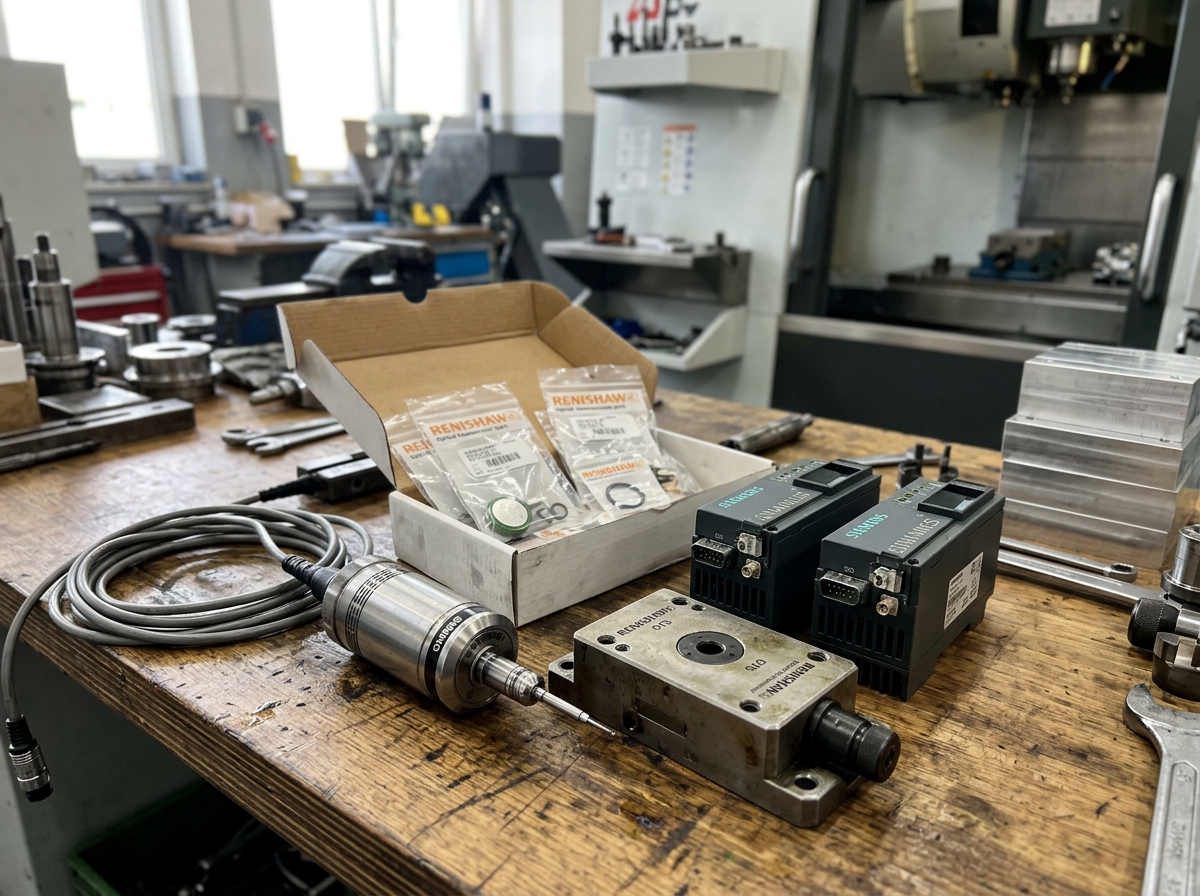
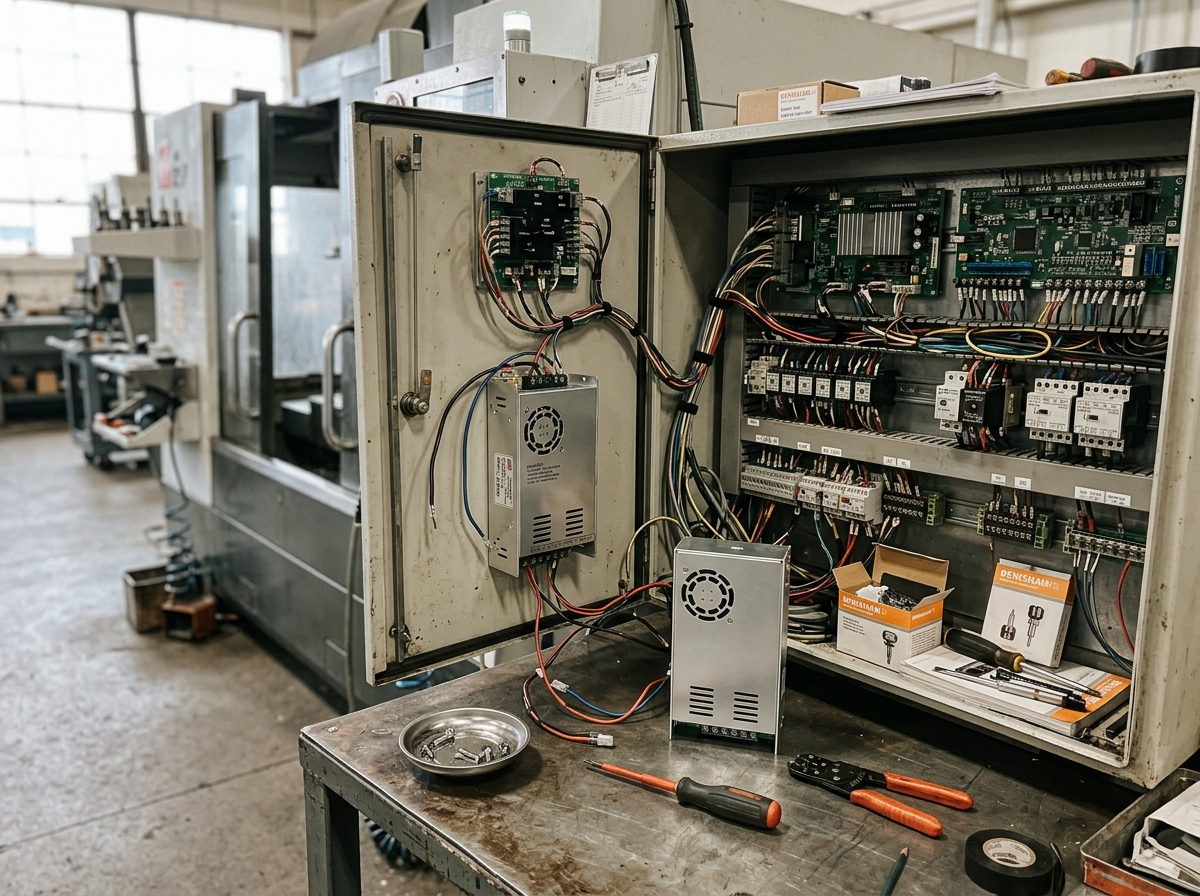
- Heidenhain handwheels are built for precise manual jog control and better CNC integration.
- Standard handwheels can work for basic machine adjustment, but they often provide less resolution and fewer control features.
- Compatibility matters as much as hardware: brand, model, interface, and control logic must match.
- For maintenance, setup, and verification, handwheel choice affects downtime, operator confidence, and positioning repeatability.
The difference between a Heidenhain handwheel and a standard handwheel matters most when you need reliable manual jog control for machine adjustment, because even small interface differences can affect setup accuracy, alarm behavior, and cycle readiness. In CNC work, positioning quality is not an abstract concept: ISO 230-1 defines machine tool test methods for positioning accuracy and repeatability, and many shops calibrate or verify motion in micrometer-level ranges. If a handwheel sends inconsistent incremental commands or does not match the control logic, the result is often wasted setup time rather than productive motion, which is why sourcing from the correct control ecosystem matters as much as the part itself.
What a Heidenhain handwheel does in manual jog control
A Heidenhain handwheel is designed to give the operator deliberate, incremental motion during setup rather than free-form movement. In a typical CNC environment, this is used for tool touch-off, fixture alignment, axis checking, program dry runs, and final machine adjustment before production starts. Because the operator is moving the axis one click or one increment at a time, the quality of the handwheel signal and the way the controller interprets it directly affect usability.
Heidenhain is strongly associated with high-precision control environments, so its handwheels are commonly used where fine adjustment and repeatability matter more than simple jogging convenience. A practical example is a setup technician aligning a workpiece after fixturing: a coarse jog may overshoot the edge, while a well-matched handwheel makes it easier to creep into position in small steps. That is why many shops prefer a handwheel that is designed specifically for the control family rather than a generic replacement.
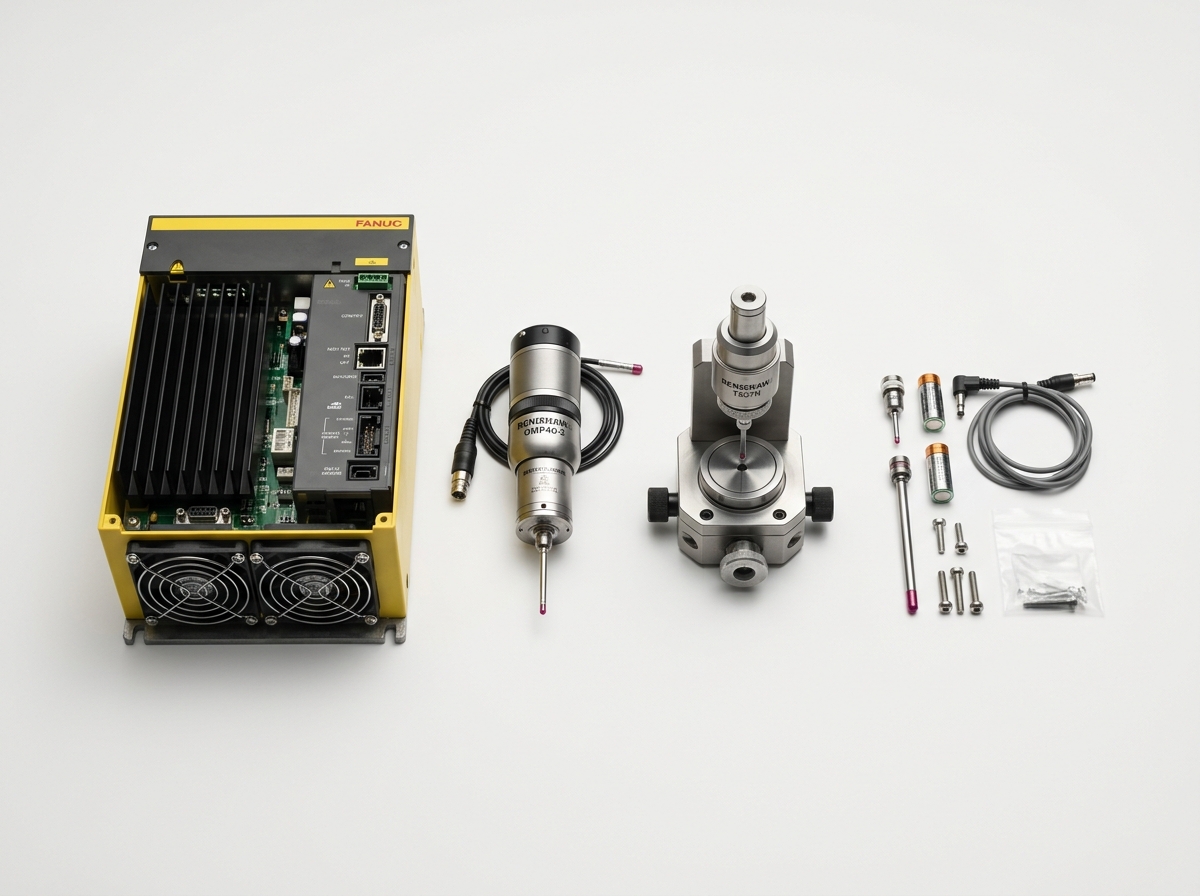
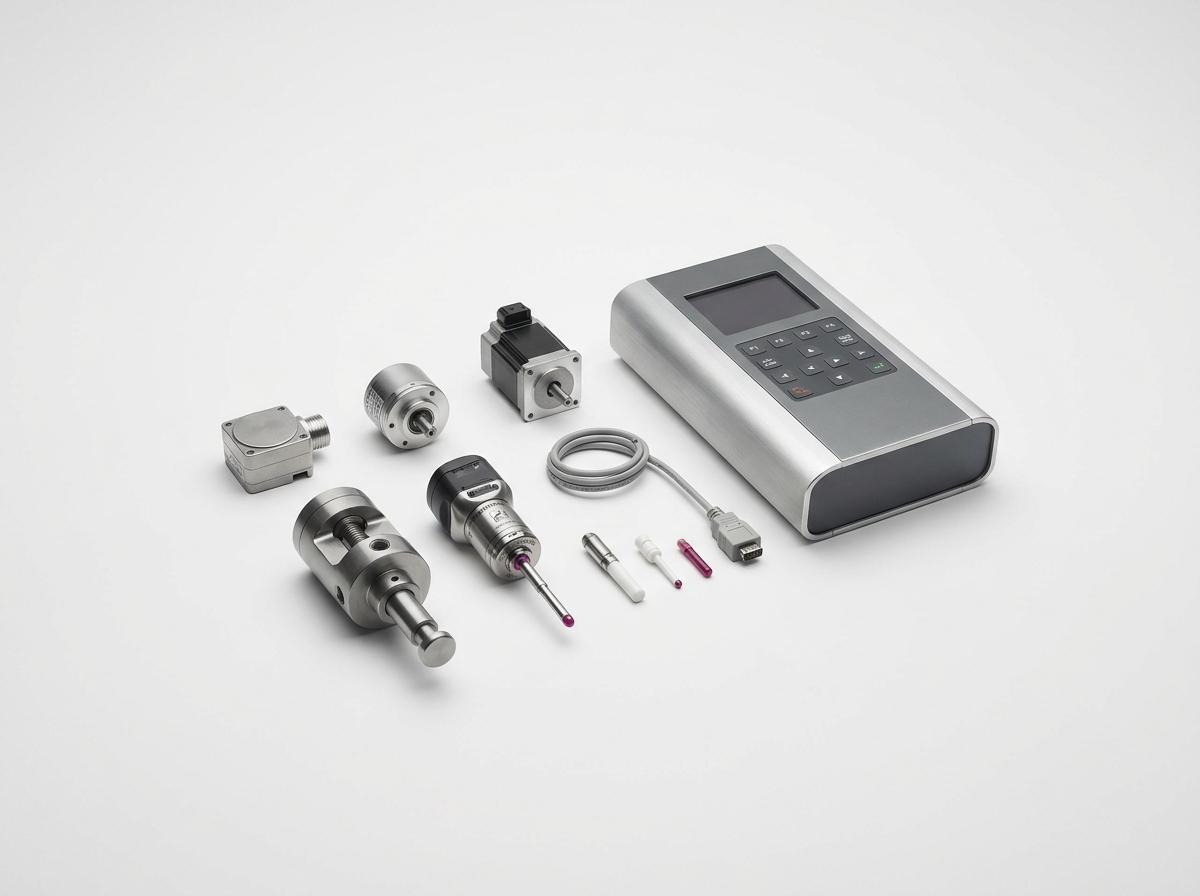
For readers comparing compatible components, it helps to see the handwheel as part of a broader control stack. The same logic applies to other replacement parts such as servo drives, encoders, and I/O modules, where a correct electrical match and protocol match are often more important than the lowest price.
Heidenhain handwheel vs standard handwheel: the practical differences
The core difference is not just shape or mounting; it is how the device communicates precision to the CNC control. A standard handwheel may offer basic incremental jogging, but a Heidenhain handwheel is usually selected for tighter integration, clearer step control, and higher confidence during fine machine adjustment.
| Feature | Heidenhain handwheel | Standard handwheel |
|---|---|---|
| Primary use | Precision setup, tuning, and manual jog control | General manual movement and basic adjustment |
| Control integration | Designed for control-family compatibility | May require broader compatibility checking |
| Adjustment feel | Typically more consistent for fine increments | Can be adequate but less refined |
| Risk of mismatch | Lower when correctly matched to the control | Higher if interface or logic differs |
In a maintenance setting, that difference becomes operational very quickly. If a machine is down and the technician needs to re-establish reference positions, a handwheel that behaves predictably reduces the chance of overshoot, accidental axis movement, or confusing operator feedback. If the replacement is not aligned with the machine’s interface expectations, the issue may appear as alarm codes, non-responsive motion, or inconsistent step behavior rather than an obvious hardware failure.
Why machine adjustment depends on interface compatibility
Machine adjustment is only as reliable as the communication chain behind it. The handwheel is a human interface, but the CNC control interprets it through the machine’s electrical and logical architecture, which means brand compatibility, signal format, and connector configuration all matter. This is the same reason OEM spare parts are often preferred in retrofit and repair work: the hidden cost is not the part itself but the downtime caused by a mismatch.
In real purchasing workflows, the safest approach is to verify the exact model, interface type, voltage expectations, and axis-selection behavior before ordering. A technician may be looking for a simple replacement, but a seller still has to confirm whether the machine uses a pulse generator style input, a specific connector layout, or a control-specific protocol. When that information is wrong, even a physically similar handwheel can fail at installation.
For this reason, buyers often compare related control components at the same time. If a handwheel issue is part of a larger control fault, the same machine may also require a new power supply or a replacement machine cable, since unstable supply or noisy signal transmission can produce symptoms that look like a handwheel failure.
Precision, resolution, and why the numbers matter
Precision in manual jog control is not measured by marketing language; it is measured by the amount of motion the operator can command and repeat. In high-precision machining, the machine itself may be validated under standards such as ISO 230-1, which addresses testing of machine tool accuracy and repeatability. For linear feedback systems, NIST provides calibration resources used in displacement measurement environments where micrometer-level verification is relevant.
That matters because the handwheel is often used to approach a target by tiny increments during tool setting or edge finding. If the control interprets the input inconsistently, the operator may need more passes to reach the correct position, which increases setup time and the chance of scrap. In practical terms, the better the handwheel behavior matches the control, the less the operator has to compensate mentally for lag, jumpiness, or vague increments.
| Adjustment factor | Why it matters | Typical impact |
|---|---|---|
| Increment consistency | Predictable axis movement | Less overshoot during setup |
| Control compatibility | Correct signal interpretation | Fewer alarms and install issues |
| Operator feedback | Confident fine positioning | Faster tool and fixture alignment |
| Signal integrity | Stable command transmission | Lower risk of intermittent faults |
When the motion system is more sensitive, the handwheel becomes part of the quality chain, not just a convenience accessory. That is why shops focused on repeatable machine adjustment often treat it with the same seriousness as feedback devices and drive components.
How to choose between a Heidenhain handwheel and a standard handwheel
The best choice depends on the control system, the required adjustment precision, and the consequences of downtime. If the machine is used for high-value parts, frequent setup changes, or tight tolerance work, the Heidenhain handwheel is usually the safer pick because it aligns better with precision-oriented workflows. If the machine is older, low-complexity, or used mainly for coarse jogging, a standard handwheel may be enough as long as the interface matches.
- Confirm the CNC control model before comparing handwheels.
- Check connector type, pinout, and signal logic.
- Verify whether the machine expects incremental, axis-select, or mode-specific behavior.
- Match the replacement to the intended use: setup, maintenance, or production support.
- Ask for photos of the label, connector, and cable end if the original part number is unclear.
For maintenance buyers, the fastest route is often a model-first search rather than a brand-only search. A correct part number can eliminate most compatibility risk, while a visually similar product can still fail if the machine expects different jog logic or voltage behavior.
Handwheel replacement in a wider CNC spare parts strategy
A handwheel failure rarely exists in isolation. In many cases, the operator notices poor jogging, missing motion, or inconsistent adjustment only after another component has already become unstable. That is why CNC spare parts procurement works best when it looks at the entire control path: command input, power delivery, feedback, and communication.

For example, a degraded encoder can affect positioning confidence, a weak power supply can create unstable behavior, and a damaged cable can introduce intermittent signal faults. If the goal is to restore a machine quickly, the part choice has to reflect the control ecosystem rather than simply the device category. This is especially true in cross-brand sourcing, where one supplier may cover multiple machine families but still needs exact model confirmation before shipping.
The same logic applies across adjacent spare-part categories such as encoders, probe systems, and tool setting gauges. When the machine’s accuracy chain is stable, the handwheel becomes a dependable setup tool rather than a troubleshooting variable.
Common mistakes when buying a Heidenhain handwheel
The most common mistake is assuming that a handwheel is interchangeable just because it looks similar. In CNC repair, appearance is a poor substitute for interface validation, and the wrong choice can create more downtime than the original fault.
- Buying by housing shape instead of model number.
- Ignoring connector style or cable termination.
- Assuming every handwheel supports the same jog logic.
- Replacing the handwheel without checking the control alarm history.
- Overlooking related faults in power, feedback, or wiring.
A second mistake is treating price as the main decision variable. In uptime-critical environments, the true cost is often installation delay, troubleshooting time, and the risk of a second replacement. The correct question is not whether the part is cheaper; it is whether it restores machine adjustment behavior without creating a compatibility problem.
What operators notice on the shop floor
Operators usually judge a handwheel by feel long before they read a specification sheet. If the motion is smooth, the increment selection is intuitive, and the response matches expectation, the setup process feels controlled. If the motion is vague, delayed, or overly sensitive, the operator starts compensating manually, which slows the whole setup loop.
That human factor matters because handwheel use is often concentrated in high-risk moments: first article setup, tool change verification, offset correction, and maintenance recovery. In those moments, a dependable Heidenhain handwheel can reduce cognitive load, while a generic replacement may force the operator to think about the control instead of the part being set.
From a production perspective, better manual jog control also supports standardization. When multiple technicians can use the same predictable interface, the machine is easier to hand over between shifts, easier to validate after service, and less likely to accumulate small setup errors over time.
FAQ about Heidenhain handwheel and standard handwheel
Is a Heidenhain handwheel always better than a standard handwheel?
It is usually better for precision-oriented machine adjustment, but only if the control system supports it and the interface matches exactly.
Can I replace a standard handwheel with a Heidenhain handwheel?
Only if the machine control, connector, and jog logic are compatible; otherwise, the replacement may not function correctly.
Why does the wrong handwheel cause machine alarms?
Because the control may detect invalid signals, missing pulses, or incompatible input behavior during manual jog control.
What should I check before ordering a replacement handwheel?
Check the part number, connector type, cable details, control model, and axis-selection behavior.
Does a handwheel affect machining accuracy?
Yes, indirectly, because setup accuracy and machine adjustment quality influence tool alignment, offsets, and repeatability.
What other parts should I inspect if the handwheel is not working?
Inspect the cable, power supply, encoder-related feedback chain, and controller input modules.
How do I reduce the risk of buying the wrong spare part?
Match the exact model and verify the control family before ordering, especially for cross-brand sourcing.