
- Magnetic chucks are popular because they clamp flat ferromagnetic parts quickly and with minimal distortion.
- In precision grinding, workholding stability matters as much as spindle accuracy and wheel condition.
- The best chuck choice depends on part material, thickness, residual stress, and required surface finish.
- Electrical holding force, pole pitch, and chuck flatness should be verified before production use.
- For repair-focused shops, faster setup and fewer rejected parts often matter more than the lowest purchase price.
Magnetic chuck use in precision grinding shops is driven by one practical goal: hold the part securely enough to grind accurately, while disturbing it as little as possible. For dimensional control, that matters because ISO 1101 defines geometric tolerancing principles that only become meaningful when the part is clamped repeatably and without distortion. In surface grinding, a well-selected magnetic chuck can shorten setup, reduce clamp marks, and keep thin workpieces flatter under load than many mechanical fixtures. Shops that also depend on stable machine control often pair workholding with reliable servo drivers and a clean electrical architecture built around power supply units.
Why Magnetic Chuck Workholding Fits Precision Grinding
The main reason a magnetic chuck is common is that it solves the core grinding problem better than many alternatives: it holds flat steel parts evenly across the contact area. In precision grinding, the wheel removes material in very small increments, so any clamp distortion, jaw indentation, or chatter becomes a quality risk. A magnetic chuck spreads holding force across the part’s underside, which is why it is widely used for plate, blade, die, mold, and fixture components made from ferromagnetic materials.
That even support is especially useful for thin parts. A mechanical vise or two-point clamp can bend a sheet enough to hide stress during setup and release it after unclamping. A magnetic chuck reduces that effect, making it easier to hit flatness and parallelism targets on the machine itself rather than correcting them later.
| Workholding method | Best fit | Main advantage | Typical limitation |
|---|---|---|---|
| Magnetic chuck | Flat ferromagnetic parts | Fast setup and low distortion | Requires magnetic material |
| Mechanical vise | Prismatic parts | Strong positive location | Can mark or bend thin parts |
| Vacuum table | Nonmagnetic flat parts | Uniform support over large areas | Lower holding force on porous or rough surfaces |
| Custom fixture | Complex geometry | High adaptability | Higher setup time and cost |
For shops that buy replacement components quickly, the same logic applies to machine infrastructure. If the clamping method is right but the control hardware is unstable, the process still fails. That is why spare-part planning around encoders, linear scales, and handwheels often matters as much as the chuck itself.
Magnetic Chuck Performance Factors That Matter in Precision Grinding
Holding force is not the only metric that matters; chuck flatness, pole pattern, and surface condition all affect real grinding results. A strong magnetic field is useless if the chuck face is uneven or if the part bridges poles in a way that creates local lift. In production, operators usually care about three things: how fast the part can be set, how consistently it repeats, and how much post-grind correction is needed.
Magnetic chucks are also valued because they simplify tool access. With no jaws rising above the work surface, the grinding wheel can approach edges and shoulders more freely. That matters in profile grinding and thin-stock finishing, where wheel clearance and uniform contact pressure are both critical.
| Selection factor | Why it matters | Typical shop check | Risk if ignored |
|---|---|---|---|
| Chuck flatness | Affects part support | Indicator sweep across face | Uneven grind and taper |
| Pole pitch | Controls magnetic field distribution | Match to part size and thickness | Poor hold on small parts |
| Material type | Determines whether the chuck can grip | Confirm ferromagnetic grade | No hold on nonmagnetic alloys |
| Demagnetization method | Prevents residual magnetism | Verify release cycle | Chip attraction after grinding |
For grinding shops that run high-utilization equipment, machine stability also depends on adjacent systems. A weak servo motor, noisy machine cable, or inconsistent I/O module can create unplanned downtime that wipes out the time saved by faster workholding.
What the Standards Say About Grinding Accuracy and Workholding
Grinding shops often talk about microns, but standards define the language that makes those micron claims credible. ISO 230-1:2022 provides test code principles for machine tool geometric accuracy, including positioning and straightness-related checks that influence grinding outcomes. The key point is simple: workholding cannot compensate for a machine whose geometric condition is drifting.
For surface integrity and finish verification, many shops compare their results against established measurement methods rather than subjective visual judgment. Surface texture parameters are typically evaluated using standardized metrology procedures, and the choice of clamping method can affect the measured value if the part is distorted during setup or release. In practice, that means a magnetic chuck is most valuable when it preserves the part’s natural geometry instead of forcing it into a clamped shape.
On the material side, precision grinding shops commonly process steels that respond well to magnetic clamping, including low-carbon and alloy grades. If the workpiece is not ferromagnetic, the shop usually needs a different strategy such as vacuum workholding or a custom fixture. For that reason, a magnetic chuck is not a universal solution; it is a specialized solution that excels on the right family of parts.
| Reference | What it helps control | Practical shop implication |
|---|---|---|
| ISO 230-1:2022 | Machine tool geometric test principles | Supports repeatable accuracy checks |
| ASTM surface texture standards | Measurement methodology | Helps compare finish results consistently |
| NIST Physical Measurement Laboratory | Metrology traceability | Supports credible measurement and calibration practices |
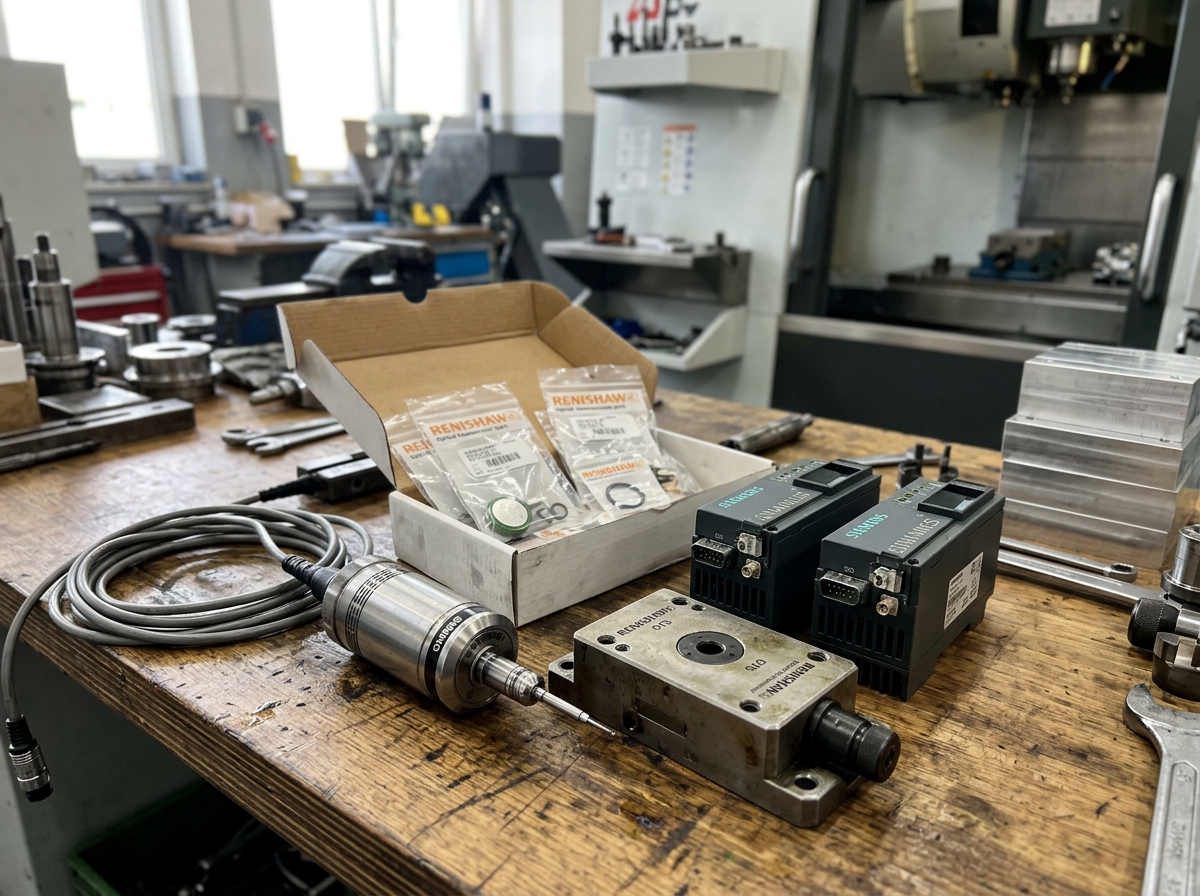
Where control systems matter, the same rigor applies to replacement parts. A shop that needs dependable feedback for axis motion may choose an absolute encoder for retention of position data, or a probe sensor to reduce manual alignment variation during setup.
How a Magnetic Chuck Reduces Setup Time and Scrap
The strongest economic reason for using a magnetic chuck is that it reduces non-cutting time. When an operator can place a part, energize the chuck, confirm contact, and start grinding without mechanical tightening, setup becomes faster and more repeatable. That matters most in mixed-lot shops, repair cells, and toolrooms where every minute of spindle idle time adds cost.
Industry guidance on lean manufacturing consistently shows that setup reduction improves flow more reliably than chasing marginal cutting gains. In a grinding environment, faster setup also lowers the chance of handling damage, especially on precision plates and thin components that might otherwise be overtightened or re-clamped. Fewer re-clamps usually mean fewer rejected parts and less operator variability.
| Cost element | Mechanical clamping | Magnetic chuck | Operational effect |
|---|---|---|---|
| Setup steps | Multiple manual adjustments | Single energize/release cycle | Shorter changeover |
| Part distortion risk | Moderate to high on thin parts | Lower on flat ferromagnetic parts | Better dimensional stability |
| Wheel access | Often obstructed by jaws | Open top surface | Improved edge access |
| Repeatability | Operator dependent | Fixture dependent | Less variation between shifts |
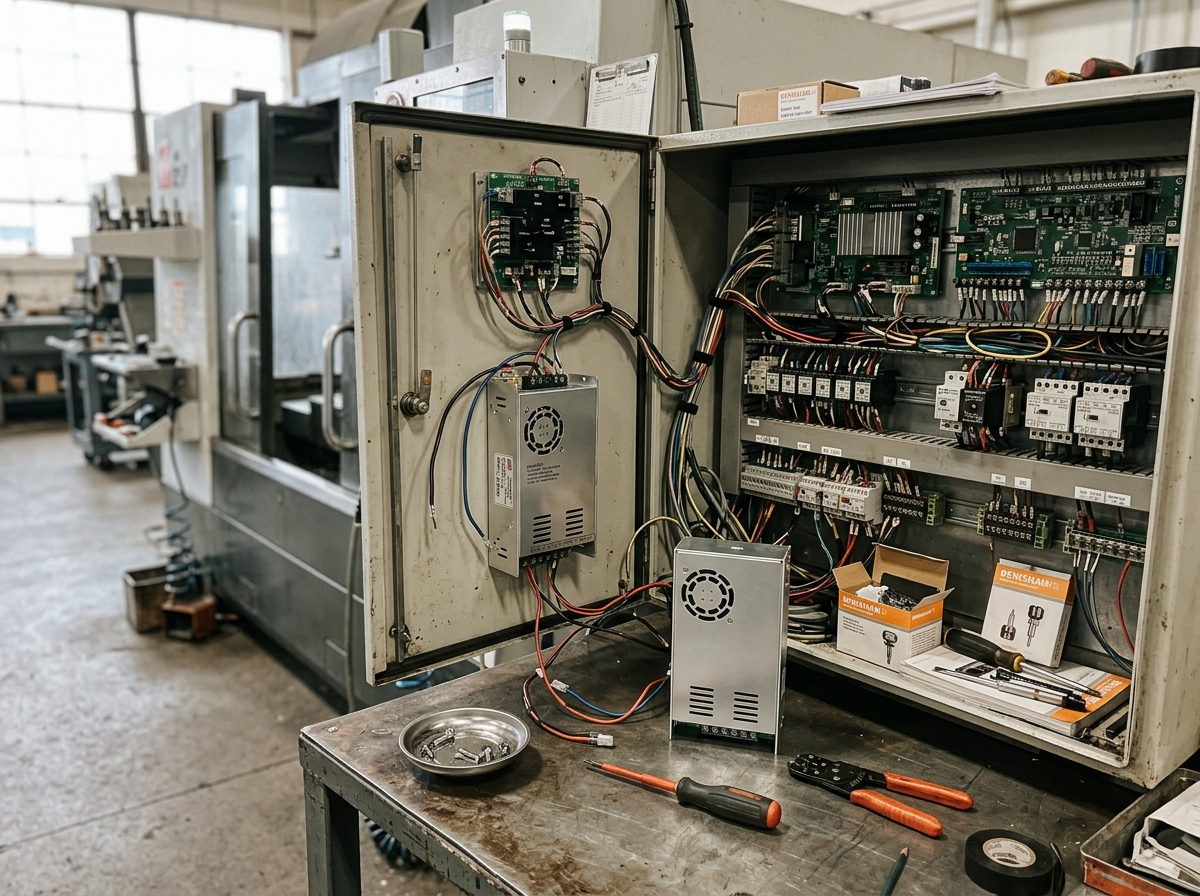
That is also why shops often standardize on dependable auxiliaries such as transformers and electrical panels. A magnetic chuck can only be as reliable as the power and control chain feeding it.
When a Magnetic Chuck Is the Wrong Choice
The magnetic chuck is not the best answer for every grinding job, and knowing when not to use it is part of professional workholding. Nonmagnetic materials such as aluminum, brass, austenitic stainless steels, and many titanium components cannot be held effectively by magnetic attraction. Very small parts may also bridge the magnetic poles poorly, while deeply warped parts may not sit flat enough for uniform contact.
Residual magnetism can also become a housekeeping issue. Fine chips may cling to the part or chuck face after release, which is why demagnetization and regular cleaning are part of the operating routine. In high-precision environments, that maintenance step matters because embedded debris changes both flatness and surface finish.

- Confirm the workpiece is ferromagnetic before planning magnetic clamping.
- Check part thickness and flatness against the chuck pole pattern.
- Verify that the chuck face is clean, undamaged, and properly energized.
- Use demagnetization after grinding if chip attraction is a risk.
- Measure the result, do not assume the fixture alone guarantees tolerance.
Shops that use mixed machine platforms often keep parallel spare inventories for control reliability as well, including spindle motors, CNC lathes, and automatic lathes, because workholding success means little if upstream equipment is unstable.
How to Choose the Right Magnetic Chuck for Precision Grinding
The best magnetic chuck is the one that matches the part family, not the one with the biggest headline force rating. Shops should begin with the part’s material, thickness, footprint, and required finish. Then they should match the chuck style to the job: fine-pole chucks for smaller parts, larger pole patterns for bigger plates, and specialized fixtures for irregular shapes.
Accuracy checks should be practical, not theoretical. A simple indicator sweep, a test grind, and a repeat clamp trial tell more than a brochure specification. Shops that run recurring jobs should document the chuck, part family, and measured outcome so the setup can be repeated consistently by any operator.
| Buying criterion | Why it matters | Example check | Decision rule |
|---|---|---|---|
| Part size | Determines coverage | Part footprint vs chuck face | Choose full support |
| Material grade | Determines magnetic response | Material certificate review | Use only ferromagnetic stock |
| Grinding depth | Affects holding stability | Expected stock removal | Favor stronger clamping for heavier cuts |
| Throughput target | Impacts setup economics | Parts per shift | Prioritize faster loading if mix is high |
In a broader maintenance ecosystem, this same logic is why replacement buyers cross-check linear scales, handwheels, and probe sensors before placing an order. Compatibility reduces hidden downtime, which is usually more expensive than the part itself.
Magnetic Chuck Maintenance and Shop Discipline
Good magnetic chuck performance depends on maintenance discipline, not just purchase quality. The chuck face should be cleaned regularly so grinding swarf does not create false contact points. Electrical inspection also matters because inconsistent energizing can feel like a workholding problem when the real issue is upstream in the power path.
Shops that track downtime often discover that the fastest gains come from preventing small faults. A weak supply, loose connection, or degraded cable can show up as inconsistent chuck response, which in turn creates part variation. That is why the chuck should be treated as part of a system, not as an isolated accessory.
- Clean the chuck face before every precision job.
- Check release and energize cycles regularly.
- Inspect wiring, connectors, and control switches for heat or wear.
- Verify flatness with a calibrated indicator routine.
- Document any recurring part family that shows poor magnetic contact.
For service teams, it is often useful to keep related control items on hand, including machine cables, I/O modules, and power supply units, because electrical reliability directly affects chuck performance and machine uptime.
FAQ
Why is a magnetic chuck preferred over a vise in grinding?
A magnetic chuck is preferred because it clamps flat ferromagnetic parts more evenly and with less distortion than many mechanical vises. That improves access, reduces setup marks, and supports better surface finish.
What materials work best on a magnetic chuck?
Ferromagnetic materials such as carbon steel and many alloy steels work best. Nonmagnetic materials like aluminum, brass, and austenitic stainless steel generally require another workholding method.
Does a magnetic chuck improve accuracy by itself?
No. It improves workholding consistency, but final accuracy still depends on machine geometry, spindle condition, wheel balance, dressing, and measurement discipline.
Can a magnetic chuck hold thin parts safely?
Yes, if the part is ferromagnetic, flat enough for good contact, and supported by a chuck with suitable pole pattern and flatness. Thin parts are one of the strongest use cases for magnetic workholding.
How do shops verify magnetic chuck performance?
They usually check flatness, clamp consistency, and repeatability with indicator sweeps and test grinds, then compare the result against the required tolerance and finish target.
What causes poor holding on a magnetic chuck?
Common causes include dirty chuck faces, warped parts, poor material match, damaged pole surfaces, insufficient contact area, or electrical problems in the energizing circuit.
When should a shop choose a different fixture?
A different fixture is better when the part is nonmagnetic, unusually shaped, heavily warped, or too small to bridge the pole pattern reliably.