










Why are Renishaw grating rulers suddenly quiet in 2025
Renishaw grating rulers are not "suddenly quiet" in 2025. Their perceived reduced visibility stems from several evolving market dynamics and significant technological shifts. Industries now demand high-precision measurement tools more than ever, especially in automotive, aerospace, and electronics. Advances in sensor accuracy and digital readouts enhance functionality, driving this evolution. Companies like Renishaw also diversify their offerings, for example, with the Renishaw touch probe, which shifts market attention. This post will explore the key reasons behind this perception, demonstrating their continued importance within broader industry narratives.
Key Takeaways
- Renishaw grating rulers are not less important; they are now a standard part of many industries.
- Their high reliability means they do not often break, so they get less public attention.
- New ways to measure things, like non-contact systems, are becoming popular for some jobs.
- Renishaw now focuses on new areas like 3D printing and healthcare, which changes what people talk about.
- Grating rulers are key parts of bigger systems, so people talk more about the whole system than just the ruler.
- They are still very important for precise machines, like those used to make computer chips and airplane parts.
- Renishaw grating rulers help new technologies, such as flying taxis and advanced robots, work correctly.
Market Maturation and Ubiquity: Why "Quiet" Can Mean "Standard" for Renishaw Grating Rulers
Renishaw's Established Dominance
How their technology became an industry standard
Renishaw has long stood as a leader in precision measurement. The company consistently drives progress through advancements in grating ruler technology. These innovations have significantly improved the performance and reliability of grating rulers across various industries. For example, Renishaw introduced a new series of high-resolution grating rulers in January 2023. These rulers were specifically designed for 5-axis machining centers. Such continuous development has made Renishaw's technology a benchmark, setting the standard for accuracy and dependability in many applications.
Less "news" and more "expected" integration
When a technology becomes an industry standard, its presence becomes an expectation rather than a headline. Manufacturers and engineers now routinely integrate Renishaw's solutions into their designs. This integration happens without much fanfare. The technology works reliably in the background. Its consistent performance means less "news" about its adoption. Instead, its use is simply a given in high-precision systems.
High Reliability and Longevity
Why a product that rarely fails generates less buzz
Products that perform flawlessly and rarely break down often receive less attention. People tend to notice things when they go wrong. Renishaw grating rulers are known for their exceptional reliability. They consistently deliver accurate measurements without issues. This dependable operation means they generate less "buzz" compared to newer, unproven technologies or products that require frequent troubleshooting. Their quiet efficiency is a testament to their quality.
Reduced need for frequent replacements
The design and construction of grating rulers contribute to their long lifespan.
- Simple Structure: Grating rulers, including those from Renishaw, feature a straightforward design. They primarily consist of a ruler grating and a reading head. This simplicity means they lack complex mechanical parts. They are less prone to wear and loosening. This design contributes to their high stability and reliability.
- Strong Anti-interference Ability: These rulers use photoelectric measurement principles. This gives them robust resistance against external interferences. They can withstand electromagnetic noise, vibrations, and dust. This capability allows them to operate stably in demanding industrial environments. CNC machine tool processing sites are a good example. They ensure measurement accuracy even in harsh conditions.
- Long Service Life: The materials and manufacturing processes for these rulers are carefully chosen. They ensure extended durability. With proper use and maintenance, they maintain excellent measurement performance for long periods. This reduces maintenance costs and the need for frequent replacements.
Focus on Niche and High-Precision Applications
Continued presence in specialized fields
Renishaw grating rulers maintain a strong presence in highly specialized fields. These include aerospace, medical device manufacturing, and semiconductor production. These industries demand extreme precision and reliability. Renishaw's technology meets these stringent requirements. It provides the accuracy needed for critical processes.
Not capturing mainstream attention
The specialized nature of these applications means the technology does not often capture mainstream attention. The general public or broader industrial sectors may not discuss it frequently. Its importance remains high within its specific user base. However, it operates outside the spotlight of more consumer-facing or widely adopted technologies.
The Rise of Alternative and Complementary Technologies Impacting Renishaw Grating Rulers
Emergence of Non-Contact and Vision-Based Metrology
New methods gaining traction in certain applications
New measurement methods are gaining popularity in various industries. These methods often use non-contact and vision-based technologies. They offer different advantages compared to traditional contact systems. For example, Moire contouring is a non-contact system. It can produce 50,000 points per second. This is a large increase compared to the 1 point per second from typical contact measurement systems. A single image from Moire can gather over 250,000 data points.
Specific use cases where alternatives excel
These alternative technologies excel in certain situations. They can detect features as small as 0.001 inches. They achieve 2D measurements better than 0.0001 inches over a 1-inch field of view. Moire contouring works very well for continuously curving surfaces. It maps an entire area at once. This provides an immediate view of the part's shape in real-time. This non-contact approach also prevents damage to delicate surface finishes. This makes it ideal for inspecting sensitive components.
Advancements in Other Encoder Technologies
Evolution of magnetic and inductive encoders
Other encoder technologies have also advanced significantly. Magnetic and inductive encoders have evolved. They now offer improved accuracy and robustness. Magnetic encoders use magnetic fields to detect position. Inductive encoders use electromagnetic induction. These technologies are becoming more precise. They can operate reliably in harsh industrial environments.
Cost and performance trade-offs for specific needs
Manufacturers often weigh cost against performance. Magnetic and inductive encoders can be more cost-effective for some applications. They might not match the extreme precision of optical encoders in all cases. However, their improved performance makes them suitable for many tasks. These tasks include general automation and machine control. The choice depends on the specific requirements of the application.
Integration into Larger Systems
Grating rulers as embedded components
Grating rulers often function as embedded components within larger, more complex systems. They provide crucial one-dimensional linear motion data. This data is essential for the system's overall operation. For instance, a renishaw grating ruler is commonly integrated into closed-loop servo systems of CNC machine tools. These systems use the ruler to detect linear or angular displacement. They offer a wide detection range, high accuracy, and fast response. In CNC machines, they monitor tool and workpiece coordinates. They also track tool errors and correct tool motion inaccuracies.
System, not the ruler, becoming the focus of discussion
The integration of grating rulers into larger systems shifts the focus. People discuss the overall system more than the individual ruler. For example, a self-calibration method uses grating rulers for 6-DOF motion measurement systems. This method adds external physical constraints to create a closed loop. This allows the entire measurement system to self-calibrate. The discussion moves beyond the ruler's individual performance. It focuses on the system's accuracy, robustness, and how it identifies system parameters. This method has been tested on a Stewart platform. It showed its ability to achieve self-calibration for the 6-DOF motion measurement system.
Strategic Shifts and Communication at Renishaw Affecting Grating Ruler Visibility

Diversification of Renishaw's Portfolio
Broader focus on additive manufacturing
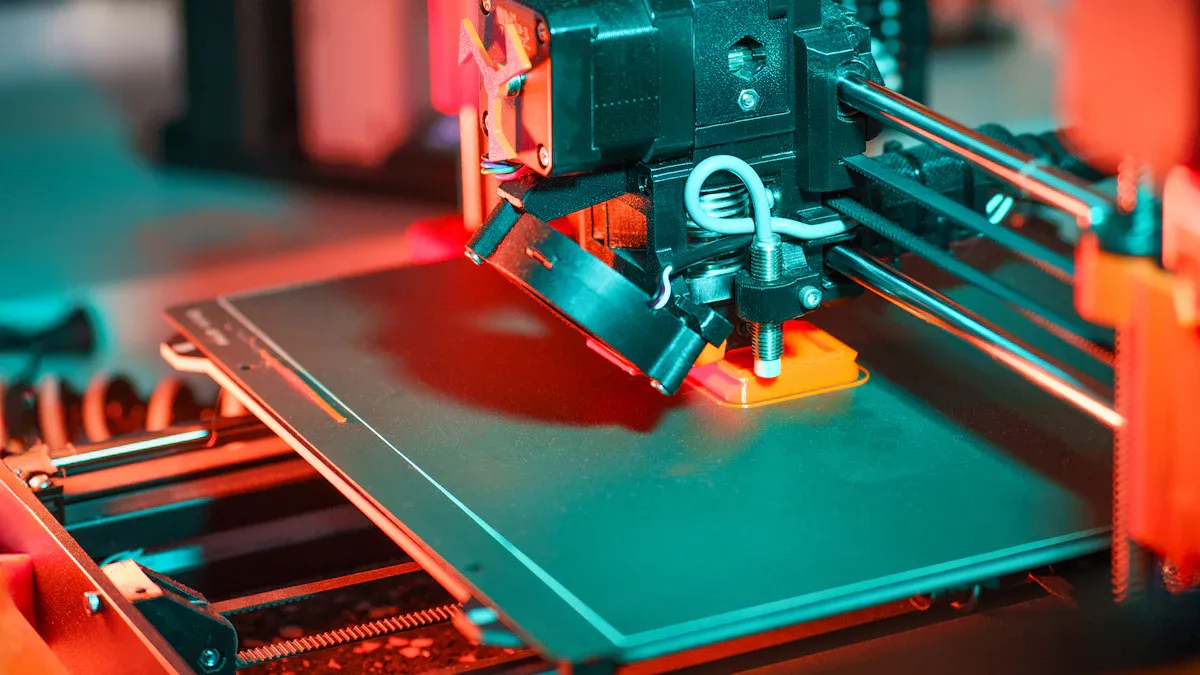
Renishaw has significantly broadened its business focus. The company now places a strong emphasis on additive manufacturing, also known as 3D printing. This technology allows for the creation of complex parts layer by layer. Renishaw develops and sells advanced metal additive manufacturing systems. This strategic shift has captured considerable attention. It positions Renishaw as a key player in this rapidly growing sector. This broader focus naturally diverts some public and industry attention from their traditional product lines.
Expansion into healthcare and other metrology solutions
Renishaw also expanded into healthcare and other specialized metrology solutions. This includes neurosurgical devices and dental scanning. These new ventures represent significant growth areas for the company. In fiscal year 2025, Renishaw's revenue from the Manufacturing Technologies segment, which includes additive manufacturing, reached £671.5 million. This accounted for 94% of their total revenue. The Analytical Instruments and Medical Devices segment, encompassing healthcare solutions, contributed £41.6 million. This represented 6% of the total revenue. Specifically, the healthcare division's revenue of £41.6 million constituted approximately 5.8% of the group's total £713 million revenue. This data clearly shows Renishaw's successful diversification.
Targeted Marketing and Industry-Specific Communication
Communication focused on specific industrial sectors
Renishaw now employs a highly targeted marketing strategy. They focus their communication efforts on specific industrial sectors. This approach allows them to address the unique needs and challenges of each industry. For example, they might highlight specific solutions for aerospace or medical device manufacturers. This ensures their message resonates with key decision-makers in those fields.
Less broad public announcements
This targeted approach means Renishaw makes fewer broad public announcements. They do not often release general news about all their products. Instead, their communications are tailored. They reach specific audiences through industry journals, trade shows, and specialized online platforms. This strategy makes their traditional products, like a renishaw grating ruler, seem less visible to the general public.
Emphasis on Software and Data Integration
Value proposition shifting to integrated solutions
Renishaw's value proposition has evolved. They now emphasize integrated solutions. These solutions combine hardware, software, and data analysis. This approach helps customers achieve greater efficiency and precision. The company focuses on how its products work together. They create comprehensive systems for manufacturing and measurement.
Hardware as part of a larger ecosystem
Hardware components, such as grating rulers, are now presented as parts of a larger ecosystem. The discussion centers on the overall system's capabilities. It highlights how different elements contribute to a complete solution. This shift means individual hardware components receive less standalone attention. They are seen as essential, yet integrated, parts of a sophisticated technological framework.
Economic and Supply Chain Factors Influencing Renishaw Grating Ruler Discussion
Global Economic Climate and Investment Cycles
Broader economic trends affecting demand
Global economic trends significantly shape the demand for precision manufacturing components. Industries increasingly adopt industrial automation and Industry 4.0. This requires precise positional feedback. Advancements in manufacturing technologies, such as more complex CNC machines and robotics, necessitate higher accuracy and reliability. Manufacturers also seek enhanced productivity and reduced downtime. Absolute encoders eliminate homing cycles, which helps achieve this. Stringent quality control requirements demand tighter tolerances and greater repeatability. Equipment miniaturization drives the development of smaller, integrated absolute encoders. However, challenges exist. Absolute encoders have a high initial cost compared to incremental encoders. This poses a barrier for small and medium-sized enterprises. Technical complexity and integration hurdles also affect implementation. Competition from alternative sensing technologies impacts less demanding applications. The absolute grating ruler market shows an estimated annual growth rate of around 6.5%.
Impact on innovation cycles in precision manufacturing
Manufacturers face a complex economic landscape in 2025. Inflation, rising interest rates, ongoing supply chain disruptions, and global economic uncertainty are present. These challenges compel manufacturers to find innovative ways to navigate turbulent waters. Key economic factors include rising costs for materials and energy, higher borrowing costs for new projects, continuous supply chain disruptions, and geopolitical tensions. Savvy manufacturers adopt several approaches. They double down on lean manufacturing principles. They use technologies like AI and IoT to optimize processes and reduce waste. Diversification helps them expand product lines and target markets. Agile planning involves short-term planning cycles and scenario-based forecasting. Strategic investments in automation and sustainability are crucial. Dynamic pricing models help manage fluctuating costs and demand. For example, a mid-sized automotive parts manufacturer implemented an AI-driven inventory management system. They also invested in local suppliers and developed modular product designs. This improved resilience and reduced costs.
Supply Chain Resilience and Localization
Regional manufacturing shifts influencing product availability
Global events often trigger shifts in manufacturing strategies. Companies increasingly focus on regionalizing their supply chains. This reduces reliance on distant suppliers. It also mitigates risks from geopolitical tensions or natural disasters. This shift influences the availability of products like precision measurement tools. Manufacturers prioritize local production or sourcing.
Effects on market discussion
These regional manufacturing shifts change market discussions. The focus moves to local capabilities and supply chain resilience. Asia-Pacific, particularly China, dominates the absolute grating ruler market. A vast and rapidly expanding manufacturing base fuels this dominance. This is especially true in CNC Machine Tools and automated industrial equipment. Government initiatives like 'Made in China 2025' promote advanced manufacturing. This boosts demand. The region also has a robust supply chain for electronics and precision components. It has a large domestic market for industrial machinery.
Competitive Landscape
Increased competition spreading market attention
The precision measurement market features intense competition. This spreads market attention across many players. HEIDENHAIN stands as the world's largest linear encoders manufacturer. It holds over 50% of the global absolute grating ruler market share. In 2023, the global top five players in the absolute grating ruler market collectively held approximately 20% of the market share in terms of revenue. Main players include Fagor Automation, Mitutoyo, TR-Electronic GmbH, Precizika Metrology, Givi Misure, Elbo Controlli Srl, Celera Motion (MICROE), Atek Electronic Sensor Technologies, SINO/Guangzhou Lokshun CNC Equipment, SOXIN, Changchun Yuheng Optics, and Dongguan Ouxin Precision Instrument.
Maintaining quality amidst new players
The grating ruler market concentrates among a few dominant players. HEIDENHAIN, Renishaw, and Mitutoyo hold the largest shares. Many smaller, specialized manufacturers also cater to niche applications and geographical markets. Established companies maintain their position by consistently delivering high-quality products. They also focus on continuous innovation. This ensures their offerings meet the evolving demands of precision industries.
Enduring Applications and Market Growth for Renishaw Grating Rulers in 2025
High-Precision Machine Tools
CNC machining centers
Renishaw grating rulers remain vital for high-precision machine tools. They ensure accuracy in CNC machining centers. These rulers allow worktable positioning accuracy to reach micron levels. This precision is crucial for complex manufacturing tasks. For example, a renishaw grating ruler provides the necessary feedback for fully closed-loop systems. These systems are common in optical processing machine tools and five-axis linkage equipment. Some advanced machines even use dual encoders and grating rulers for triple feedback, enhancing reliability.
| Requirement | Specification |
|---|---|
| Accuracy | Optical grating rulers achieve micron-level accuracy (e.g., 0.1μm, 0.5μm, 1μm, 5μm). |
| Resolution | Optical grating rulers offer higher resolution, down to 0.01μm. |
| Application | Optical grating rulers are used in high-precision applications like CNC machine tools. |
| Environmental Resistance | Optical grating rulers are sensitive to dust, oil, and water, requiring a sealed installation. |
Grating rulers offer a resolution that depends on their line density. A 20μm pitch grating ruler can achieve 0.1μm accuracy after subdivision. Their measurement range can cover several meters. This makes them suitable for high-precision linear displacement measurement over long travels. Installation requires careful attention. Technicians must ensure parallelism between the scale grating and the reading head. They also need protection against dust and cutting fluid. This leads to higher maintenance costs but ensures performance.
Grinding and turning machines
Grinding and turning machines also rely on grating rulers for their precision. These machines shape materials with extreme accuracy. Grating rulers provide continuous feedback on tool and workpiece positions. This feedback helps maintain tight tolerances. It ensures the final product meets exact specifications. The reliability and accuracy of these rulers are essential for consistent quality in these demanding applications.
Metrology and Inspection Equipment
Coordinate Measuring Machines (CMMs)
Coordinate Measuring Machines (CMMs) use grating rulers extensively. CMMs measure the physical geometric characteristics of an object. Grating rulers provide the precise positional data for the CMM's probes. This allows the machine to accurately map an object's dimensions. The high resolution of these rulers ensures CMMs deliver reliable and repeatable measurements.
Optical comparators and vision systems
Optical comparators and vision systems also benefit from grating rulers. These systems inspect parts without physical contact. Grating rulers ensure the accurate positioning of the stage or camera. This allows precise measurement of features and defects. Their stability helps these systems maintain calibration. This provides consistent and accurate inspection results.
Semiconductor Manufacturing
Wafer inspection and lithography equipment
Semiconductor manufacturing demands extreme precision. Grating rulers are critical components in wafer inspection and lithography equipment. Lithography machines use light to print circuit patterns onto silicon wafers. This process requires nanometer-level accuracy. Grating rulers provide the precise positioning feedback needed for these delicate operations. They ensure each layer aligns perfectly.
Precision stage positioning
Precision stage positioning is vital in semiconductor fabrication. Grating rulers enable the accurate movement of stages that hold wafers. These stages must move with incredible speed and precision. They position wafers for various processing steps. The rulers ensure the stage moves to the exact location every time. This prevents errors and maximizes yield in chip production.
Advanced Robotics and Automation
High-accuracy robotic arms
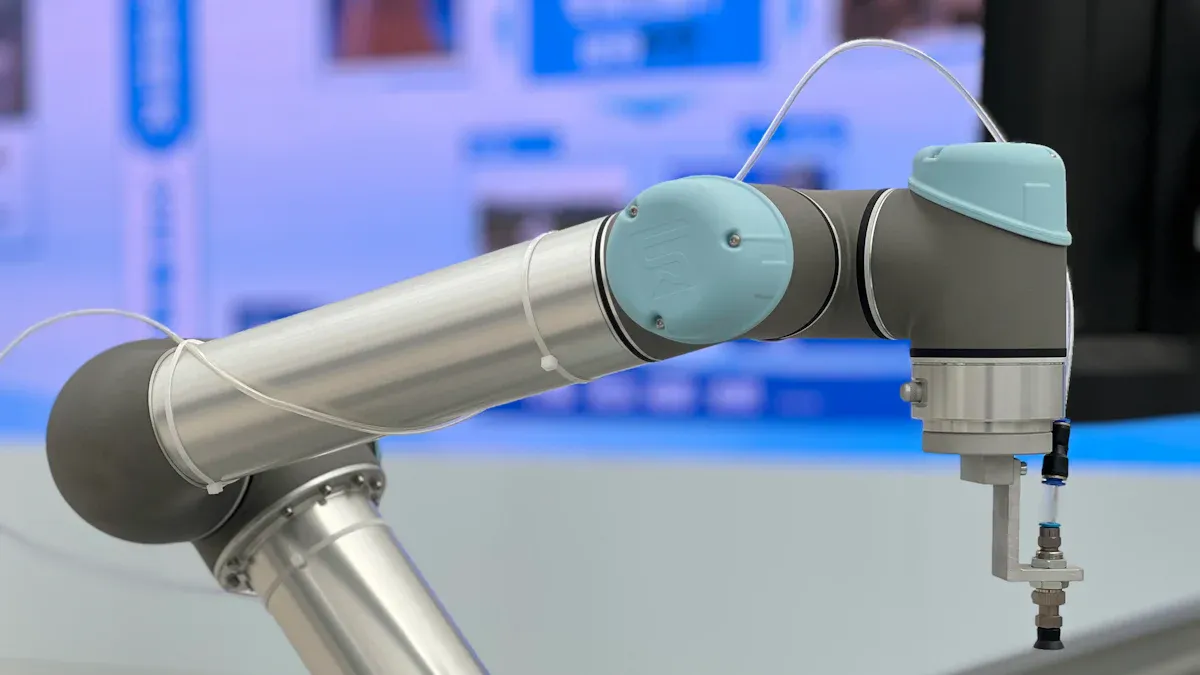
Grating rulers play a crucial role in advanced robotics. They provide essential feedback for high-accuracy robotic arms. These arms perform delicate tasks. For example, they assemble small electronic components or carry out surgical procedures. The rulers precisely measure the arm's position and movement. This feedback allows the robot to place objects with extreme accuracy. It ensures the arm moves exactly as programmed. This precision is vital for consistent quality and performance in automated manufacturing.
Automated assembly lines
Automated assembly lines also rely heavily on grating rulers. These lines move products through various stages of production. Grating rulers ensure precise positioning of parts and tools. They help robots pick up components and place them correctly. They also ensure that products stop at the right spot for the next step. This precise control prevents errors and speeds up the assembly process. It makes automated lines efficient and reliable.
Scientific and Research Instruments
Electron microscopes
Electron microscopes require incredibly precise sample positioning. Scientists use these powerful instruments to view tiny structures. Grating rulers enable the microscope's stage to move with nanometer-level accuracy. This fine movement allows researchers to scan samples and focus on specific areas. The rulers ensure stable and repeatable positioning. This helps scientists capture clear, high-resolution images of materials and biological samples.
Nanopositioning systems
Nanopositioning systems control movement at the nanoscale. These systems are critical in many scientific and research fields. Grating rulers provide the feedback for these extremely fine adjustments. They allow researchers to manipulate objects with incredible precision. Scientists use nanopositioning systems in areas like material science, biotechnology, and semiconductor research. The rulers ensure these systems achieve the exact position needed for experiments. This precision helps drive new discoveries and technological advancements.
The Role of Renishaw Grating Rulers in Emerging Technologies and Global Markets
Contribution to eVTOLs and Flying Taxis
Ensuring repeatable positioning in advanced aerospace applications
Emerging aerospace technologies, like electric Vertical Take-Off and Landing (eVTOL) vehicles and flying taxis, demand extreme precision. These advanced aircraft require highly accurate positioning systems. They ensure safe and efficient operation. Grating rulers provide critical feedback for flight control surfaces and propulsion systems. They help maintain exact alignment and movement. This precision is essential for repeatable performance and passenger safety.
Integration with stable static-pressure guide rails
eVTOLs often use stable static-pressure guide rails for precise movement during manufacturing or maintenance. These rails provide a smooth, low-friction path. Grating rulers integrate with these guide rails. They offer accurate positional data. This combination ensures components align perfectly during assembly. It also allows for precise adjustments and inspections. This integration enhances the overall reliability of these innovative aircraft.
Impact on the Global Grating Ruler Market
Renishaw's share in the projected $465 million market by 2025
The global grating ruler market shows significant growth. Experts project it to reach $465 million by 2025. Renishaw holds a substantial share in this market. The company's reputation for quality and innovation helps maintain its strong position. Its products are crucial for many high-precision industries worldwide.
Driving growth in automation and advanced robotics
Grating rulers are key components in automation and advanced robotics. They provide the precise feedback robots need for complex tasks. As industries adopt more automation, the demand for these rulers increases. Renishaw's technology drives growth in these sectors. It enables robots to perform with greater accuracy and efficiency.
Integration within CNC Controller Ecosystems
As critical spare parts for leading CNC brands (FANUC, Siemens, Heidenhain)
A renishaw grating ruler serves as a critical spare part for major CNC brands. These include FANUC, Siemens, and Heidenhain. CNC machines rely on these rulers for accurate position feedback. When a ruler needs replacement, manufacturers often choose Renishaw for its reliability. This ensures the CNC machine continues to operate with high precision.
Supporting the broader CNC machine tool accessories market
Grating rulers support the entire CNC machine tool accessories market. They are essential for maintaining the performance of CNC equipment. Companies like DingYan Machinery offer these rulers as part of their comprehensive solutions. They provide original parts for global brands. This ensures customers have access to high-quality components. This support helps the broader market thrive.
The perceived "quietness" of Renishaw grating rulers in 2025 does not signal decline. Instead, it reflects market maturity, technological evolution, and strategic business shifts. It also shows a focus on integrated solutions. These rulers remain critical components in high-precision applications. They function as an embedded, highly reliable standard, not a new, headline-grabbing innovation. Their continued presence in critical sectors and emerging technologies underscores their enduring value. This also highlights Renishaw's strategic positioning.
FAQ
What makes Renishaw grating rulers seem less visible today?
Renishaw grating rulers are now standard in many industries. Their reliable performance means less "news" about them. Renishaw also focuses on new areas like additive manufacturing. This shifts public attention from traditional products.
Do Renishaw grating rulers remain important in 2025?
Yes, they remain critical. They provide essential precision in high-accuracy applications. These include CNC machines, metrology equipment, and semiconductor manufacturing. Their role is often embedded within larger systems.
What alternative technologies compete with grating rulers?
Non-contact and vision-based metrology systems are emerging. Magnetic and inductive encoders also offer alternatives. These technologies provide different cost and performance trade-offs. They suit specific application needs.
How does Renishaw's business diversification affect grating ruler visibility?
Renishaw has expanded into additive manufacturing and healthcare. This broadens their portfolio. The company's communication now targets specific industries. This means fewer general announcements about grating rulers.
In which industries do Renishaw grating rulers remain crucial?
They are vital in high-precision machine tools and metrology equipment. Semiconductor manufacturing also relies on them. Advanced robotics and scientific instruments use them for accurate positioning.
How do global economic factors influence grating ruler demand?
Global economic trends affect investment in precision manufacturing. Inflation and supply chain issues impact costs. Manufacturers seek efficient solutions. This drives demand for reliable components like grating rulers.
What role do Renishaw grating rulers play in emerging technologies?
They ensure repeatable positioning in advanced aerospace applications like eVTOLs. They also drive growth in automation and advanced robotics. Grating rulers are critical for precise control in these new fields.