










- Compatibility protects uptime, not just machine performance.
- A Fanuc servo amplifier must match power, feedback, and control signals exactly.
- Verification should start with part number, then move to interface and firmware checks.
- Fast repair buyers should prioritize confirmed fitment over headline price.
- Stocking the wrong amplifier often costs more than buying the correct one once.
Why is compatibility more important for Fanuc servo amplifier buying in 2026? Because modern CNC uptime depends on precise electrical and control matching, not just brand name recognition. Servo drives are the motion layer that converts controller commands into axis movement, and a mismatch can trigger overcurrent, encoder, or communication alarms. In practice, machine builders and repair teams often use tolerance and verification logic similar to ISO 230-1:2022 for machine tool geometric accuracy, where consistency matters more than a single nominal value. If your operation also depends on related components such as servo motors, encoders, and power supply units, the amplifier has to fit the entire loop, not only the label on the housing.
Fanuc servo amplifier compatibility in 2026: what buyers really need to verify
Compatibility is the first buying criterion because the amplifier must operate inside a closed-loop system with the correct signal behavior, voltage class, and axis logic. A servo amplifier is not a generic replacement part; it is a control interface between the CNC and the motor. If the loop is wrong, the machine may boot but fail under load, which is worse than an immediate no-start fault because it creates false confidence.
The most common compatibility checks are model family, rated input voltage, motor pairing, encoder format, connector layout, and software generation. Repair buyers often discover that two units with similar casing dimensions behave differently at startup because the internal control parameters were designed for different motor families. That is why a low-price unit with uncertain fitment can become the most expensive option on the shelf.
| Compatibility check | Why it matters | Typical failure if ignored | Buyer action |
|---|---|---|---|
| Part number | Defines electrical and control family | Alarm at power-up | Match exact code and suffix |
| Voltage class | Determines power stage suitability | Overvoltage or undervoltage fault | Confirm machine supply rating |
| Feedback interface | Coordinates position feedback | Encoder mismatch or lost reference | Verify encoder type and pinout |
| Motor pairing | Controls current and torque response | Rough motion or weak axis output | Cross-check motor model |
| Firmware generation | Affects communication and parameter logic | Communication alarm | Confirm revision compatibility |
The practical lesson is simple: if the amplifier is for a machine that must restart quickly, use fitment verification before commercial comparison. For high-mix repair shops, this is especially important when sourcing through a broad catalog such as Fanuc servo amplifier options and matching them to the exact machine configuration.
Why compatibility beats price in Fanuc servo amplifier purchasing
Compatibility beats price because downtime usually costs more than the component. In manufacturing, a one-hour stop on a critical axis can delay an entire shift, and the hidden cost includes operator idle time, missed delivery windows, and extra setup labor. A cheaper amplifier that needs rework, parameter recovery, or return shipping creates a second expense layer that is easy to overlook during purchase approval.
This is also why maintenance teams increasingly evaluate total replacement risk instead of just unit price. Compatibility reduces the chance of reprogramming, minimizes commissioning time, and shortens the distance from unpacking to production. For service departments, the value comes from predictable restoration, not just a lower invoice line.
| Purchase factor | Low-price focus | Compatibility focus | Operational outcome |
|---|---|---|---|
| Initial cost | Lower | Moderate | Depends on fitment |
| Commissioning time | Uncertain | Shorter | Faster restart |
| Alarm risk | Higher | Lower | Fewer shutdowns |
| Return probability | Higher | Lower | Less procurement friction |
| Total downtime cost | Often higher | Usually lower | Better OEE protection |
For buyers who maintain multiple machine platforms, compatibility also reduces training complexity. The technician who understands one verified replacement path can work faster than the technician who keeps troubleshooting unknown substitutes. That is especially true for motion systems where the amplifier, motor, encoder, and CNC logic are tightly coupled.
How Fanuc servo amplifier compatibility connects to the full motion loop
Compatibility matters because the servo amplifier sits in the middle of a closed-loop control chain. The CNC sends a command, the amplifier conditions power, the motor converts it into motion, and the encoder returns feedback. If any link is wrong, the loop loses stability. That is why compatible replacement is not only about “same shape” or “same connector count.”
The feedback path is particularly sensitive. Encoders provide position and speed data, and a mismatch can distort axis positioning, create oscillation, or trigger abnormal following errors. For that reason, many buyers also verify related items such as machine cables and servo drive components to make sure noise immunity and signaling remain intact.
| Loop element | Function | Compatibility risk | Buyer verification point |
|---|---|---|---|
| CNC controller | Generates motion commands | Protocol mismatch | Confirm model and revision |
| Servo amplifier | Drives motor current | Power or firmware mismatch | Match exact family and suffix |
| Servo motor | Produces axis motion | Torque or current mismatch | Verify rated pairing |
| Encoder | Returns feedback | Signal or resolution mismatch | Check encoder format |
| Cable set | Transmits signals and power | Noise or pinout mismatch | Inspect shield and connector type |
The key insight is that compatibility is systemic. A correct amplifier with the wrong encoder feedback chain can still fail, and the failure may look like a software issue when it is actually an interface issue. Buyers who check the whole motion loop usually resolve problems faster and avoid repeated parts swapping.
Technical data that buyers should confirm before ordering
Technical data is the fastest way to separate a true match from a risky substitute. The label may look similar, but the specifications determine whether the amplifier can safely support the axis under load. In a 2026 buying workflow, the minimum data set should include input voltage, continuous current, peak current, regeneration method, connector family, and matched motor series.
For general machine-tool accuracy expectations, NIST publications are useful for understanding how measurement discipline affects repeatability, while ASTM standards and publications help frame verification practice in industrial environments. Buyers do not need every standard to choose a replacement, but they do need a disciplined verification process.
| Specification | Why it matters | Typical verification method | Risk if wrong |
|---|---|---|---|
| Input voltage | Protects power stage | Read machine nameplate | Immediate fault or damage |
| Continuous current | Supports sustained load | Compare against motor demand | Overheating or torque loss |
| Peak current | Handles acceleration demand | Check acceleration profile | Axis stalls during rapid moves |
| Feedback type | Ensures closed-loop stability | Confirm encoder family | Position errors |
| Connector layout | Determines harness fit | Inspect pinout and keying | Installation delay |
In precision production, these checks are not optional because the amplifier is only as reliable as the least compatible interface around it. If you are evaluating a replacement for a high-value axis, the safer move is to match the original electrical envelope first and only then compare cost and availability.
Common compatibility mistakes in Fanuc servo amplifier replacement
The most common mistake is treating the amplifier like a generic spare rather than a system-specific component. Buyers often see the same housing or a similar connector and assume interchangeability, but internal logic, control generation, and current mapping can differ sharply. That mistake usually shows up after installation, when the machine alarms under motion rather than at checkout.
A second mistake is ignoring the feedback chain. Since the encoder is the feedback core, any mismatch in signal format or cable termination can make the amplifier appear defective even when the hardware is fine. A third mistake is buying only by part family without checking suffixes, because small revision differences can affect connector compatibility or parameter defaults.
- Do not assume similar casing means identical function.
- Do not ignore encoder and cable compatibility.
- Do not skip voltage and current checks.
- Do not buy before confirming machine revision and control generation.
- Do not mix a replacement amplifier with unverified motor pairing.
For teams that maintain multiple lines, the fastest way to reduce errors is to keep a cross-reference file by machine model, amplifier code, motor code, and feedback type. That habit is more valuable in 2026 than a one-time bargain because it prevents repeat downtime.
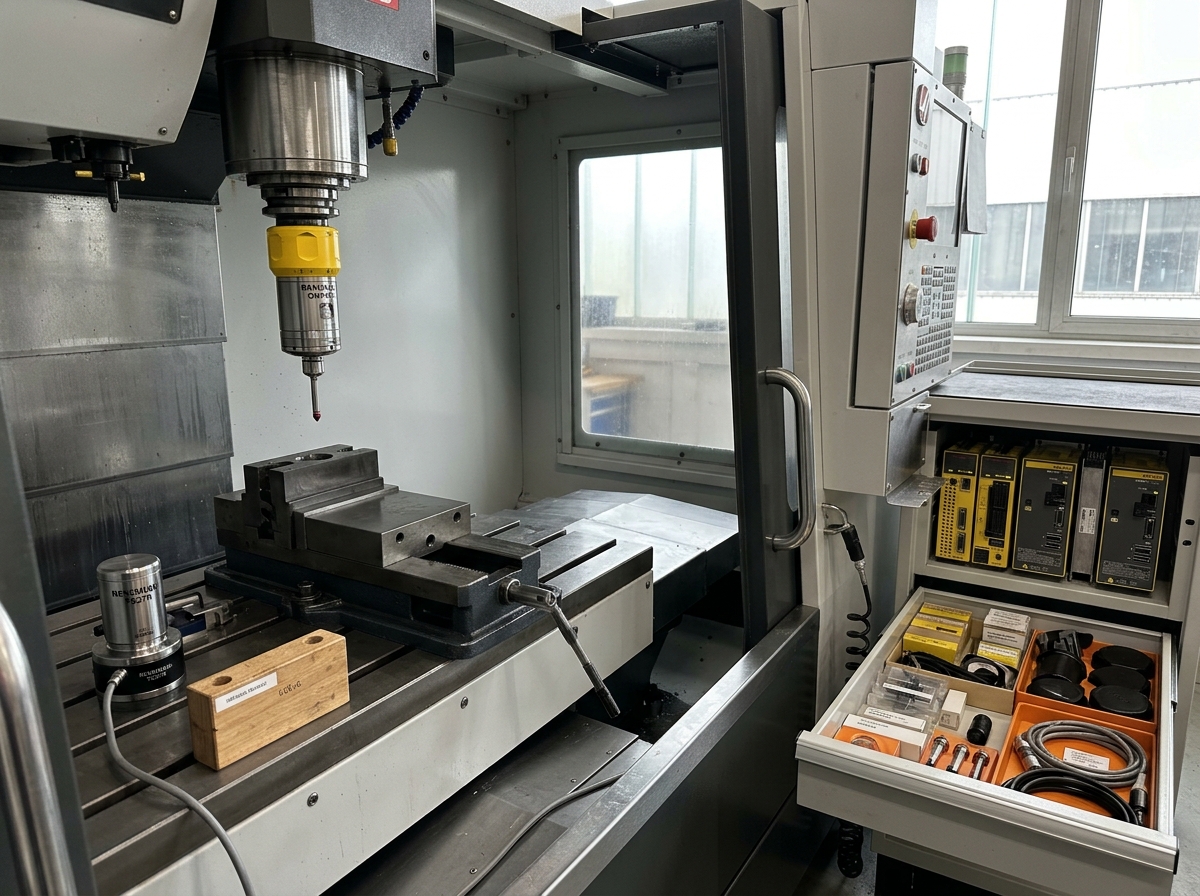
When the right replacement depends on the machine application
Application context changes what “compatible” means in practice. A vertical machining center with frequent acceleration and deceleration may stress the amplifier differently than a turning center with steadier load patterns. The same replacement can work in both environments on paper but behave differently under real thermal and duty-cycle conditions.
That is why some buyers also review related components such as servo motors and spindle motors during replacement planning. If the machine has a history of cable noise, intermittent encoder faults, or power fluctuation, the amplifier choice should be validated against the full operating environment, not only the original part number.
In a repair scenario, the best replacement is the one that restores the axis with the least amount of parameter changes. In a machine builder scenario, the best replacement is the one that preserves motion profile, thermal margin, and serviceability across the machine’s planned life. Those are different buying goals, and compatibility has to support the right one.
2026 buying guide: how to evaluate a Fanuc servo amplifier step by step
A disciplined buying process lowers risk more effectively than a long product comparison list. The sequence should begin with machine identity, then move to amplifier identity, then to interface checks, and finally to supplier confirmation. This order matters because fitment errors become more expensive at later stages of the buying cycle.
- Record the machine model, axis position, and old part number.
- Check voltage class, connector type, and mounting layout.
- Verify motor pairing and encoder feedback format.
- Confirm any firmware or revision differences.
- Ask for cross-reference confirmation before payment.
- Inspect lead time, return policy, and test status.
Buyers who work this way tend to reduce reordering and commissioning delays. For urgent maintenance, that is often worth more than a small unit discount because the cost of waiting quickly overtakes the cost of buying correctly the first time.
Compatibility versus availability: how to make a practical decision
Availability matters, but it should not override compatibility unless the machine is already down and no exact match exists. Even then, the substitute must be evaluated against the motor, feedback, and control environment. A rapidly shipped amplifier that is only “close” can still create a longer outage if it cannot pass the startup checks.
A practical rule is to prioritize exact fit for production-critical axes and allow limited substitution only for noncritical systems after technical validation. This is especially important in plants where the same machine family is used across multiple shifts, because an error on one line can ripple into the rest of the schedule.
| Decision scenario | Best priority | Reason | Risk level |
|---|---|---|---|
| Critical production axis | Exact compatibility | Minimize restart risk | Low |
| Spare stocking | Verified cross-reference | Fast future recovery | Low to moderate |
| Emergency repair | Confirmed substitute only | Keep machine moving | Moderate |
| Legacy machine | Full system review | Old revisions vary widely | Moderate to high |
That decision structure works because it reflects real shop-floor constraints. Buyers rarely have unlimited time, but they do have enough information to avoid obvious fitment errors if they organize the checks in the right order.
FAQ: Fanuc servo amplifier compatibility in 2026
1. Why is compatibility more important than price for a Fanuc servo amplifier?
Compatibility matters more because a mismatched amplifier can cause alarms, unstable motion, or complete downtime, which usually costs more than the price difference.
2. What is the first thing to check before buying a replacement?
Start with the exact part number, then confirm voltage class, encoder feedback type, connector layout, and motor pairing.
3. Can two amplifiers with similar housings be interchangeable?
No. Similar physical appearance does not guarantee the same power stage, firmware generation, or signal behavior.
4. Why does the encoder matter so much in compatibility?
The encoder is the feedback core of the closed loop, so any mismatch can affect position accuracy and trigger drive faults.
5. Is it safe to buy a lower-cost substitute if the model looks close?
Only if the substitute has been cross-checked for electrical, feedback, and control compatibility with the exact machine configuration.
6. What documents should a buyer request from the supplier?
Request part number confirmation, cross-reference validation, connector details, and any notes on tested machine families or revisions.
7. How can a maintenance team reduce future replacement errors?
Build a reference list that records machine model, amplifier code, motor code, encoder type, and approved substitute options.