










Your Guide to the Best Laser Interferometer Brands
Renishaw, Keysight, Zygo, and SIOS Messtechnik stand as leading laser interferometer brands in 2026. These companies consistently deliver unparalleled precision, reliability, and advanced features in this technology. The global market for these devices shows significant growth. It reached $346.18 million in 2024 and projects to hit $394.27 million in 2026.
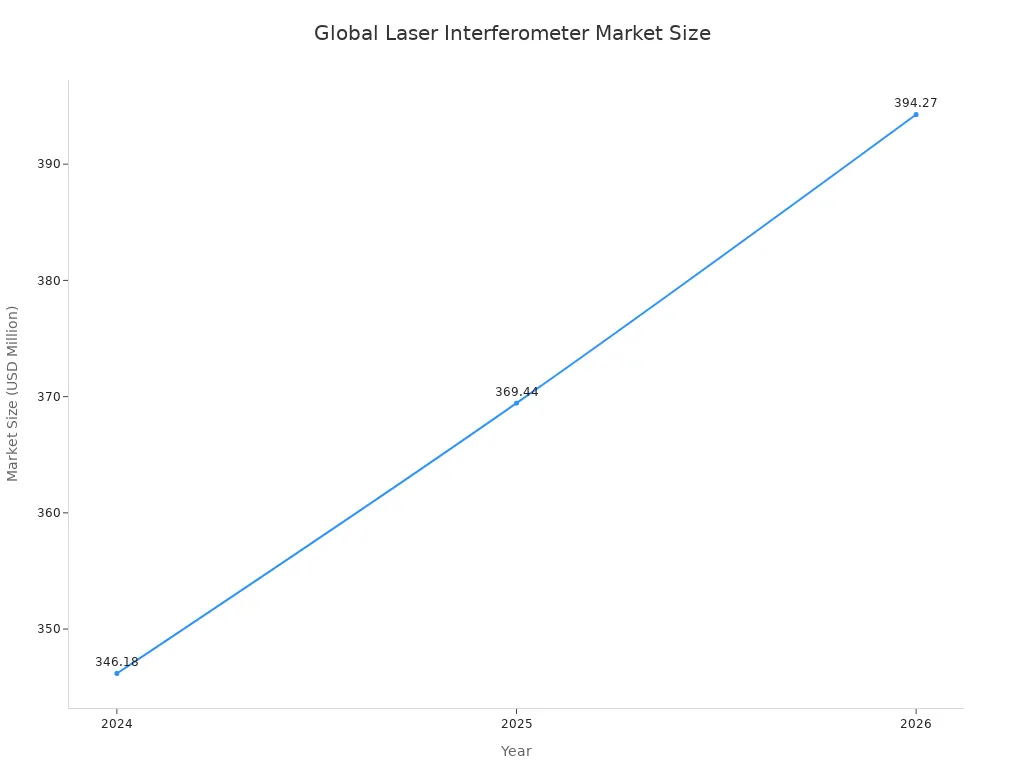
This market is expected to grow at a Compound Annual Growth Rate (CAGR) of 7% from 2024 to 2030, driven by advancements in automation and digitalization. Selecting the optimal system requires understanding specific application needs and brand specializations. DingYan Machinery works with official agents of these brands, ensuring access to original parts and comprehensive solutions.
Key Takeaways
- Laser interferometers use light to measure distances very precisely. They split a laser beam and then combine it again. This creates patterns that show tiny movements.
- These tools are very important for making things like car parts and computer chips. They help ensure everything is built exactly right. This is called precision measurement.
- The market for laser interferometers is growing fast. New technologies like AI make them even better. They can now measure faster and more accurately.
- Top brands like Renishaw, Keysight, Zygo, and SIOS Messtechnik lead the market. Each brand has special strengths for different needs.
- Choosing the right interferometer means looking at several things. Consider how accurate it needs to be and how fast it must measure. Also, think about where you will use it.
- Modern interferometers use AI to improve accuracy. AI helps them correct errors and work better. This makes them more reliable.
- New interferometers are becoming smaller and easier to move. They can also connect to other devices. This helps with smart factories and remote monitoring.
Understanding Laser Interferometer Technology
What is a Laser Interferometer and How Does it Work?
Principles of Laser Interference for Measurement
A laser interferometer uses the interference of coherent laser beams to achieve precise measurements. This technology works by splitting a single laser beam into two paths: a reference path and a measurement path. The measurement beam interacts with the target object, while the reference beam travels an undisturbed path. When these two beams recombine, they create an interference pattern. This pattern consists of light and dark fringes. Any movement of the target object changes the optical path length of the measurement beam. This change causes a measurable shift in the interference fringes, allowing for incredibly accurate displacement measurements, often down to the sub-nanometer scale. Lasers are ideal for this because their monochromatic and coherent properties ensure stable and precise interference patterns. This foundational technique, interferometry, is highly sensitive to changes in optical path length, enabling measurements of distances and displacements down to the picometer scale.
Types of Laser Interferometer Systems
Various laser interferometer systems exist, each designed for specific measurement tasks. Some systems focus on measuring linear displacement, crucial for machine tool calibration and positioning. Others specialize in angular measurements, essential for rotational stages. Surface metrology interferometers analyze the flatness and roughness of optical components and other precision surfaces. These systems leverage the same core principles of interference but adapt their optical configurations and data processing to suit different applications, from vibration analysis to velocity detection.
The Critical Role of Precision Measurement in 2026
Impact on Advanced Manufacturing and Quality Control
Precision measurement plays a critical role in advanced manufacturing and quality control in 2026. Industries like aerospace and automotive demand extremely high precision for production, testing, and ensuring components meet strict quality standards. For instance, inductive sensors are crucial for real-time monitoring and adjustment in high-speed operations. Manufacturing and industrial automation rely on precise measurements to enhance machine efficiency. They provide real-time data on position, distance, and speed, particularly for monitoring assembly lines and ensuring correct part alignment. Robotics also benefits significantly from these precise measurements, facilitating accurate movements and interactions in both collaborative and automated systems.
Importance in Scientific Research and Development
Scientific research and development also heavily depend on precision measurement. Industrial applications in aerospace, defense, and energy require accurate measurements for advanced technologies and operational efficiency. Quantum measurement technologies are vital for optimizing production processes, ensuring safety, and improving performance. Timekeeping, for example, utilizes atomic clocks for precise synchronization in satellite communication, GPS systems, and scientific research. Quantum sensors find applications in seismic monitoring, geophysical exploration, medical diagnostics, and environmental sensing. Metrology, across manufacturing, pharmaceuticals, and telecommunications, benefits from quantum-based methods for more precise instrument calibration. Governments and military sectors invest in quantum technologies for national security and critical infrastructure, using quantum sensors for surveillance, submarine detection, and improved navigation systems.
The Evolution of Laser Interferometer Technology
Historical Milestones in Laser Interferometer Development
The journey of laser interferometer technology began long before the invention of the laser itself.
- 1862: Armand Hippolyte Louis Fizeau introduced the Fizeau interferometer. He presented this device at the French Academy of Sciences. It measured glass parameters. Fizeau had previously used a similar version in 1851 to test the 'ether-drag' theory.
- Pre-1960s: Optical test interferometers were difficult to use. Manufacturers often custom-built them. Low-coherence illumination favored equal path interferometers like Twyman-Green or Mach-Zehnder. Commercial Fizeau interferometers were large, heavy, and limited to flat surface measurements.
- 1960s: The invention of the laser made interferometry much easier. Bob Hopkins recognized the laser's potential for improving optical component testing. Lasers simplified fringe finding. This made interferometry a practical tool for optical manufacturing. Stabilized HeNe lasers were very expensive at this time.
- 1970s: The modern Fizeau architecture emerged. Two key developments created it: the modular Fizeau interferometer with a laser source and computerized phase measurements. Zygo's insight in 1972 used a polarizer with a low-cost, multi-mode laser. This achieved long coherence. It led to the GH interferometer and the Mark II™ in 1976. Bell Labs and Tropel (now Corning) developed computer data acquisition phase measuring interferometry. This enabled pixel-by-pixel phase retrieval. Tropel developed the first commercial computerized Phase Stepping systems. Jim Wyant later introduced Phase Shifting, improving accuracy and speed.
- 1980s: Two significant inventions appeared: carrier fringe interferometry (Takeda, Ina, Kobayashi) and multi-camera frame simultaneous interferometry (Smythe & Moore). These became commercially successful later. They enabled microsecond-rate phase measurement for vibrating and turbulent environments.
- 1990s: Improvements came from the personal computer revolution and advancements in CCD sensors. The Mark II architecture was repackaged with faster computers, better software, and higher-density cameras. New multi-frame algorithms (Creath, Degroot) were developed. Dr. Michael Küchel of Carl Zeiss developed the Direct 100 laser Fizeau. This was a multi-wavelength interferometer with advanced optics and data acquisition based on carrier fringe. Professor Schwider created a 'White Light Fizeau Interferometer' in 1997.
- 2000s: Deterministic optical manufacturing, especially for aspheres, drove innovation. The need for improved imaging, calibrated image size, and high pixel resolution led to the abandonment of Mark II-type instruments. 4D Technologies introduced a light source based on a coupled delay-line for low coherence fringes. This enabled surface isolation.
NIST also made crucial contributions:
- 1973: NIST scientists Richard Deslattes and Howard Layer combined X-ray and laser-based optical interferometry. They precisely determined atom spacing in silicon crystals. This improved the Avogadro constant and established more accurate X-ray and gamma-ray wavelength standards.
- 1975-1979: Laser heterodyne interferometers revolutionized high-precision length measurement. NIST integrated these devices into instruments like coordinate measuring machines and the NIST linescale interferometer. This became the world's most accurate instrument for measuring lengths up to 1 meter.
- 1977: NIST developed the concept of laser 'error mapping' for Coordinate Measuring Machines (CMMs). Techniques using laser interferometers characterized repeatable rigid-body errors. This increased CMM accuracy by an order of magnitude. It contributed to their commercial success in industrial length metrology.
Key Technological Advancements in Modern Laser Interferometers
Modern laser interferometers benefit from significant technological advancements. These improvements enhance their capabilities across various applications.
Enhanced Accuracy and Resolution
Today's laser systems generate highly stable and coherent laser beams. This is crucial for enhanced resolution and measurements. These advancements lead to more reliable and stable laser interferometers. They also allow for smaller sizes with better precision. Artificial Intelligence (AI) significantly enhances modern laser interferometer performance.
- AI automates calibration.
- It processes data in real-time.
- AI predicts and corrects errors.
- It enables self-optimization and predictive diagnostics.
- AI efficiently handles complex datasets.
- It automatically detects and corrects misalignments.
- AI adjusts measurement parameters in real time.
- It predicts measurement drift due to environmental factors like temperature or vibrations.
- AI automates traditionally manual processes.
- It provides real-time diagnostics and error correction in systems like Laser Doppler Displacement Meters (LDDM).
- It processes and analyzes data at nanometer scales for better precision.
- AI automatically corrects errors in challenging environments, such as cryogenic conditions or vacuum chambers.
- It offers automated data interpretation, including real-time analysis of surface data and flaw detection.
- AI optimizes machine parameters based on environmental conditions.
- It predicts and compensates for machine errors in real time using historical calibration data.
Increased Measurement Speed and Dynamic Range
Modern laser interferometers offer increased measurement speed and dynamic range. This allows them to capture rapid changes and measure over wider ranges. AI contributes to this by enabling real-time data processing and error correction. This ensures high accuracy even during fast measurements. The stability of modern lasers also supports faster data acquisition without compromising precision.
Top Laser Interferometer Brands in 2026
Renishaw: Innovating Laser Interferometer Solutions
Key Strengths and Technological Innovations in Laser Interferometers
Renishaw stands out for its commitment to innovation in precision measurement. The company consistently develops solutions that push the boundaries of accuracy and reliability. Their technological advancements focus on creating robust systems that perform exceptionally well in demanding industrial environments. Renishaw's designs often integrate user-friendly features with high-performance capabilities, making complex measurements accessible.
Notable Laser Interferometer Products and Series (e.g., XL-80, RLE)
Renishaw offers a range of highly regarded products. The XL-80 laser interferometer system is a prime example of their engineering prowess. It provides linear measurement accuracy of ±0.5 ppm, assured with a precision-stabilized laser source and accurate environmental compensation. This system boasts a reading frequency of up to 50 kHz and a maximum linear measurement speed of 4 m/s. It achieves a linear resolution of 1 nm, even at maximum speed. The XL-80's laser frequency stability is impressive, maintaining ±0.05 ppm over one year and ±0.02 ppm over one hour, thanks to dynamic thermal control of the laser tube length. It operates reliably in environmental conditions ranging from 0 ºC to 40 ºC and 650 mbar to 1150 mbar. The XL-80 features integrated USB connectivity, eliminating the need for a separate laser-to-PC interface. Users can switch between standard (40 m) and long (80 m) range modes. An analogue I/O port allows for analogue signal output and trigger signal input. The system has a warm-up time of less than 6 minutes and uses an external, switch-mode power supply with 90 V - 264 V input voltage flexibility. Its software capabilities include modules for linear, angular, rotary axis, flatness, straightness, squareness measurements, and dynamic measurement. Another significant product is the RLE20 fiber-optic laser interferometer encoder. It offers picometer resolution, differential measurement, and part-per-billion laser frequency stability.
Ideal Applications for Renishaw Laser Interferometers
Renishaw laser interferometers find extensive use across various industries. They excel in measuring distances, refractive index changes, and surface properties. These systems are crucial for machine calibration, ensuring the precise operation of manufacturing equipment. They also accurately measure position, straightness, and angular deviations such as pitch, roll, and yaw. The RLE20, with its exceptional application flexibility and ease of installation, is highly suitable for advanced axis positioning systems.
Keysight Technologies: Advanced Laser Interferometer Metrology
Key Strengths in High-Speed Laser Interferometer Measurements
Keysight Technologies demonstrates strong capabilities in high-speed laser interferometer measurements. Their systems offer rapid warm-up times, typically four minutes, allowing for quick deployment. They integrate internal measurement receivers for efficient operation. Keysight's laser systems provide excellent vacuum wavelength accuracy of ±0.1 ppm (3 sigma, lifetime) and impressive vacuum wavelength stability, typically 0.002 ppm over one hour and 0.02 ppm over its lifetime. The company's lasers feature a long-life laser tube, with a demonstrated Mean Time Between Failure (MTBF) greater than 50,000 hours. The typical beam diameter is 6 millimeters (0.25 inch). Reference frequencies range from 1.7 to 2.4 MHz for newer models and 1.5 to 2.0 MHz for older models. Keysight is known for its industry-leading reliability.
Notable Laser Interferometer Systems (e.g., 5530 Laser Calibration System)
The Keysight 5530 Laser Calibration System is a prominent offering. When equipped with the 55281B Linear/Angular Measurement Kit, this system measures linear velocity along a machine's travel path. It also measures rotation (pitch and yaw) about an axis perpendicular to the motion axis. With the 55280B Linear Measurement Kit, the system measures linear displacement and velocity along a machine's travel path. This functionality aims to document and potentially enhance positioning accuracy and velocity control for machines requiring such precision.
Applications in Semiconductor and Advanced Research with Keysight Laser Interferometers
Keysight laser interferometers play a vital role in critical stages of semiconductor manufacturing. They provide interferometric solutions for semiconductor inspection and lithography processes. This ensures the necessary sub-nanometer accuracy for microelectronic component production. Their precision measurement capabilities also support advanced research applications where extreme accuracy and stability are paramount.
Zygo Corporation (Ametek): Optical Surface Laser Interferometers
Key Strengths in Non-Contact Optical Laser Interferometer Measurement
Zygo Corporation, an Ametek company, excels in non-contact optical measurement. Their instruments offer fast and reliable measurements. The Zygo Verifire Interferometer, for example, uses QPSI technology. This technology ensures robust data acquisition, allowing for quick and dependable measurements even in challenging environments with vibration and air turbulence. Zygo's systems feature a true Laser Fizeau design. They incorporate a ZYGO-made HeNe laser source, which provides a longer operational lifetime of 60,000 hours and a 3-year warranty. This laser delivers higher power and exceptional wavelength stability (0.0001 nm). This enhances vibration performance and accuracy in low-light conditions. The systems come equipped with full-featured Mx™ software. This software provides powerful yet intuitive capabilities for measurement, analysis, and automation, streamlining the user workflow. The Zygo Verifire Interferometer is broadly applicable for characterizing surface form error, transmitted wavefront, and surface flatness across various optical components. These include lenses, mirrors, prisms, and windows, as well as precision machined metal and ceramic surfaces.
Notable Laser Interferometer Products (e.g., Verifire, NewView)
Zygo's product line includes the Verifire and NewView series. These instruments are renowned for their precision in optical metrology. The Verifire series focuses on high-performance surface and wavefront measurements. The NewView series specializes in 3D optical surface profiling.
Ideal Use Cases for Zygo Laser Interferometers in Optics and Aerospace
Zygo laser interferometers are indispensable in the optics and aerospace industries. They are crucial for spacecraft navigation and the alignment of spacecraft components. These systems also perform vibration analysis for sensitive instruments and components during launch and operation. In satellite technology, they improve the accuracy of Earth observation data for climate monitoring and resource management. Zygo is a major player in developing and supplying these advanced solutions.
SIOS Messtechnik GmbH: Nanometrology with Laser Interferometers
Key Strengths in Multi-Axis and Environmental Stability for Laser Interferometers
SIOS Messtechnik GmbH specializes in nanometrology, offering solutions for ultra-high-resolution and low-noise measurements. They primarily serve academic research, cleanrooms, and metrology institutes. SIOS has developed advanced laser interferometers with sub-picometer resolution. Their thermally shielded setups measure nanopositioning drift even in extreme environments. A notable development includes a vacuum-compatible interferometer platform. This platform is designed for low-temperature quantum physics experiments. It features a thermally isolated sensor head and sub-picometer resolution. Multiple national physics labs across Europe currently use this technology.
Notable Laser Interferometer Series (e.g., SP series, NMM series)
SIOS Messtechnik offers several distinguished product series. The SP series provides highly stable and precise displacement measuring interferometers. These systems are known for their compact design and robust performance. The NMM series, which includes the Nanomeasuring Machine, represents the pinnacle of their ultra-precision positioning technology. These instruments integrate multiple measurement axes, offering comprehensive metrology solutions for complex tasks.
Applications in Nanotechnology and Ultra-Precision Positioning with SIOS Laser Interferometers
SIOS Messtechnik systems are crucial for nanotechnology and ultra-precision positioning. They specialize in high-resolution systems essential for nano-positioning and scientific research. Their systems offer picometer-level resolution, crucial for ultra-precision applications. SIOS systems are widely used in semiconductor fabrication and high-end manufacturing. A key achievement is the development of the NMM-1 Nanomeasuring Machine. This machine is recognized as the world’s most accurate positioning system. It directly supports nanotechnology and ultra-precision positioning needs.
Other Leading Laser Interferometer Contenders
Heidenhain's Contributions to Integrated Laser Interferometer Systems
Heidenhain, a renowned name in metrology, contributes significantly to integrated laser interferometer systems. They focus on high-precision linear and angular encoders. These encoders often incorporate interferometric principles for superior accuracy. Heidenhain's solutions are integral to machine tools and automation systems. They ensure precise motion control and positioning.
Optodyne's Specialization in Dynamic Laser Interferometer Measurements
Optodyne specializes in dynamic laser interferometer measurements. Their systems excel at capturing rapid movements and vibrations. This capability makes them ideal for applications requiring real-time feedback and high-speed data acquisition. Optodyne's technology supports dynamic calibration of machine tools and other precision equipment.
ZEISS and Bruker Corporation in the Laser Interferometer Market
ZEISS and Bruker Corporation also hold significant positions in the laser interferometer market. ZEISS, known for its optical and optoelectronic technology, offers interferometric solutions for surface metrology and quality control. Bruker Corporation provides advanced scientific instruments. Their offerings include interferometers for material science and semiconductor inspection. Both companies leverage their extensive expertise to deliver high-performance measurement tools.
Market Landscape and Growth of Laser Interferometers
Global Market Trends for Laser Interferometers
The global market for laser interferometers shows dynamic growth. Technological advancements continuously improve measurement accuracy. These innovations also expand the functionalities of laser interferometers, making them more versatile. The manufacturing sector increasingly uses these devices for quality assurance and process control. This reflects a clear move towards more precise manufacturing methods. Digital solutions, such as software and data analytics, now combine with laser interferometers. This integration enhances data interpretation and optimizes processes. The growing adoption of automated systems in manufacturing drives the need for precise measurement tools. Laser interferometers ensure accuracy in machinery and robotics. The expansion of semiconductor manufacturing also contributes significantly. The demand for smaller, more efficient electronic devices leads semiconductor manufacturers to use laser interferometers for precision in production. Furthermore, increased investments in research and development across scientific fields, including physics and materials science, boost demand. Laser interferometers accurately measure minute displacements, making them essential for R&D activities.
Driving Factors for Laser Interferometer Adoption
Several key factors drive the increased adoption of laser interferometers across various industries. Scientific research and development demand high-precision measurement tools in fields like physics and astronomy. Manufacturing and industrial applications find them essential for quality control, alignment, and calibration. Advancements in aerospace and defense require precise navigation, missile guidance, and space exploration instruments. Technological innovation and miniaturization lead to more compact, affordable, and efficient interferometers. Government funding and strategic initiatives also increase investments in scientific infrastructure and research. Digital transformation and the increasing demand for efficient, scalable solutions further propel their use.
Industry 4.0 and Automation Demands
Industry 4.0 principles and automation demands significantly influence the adoption of laser interferometers. These tools are crucial for the digital transformation of manufacturing. They support the growing need for efficient and scalable solutions in automated environments. Laser interferometers ensure the precision required for automated machinery and robotic systems. This focus on quality control and precision manufacturing aligns perfectly with Industry 4.0 goals.
Miniaturization and Precision Engineering Requirements
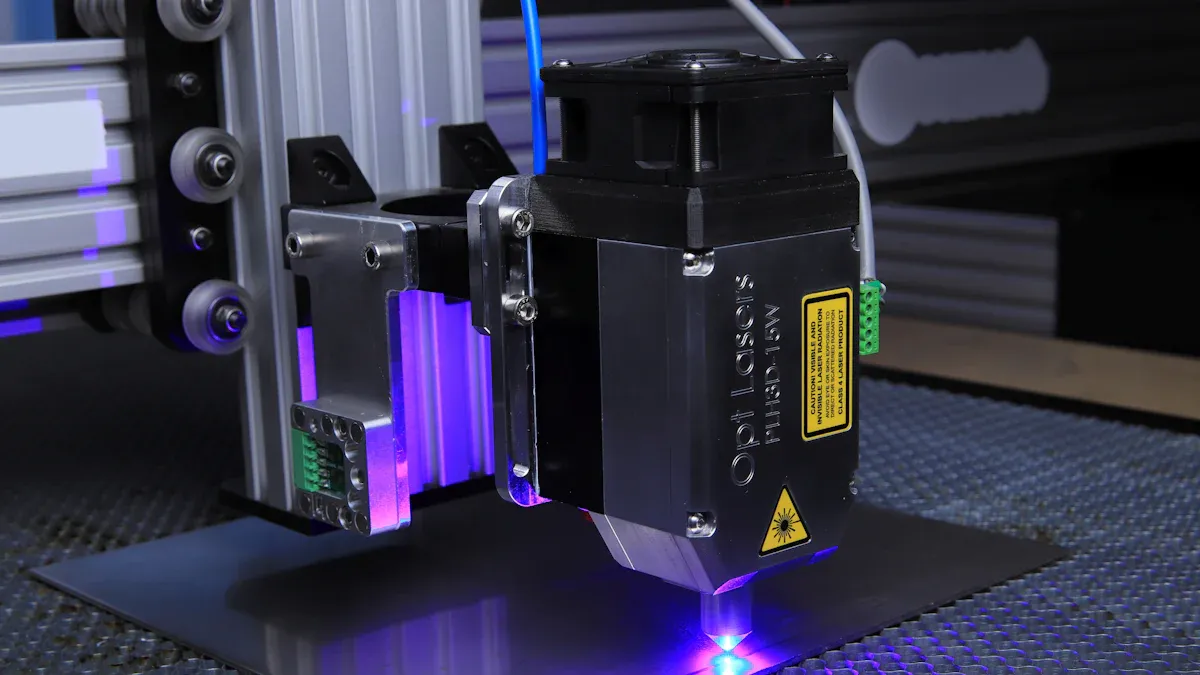
The ongoing trend of miniaturization and precision engineering also drives the demand for laser interferometers. Industries require smaller, more efficient electronic devices. This necessitates extremely precise production processes. Laser interferometers provide the accuracy needed for these intricate tasks. The development of more user-friendly and cost-effective models, such as the HPI-3D linear laser interferometer system, makes advanced precision accessible to a wider range of applications. AI integration further improves precision across industries. Growing software integration and general adoption of laser technology also contribute to meeting these stringent requirements.
Factors for Choosing the Best Laser Interferometer in 2026
Selecting the right measurement tool is crucial. Several factors guide the choice of a laser interferometer. These factors ensure the system meets specific application needs.
Accuracy and Resolution Requirements for Laser Interferometers
Accuracy and resolution are paramount when choosing a laser interferometer. Different applications demand varying levels of precision. For example, semiconductor manufacturing requires sub-nanometer resolution. General machine tool calibration might need less extreme precision. Users must define their exact measurement needs. This helps them select a system that provides sufficient accuracy without unnecessary cost. High resolution allows detection of minute changes. High accuracy ensures the measurements are correct.
Measurement Range and Speed Capabilities of Laser Interferometers
The measurement range and speed capabilities of a laser interferometer must match the application. Some tasks require measuring long distances quickly. Others involve short, precise movements. The table below shows typical capabilities of leading systems:
| Interferometer Type | Measurement Range | Maximum Displacement Speed |
|---|---|---|
| Triple-Beam | 0 m to ≥ 5 m | 3 m/s |
| Single-Beam | 0 m to ≥ 5 m | 3 m/s |
| Differential | 0 m to ≥ 5 m | 3 m/s |
Note that some single-beam systems can extend their range up to 80 meters. Users should consider both the maximum distance and the speed of the target. This ensures the interferometer can track movements effectively.
Environmental Stability and Robustness of Laser Interferometer Systems
Environmental conditions significantly impact interferometer performance. Users must consider the operating environment.
Environmental factors affecting performance include:
- Air refractive index: This is a major environmental disturbance.
- Optical path mixing: This leads to periodic nonlinearity.
- Periodic nonlinearity (PNL): Imperfect optical components cause this.
- Vibrations: Shop-floor vibrations greatly affect laser interferometers.
- Thermal changes: These are also critical in shop-floor environments.
Manufacturers achieve stability through various methods:
- Environmental compensation units: These units apply equations, like the Ciddor equation, to correct for air refractive index changes.
- Heterodyne (dual-frequency) architectures: These suppress optical path mixing and periodic nonlinearity.
- System-level improvements: Robust phase measurement and advanced optical designs enhance stability.
- Real-time digital processing: Technologies like FPGAs and machine learning reduce errors.
A robust system performs reliably even in challenging industrial settings.
Software and Data Analysis Capabilities for Laser Interferometer Data
Advanced software is crucial for maximizing the utility of modern measurement systems. These programs offer powerful tools for data acquisition, analysis, and visualization. They allow users to manage complex measurements efficiently.
Software features real-time video alignment. It stores camera settings, detector masks, and trimming options. Acquisition modes support single, averaged, continuous, difference, and burst measurements. Users can operate the system remotely via Web Services.
The software provides comprehensive analysis. It offers slope (X, Y, Magnitude), histograms, and diffraction analysis (MTF, PSF, PSD, Autocovariance). It also includes geometric analysis (spot diagrams, encircled energy, ensquared energy diagrams). Powerful Zernike analysis comes with worksheet and table outputs. Surface roughness analysis (S parameters, ISO 10110-5) is available. Sub-aperture analysis over complex regions uses flexible masking options.
Data transformation options include scaling, rotation, flip X/Y, and translations. High-pass and low-pass Fourier filters, along with median filters, are also present. A data stack facilitates arithmetic operations between different datasets. Fiducial transformation aligns measurements using pre-placed markers.
Visualization features state-of-the-art 2D and 3D displays. These displays are rotatable, scalable, and zoomable perspective plots. They support various color palettes and custom palette creation. A Measurement Flow screen shows every stage of processing and analysis.
The software enables easy data exchange with other applications. These include MatLab™, IDL™, MetroPro™, Opticode™, Bruker Vision®, Code V®, and Microsoft Excel®. Data files save in the open HDF5 (or HDF4) format. This allows custom application access. Users can copy and paste numerical or graphical output into any Windows® application.
Cost, Support, and Calibration Services for Laser Interferometers
The cost of these advanced systems varies significantly. Prices depend on technical parameters, features, and brand name. For accurate pricing, contacting suppliers directly is recommended.
Specific examples show a range of costs:
- A used Renishaw ML10/XL-80 system costs around $4,450.00.
- New Renishaw ML10/XL80 Squareness Optics are priced at $6,827.00 (MSRP), often available for $4,450.00.
- A Renishaw XL80 XC80 Calibration System can cost $38,250.00.
Beyond the initial purchase, support and calibration services are vital. These services ensure the long-term accuracy and reliability of the equipment. Regular calibration maintains measurement precision. Technical support helps users resolve operational issues. Investing in these services protects the initial investment. It also guarantees consistent performance over time.
Future Trends in Laser Interferometer Technology
Integration of AI and Machine Learning with Laser Interferometers
Artificial intelligence (AI) and machine learning (ML) are transforming laser interferometer systems. These technologies create adaptive measurement systems. This integration significantly improves precision. It also reduces the time needed for calibration. Advanced data processing algorithms enable real-time, automated measurement workflows. This technological evolution aligns with Industry 4.0 principles. Industry 4.0 emphasizes automation, data integration, and predictive analytics. AI and ML expand the application scope of laser interferometers. They allow high-precision measurements in complex environments. This also supports automation within Industry 4.0 frameworks.
Miniaturization and Portability in Laser Interferometer Design
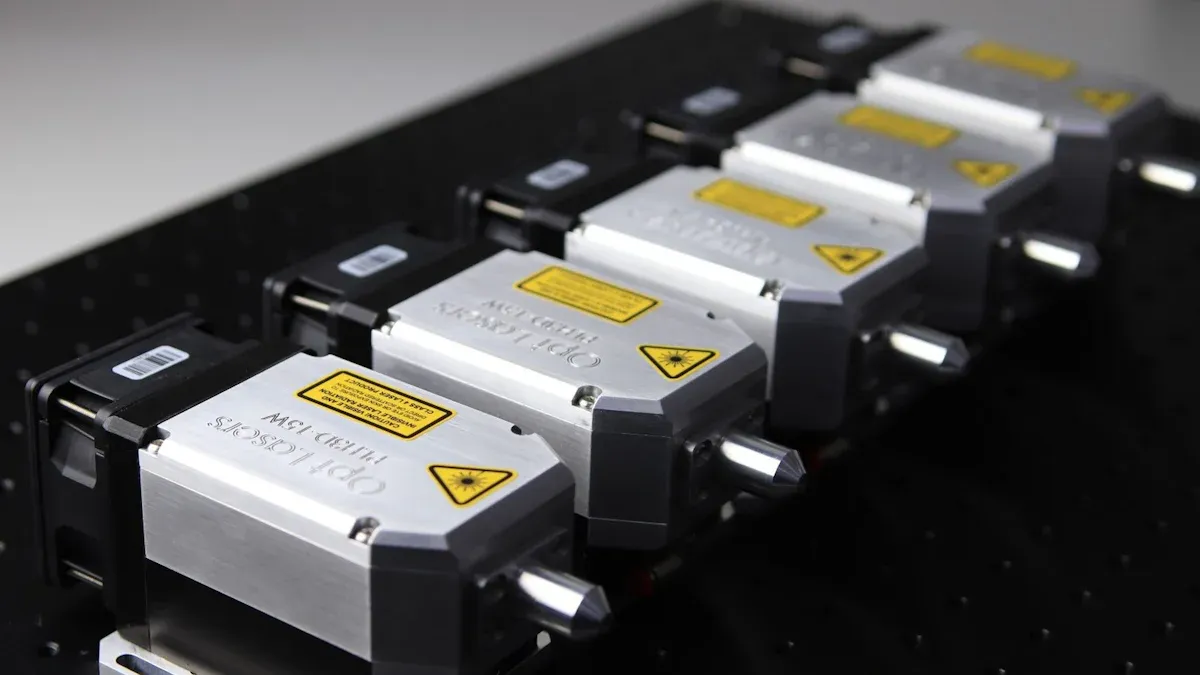
The future of laser interferometers includes smaller, more portable designs. Engineers are developing compact systems. These systems offer high precision in a smaller footprint. Miniaturization makes interferometers easier to transport and deploy. This benefits field applications and tight laboratory spaces. Portable designs allow users to take precise measurements outside of traditional lab settings. This trend increases the versatility of laser interferometers. It opens new possibilities for on-site calibration and quality control.
Enhanced Connectivity and IoT Integration for Laser Interferometers
Enhanced connectivity and the Internet of Things (IoT) are changing laser interferometers. IoT integration drives demand for interoperable, real-time measurement systems. This enhances precision. It also enables remote monitoring in manufacturing and research and development. Renishaw's IoT-enabled laser interferometer systems facilitate seamless data transmission. They send data to factory automation networks. This supports predictive maintenance and process optimization in smart factories.
Integration with robotics and automated inspection systems improves accuracy. It also reduces manual errors in critical manufacturing processes. Semiconductor fabrication is one example. Cloud computing and big data analytics work with IoT-enabled interferometers. This enables advanced measurement data processing. It also allows for trend analysis and quality control across distributed production sites. Enhanced firmware and software platforms provide improved user interfaces. They also offer automation protocols and programmable measurement sequences. This boosts efficiency and throughput. The expansion of industrial IoT standards and protocols promotes interoperable interferometry solutions. These solutions align with evolving factory digitization and Industry 4.0 initiatives. The growing adoption of Industry 4.0 principles fosters smart manufacturing, automation, digitalization, and connectivity in the laser interferometer market. This integration enables seamless interoperability, communication, and data exchange. It facilitates progress in science, technology, and industry.
Choosing the best laser interferometer in 2026 depends heavily on specific application requirements. Renishaw, Keysight, Zygo, and SIOS Messtechnik consistently lead the market with cutting-edge solutions. They provide high precision and reliability. Buyers must carefully consider technical specifications, their unique application needs, and future technological trends. This ensures an informed and successful purchasing decision.
FAQ
What is the primary function of a laser interferometer?
A laser interferometer precisely measures distance, displacement, and surface properties. It uses laser light interference patterns. Industries use it for high-accuracy tasks like machine calibration and quality control.
How does a laser interferometer achieve its high precision?
It splits a laser beam into two paths. One beam reflects off the target. The beams recombine, creating an interference pattern. Any target movement shifts this pattern. The system detects these shifts for highly accurate measurements.
Which industries frequently use laser interferometers?
Many industries use laser interferometers. These include advanced manufacturing, aerospace, semiconductor production, and scientific research. They are crucial for tasks requiring extreme precision and reliability.
What are the key advancements in modern laser interferometers?
Modern laser interferometers offer enhanced accuracy and resolution. They also provide increased measurement speed and dynamic range. AI and machine learning integration further improve their performance and capabilities.
Can laser interferometers operate in challenging environments?
Yes, many laser interferometer systems are robust. They feature environmental compensation units. These units correct for factors like air refractive index and temperature changes. This ensures reliable performance in industrial settings.
What role does artificial intelligence play in laser interferometer technology?
AI automates calibration and processes data in real-time. It predicts and corrects errors. AI also enables self-optimization and predictive diagnostics. This significantly enhances the precision and efficiency of laser interferometer systems.
Are laser interferometers becoming smaller and more portable?
Yes, miniaturization is a key trend. Engineers develop compact and portable laser interferometer designs. This allows for easier transport and deployment. It also enables precise measurements in various field applications.